Free speech up for sale

When I was planning to post this article a couple of weeks ago, Elon Musk’s bid to buy Twitter and take it into private ownership was looking unlikely to succeed. Musk had just declined to take up the offer of a seat on the Twitter board, following which the board adopted a poison-pill defence against a hostile takeover. And just as I was about to go to press at my usual time, the news broke that the original bid had now been accepted by the board, so I hit the pause button instead and waited a day to see what the public reaction was. What a difference 72 hours (and US$44bn) can make… It seems “free speech” does indeed come with a price.

Of course, the Twitter transaction is still subject to shareholder approval and regulatory clearance, as well as confirmation of the funding structure, since Musk is having to raise about half the stated purchase from banks.

Musk’s stated objective in acquiring Twitter was highlighted in a press release put out by the company:

“Free speech is the bedrock of a functioning democracy, and Twitter is the digital town square where matters vital to the future of humanity are debated,” said Mr. Musk. “I also want to make Twitter better than ever by enhancing the product with new features, making the algorithms open source to increase trust, defeating the spam bots, and authenticating all humans. Twitter has tremendous potential – I look forward to working with the company and the community of users to unlock it.”

This latest development in Musk’s apparent love/hate relationship with Twitter is bound to further divide existing users as to the billionaire’s intentions, as well as raise concerns about the broader implications for free speech. Musk himself has encouraged his “worst critics” to stay with the platform. Meanwhile, founder and former CEO, Jack Dorsey has renewed his love of Twitter, despite only recently stepping away from the top job to spend more time on his other interests.

Personally, I’m not overly concerned that a platform such as Twitter is in private hands or under single ownership (subject, of course, to anti-trust rules, etc.). Far from creating an entrenched monopoly, it may actually encourage more competition by those who decide to opt out of Twitter. What I am less comfortable with is the notion that Twitter somehow acts as an exemplar of free speech, and as such, is a bastion of democracy.

On the positive side, we will be able to judge the veracity of Musk’s objectives against his actual deeds. For example, will Twitter actually introduce an edit button, make its algorithms open-source, exorcise the spam bots, verify users, and reduce/remove the platform’s reliance upon advertising?

On the negative side, what credible stance will Twitter now take on “free speech”, short of allowing an “anything goes” policy? If Musk is sincere that Twitter will be a platform for debating “matters vital to the future of humanity”, he may need to modify what he means by public discourse. Personal slanging matches with fellow-billionaires (and those less-able to defend themselves) do not make for an edifying public debating forum. Musk’s own disclosures about Twitter and his other business interests will also come under increased scrutiny. We know from past experience that Elon’s Tweets can move markets, and for this alone he should be aware of the responsibility that comes with ownership of the platform.

We have long understood that free speech is not the same as an unfettered right to say what you like in public – there are limits to freedom of expression, including accountability for the consequences of our words and actions, especially where they can cause harm. The broader challenges we face are:

  • technology outpacing regulation, when it comes to social media
  • defining what it means to “cause offence”
  • increased attacks on “mainstream media” and threats to freedom of the press

1. Just as the printing press, telegraphy, telephony, broadcasting and the internet each resulted in legislative changes, social media has continued to test the boundaries of regulation under which its predecessors now operate. Hitherto, much of the regulation that applies to social and digital media relates to privacy and data protection, as well as the existing law of defamation. But the latter varies considerably by jurisdiction, and by access to redress, and availability of remedies. Social media platforms have resisted attempts to treat them as traditional media (newspapers and broadcasters, which are subject to licensing and/or industry codes of practice) or treat them as publishers (and therefore responsible for content published on their platforms). (Then there is the question of how some social media platforms manage their tax affairs in the countries where they derive their revenue.)

The Australian government is attempting to challenge social media companies in a couple of ways. The first has been to force these platforms to pay for third-party news content from which they directly and indirectly generate advertising income. The second aims to hold social media more accountable for defamatory content published on their platforms, and remove the protection of “anonymity”. However, the former might be seen as a (belated) reaction to changing business models, and largely acting in favour of incumbents; while the latter is a technical response to the complex law of defamation in the digital age.

2. The ability to be offended by what we see or hear on social media is now at such a low bar as to be almost meaningless. During previous battles over censorship in print, on stage or on screen, the argument could be made that, “if you don’t like something you aren’t being forced to watch it”, so maybe you are deliberately going in search of content just to find it offensive. The problem is, social media by its very nature is more pervasive and, fed by hidden algorithms, is actually more invasive than traditional print and broadcast media. Even as a casual, passive or innocent user, you cannot avoid seeing something that may “offend” you. Economic and technical barriers to entry are likewise so low, that anyone and everyone can have their say on social media.

Leaving aside defamation laws, the concept of “hate speech” is being used to target content which is designed to advocate violence, or can be reasonably deemed or expected to have provoked violence or the threat of harm (personal, social or economic). I have problems with how we define hate speech in the current environment of public commentary and social media platforms, since the causal link between intent and consequence is not always that easy to establish.

However, I think we can agree that the use of content to vilify others simply based on their race, gender, sexuality, ethnicity, economic status, political affiliation or religious identity cannot be defended on the grounds of “free speech”, “fair comment” or “personal belief”. Yet how do we discourage such diatribes without accusations of censorship or authoritarianism, and how do we establish workable remedies to curtail the harmful effects of “hate speech” without infringing our civil liberties?

Overall, there is a need to establish the author’s intent (their purpose as well as any justification), plus apply a “reasonable person” standard, one that does not simply affirm confirmation bias of one sector of society against another. We must recognise that hiding behind our personal ideology cannot be an acceptable defence against facing the consequences of our actions.

3. I think it’s problematic that large sections of the traditional media have hardly covered themselves in glory when it comes to their ethical standards, and their willingness to misuse their public platforms, economic power and political influence to undertake nefarious behaviour and/or deny any responsibility for their actions. Think of the UK’s phone hacking scandals, which resulted in one press baron being deemed “unfit to run a company”, as well as leading to the closure of a major newspaper.

That said, it hardly justifies the attempts by some governments, populist leaders and authoritarian regimes to continuously undermine the integrity of the fourth estate. It certainly doesn’t warrant the prosecution and persecution of journalists who are simply trying to do their job, nor attacks and bans on the media unless they “tow the party line”.

Which brings me back to Twitter, and its responsibility in helping to preserve free speech, while preventing its platform being hijacked for the purposes of vilification and incitement to cause harm. If its new owner is serious about furthering public debate and mature discourse, then here are a few other enhancements he might want to consider:

  • in addition to an edit button, a “cooling off” period whereby users are given the opportunity to reconsider a like, a post or a retweet, based on user feedback or community interaction – after which time, they might be deemed responsible for the content as if they were the original author (potentially a way to mitigate “pile-ons”)
  • signing up to a recognised industry code of ethics, including a victim’s formal right of reply, access to mediation, and enforcement procedures and penalties against perpetrators who continually cross the line into vilification, or engage in content that explicitly or implicitly advocates violence or harm
  • a more robust fact-checking process and a policy of “truth in advertising” when it comes to claims or accusations made by or on behalf of politicians, political parties, or those seeking elected office
  • clearer delineation between content which is mere opinion, content which is in the nature of a public service (e.g., emergencies and natural disasters), content which is deemed part of a company’s public disclosure obligations, content which is advertorial, content which is on behalf of a political party or candidate, and content which is purely for entertainment purposes only (removing the bots may not be enough)
  • consideration of establishing an independent editorial board that can also advocate on behalf of alleged victims of vilification, and act as the initial arbiter of “public interest” matters (such as privacy, data protection, whistle-blowers etc.)

Finally, if Twitter is going to remove/reduce advertising, what will the commercial model look like?

Next week: The Crypto Conversation

My love/hate relationship with Science Fiction

Watching the latest installment of “The Matrix”, I was reminded of my love/hate relationship with Science Fiction. I wouldn’t count myself as a huge SF fan, but I dip my toe in from time to time, and occasionally find a sub-genre, eco-system or franchise that draws me in deeper, whether via television, film or literature. Unfortunately, while the original “Matrix” movie (and maybe the first sequel) managed to be original, entertaining and engaging, by the time of “The Matrix Revolutions” both the plot and the characterisation had run thin. When I saw the trailers and the pre-launch campaign for “The Matrix Resurrections”, I was sufficiently intrigued to want to see it, especially in light of recent geo-political events. Sadly, it was a huge waste of time: the plot was banal, and the story-line disjointed; there were awkward flashbacks to the previous films (in large part to remind us of the actors who originally played the current characters?); and there were far too many retrospective explanations to justify the present “narrative”. The whole thing felt like another Keanu Reeves character had stumbled into a dystopian Lewis Carroll landscape – “Wick in Wonderland” would have been a more suitable title.

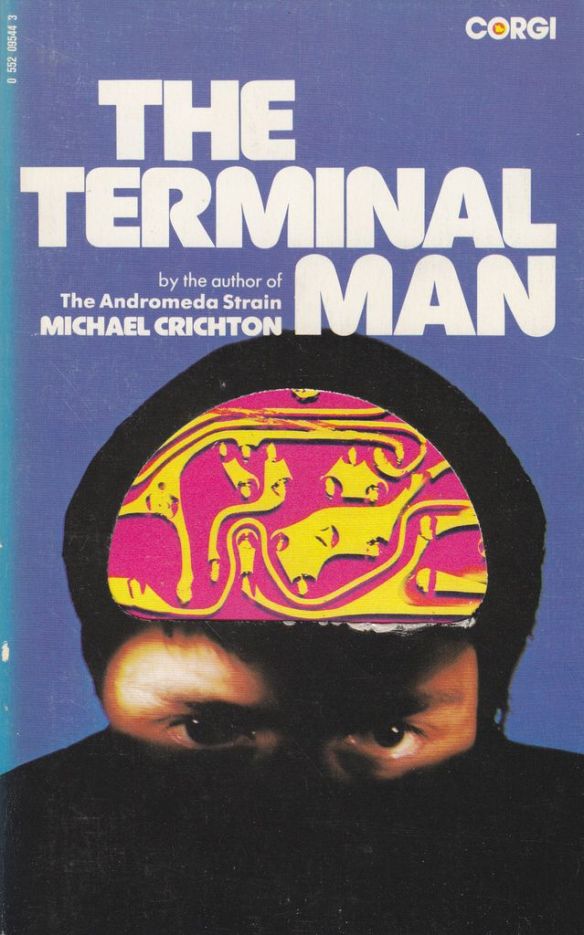
“The Terminal Man” by Michael Crichton (image sourced from the author’s website)

Growing up in the UK in the 1960s, my school friends and I avidly watched a bunch of TV programmes that found a young and eager audience for SF. These productions also spawned multiple re-boots, spin-offs and imitators, as well as giving rise to the franchise phenomenon that dominates much of today’s cinema. Those early shows included “Star Trek”, “Lost in Space”, “Planet of the Apes” and “Land of the Giants”. All of these programmes were American, which I suppose made them seem even more exotic, and therefore more appealing, to our impressionable minds.

By contrast, British television had produced the “Quatermass” TV series back in the 1950s, and “Dr Who” (launched in 1963), both of which pre-dated their US counterparts by several years. But in my mind these domestic efforts were firmly rooted in Gothic horror – more H.G.Wells and Jules Verne than Isaac Asimov and Philip K. Dick? – and therefore they felt less futuristic, especially when we were witnessing the real-life events of the Space Race on the evening news. Which is probably why even Gerry Anderson’s puppet creations such as “Fireball XL5”, “Thunderbirds” and “Captain Scarlet” resonated with me more than Daleks and Cybermen. So to me, British television was more successful in producing psycho-dramas founded upon stories of espionage set against backdrop of the Cold War, with programmes such as “Danger Man”, “The Avengers”, “The Champions” and “The Prisoner” being far more evocative of contemporary themes and fashions, notwithstanding some creaky plot lines.

Later, I would watch classic SF films of the 1950s, such as “The Day the Earth Stood Still”, “The Blob” and “Forbidden Planet” which, despite their technical limitations, are still key reference points for fans of the genre; they also convey elements of Cold War paranoia, and the perennial fear of “the other”. Then, as a young teenager, I found myself reading SF novels, including works by Asimov, John Wyndham, Aldous Huxley, Michael Crichton, Norman Spinrad, Brian Aldiss and J.G.Ballard. Ballard, of course, preferred to explore “inner space” rather than outer space, and this means his writing contains universal themes that are not constrained by contemporary accounts of futuristic technology. In fact, this theme of “inner space” probably underpins my preferences within the SF genre, as evidenced by 1960s movies I managed to see when I was older, such as “Seconds”, “Alphaville”, and “Fahrenheit 451”.

Despite an aversion for SF that is over-reliant upon technology as a plot technique, I have enjoyed some recent novels that engage with emerging technology such as AI and robotics – great examples would include William Gibson’s “Agency”, Ian McEwan’s “Machines Like Me”, and Jeanette Winterson’s “Frankissstein”.

However, if I was to delineate my personal likes/dislikes of SF in film and on TV, I would probably list them as follows:

  • As a child, I loved the original “Star Trek”, but I’ve never seen a “Star Trek” film or any of the newer TV series
  • I’ve never seen a “Star Wars” film, and have no desire to
  • “Moon” was great, and “Source Code” wasn’t bad either
  • I really enjoyed “Close Encounters of the Third Kind”, and I appreciated “Contact”, “Arrival”, “Interstellar” and “The Martian”
  • “Gravity” was somehow plausible, whereas “Elysium” was a stretch
  • “2001: A Space Odyssey” is in a class of its own
  • Same with “The Man Who Fell To Earth”
  • I loved the first four “Alien” movies, but I disliked the so-called prequels, and I’ve avoided the “Predator” cross-overs
  • The original “Terminator” film was great, but the sequels prove the law of diminishing returns
  • I really enjoyed “Looper” and in a somewhat similar vein, “Inception”
  • I couldn’t ever get into the “X-files” – but I was hooked on “Twin Peaks”
  • The original “Westworld” movie was fine, but I have no interest in the recent TV series
  • Similarly, I love the original film versions of “Blade Runner” and “Total Recall”, but see no point in the later remakes
  • And while I used to watch re-runs of the original “Twilight Zone” series, I’ve not seen the later re-boot; however, “Black Mirror” got my attention
  • “Donnie Darko” yes, “Stranger Things” no
  • Overall, I tend to avoid SF that is more firmly rooted in the sub-genres of horror, fantasy, magic, super heroes (with super powers), space westerns, superstition, disaster themes and most tales of the supernatural (and anything with Kevin Costner….)

Finally, there is room for humour in SF, if done well – such as “Dark Star”, “Mars Attacks!”, and “Tremors”; even the first “Men in Black” effort is head and shoulders above “Wild Wild West”….

Next week: Smart Contracts… or Dumb Software

Music with literary leanings

A few weeks ago, I responded to a question posted on Twitter about “songs named after books”, little realizing the rabbit warren I would subsequently find myself going down (social media can have that effect…).

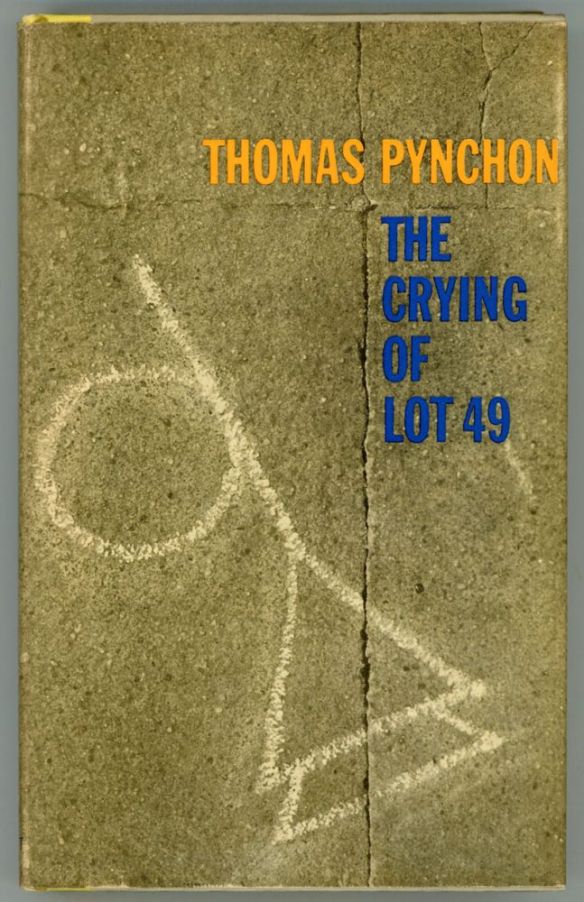
Image sourced from L.W.Currey, Inc.

There has long been a close relationship between popular music and literature – think about the connection between “West Side Story” and William Shakespeare, for one. Songwriters are often inspired by the titles or themes of books and plays for their own compositions – “Wuthering Heights” by Kate Bush being one of the most obvious, and “White Rabbit” by Jefferson Airplane being one of the more lysergic…

Some bands even name themselves after literary references; William Boroughs can claim credit for bestowing both Steely Dan and Soft Machine with their monikers. (In Australia, The Triffids, The Go-Betweens and Sexing the Cherry offer similar examples of groups taking their names from novels.) And of course, David Bowie employed Burroughs’ cut-up technique for writing his lyrics, as well as being inspired by Nietzsche, Orwell and Burgess, etc.

A number of bands I listened to in the late ’70s drew on their own teenage reading as key reference texts. Groups like Joy Division, Magazine, The Cure, The Buzzcocks, The Fall (naturally!), Josef K (of course!) and even The Jam all revealed their familiarity with Penguin Modern Classics and Pan paperback editions of Kafka, Sartre, Dostoevsky, Gogol, Fowles, Ballard, Murdoch, Bukowski, Plath, Nabokov and Huxley, to name but a few.

Of course, this traffic is not all one-way. Writers such as Ian Rankin and Nick Hornby, in their respective ways, have made use of musical themes and references for their novels. Elvis Costello is an interesting example of this flow and ebb of influences (conscious or otherwise). In his 1982 album, “Imperial Bedroom”, Costello name-checks books by Evelyn Waugh, Mary Scott and Emlyn Williams. In turn, the album seems to have inspired Brett Easton Ellis and Stephanie Bishop.

However, for sheer worm hole appeal, the works of Thomas Pynchon deserve a Nobel Prize for inspiring a whole thread of academic research in this area of literary influences. There’s probably a PhD thesis or two out there on this exact topic. At the risk of making this an indulgent and self-referencing blog, the band I was in from 1979-1983, Greenfield Leisure, recorded a song called “Too Fat To Frug” (the one song of ours that John Peel liked). The words were adapted from “Miles’s Song”, one of the lyrics Pynchon wove into “The Crying of Lot 49”, published in 1966. Even back in the ’60s, Pynchon was a source for popular culture, if the title of a 1967 comic is anything to go by, and a trend which seems destined to continue.

Finally, my thanks to Gary Wigglesworth for triggering this post.

Next week: My love/hate relationship with Science Fiction


Vinyl on the brain

In planning to write a blog on vinyl records, I was responding to recent personal experiences and insights on this topic. Then events somewhat overtook me, as I learned of the death this past weekend of Philip Jeck (more on him later). So this post has taken on a slightly different tone.

Image sourced from Vintage Everyday

The initial trigger for this blog came from the realisation that I’ve been spending more time on Twitter engaging with fellow vinyl enthusiasts – and of course, this interest has been amplified by social media algorithms and their “preferences” and “recommendations”. In my experience, most people who post content about music in general (and vinyl in particular) tend to be much nicer than those who indulge in the didactic venom and unfiltered hate speech that passes for “social commentary” these days. But this just goes to prove that you find your audience (and your confirmation bias?) where you choose to seek them.

Part of this on-line engagement is prompted by a passion for collecting, and a love of sharing. Yes, it could merely relate to showing off one’s vinyl stash, and may reveal fetishistic tendencies – but frankly, there are far worse vices. A lot of the commentary details successful crate-digging, charity shop bargains, and re-discovered hidden gems. In fact, the prospect of finding an over-looked classic, unearthing a valuable rarity, or simply completing a gap in your collection often drives this obsession. So much so, that recently I found myself dreaming of records which I know don’t exist, but in so much detail that part of me thinks these artefacts must be out there somewhere!

Like many music enthusiasts, I was first exposed to vinyl records via my parents’ and then my sisters’ collections. For a time in the late ’60s, my dad used to visit EMI on business, and would sometimes come home on a Friday having picked up a new release or two, most memorably the first few singles on the Beatles’ Apple label. I probably got the collecting bug more than my siblings, and still recall the key albums I bought with my own money: “Tubular Bells” by Mike Oldfield, “Autobahn” by Kraftwerk, and “A Clockwork Orange” by Wendy Carlos – which probably confirms my personal bias for instrumental, electronic and soundtrack music.

Then, I started playing in bands with mates from school, an interest that was further fueled by the arrival of punk rock, and the realisation that there was more to music than the Top 40 and old hippies singing into their patchouli-drenched afghan overcoats. One group I was in, Greenfield Leisure, received an airing on John Peel’s BBC Radio 1 programme (the Holy Grail for aspiring musicians at the time), but mostly these bands existed on home-made demo tapes, and were only ever heard (and rarely appreciated…) by our long-suffering families. Later, I worked in a chain of infamous second-hand record stores in London, which, if nothing else, revealed some of the weirder ends of the vinyl-collecting public. It also helped expand my musical knowledge, but at the cost of a fair chunk of my paltry shop wages.

Vinyl is not necessarily the most convenient format of music – it’s not as portable as digital, and not as robust as CD. Records get scratched, they warp, the grooves fill up with dust, and the sleeves get battered and torn. So, despite advances in technology, and the huge market for digital music and streaming services, why have vinyl records endured?

The continued and renewed interest in music on vinyl cannot be explained by a single factor – this phenomenon is as multi-faceted as the genres of music people listen to.

First, whether or not driven by events like Record Store Day, limited edition releases, box set retrospectives or physical copies being shipped with download coupons, vinyl sales are steadily on the up. But as a proportion of how people listen to music each week, purchased music (physical and download formats) comprises less than 10%, while streaming formats account for two-thirds of our listening.

Second, the tactile nature of vinyl records, plus the opportunity they present for creativity in their use of artwork, design and packaging, can generate a more engaging and long-lasting experience. As someone said recently on Twitter, you probably don’t remember the first music you downloaded or streamed, but it’s very likely you remember the first record you bought.

Third, quite apart from the vast amount of artist and label back catalogue being reissued on vinyl, more and more new and contemporary music is being released on vinyl as well as digital – sometimes, there’s not even a CD edition.

Fourth, swathes of back-catalogue can only be accessed via original vinyl editions, having never been re-issued during the hey-day of CDs in the 1990s and early 2000s. In fact, even where current and past releases have been released for streaming and/or download, the vagaries of geo-blocking can mean that this digital content is not available in all territories.

Finally, the economics of streaming (and to a lesser extent, downloads) have revealed that artists receive just a tiny proportion of the subscription revenue generated by Spotify, Apple and others, which can make vinyl purchases more attractive to music fans. This dynamic has also made direct-to-buyer platforms like Bandcamp more appealing to artists and fans alike.

Back to Philip Jeck, a sound artist who transformed piles of dusty old records into a musical experience. Using techniques he gleaned from watching hip-hop DJs and post-modern turntablists, he curated (rather than composed) sound collages built up from layers of seemingly forgotten and anonymous recordings, turning them into live art. I was fortunate enough to see him perform twice. The first was in 1993, when he presented his magnum opus “Vinyl Requiem” at the Union Chapel in North London. The second was in 2008, for a much more intimate solo performance at The Toff in Town, Melbourne. In both cases, the use of streaming could not have resulted in such a strong creative process or delivered such immersive listening.

Next week: Music with literary leanings