Facebook and that news ban

On February 18 this year, Facebook decided to “ban” news content in Australia. This meant that Australian Facebook users (including media companies) could not post news content or links, nor could they access local or overseas news. The move was a preemptive strike (and a somewhat crude negotiation tactic) by Facebook in an attempt to circumvent the Media Bargaining Code, which requires social media and search engine platforms (specifically, Google and Facebook) to pay news providers for the use of their content. Despite the gnashing and wailing among some sectors of the Australian community, the world did not end. And while Facebook has somewhat relented (following some concessions from the Federal government), the story has generated some useful debate about the power of certain tech platforms and the degree of influence or control they exercise over what we see on our screens each day.
Image sourced from Wikimedia

Personally, I did not find the ban an inconvenience, because I rarely use my Facebook account, and I certainly don’t rely on it for news or information. Instead, I prefer to access content direct from providers. One result of the ban was more downloads for Australian news apps such as the ABC and Inkl. Another (unforeseen?) result was a block on information posted by public and voluntary sector bodies, including essential services, health, community and charitable organisations.

Regarding the former, this can only be a good thing. Seriously, if we are relying on Facebook for news content, THAT is the real problem. As for the latter, it suggests a lot of organisations have become over-reliant on Facebook to reach their audience.

Meanwhile, Google (which had already struck a deal with Australian media companies) was eagerly promoting the number of Australian “partner publications” it offers in its News Showcase. This was something of a U-turn, because Google had threatened to remove search in Australia in response to the same Media Bargaining Code. While that might have been drastic, nevertheless, other search engines are available.

It was also interesting to see Microsoft (no stranger to anti-trust action during the so-called browser wars) promoting BuzzFeed via Twitter on the day of the Facebook ban. I also received a number of e-mails from various organisations reminding me that I could still access their content direct from their website or via their newsletter. These moves to re-connect direct with audiences started to make Facebook look very silly and petulant.

Just as there are other search engines besides Google, other social media platforms are available – so why do so many people appear to be against the Media Bargaining Code, and would prefer to give Facebook a free monopoly over which content they read?

I have written previously about Facebook’s relationship with “news”. For those people who felt “cheated” that they couldn’t access news, they should realise that a “free” social media account comes with a price – the consumer is the product, and is only there to serve up eyeballs and profiles to be sold to Facebook’s advertisers. In short, Facebook only sees news as a magnet for its own advertisers, so it seems only fair that they should pay for this piggyback ride on someone else’s content. (And we all know what else Facebook does with our personal information, as the Cambridge Analytica scandal revealed.)

Some commentary suggested that Facebook is providing a type of “public service” by enabling links to news stories – so much so, that they question whether it is equitable to force Facebook to pay for the privilege, under the new Code. In fact, some argued that Facebook should be charging the media companies for linking to their stories, since this drives traffic to third-party news sites, which in turn generate advertising income based on their own readership. But this overlooks the reality of the economic bargain being struck here: Facebook might like to argue that it is doing you a “favour” by serving up news content in your personal feed; whereas, the social media giant “curates” what you see in your feed purely to generate ad revenue.

Alternatively, if news content has no value to Facebook, why has it been happy to distribute it for “free” all these years? Because, I repeat, they know full well that without readers and content, they can’t sell advertising. Maybe Facebook should invest in journalism and create their own news content? Oh wait, they don’t want to be regulated like a newspaper. Remember in 2013 when Facebook said it wanted to be “the world’s newspaper”, but then they realized they’d have to comply with media laws (libel, racial vilification etc.) and quietly dropped the plan?

In short, Facebook is not interested in being a news publisher (nor being subject to relevant media laws) but they are happy to “leverage” third-party content. Now, they will have to pay a fair price to use that content.

The conclusions from this Facebook episode (and some clumsy messaging from the Federal government) are pretty obvious:

  1. There is no such thing as a free lunch – a “free” social media account comes with a price; and there is also a cost attached to using someone else’s content
  2. Taxation of tech company revenues like Facebook, Google, Apple, Netflix and Amazon should be at the point of sale and consumption (i.e., where the consumer value is created and the income is generated, not where the revenue is recognised).
  3. Other search engines and social media platforms are available and content can be accessed direct from the source (but we’re probably too lazy to change our habits….)
  4. In part, this is about the continued demise of the 4th estate – no-one wants to pay for content, so social media platforms are getting a free ride having already destroyed the newspapers’ classified and display advertising business model
  5. But it’s also about the attention economy – consumers are the product when it comes to social media, so perhaps we should get paid more for our own time spent looking at ads?
  6. As ever, tech outstrips legislation – the law lags behind and is playing catch up
  7. And politicians really don’t have a clue how to go about this…..

Next week: Rebooting the local economy
Cancel or Recalibrate?

In the wake (sic) of wokeness and cancel culture, it was interesting to read that Disney has decided to add a health warning of “negative depictions of cultures” to re-runs of the Muppet Show. So rather than cancel these programmes, it has chosen to (re-)contextualise the content for a contemporary audience.

I don’t have a problem with this type of labelling, or indeed on any other content, if it helps to aid understanding, generate debate, and acknowledge past lapses of taste or judgement. Especially as programmes like the Muppet Show were huge in the heyday of mass-market network television, before cable and streaming fragmented audiences into pre-defined sub-genres and segregated demographics.

Indeed, I’ve grown used to similar health warnings attached to re-runs of many BBC radio dramas, from the 1950s through to the 1980s, when “social attitudes were somewhat different to today”.

But, if we continue along those lines, should we be applying similar health warnings to Shakespeare’s plays, Greek tragedies, French farces, Norse legends, European folklore as told by the Brothers Grimm, or Roman accounts of gladiatorial victories over their hapless victims?

In which case, I look forward to the same contextualisation (and health warnings) of any programmes that quote, cite, promote or reference key religious texts, most of which were written hundreds and thousands of years ago, yet which similarly offend our current values and societal norms.

Next week – Facebook and that news ban

Corporate Art

The art world in Melbourne is getting something of a boost from corporate commissions. Last year, Deloitte compiled one of the largest corporate art collections in recent years for their new offices on Collins Street, which was otherwise a lean time for local artists during the recent lock-downs.

Not everyone will get to see this collection, as the works are on selected floors within the building, and access will be limited to staff, business visitors and clients.

But elsewhere, there is a lot of work that is accessible to the public. Here are a few randon examples:

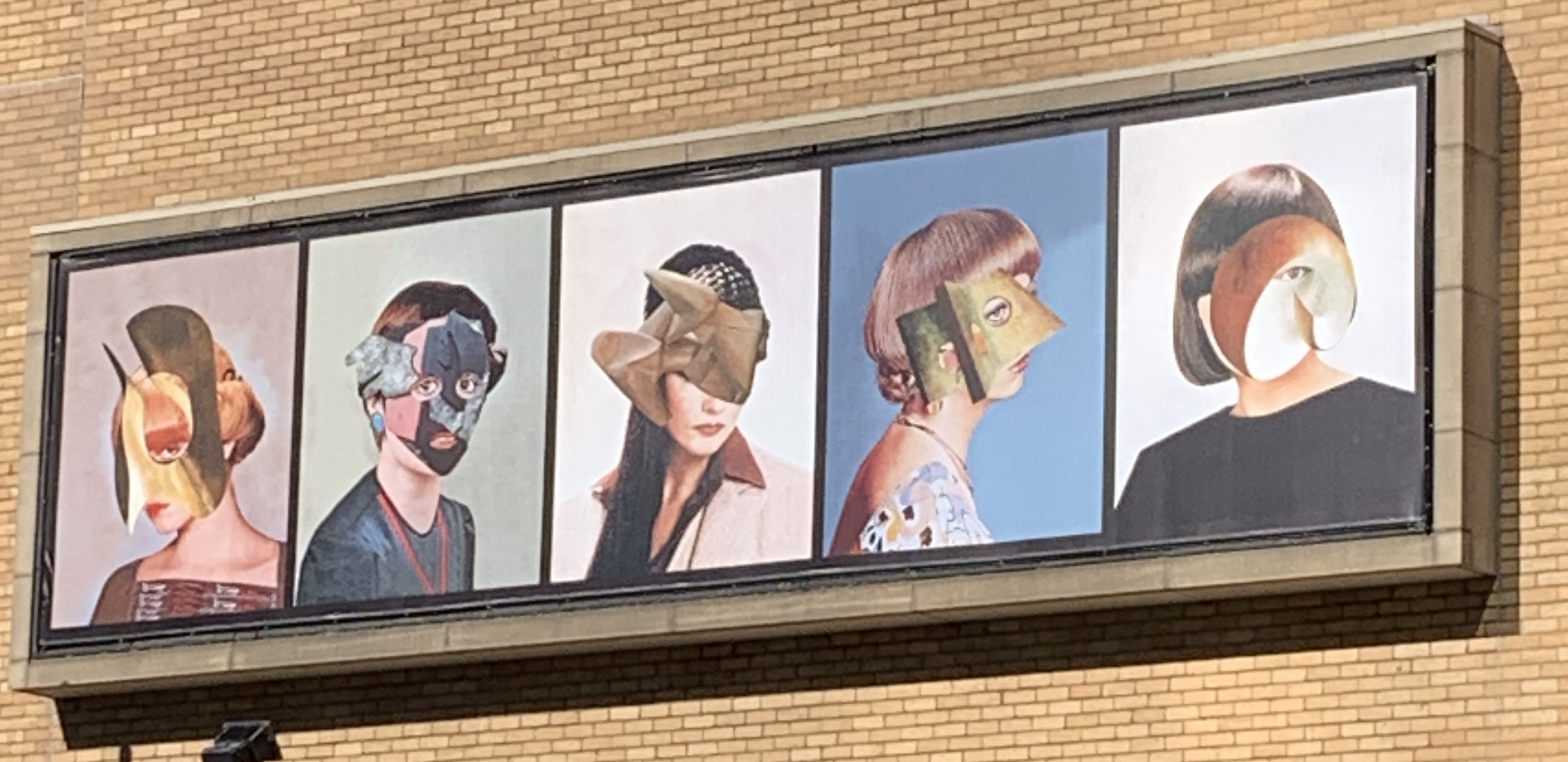
Collage mural, Hero Apartments, Russell Street

Hero Apartments – this former telephone exchange displays unique work on its western-facing wall, usually photographic in nature.

80 Collins Street – the revamped office block has recently undergone a major makeover, including an enormous digital screen in its ground floor lobby, for displaying newly-commissioned works.

Digital mural, 80 Collins Street

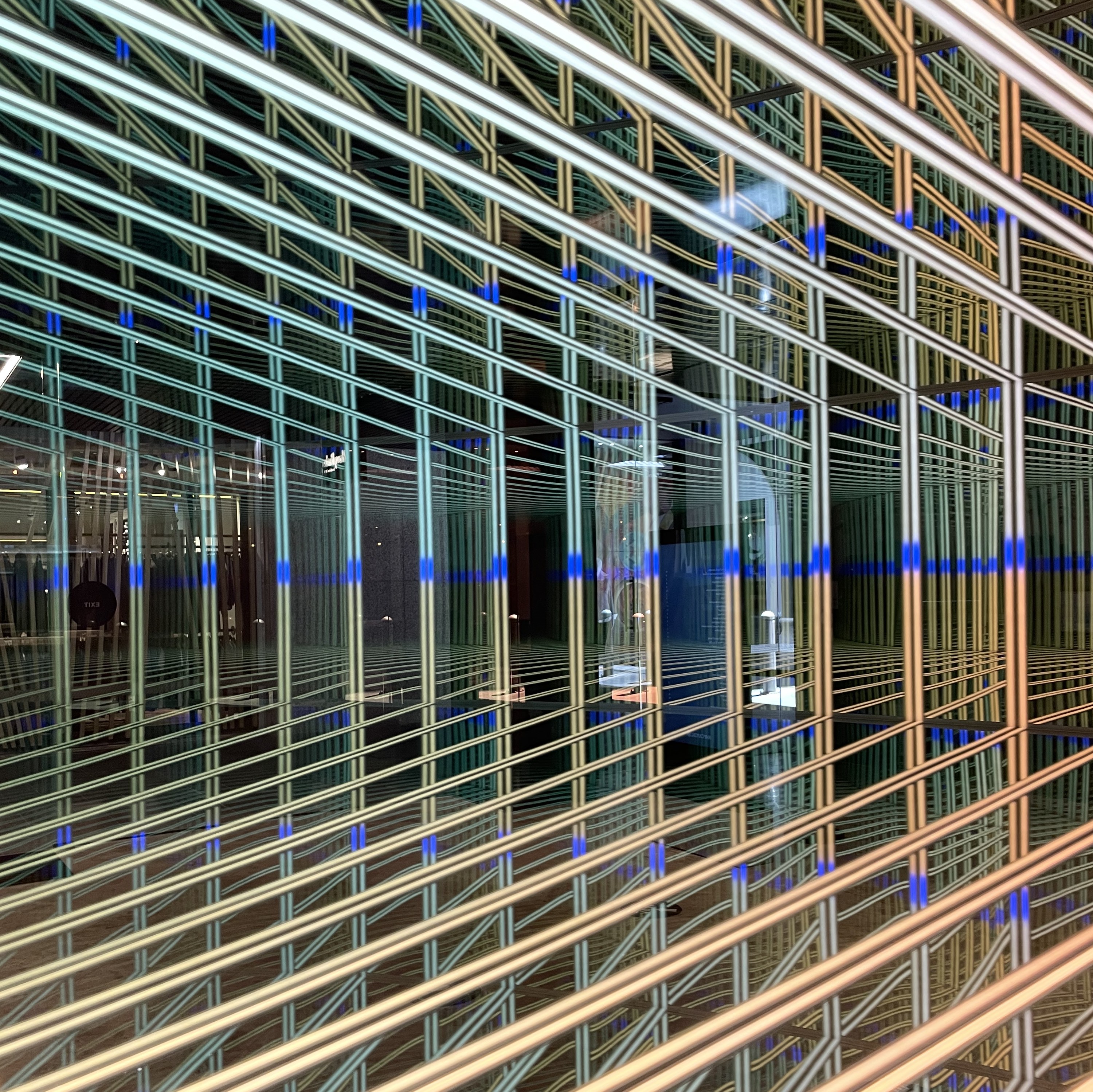
330 Collins Street – the lobby to this otherwise anonymous office building now features a striking piece of op art, in the form of a dual light box and mirror construction.

Lobby Op Art, 330 Collins Street

Grand Hyatt Hotel – as part of its major revamp more than a decade ago, the hotel installed some huge Bruce Armstrong bird sculptures to guard the main entrance.

Docklands – facing the waterfront opposite Marvel Stadium is John Kelly’s quirky “Cow Up A Tree” (which says what it is).

Yarra River – from Birrarung Marr to Webb Bridge (itself a great example of functional public art) there are a sequence of sculptures and installations, including further works by Bruce Armstrong.

Southbank Arts Precinct – not surprising given its function, this area houses numerous sculptural works, permanent installations architectural features, such as Ron Robertson-Swann’s “Vault” outside ACCA.

Laneways Street Art – of course, Melbourne is (in)famous for its extensive “collection” of graffiti and spray-paint murals, although works attributed to Banksy have either been vandalised, stolen or simply painted over.

Next week: Cancel or Recalibrate?

Transition – post-pandemic career moves

Even before the latest lock-down v3.0 in Melbourne, one of the other members of my co-working space in the CBD decided they’d already had enough of being confined to a 5km radius, working from home, and other lock-down related restrictions. Having had their interstate travel curtailed over the past 12 months, and suffering from cabin fever, they have opted to spend the next few months living in and working from various Airbnb locations around regional Victoria. Even though they are used to WFH, recent experience has shown that they don’t need to be confined to one place. And this post-COVID shift in our work/life patterns (already being disrupted and enabled by remote working) is only increasing.

Likewise, a client I spoke to in the USA last week informed me that they had just settled into a new location on the west coast, and was “living the dream” of a nomadic existence.

More extreme is the recent example of a Guardian employee who, having had to travel from Sydney to the UK for a family funeral last year, then took several months to get back home (due to flight cancellations), but managed to keep working remotely from various European locations as he moved around to stay ahead of border closures.

Prior to this past weekend, and despite the city being out of Stage 4 lock-down for 3 months, private offices in Melbourne’s CBD have only been allowed to operate at 50% of capacity – the proposed move to 75% capacity has been put back. It means, for example, that even on a really good day, my local coffee shop is still only doing 60% of its pre-COVID business.

It’s my guess that the combination of office restrictions and many retail and hospitality businesses simply not bothering to re-open at all means the CBD is barely operating at 40-50%. It’s deceptive – some activities (e.g., construction) have continued pretty much unabated (even expanding while there is less traffic on the roads); while others have been shut down altogether (e.g., entertainment). Certainly food delivery services are still in demand, while some retail has been doing a bit better as customers appreciate the novelty of shopping in-person.

Monday to Friday in the CBD is like a bell-curve distribution – Mondays and Fridays are much quieter, as people choose to WFH part of the week. Which is challenging for employers, as they try to revert to “normal”. But assuming a mix of remote and on-site working continues, it probably means less overall demand for office space. (It’s also difficult to assess the impact of the CBD exodus on suburban hubs.)

So all that construction work suggests we will have an over-supply of commercial premises (offices, shops, restaurants and hotels).

Residential property is a similar story – student accommodation is far from full, as overseas students aren’t returning; and more inner-city apartment buildings are still going up, but there is something of an exodus from the city to regional and rural locations.

The latter tree- and sea-changes are being fueled by a number of factors: a desire to leave the city (which is more prone to lock-downs); low interest rates (so, cash out the equity in your suburban home and move to the country where your money buys you more); increased opportunity to WFH (see, 5G and the NBN have their benefits!); and a broader wish for a different work/life balance.

Unfortunately, this shift is also putting pressure on local housing supply – average property prices are going up faster in some regional centres than in the capital cities; and more nomadic lifestyles are driving up demand for short-stay accommodation. The combined effect is higher rental costs and reduced supply, tending to squeeze out the locals.

Ironically, we’ve heard farmers and primary producers in rural and regional Australia complain that they can’t get seasonal workers due to COVID restrictions on international visitors (especially students, back-packers and experienced fruit pickers). Conversely, we’re told that 90% of jobs lost after March last year have now been recovered – although this apparent rebound is mainly in part-time roles, not full-time positions. It would be interesting to see a detailed breakdown by industry, as some sectors (tourism, aviation, universities) are still struggling.

The hiatus (and disruption) brought about by COVID and subsequent lock-downs has no doubt prompted many people to reassess their careers: where do I want to live/work? what type of work do I want to do? which industries or companies are hiring? and for what roles? As part of a wider re- and up-skilling initiative, the Federal and State governments are offering a range of free vocational courses (mostly Cert I to IV programmes), as well as some enhanced “pathways” to trade apprenticeships.

While this is to be applauded, I can’t help feeling the effort is at least 5-10 years too late to address the technological, demographic and societal changes that began at the end of the last century, with the advent of the internet, cheaper technology, an ageing population, increased globalisation, inefficient taxation and tariff systems, and general economic restructuring. If nothing else, COVID has demonstrated the need for more resilience in the domestic economy, (and a reduced reliance on overseas imports and supply chains) such as smart manufacturing and food security.

Meanwhile, a friend of mine recently related that a nephew of his had dropped out of college (like many of his peers in the USA and elsewhere) and decided to become a self-taught expert in DeFi, as there is more chance of financial success (and career satisfaction) than obtaining an “off the shelf” bachelor degree….

Next week: Corporate Art