The Maker Culture

London’s newly re-opened Design Museum welcomes visitors with a bold defining statement of intent. According to the curators, there are only designers, makers and users. To me, this speaks volumes about how the “makers” are now at the forefront of economic activity, and how they are challenging key post-industrial notions of mass-production, mass-consumption and even mass-employment. Above all, as users, we are becoming far more engaged with why, how and where something is designed, made and distributed. And as consumers we are being encouraged to think about and take some responsibility for our choices in terms of environmental impact and sustainability.
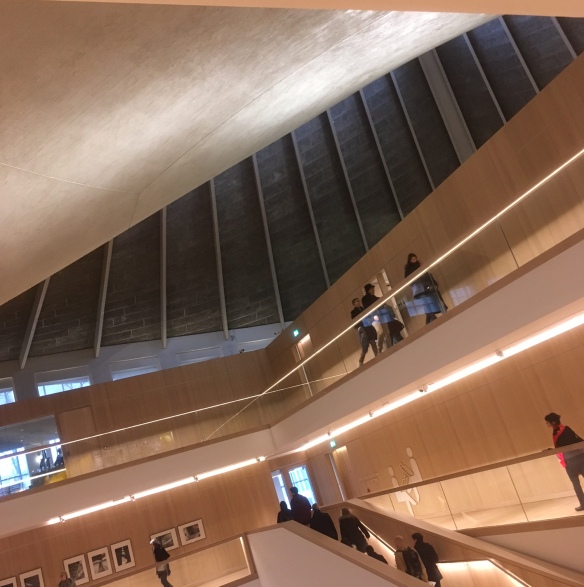
Design Museum, London (Photo: Rory Manchee)

Design Museum, London (Photo: Rory Manchee)

There are several social, economic, technological and environmental movements that have helped to define “maker culture”, so there isn’t really a single, neat theory sitting behind it all. Here is a (highly selective) list of the key elements that have directly or indirectly contributed to this trend:

Hacking – this is not about cracking network security systems, but about learning how to make fixes when things that don’t work the way that we want them to, or for creating new solutions to existing problems – see also “life hacks”, hackathons or something like BBC’s Big Life Fix. Sort of “necessity is the mother of invention”.

Open source – providing easier access to coding tools, software programs, computing components and data sources has helped to reduce setup costs for new businesses and tech startups, and deconstructed/demystified traditional development processes. Encompasses everything from Linux to Arduino; from Github to public APIs; from AI bots to widget libraries; from Touch Board to F.A.T. Lab; from SaaS to small-scale 3-D printers.

Getting Sh*t Done – from the Fitzroy Academy, to Andrea de Chirico’s SUPERLOCAL projects, maker culture can be characterised by those who want: to make things happen; to make a difference; to create (social) impact; to get their hands dirty; to connect with the materials, people, communities and cultures they work with; to disrupt the status quo; to embrace DIY solutions; to learn by doing.

The Etsy Effect – just part of the response to a widespread consumer demand for personalised, customised, hand-made, individual, artisan, crafted, unique and bespoke products. In turn, platforms like the Etsy and Craftsy market places have sparked a whole raft of self-help video guides and online tutorials, where people can not only learn new skills to make things, they can also learn how to patch, repair, re-use, recycle and re-purpose. Also loosely linked to the recent publishing phenomena for new magazines that combine lifestyle, new age culture, philosophy, sustainability, mindfulness, and entrepreneurism with a social conscience.

Startups, Meetups and Co-working Spaces – if the data is to be believed, more and more people want to start their own ventures rather than find employment with an existing organisation. (Under the gig economy, around 40% of the workforce will be self-employed, freelance or contractors within 5 years, so naturally people are having to consider their employment options more carefully.) While starting your own business is not for everyone, the expanding ecosystem of meetups and co-working spaces is enabling would-be entrepreneurs to experiment and explore what’s possible, and to network with like-minded people.

Maker Spaces – also known as fabrication labs (“FabLabs”), they offer direct access to tools and equipment, mostly for things like 3-D printing, laser-cutting and circuit-board assembly, but some commercial facilities have the capacity to support new product prototyping, test manufacturing processes or short-run production lines. (I see this  interface between “cottage industry” digital studios and full-blown production plants as being critical to the development of high-end, niche and specialist engineering and manufacturing services to replace the declining, traditional manufacturing sectors.) Some of the activity is formed around local communities of independent makers, some offer shared workshop spaces and resources. Elsewhere, they are also run as innovation hubs and learning labs.

Analogue Warmth – I’ve written before about my appreciation for all things analogue, and the increased sales of vinyl records and even music cassettes demonstrate that among audiophiles, digital is not always better, that there is something to be said for the tangible format. This preference for analogue, combined with a love of tactile objects and a spirit of DIY has probably reached its apotheosis (in photography at least) through Kelli Anderson’s “This Book Is A Camera”.

Finally, a positive knock-on effect of maker culture is the growing number of educational resources for learning coding, computing, maths and robotics: Raspberry PI, Kano and Tech Will Save Us; KidsLogic, Creative Coding HK and Machinam; Robogals, Techcamp and robokids. We can all understand the importance of learning these skills as part of a well-rounded education, because as Mark Pascall, founder of 3months.com, recently commented:

“I’m not going to advise my kids to embark on careers that have long expensive training programs (e.g. doctors/lawyer etc). AI is already starting to give better results.”

Better to learn how things work, how to design and make them, how to repair them etc., so that we have core skills that can adapt as technology changes.

Next week: Life Lessons from the Techstars founders

 

What might we expect in 2017?

On a number of measures, 2016 was a watershed year. Unexpected election results, fractious geopolitics, numerous celebrity deaths, too many lacklustre blockbuster films, spectacular sporting upsets (and regular doping scandals), and sales of vinyl records are outpacing revenue from digital downloads and streaming services. What might we expect from 2017?

Detail from "The Passing Winter" by Yayoi Kusama (Photo by Rory Manchee)

Detail from “The Passing Winter” by Yayoi Kusama [Photo by Rory Manchee]

Rather than using a crystal ball to make specific predictions or forecasts, here are some of the key themes that I think will feature in 2017:

First, the nature of public discourse will come under increased scrutiny. In the era of “post-truth”, fake news and searing/scathing social commentary, the need for an objective, fact-based and balanced media will be paramount. In addition, the role of op-ed pieces to reflect our enlightened liberal traditions and the need for public forums to represent our pluralist society will be critical to maintaining a sense of fairness, openness, and just plain decency in public dialogue.

Second, a recurring topic of public conversation among economists, politicians, sociologists, HR managers, career advisors, bureaucrats, union leaders, technologists, educators and social commentators will be the future of work. From the impact of automation on jobs, to the notion of a universal basic income; from the growth of the gig economy, to finding purpose through the work we do. How we find, engage with and navigate lifelong employment is now as important as, say, choosing high school electives, making specific career choices or updating professional qualifications.

Third, the ongoing focus on digital technology will revolve around the following:

  • The Internet of Things – based on a current exhibit at London’s Design Museum, the main use cases for IoT will continue to be wearable devices (especially for personal health monitoring), agriculture, transport and household connectivity
  • Fintech – if a primary role of the internet has been for content dissemination, search and discovery, then the deployment of Blockchain solutions, the growth in crypto-currencies, the use of P2P platforms and the evolution of robo-advice are giving rise to the Internet of Money
  • Artificial Intelligence – we are seeing a broader range of AI applications, particularly around robotics, predictive analytics and sensory/environmental monitoring. The next phase of AI will learn to anticipate (and in some cases moderate) human behaviour, and provide more efficacious decision-making and support mechanisms for resource planning and management.
  • Virtual Reality/Augmented Reality – despite being increasingly visible in industries like gaming, industrial design, architecture and even tourism, it can feel like VR/AR is still looking for some dedicated use cases. One sector that is expected to benefit from these emerging technologies is education, so I would expect to see some interesting solutions for interactive learning, curriculum delivery and student assessment.

Fourth, and somewhat at odds with the above, the current enthusiasm for the maker culture is also leading to a growing interest in products that represent craft, artisan and hand-made fabrication techniques and traditions. Custom-made, bespoke, personalized and unique goods are in vogue – perhaps as a reaction to the “perfection” of digital replication and mass-production?

Fifth, with the importance of startups in driving innovation and providing sources of new economic growth, equity crowdfunding will certainly need to come of age. Thus far, this method of fund-raising has been more suited (and in many cases, is legally restricted) to physical products, entertainment assets, and creative projects. The delicate balance between retail investor protection and entrepreneurial access to funding means that this method of startup funding is constrained (by volume, amounts and investor participation), and contrary to stated intentions, can involve disproportionate set up costs and administration. But its time will come.

Finally, as shareholder activism and triple bottom line reporting become more prevalent (combined with greater regulatory and compliance obligations), I can see that corporate governance principles are increasingly placing company directors in the role of quasi-custodians of a company’s assets and quasi-trustees of stakeholder interests. It feels like boards are now expected to be the conscience of the company – something that will require directors to have greater regard to the impact of their decisions, not just whether those decisions are permitted, correct or good.

One thing I can predict for 2017, is that Content in Context will continue to comment on these topics, and explore their implications, especially as I encounter them through the projects I work on and the clients I consult to.

Next week: The FF17 Semi Finals in Melbourne

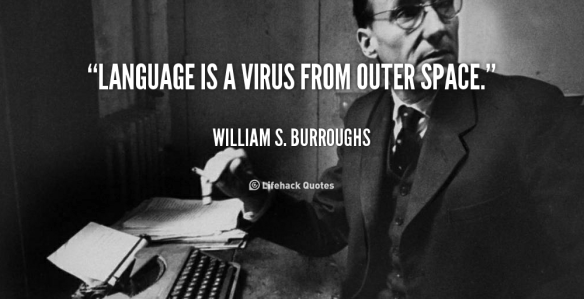
“Language is a virus” – a look at coding skills

We are fast-approaching the point when a lack of some basic coding skills will be likened to being illiterate. If you are unable to modify a web page or use an HTML text editor, it will be like not knowing how to create a Word document or edit a PDF file. Coding does appear on some school curricula, but it is primarily taught in the context of maths, computer programming or IT skills. Whereas, if we look at coding as a language capability (part of a new literacy), it should be seen as an essential communication tool in itself.

quote-William-S.-Burroughs-language-is-a-virus-from-outer-space-92713First, I am aware that a number of programs for children are trying to teach coding and maths in more relevant ways, and having talked to some of their creators, I admire their ambition to place these skills in a broader context. Coding might be described as the “4th R”: alongside reading, writing, arithmetic we have reasoning”. So a program like Creative Coding HK (as it name implies) focuses on students making things; in the USA, KidsLogic is placing as much emphasis on contextual learning as on robotics; while Australia’s Machinam is re-writing the maths curriculum to teach practical, everyday problem-solving skills.

Second, as we know, learning the foundations of coding is like learning the syntax of a foreign language. However, while Latin and Greek can provide the basis for learning the structure (and many words) of many European languages, it’s not much use when learning character-based languages (Chinese, Japanese) – although there are common grammatical elements. But if we understand that a line of any code has to be structured a certain way, contain essential elements, define key attributes and run in a particular sequence or order, we may come to “read” and interpret what the code is saying or doing.

As an aside, I’m struck by the comments made by the founder of AssignmentHero during a recent pitch night. Although he had studied computer sciences at Uni, he did not use any of the formal computing languages he had learned when building his product. This highlights the downside of learning specific languages, which can become obsolete, unless we have a better grasp of “which languages for which purposes”, or find ways to easily “interpolate” components of one language into another (just as languages themselves borrow from each other). Or do we need an Esperanto for coding?

Third, even if I don’t want or need to learn how to program a computer or configure an operating system, knowing how to define and sequence a set of instructions for running some software or a dedicated program will be essential as more devices become connected in the Internet of Things. For myself, I have dabbled with a simple bluetooth enabled robot (with the original Sphero), acquired a WiFi-enabled light bulb (the programmable LIFX) and experimented with an iOS music app that incorporates wearables (the MIDI-powered Auug motion synth).

Finally, just like a virus, coding is contagious – but in a good way. At a recent event on Code in the Cinema (hosted by General Assembly as part of the Melbourne International Film Festival), there were three demos which captured my attention, and which I will be investigating over the coming months:

I think they show why, where and how many of us “non-computing” types will want to learn the benefits of coding as a new language skill. If nothing else, getting comfortable with coding will help mitigate some of the risks of the “digital divide”.

Next week: The arts for art’s sake….

Re-Imagining Human-led #Innovation

Following my previous blog on Innovation, I recently participated in an on-line forum on the Future of Innovation, hosted by Re-Imagi, and facilitated by Jesper Christiansen from NESTA, a UK-based think-tank. You can read about it here, including the infographic output of the discussion. As a result of working with my fellow Re-Imagineers, I developed some ideas on what I call the “Innovation Dichotomy”, which I shared last week at an Re-Imagi event on the Future of Financial Services, hosted at NAB Village in Melbourne.

Screen Shot 2016-08-07 at 3.03.52 PMThe Innovation Dichotomy revolves around an over-emphasis on technology, as illustrated by the following:

  1. Innovation is heavily tech-led, but design thinking is very much human centred and is all about mapping people’s’ needs;
  2. Innovation is often based on digital disruption, and is mostly about devaluing existing processes, de-layering management levels, and increased automation; and yet human skills (cognition, empathy, client-facing, service delivery) are going to be in increasing demand;
  3. Innovation usually happens in tech-labs and silos (external and internal), but it will be people (employees, customers, stakeholders) who actually implement the changes – so there has to engagement through alignment of values and purpose.

And as one of our participants at NAB Village commented, if the organisational culture and communications are not right, any innovation-led change will be destined to fail.

Finally, Re-Imagi will be in Sydney this week, so get in touch if you’d like to find out more: rory@re-imagi.co

Next week: The Day of the Mavericks – the importance of intrapreneurship