Cancel or Recalibrate?

In the wake (sic) of wokeness and cancel culture, it was interesting to read that Disney has decided to add a health warning of “negative depictions of cultures” to re-runs of the Muppet Show. So rather than cancel these programmes, it has chosen to (re-)contextualise the content for a contemporary audience.

I don’t have a problem with this type of labelling, or indeed on any other content, if it helps to aid understanding, generate debate, and acknowledge past lapses of taste or judgement. Especially as programmes like the Muppet Show were huge in the heyday of mass-market network television, before cable and streaming fragmented audiences into pre-defined sub-genres and segregated demographics.

Indeed, I’ve grown used to similar health warnings attached to re-runs of many BBC radio dramas, from the 1950s through to the 1980s, when “social attitudes were somewhat different to today”.

But, if we continue along those lines, should we be applying similar health warnings to Shakespeare’s plays, Greek tragedies, French farces, Norse legends, European folklore as told by the Brothers Grimm, or Roman accounts of gladiatorial victories over their hapless victims?

In which case, I look forward to the same contextualisation (and health warnings) of any programmes that quote, cite, promote or reference key religious texts, most of which were written hundreds and thousands of years ago, yet which similarly offend our current values and societal norms.

Next week – Facebook and that news ban

From Brussels With Love (Revisited)

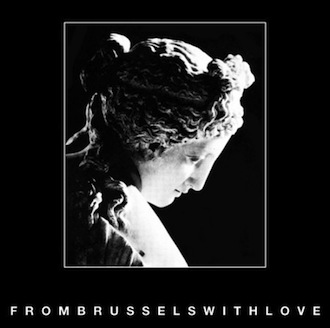
40 years ago this month, an obscure record label in Belgium released a cassette-only compilation album, which became a reference point for many post-punk projects. “From Brussels With Love”, originally put out by Les Disques du Crepuscule, has just been re-issued, so during the recent lock-down, I thought I would exhume my original copy and remind myself of why this was such a landmark album, and why its influence continues to this day.

To add some context, Sony had launched the Walkman cassette player in 1979, the first truly portable device for pre-recorded music. This led to a renewed interest in the cassette format among independent artists and labels, as it was also a cheaper means of manufacture and distribution than vinyl records (and long before CDs, mp3 and streaming services). And in the wake of the DIY aesthetic promoted by punk, some new music was being released on cassette only, such as Bow Wow Wow’s “Your Cassette Pet” and BEF’s “Music for Stowaways” (the title referencing an early model of the Sony Walkman). Some of these cassette-only releases (especially by independent, lo-fi, DIY electronic artists such as Inertia) are now highly collectable.

What made “From Brussels With Love” so significant was not just the format. It was not even alone in combining music with interviews and fully illustrated booklets. Fast Forward in Melbourne also launched their first audio-magazine in November 1980, and other similar projects followed such as Edinburgh’s “Irrationale”, Manchester’s “Northern Lights”, and London’s “Touch” label which began life releasing a series of curated audio gazettes, including both spoken-word and musical contributions.

The importance of “From Brussels With Love” was the cross-section of artists it managed to bring together: mercurial musicians such as Bill Nelson, John Foxx and Vini Reilly; side projects from members of established post-punk bands from the UK (Wire, Joy Division/New Order, the Skids and Spizzenergi); a cluster of emerging European bands (Der Plan, The Names and Radio Romance); and several leading names in modern classical and ambient music (Harold Budd, Michael Nyman, Gavin Bryars, Phil Niblock, Brian Eno and Wim Mertens). Oh, and an interview with actor Jeanne Moreau.

This eclectic mix of contemporary artists (and this deliberate approach to curation) was no doubt highly influential on subsequent projects such as the NME/Rough Trade “C81” or Rorschach Testing’s “Discreet Campaigns” – these were not compilations reflecting a single musical style or even the usual label sampler, nor were they simply collections of what was new or current. Instead, they reveal an aesthetic attitude (curiosity combined with open-mindedness mixed with a high level of quality control and a hint of audience challenge) that is harder to find today. Now we have “recommender engines” and narrow-casting streaming services that would struggle to compile similarly diverse outcomes. And more’s the pity.

I know there are a number of on-line platforms and print publications that try to bring a similar approach to their curation, but for various reasons, and despite their best intentions, they generally suffer from being cliquey, self-referencing/self-identifying, and all driven by a need to capture eyeballs to attract advertising, so they quickly lose any claim to independence or even originality. Which is a shame because there is so much great music out there that we don’t get to hear, simply because it is not mainstream, or it doesn’t conform to a particular style, or it doesn’t meet “playlist criteria”, or it doesn’t have enough marketing dollars behind it.

Next week: Is the Party over?

Who fact-checks the fact-checkers?

The recent stoush between POTUS and Twitter on fact-checking and his alleged use of violent invective has rekindled the debate on whether, and how, social media should be regulated. It’s a potential quagmire (especially the issue of free speech), but it also comes at a time when here in Australia, social media is fighting twin legal battles – on defamation and fees for news content.

First, the issue of fact-checking on social media. Public commentary was divided – some argued that fact-checking is a form of censorship, and others posed the question “Quis custodiet ipsos custodes?” (who fact-checks the fact-checkers?) Others suggested that fact-checking in this context was a form of public service to ensure that political debate is well-informed, obvious errors are corrected, and that blatant lies (untruths, falsehoods, fibs, deceptions, mis-statements, alternative facts….) are called out for what they are. Notably, in this case, the “fact” was not edited, but flagged as a warning to the audience. (In case anyone hadn’t noticed (or remembered), earlier this year Facebook announced that it would engage Reuters to provide certain fact-check services.) Given the current level of discourse in the political arena, traditional and social media, and the court of public opinion, I’m often reminded of an article I read many years ago in the China Daily, which said something to the effect that “it is important to separate the truth from the facts”.

Second, the NSW Court of Appeal recently ruled that media companies can be held responsible for defamatory comments posted under stories they publish on social media. While this specific ruling did not render Facebook liable for the defamatory posts (although like other content platforms, social media is subject to general defamation laws), it was clear that the media organisations are deemed to be “publishing” content on their social media pages. And even though they have no way of controlling or moderating the Facebook comments before they are made public, for these purposes, their Facebook pages are no different to their own websites.

Third, the Australian Government is going to force companies like Facebook and Google to pay for news content via revenue share from ad sales. The Federal Treasurer was quoted as saying, “It is only fair that the search ­engines and social media giants pay for the original news content that they use to drive traffic to their sites.” If Australia succeeds, this may set an uncomfortable precedent in other jurisdictions.

For me, much of the above debate goes to the heart of how to treat social media platforms – are they like traditional newspapers and broadcast media? are they like non-fiction publishers? are they communications services (like telcos)? are they documents of record? The topic is not new – remember when Mark Zuckerberg declared that he wanted Facebook to be the “world’s newspaper”? Be careful what you wish for…

Next week: Fact v Fiction in Public Discourse

The Current State of Popular Music

Over the holidays, during a family get-together, two younger relatives mentioned what their favourite pop song was. I did not know the song by title or artist, and until very recently I actually I thought it was an advertising jingle. I now understand that the combination of the song’s novelty factor and its ubiquitous appearance had helped to make it very popular. I can see why it may appeal to kids – but I doubt it will become an evergreen classic….
The song they mentioned incorporates a number of musical tropes very prevalent in many current pop songs, especially as regards the vocal styling and lyrical phrasing. But like much of the music being produced these days, it will likely be forgotten within a couple of years at most. The inherent “novelty” of the vocal could render the song a one-hit wonder, and the artist a one-trick pony.

I have nothing wrong with pop music per se, but if “we are what we eat”, surely we can become what we listen to. An unending and unvarying diet of mainstream pop music (as defined by commercial radio playlists, as measured by self-serving charts compiled by streaming services, and as financed by major record label marketing budgets and promotional tie-ins) is the equivalent of eating nothing but fast food and processed snacks.

So, at the risk of being labelled a grumpy old man, here is a list of things that are mostly wrong with contemporary pop music:

1. Vocals that feature one (or more) of the following:

  • the sound of cutesy chipmunks on helium
  • forced falsettos, cracked breathlessness and over-emoting warbling
  • singing from the back of the throat (as if constipated)
  • singing through the nose (as if congested)
  • whining, strained upper registers  (as made infamous by a certain tantric pop star)
  • auto-tune effects (especially those in search of a melody…)
  • shouting in place of projection
  • turning vowels into consonants, and consonants into vowels
  • adding syllables that don’t exist, and leaving out ones that do
  • over-stressed sibilants

2. Lyrical phrasing, scansion and rhyming schemes courtesy of Dr. Seuss,

3. Slogans, nursery rhymes and shouty phrases in place of lyrics

4. Drum and percussion tracks either programmed by ADHD, or inflicted with St. Vitus’s Dance

5. Boring, boxy and plodding 4/4 rhythms, with no syncopation or variation

6. Same set of production techniques and sound effects as used by every other producer or DJ

7. Samples based on the nastiest ringtones available (or programmed on the cheapest synths around)

8. Never mind a lack of key changes, or an absence of chord progressions, songs that revel in one-note vocal lines

9. An absence of interesting melodic or harmonic structures

10. Sound compressed into the smallest available bandwidth so it is easier to stream, but which ends up sounding flat and claustrophobic, and with exactly the same sound dynamics as every other song

11. No space to let the music breathe – every available beat and bar has to be filled up, especially with vocalese stylings

12. Too many cooks – songs by “X feat. Y with Z” are usually contrived concoctions dreamed up by the record company (“hey, we can flog this song to fans of all three of them!”) that end up as filler tracks on their respective solo albums

13. Kitchen sink productions (as in everything BUT the…) – you can almost imagine the producer in the studio shouting, “cue flamenco guitar, cue rapping, cue 80’s sample, cue metronomic rimshot, cue call and response vocals, cue detuned kick drum….!”

Part of the problem is that with the cheaper costs of recording, and the wider access to the means of production, anyone can make music, and release it direct to the public online. Meaning there is just so much more new music to listen to. However, the major record labels and their media partners still control most of the marketing budgets and distribution costs, that largely decide the songs we tend to hear, and that ultimately determine which songs become “hits”. By default, this process prescribes much of what is deemed “popular taste”. With the increased use of algorithms and other techniques, artists, producers, labels and media platforms can increasingly predict what songs will be successful, in a self-fulfilling prophesy of what will “sell”. it’s like punk never happened….

Next week: Sola.io – changing the way renewable energy is financed