Same, same – but different?

At the time of writing, Melbourne and the rest of Victoria are waiting to know when (if?) the current lock-down will be lifted.

Just to recap: Melbourne is presently in its sixth shut down since March of last year, and the fourth so far of 2021. All combined, Melbourne has now clocked up more than 200 days under lock-down. The present measures were introduced on August 5, originally scheduled to last one week, and came barely a week after the previous lock-down ended. Lock-down #6 was soon extended by another week, and then by another two weeks, and will now extend beyond September 2. This is not counting the “stay at home” directive that was in place for most of 2020, along with the various limits and restrictions on social interaction, workplace capacity, public gatherings, hospitality, events, sport, gyms, retail, schools, funerals and weddings. We also have a night-time curfew for good measure.

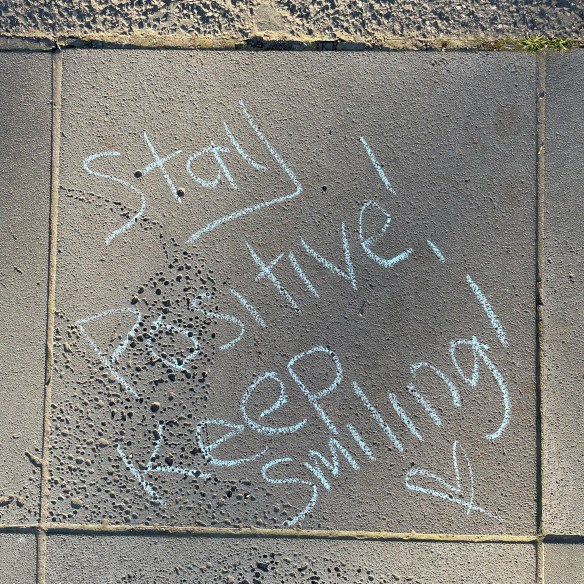
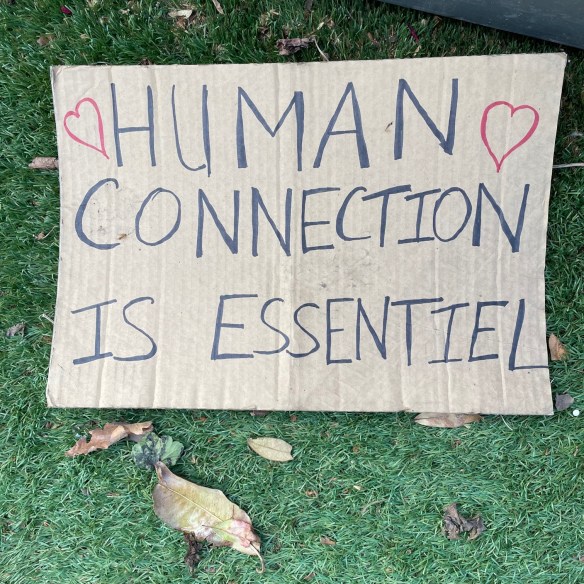
The following two pictures convey similar human sentiments, but they also represent very different responses to the situation we are living under. One is an example of the numerous messages of hope and encouragement that I see around my neighbourhood on my statutory daily walks. The other is a discarded placard seen a few days after an anti-lock-down protest.

The first reflects a “let’s grin and bear it” attitude – nobody likes being in lock-down, but we are all in this together, and if we can just remain positive, we will come through it OK.
The second is more reactive, and emotionally charged – the enforced isolation brought on by the lock-down is having an enormous effect on peoples’ mental health.
It’s hard to argue with either message….

I thought I would be able to cope better with each successive lock-down. Building a daily routine, maintaining some physical discipline (courtesy of the permitted daily exercise), managing at least 2-3 AFDs per week, treating myself to a nice restaurant-prepared meal now and then, catching up on films that I didn’t get to see at the cinema. But despite the recurring groundhog scenario, this lock-down seems different, and much harder to manage mentally.

First, the uncertainty of when it will end creates a sense of dread that we could be like this for 100 days or more (like lock-down #2). Second, the daily drip feed of data and the endless press conferences only reinforce the sense that we are not being given the full picture. Third, the sense of helplessness that for all our individual sacrifices of the past 18 months, we don’t seem to be any further ahead (if anything, we have gone backwards on so many counts). Fourth, State politicians seem to view this public health scare as a war of attrition between themselves and the voters (and their interstate and Federal counterparts). Gone is any sense that we are all in this together.

Quite apart from the cracks in Federation that the pandemic and its response has exposed, entire sections of the community are being driven apart and/or pitted against one another. Despite the so-called “National Plan” that the Commonwealth, State and Territory governments have all signed-up for, it’s clear that individual Premiers each reserve the right to interpret it differently, and will continue to impose internal border closures if they see fit. So, while Victoria and New South Wales seem aligned on this National Plan, Western Australia and Queensland in particular are more circumspect. Then there is the “race” to vaccinate their respective populations (or, as has been said a few times already, “our State citizens”, rather than “our Commonwealth citizens”).

At what point will the 70% and 80% vaccination levels be achieved to herald the promised social and economic freedoms? Is it the % of total population, or only the adult population, or only the eligible population, or only those between certain ages? Is it going to be calculated Federally, or at the State/Territory and/or LGA level? What about mandatory vaccinations for essential and front line workers, and those that have face-to-face dealings with the public? What about employers who require their staff to be fully vaccinated, but face resistance from unions?

Continued lock-down risks becoming a blunt instrument, and a tool of first (rather than last) resort. As such, it also risks alienating the majority of the population who are doing the right thing, in observing the public health directions and getting vaccinated (like, where’s the benefit?). And a prolonged lock-down risks undermining the efficacy of the vaccine, so we’ll need booster shots before we know it!

It seems that Covid19 is challenging our notions of the social contract between the government and the governed, and even testing the social license to operate we grant to big business (especially monopolies and cozy duopolies). The pandemic is also demonstrating the limits of individual responsibility and accountability, and potentially undermining the duty of care we owe to one another. If I knowingly, recklessly or carelessly (and as a result of breaching public health orders or OH&S measures) infect my family, my neighbour, my colleague or my customer, am I culpable? Does that mean I forfeit certain of my rights, especially if infection leads to death?

Just on the data, another reason the current lock-down seems different is because the information is being presented is not the same. Last year, everything was about the R0 number, flattening the curve, and “double-donut days”. There was also confusion over agreed terminology for “clusters”, “unknown cases”, “hot spots”, “red zones”, “complex cases” and “linked cases”. Politicians and bureaucrats talked about “settings”, “circuit breakers”, and “gold standards” for contact tracing. This year, it’s all about the “number of days infected”, “chains of transmission”, “mystery cases”, as well as the number of tests and vaccinations – much less analysis, it seems, on the number of confirmed cases per 1,000 tests or per 1,000 of the population, recovery rates or deaths as a percentage of cases.

From what I can glean, the stubborn levels of “mystery” cases can only be explained by the following:

  • more asymptomatic cases (are people building natural immunity?);
  • legacy cases shedding (a result of long Covid?);
  • longer incubation (and reporting) periods (less obvious initial symptoms?);
  • novel forms of transmission (or the virus is lingering longer on outdoor surfaces?);
  • QR codes and contact tracing not working (or the data is not usable?);
  • confusion over domestic/social/workplace/health/retail settings (e.g., extended families and multi-generational households?);
  • people being unclear about their movements (for fear of being victimised?).

Finally, I’m also not sure if lessons are being learned from elsewhere. We are still applying 14 day quarantine/isolation periods (albeit now with a day 17 test), yet in Hong Kong, for example, quarantine was extended to 21 days some time ago.

Next week: To be or NFT?
 

More Music for Lock-down

Last year, as Melbourne was entering its second, lengthy lock-down, I listed some of the music that helped to sustain me during the endless days of working from home. Now, as the city faces another (twice-extended) 4 week lock-down, music is one of the few pleasures still available….

My updated list includes:

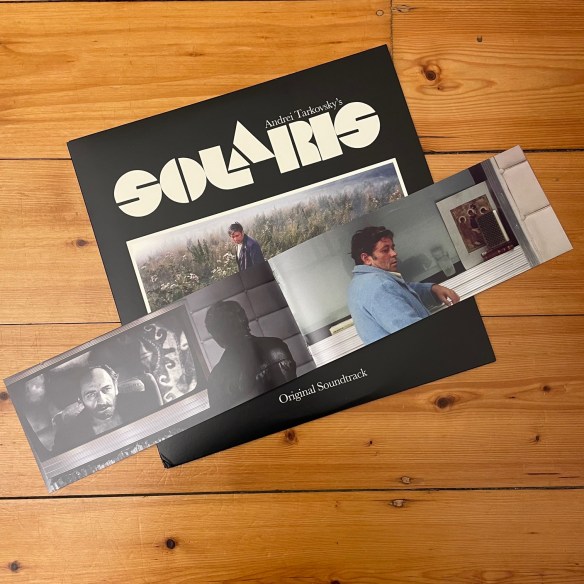
Eduard Artemiev – Solaris (Original Soundtrack) A science fiction film from 1972, and in the vein of JG Ballard or Brian Aldiss, it concerns the strange psychological illness that afflicts scientists on-board a space station orbiting the planet Solaris. The slightly claustrophobic electronic score is offset by a number of compositions by JS Bach. Note the early Zoom call and all-day PJs featured in the accompanying stills from the film.

Various Artists Pacific Breeze: Japanese City Pop, AOR & Boogie 1976-1986 Perfect antidote to lock-down blues, this compilation of mostly up-tempo numbers reveals more depth below the shiny surface – the arrangements, choice of textures and compositional structures make this more than just easy listening. (Released by the excellent Light in The Attic label, there’s also a second volume, plus related compilations that focus on the more ambient and experimental end of the spectrum.) Definitely a mood-enhancer.

Hans-Joachim Roedelius – Drauf Und Dran The prolific Roedelius has released one of the most sublime albums of his lengthy career – which is saying something for an artist closely associated with ambient and minimalist styles. A piano-based album, with very few electronics or effects, the clarity of composition and playing make for a brief but welcome respite from the mental fug of lock-down. In a similar vein, I would also recommend Brian Eno’s soundtrack to the Dieter Rams documentary, and Eno’s recent work with his brother, Roger, the albums Mixing Colours and Luminous.

Mogwai – ZeroZeroZero Another soundtrack, for the TV series of the same name (which I have not seen). Like the Solaris soundtrack, the music is more about the atmosphere than the narrative, and all the more powerful as a result. Also worth mentioning is Mogwai’s recent studio album.

Khruangbin = クルアンビン* ‎– 全てが君に微笑む Khruangbin are a band whose music I heard on a couple of sampler albums, without knowing anything about them. Playing an infectious blend of instrumental Funk, Psychedelia and Dub Reggae, this compilation brings together a number of their early singles (including inspired covers of Serge Gainsbourg and Yellow Magic Orchestra). Rather beautiful for these monochrome times.

Michel Legrand – La Piscine Yet more soundtracks, this deceptively lightweight but lush album, featuring just the right amount of economic violin solos by Stéphane Grappelli (who could let his virtuosity get the better of him), recently got a re-boot for Record Store Day, so it’s pretty hip at the moment. Other soundtrack and library music compilations I have been delving into include Adventures in Soundtracks, The Music Library and Unusual Sounds. Mostly reflecting the anonymous/unsung world of studio session composers and players of the 60s and 70s, most people would recognise at least one or two tunes, if only from their use as samples in other records.

Greg Davis – Somnia Finally, a work of stillness and contemplation – built on sustained drones and minimal instrumentation, this album nevertheless manages to generate immense depth and emotion. Again, perfect listening in this stilted yet listless environment of lock-down, curfew, social isolation and pent-up frustration and sorrow. (Also check out the Davis’ contemporaneous work, Diaphanous.)

Next week: Startupbootcamp Sports & EventTech Demo Day 2021

Goya – allegories and reportage for the modern age

Just prior to the latest COVID-related lock down in Melbourne, I managed to visit the exhibition of drawings and prints by Goya at the NGV. Although these works were produced 200 years ago, they are still relevant today.

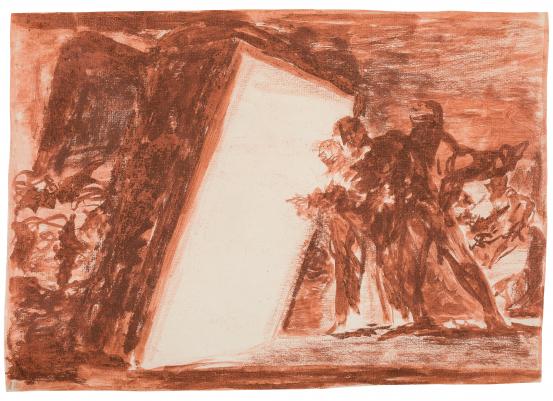
Goya: Two People Looking into a Luminous Room – Image sourced from NGV

Working at the time of the Enlightenment, and despite his status and reputation as a court painter, Goya still had to navigate the political oppression of both Spanish and French rulers, and the religious persecution in the form of the Inquisition.

His series of drawings and etchings reveal a very personal side to Goya’s work, combining allegory, satire, reportage, surrealism and the sub-conscience. The images provide a commentary on the horrors of war and its aftermath, while his domestic scenes on courtship, gold diggers and hapless suitors would not be out of place on Married at First Sight or The Bachelor… There’s a lot that’s familiar about these images.

The exhibition provide some insights into Goya’s working methods – from his use and development of preparatory drawings, to the different etching techniques he deployed to create the finished prints.

One drawing in particular caught my attention – a red crayon sketch entitled “Two People Looking into a Luminous Room”. It’s a remarkable image on a number of levels. The room of the title does not look like a typical building or structure. It almost resembles the bellows of a giant camera, except that photography had not yet been invented. Perhaps it refers to a type of camera obscura or similar device that Goya had seen? On the other hand, it could be a metaphor for Hell, a glimpse into the white heat of the Inferno. For me, it even suggests Goya’s prescience for the work of James Turrell. It’s a remarkable piece in an absorbing exhibition.

Next week: The Fall – always different, always the same

Startup Vic FinTech Pitch Night

The Australian tech sector, especially at the startup end of the industry, is having to grapple with what is fast becoming a major structural and operational challenge: how to hire, remunerate and retain staff. With closed international borders cutting off the supply of overseas students and graduates, and a lack of sufficient home-grown skills, it’s a problem that established businesses and startup ventures alike are having to address. Just last week, the AFR reported that some wages in the tech sector have gone up 30% in the past 12 months. Perhaps this issue was on the minds of the four founders who presented at the recent Startup Victoria FinTech Pitch Night.

The judges for this on-line event, sponsored by LaunchVic, were: Nicole Small, Investment Director at Rampersand; Kim Hansen, Co-founder and CEO of Cake Equity; Caitlin Zotti, Operations Manager at Pin Payments; and “the people’s judge,” Eike Zeller, Community Lead at Stone & Chalk Melbourne. Compered by Josh Sharma, Head of Labs & Startups at LUNA, the evening also featured a virtual fireside chat between Rebecca Schot-Guppy, CEO of FinTech Australia, Dom Pym, Co-Founder of Up, and Julia Bearzatto, Head of Technology for Financial Services at MYOB.

The four startups in order of presentation were (links in the names):

Elbaite

Claiming to be the “first non-custodial cryptocurrency exchange“, part of Elbaite’s mission is to prevent theft or misappropriation of crypto assets held in exchange wallets. What makes Elbaite different from other decentralized exchanges (DEXs) and peer-to-peer platforms is that they escrow the fiat involved in any transaction. While they may not be charging the fees of centralized exchanges (CEXs), they are charging a 1% on crypto purchases (although there is 0% commission on sales). Elbaite is hoping to target institutional clients who may not be as comfortable trading on “traditional” crypto exchanges – although in my experience, many institutional clients actually need third-party custody services as part of their governance and compliance obligations. The judges felt that this is a crowded space (there are more than 250 crypto exchanges globally, plus numerous fiat on/off ramps, brokers, OTC desks and P2P platforms).

Sequrr

Speaking of custody and escrow, who would have guessed that stolen house purchase deposits are such a major issue, unless the team at Sequrr had told us? Despite the use of Real Estate Trust Accounts within the industry, apparently there is not much to stop the account holders from walking off with the deposits. Which rather begs the question why the industry does not already use something like multi-signature digital wallets, which mean that the funds can only be moved once all parties to the transaction agree. Even though this is a tech solution using a 3-way verification model (innovation patent pending), the different real estate laws in each State means that it’s not that simple to roll out nationally. However, the team also see opportunities for other professional and commercial sectors: solicitors, builders, aged care. (Note to the founders: I know that invented brand names were once flavour of the month for tech startups, but I question the wisdom of adopting a word that reads like a spelling error, and sounds like someone coughing up phlegm – especially if you want to be taken seriously by banks and solicitors. Just a thought.)

Nextround

Another issue of trust exists between employers and employees when it comes to reward and recognition schemes. There’s always a risk that whatever structure and incentives companies use, someone will try to game the system (or collude with colleagues) especially if the stakes are high; or, if the rewards are simply handed out for turning up and doing your job, their currency becomes debased. Then there’s the (ill-advised) link between rewards and recognition on the one hand, and performance reviews (plus bonuses and salary adjustments) on the other. It’s a balancing act which Nextround are addressing by making it easier (and less expensive) to reward and recognise all of your staff, not just the usual top 5-15%. They do this by offering managers and team leaders access to rewards of a smaller (yet still meaningful) value, which can be easily redeemed by the recipients, for hospitality rewards, events and experiences. The commercial model relies on an annual corporate subscription fee, and taking a cut of the reward vouchers. Nextround consults with employers on their preferred merchants and suppliers, who don’t necessarily see the vouchers as eroding their margins – rather, it’s another sales channel. This is not a hospitality app (e.g., loyalty program), more of a procurement app. And although there are numerous competitors for reward and recognition schemes, the “smarts” are in the way managers and HR teams can budget and allocate accordingly, without the need for onerous expense form claims because the transactions can all be tracked from the point of redemption back to the point of issuance. The resulting data will also generate a further revenue stream from the valuable analytics, although would I want my employer to know how I used my vouchers (assuming they are not tied to a specific reward)? My other reservation is that if the rewards really are as small as a cup of coffee, or even a round of drinks at the pub, isn’t it a bit like tipping?

SpendAble

Letting people make their own financial decisions is also a form of trust. Most of us would feel we can be trusted to spend our own money how we like. But this assumption may be challenged when it comes to people with a disability. SpendAble is developing payment, saving and investment solutions for people who face physical, societal and intellectual barriers to managing the financial affairs. Starting with a budget-based spending app, SpendAble helps users to allocate, identify and track their purchases more easily, and with much of the payment friction removed. The team will also develop specific applications such as voice-controlled functions for the visually impaired. Largely reliant upon the NDIS for funding and end users to cover transaction costs, SpendAble will plug into existing banking platforms – which might be a better way to underwrite the app? However, some of the online chat on the night suggested that SpendAble could provide well-needed general financial education to school kids as part of its offering, as well as helping to address financial inclusion.

Such was the enthusiasm for SpendAble that they took out the Peoples’ Choice as well as the Judges’ Award.

Next week: Accounting for Crypto