Top 10 Gigs – revisited

Last month, I listed my Top 10 gigs of all time. Even as I wrote that blog, I knew I would probably change my mind soon after. Rather than trying to re-work those choices, I’ve decided to recall some of the more significant concerts I have attended – not necessarily the best performances, or even my favourite bands, but simply those that have had left a lasting impression.

In no particular order:

Magazine – London 1979-80

One of my favourite bands of the post-punk era. I saw them on their 1980 tour that eventually gave us “Play” – one of my favourite live albums. Although the London show I saw was good, by the time the band got to Australia, they were at the top of their game, and “Play” was recorded at Melbourne’s Festival Hall. Part of me hopes that the band will re-form to celebrate the 40th anniversary at the same venue…. I met Howard Devoto a couple of times in the mid-80s, including at the bar of the Hacienda in Manchester, and at a party in London where we talked about the prospect of doing jury service (very Kafka-esque).

Sex Pistols – Tokyo 1996

I got a free ticket (thanks, DQ) to see the Pistols on their 20th anniversary “Filthy Lucre” tour, at Tokyo’s Budokan stadium in November 1996. Apart from the sight of seeing 15,000 Japanese fans (many of whom probably weren’t even born when the Pistols were at the height of their notoriety) singing along to “Anarchy”, the concert is memorable because I went drinking with the band afterwards at a Tokyo night club, and got talking to bassist Glen Matlock. Many years later, I bumped into Glen again at a Melbourne cafe, and ended up seeing him play in Robert Gordon’s backing band along with Chris Spedding and Slim Jim Phantom at the Richmond Corner Hotel.

Kraftwerk – Hong Kong 2008

Kraftwerk have a great sense of location when choosing their tour venues. In 2008, they played the AsiaWorld-Expo trade show hall at Hong Kong International Airport, giving added context to the performace of their single, “Expo 2000”.

Diamanda Galás – Sydney 2001

Something of an acquired taste, Diamanda Galás also manages to create a sense of occasion whenever she performs. I first saw her in London in late 1994 when she was touring with John Paul Jones, former bass player for Led Zeppelin. At Sydney Opera House, she performed solo, and filled the venue with her six-octave vocal range.

Radiohead – London 1993

According to the online archives, this concert was at the Town & Country Club in March 1993, a month after they released their debut album, “Pablo Honey”. Although their single, “Creep”, hadn’t yet achieved chart success, it was clear that they were on their way to star status, given that for this gig they were “merely” the support act.

Sonic Youth – London 1985

In November 1985, Sonic Youth played the final gig of their “Bad Moon Rising Tour” at London’s Bay 63 – aka Acklam Hall – a former community centre underneath the Westway. I remember that they came on late, complained about the lights being too bright, and then ripped into an almost non-step set that culminated with “Expressway to Yr Skull” (also known as “Madonna Sean And Me“), the standout track from their 1986 album, “Evol”.

Philip Jeck – London 1993

This was more of an art installation piece than a gig, featuring the work “Vinyl Requiem” performed at the Union Chapel. Incredibly moving, and I have since seen Jeck perform a similar (but much smaller) work at Melbourne’s The Toff in Town venue.

Air – New York, 2007

As part of the Highline Festival curated by David Bowie, Air played a rare gig at Madison Square Garden. I was struggling with jet lag, but the experience of hearing their lush electronic music in a concert setting was well worth it. Featuring some of their soundtrack work for Sofia Copolla – “Virgin Suicides”, “Lost in Translation” and “Marie Antoinette” – sealed the deal.

Orange Juice – London 1985

This last ever performance by Scottish band Orange Juice, in support of striking miners, was nearly derailed by the egos of the other bands appearing that night. Despite their industry status, they agreed to go on first, only to announce the band was splitting up. I later saw Edwyn Collins performing a solo show at the Sports Bar at Hong Kong’s stadium in Happy Valley, on the back of his hit “A Girl Like You” in 1995.

James – Manchester, 2001

Another gig where I was struggling with jet lag, this was an emotional homecoming by one of the city’s favourite bands. It was also supposed to be their farewell concert, as they had announced they were calling it a day. (They reformed in 2007…). The final numbers, “Come Home” and “Sit Down” were particularly poignant. My sister also got credited on the DVD, as at the time she was the Stage Manager at the Manchester Arena.

Next week: Top Gigs – Favourite Venues
You said you wanted a revolution?

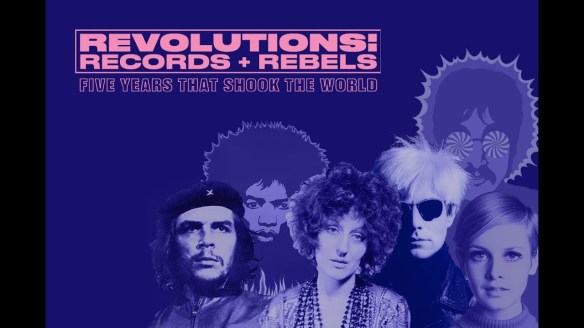
In terms of popular music and the “revolutionary” counter-culture, the Hippie Dream was born during the Summer of Love in 1967 (Haight-Ashbury to be precise) and died in December 1969 (The Rolling Stones’ concert at Altamont). The tipping point was probably The Beatles’ “White Album” released in 1968, featuring “Helter Skelter” and “Revolution 9”. Along the way, we had the “14 Hour Technicolour Dream (April 1967); the Monterey Pop Festival (June 1967); the first Isle of Wight Festival (August 1968); the Miami Pop Festivals (May and December 1968); Stones In The Park (July 1969); oh, and Woodstock (August 1969). From visiting the current “Revolutions: Records + Rebels” exhibition at Melbourne Musuem, the most significant outcome from this era was Woodstock, even though it came close to being a self-inflicted human, environmental and logistical disaster. It was only saved by a combination of the emergency services, the military, local residents – and sheer luck.

This ambitious and uneven exhibition spans the years from 1966 (The Beatles’ “Revolver”, The Beach Boys’ “Pet Sounds”, and Bob Dylan’s “Blonde on Blonde”) to 1970 (Deep Purple’s “Deep Purple in Rock”, Black Sabbath’s “Paranoid”, and The Stooges’ “Fun House”). Despite covering the peak psychedelic era of “Sergeant Pepper”, “Their Satanic Majesties Request” and “The Piper At The Gates Of Dawn”, the exhibition leaves you with the impression that Woodstock is the only enduring musical or cultural event from this time. Yet, the music portrayed in Woodstock is far from revolutionary – being mostly a bland collection of highly-derivative (and by then, almost passé) rock, blues and folk.

It almost feels like the curators of this exhibition set themselves up for failure. By trying to cover such a broad spectrum of political, social, economic and cultural themes, and then view them primarily through the rather narrow lens of popular music, the net effect is a grab bag of museum artifacts assembled with little coherence, all accompanied by a rather insipid soundtrack selection.

I’m not doubting the importance and lasting significance of the topics included (civil rights, peace movement, feminism, class war and gay liberation) – but the attempt to tack on some Australian relevance almost backfires. Let’s not forget that homosexuality was not decriminalised in Tasmania until 1997, and abortion is still not decriminalised in NSW. In fact, Australia was possibly more progressive on some issues in the early 1970s (anti-Vietnam War, ecology, feminism) than it is today with the current resurgence of populism, nationalism and religious conservatism.

Anyway, back to those “Records + Rebels”. I was surprised there was nothing about the radical developments in jazz or improvised music by the likes of Miles Davis (“In A Silent Way, “Bitches Brew”), The Art Ensemble of Chicago and Ornette Coleman, or labels like ESP, BYG and ECM. Absent also was any reference to the mod and early skinhead movements that were the antidote to hippiedom, embracing soul, r’n’b and reggae music. No mention of Soft Machine (who were contemporaries and colleagues of both Pink Floyd and Jimi Hendrix). Very little significance given to The Velvet Underground (probably the most influential band of the era in terms of inspiring the music that came after the hippie dream dissipated). And where were the likes of Can, Tangerine Dream, and Kraftwerk (their first album came out in 1970….) to represent the German rejection of traditional Anglo-American rock and roll?

On a somewhat depressing note, apart from Woodstock, two of the other enduring “brands” of this era that were on display were Richard Branson’s Virgin empire, and Time Out magazine…. So much for the Children of the Revolution.

Next week: Top 10 Gigs – revisited.


30 years in publishing

It’s 30 years since I began my career in publishing. I have worked for two major global brands, a number of niche publishers, and now I work for a start-up. For all of this time, I have worked in non-fiction – mostly professional (law, tax, accounting), business and financial subjects. I began as an editor in London, became a commissioning editor, launched a publishing business in Hong Kong, managed a portfolio of financial information services for the capital markets in Asia Pacific, and currently lead the global business development efforts for a market data start-up in blockchain, crypto and digital assets. Even when I started back in 1989, industry commentators were predicting the end of print. And despite the best efforts of the internet and social media to decimate the traditional business models, we are still producing and consuming an ever-growing volume of content.

The importance of editing and proofreading still apply to publishing today…. Image sourced from Wikimedia Commons.

The first company I worked for was Sweet & Maxwell, a 200-year-old UK law publisher. In 1989, it had recently been acquired by The Thomson Corporation (now Thomson Reuters), a global media and information brand, and majority owned by the Thomson family of Canada. When I began as a legal editor with Sweet & Maxwell in London, Thomson still had newspaper and broadcasting interests (the family continues to own the Toronto Globe & Mail), a directory business (a rival to the Yellow Pages), a travel business (comprising an airline, a travel agent and a tour operator), and a portfolio of publishing brands that ranged from the arts to the sciences, from finance to medicine, from defence titles to reference works.

Thanks to Thomson, not only did I get incredible experience from working in the publishing industry, I also got to start a new business in Hong Kong (which is still in existence). This role took me to China for the first time in 1995, including a couple of private lunches at The Great Hall of The People in Beijing. The Hong Kong business expanded to include operations in Singapore and Malaysia – during which we survived the handover and the Asian currency crisis. I also spent quite a bit of time for Thomson in the USA, working on international sales and distribution, before joining one of their Australian businesses for a year.

Given the subscription nature of law, tax and accounting publishing, many of the printed titles came in the form of multi-volume loose-leaf encyclopedias, which required constant (and laborious) updating throughout the subscription year. In fact, as editors we had to forecast and estimate the average number of pages required to be added or updated each year. If we exceeded the page allowance, the production team would not be happy. And if the number of updates each year did not match the budgeted number we had promised subscribers, the finance team would not be happy. So, we had a plethora of weekly, monthly, bi-monthly, quarterly, semi-annual and annual deadlines and schedules to manage – even today, I recall the immense relief we experienced when we got the CRC (camera ready copy) for the next release back from the typesetters, on time, and on budget…

This blog owes its title to something that senior Thomson executives liked to proclaim: “Content is King!” We were still in the era of media magnates, when newspapers (with their display and classified advertising) had a license to print money – the “rivers of gold” as some called it. But as the internet and online search came to determine how readers discovered and consumed information, the catch cry became “Content in Context!”, as publishers needed to make sure they had the right material, at the right time, in the right place, for the right audience (and at the right price….).

Of course, over the 12 years I was at Thomson, technology completely changed the way we worked. When I first started, editors still did a lot of manual mark-up on hard copy, while other specialists were responsible for technical editing, layout, design, indexing, proofreading and tabling (creating footnotes and cross-references, and compiling lists of legal and academic citations). Most of the products were still in printed form, but this was a period of rapid transition to digital content – from dial-up databases to CD-ROM, from online to web formats. Word processing came into its own, as authors started to submit their manuscripts on floppy disk, and compositors leveraged SGML (Standard Generalized Markup Language) for typesetting and for rendering print books as digital documents. Hard to believe now, but CD-ROM editions of traditional text books and reference titles had to be exact visual replicas of the printed versions, so that in court, the judges and the lawyers could (literally) be on the same page if one party or other did not have the digital edition. Thankfully, some of the constraints disappeared as more content went online – reference works had to be readable in any web browser, while HTML enabled faster search, cross-referencing and indexing thanks to text tagging, Boolean logic, key words and embedded links.

The second global firm I worked for was Standard & Poor’s, part of the The McGraw-Hill Companies (now S&P Global). Similar to Thomson, when I started with McGraw-Hill, the McGraw family were major shareholders, and the group had extensive interests in broadcasting, magazines and education publishing, as well as financial services. But when I joined Standard & Poor’s in 2002, I was surprised that there were still print publications, and some in-house authors and editors continued to work with hard copy manuscripts and proofs (which they circulated to one another via their in/out trays and the internal mail system…). Thankfully, much of this time-consuming activity was streamlined in favour of more collaborative content development and management processes. And we migrated subscribers from print and CD-ROM to web and online (XML was then a key way of streaming financial data, especially for machine-to-machine transmission).

Working for Standard & Poor’s in a regional role, I was based in Melbourne but probably spent about 40% of my time overseas and interstate. My role involved product management and market development – but although I no longer edited content or reviewed proofs, I remained actively involved in product design, content development, user acceptance testing and client engagement. The latter was particularly interesting in Asia, especially China and Japan. Then the global financial crisis, and the role of credit rating agencies such as Standard & Poor’s, added an extra dimension to client discussions…

After a period as a freelance writer and editor, for the past few years I have been working for a startup news, research and market data provider, servicing the growing audience trading and investing in cryptocurrencies and digital assets. Most of the data is distributed via dedicated APIs, a website, desktop products and third party vendors. It may not sound like traditional publishing, but editorial values and production processes lie at the core of the business – quality digital content still needs a lot of work to capture, create and curate. And even though the internet gives the impression of reducing the price of online content to zero, there is still considerable value in standardizing, verifying and cataloguing all that data before it is served up to end users.

Next week: You said you wanted a revolution?

Startup Victoria – Best of the Startup State Pitch Night

In support of Victoria’s reputation as “Australia’s Startup State”, last week’s Startup Victoria pitch night was designed to showcase four of the best local startups. Hosted by Stone & Chalk, the judges were drawn from Mentorloop, Brosa, Giant Leap Fund, Rampersand and Vinomofo.

The pitches in order of presentation were (website links embedded in the titles):

Code Like A Girl

Founded four years ago, Code Like A Girl’s stated mission is to bring greater gender diversity to the ICT sector (information and communications technology), within both the industry and education spheres. To do this, the founders say we need more female coders, which they plan to achieve via coding camps, internships, and community events. Positioning itself as a social impact enterprise, the business is active in four States, and 75% of interns are placed into full time roles.

To support the ongoing development of its “role ready” value chain and to prepare for possible overseas expansion, Code Like A Girl is seeking $1.5m in seed funding. Currently piloting the training model via education providers (RTOs, boot camps, universities, online code schools), the business takes a 10% commission on courses sold (held twice a year), plus it charges placement fees of $2k per person.

But the model is difficult to scale, especially as Code Like A Girl does not own or create the actual training content – it is acting as a sales channel for third party courseware, and providing platform for advocacy, engagement and influence. Its key metrics are based on things like social impact scores – such as 30% of kids return to boot camps. The panel felt that the community platform is a huge cost centre, and it might be preferable to try a TedX model, where Code Like A Girl provides branding and foundational support to build more of a network effect – but without its own curriculum, the business will still struggle to scale.

Seer Medical

The business claims to make epilepsy diagnosis easier, and is currently raising $14m for European expansion (UK & Germany). To improve current diagnosis, the model needs to capture time series data to distinguish epilepsy from other conditions, but do so faster, cheaper and more efficiently than current processes. Founded in 2017, Seer has already serviced more than 1500 patients via 200 clinicians.

Using the Seer Cloud infrastructure,  it can achieve diagnostic outcomes 10x faster than traditional methods, and the platform is using machine learning to train its algorithms. The service is subject to Medicare reimbursement, which has no doubt assisted adoption.

Asked by the judges if the platform could be used to diagnose other conditions, the founders mentioned cardio, sleep and other health domains. As for competition, this comes mainly from the status quo – i.e., hospital based services. With advocacy from neurologists, giving them access to customers, the founders have a strong track record in the research field, which helps to open doors with clinicians. Along with research partnerships, plus the public health cost reimbursement, data is the fuel of the business –  Seer even have access to some third party data on which to train their diagnostic.

Liven

A dining rewards app, Liven is also bringing a behavioral gamification layer to a real world use case. Currently, there is a poor linkage between loyalty programmes and gamification. So, Liven has launched a universal reward token (the LVN token) for use in a digital/real world context.  The details were scant, and the status of the LVN token sale is unclear, but it seems users can earn LVN tokens from completing certain “missions”. The token (using a standard ERC 20 token format on the Ethereum blockchain), is designed to be interoperable and fungible (but Liven does not yet appear to use blockchain in its end user app or merchant point of sale solution).

The said merchants pay a 10-25% commission on app-based sales, of which upto 40% is paid back to the end user in the form of LVN tokens – if I got the maths right, Liven itself is securing $15 profit on every $100 of sales. Currently only available in Melbourne and Sydney, the judges wanted to know what the appeal is to merchants. According to the founders, users typically spend more in an average transaction when they use the app. It also seems that the app only works in brick and mortar restaurants, cafes and bars. The path to scaling will be via channel partners such as PoS systems.

Although not yet deployed, in future, it was suggested that users will be able to pay in any crypto – which raises all sorts of questions about the tokenomics of the LVN token, and whether LVN will be subject to exchange rate volatility (and even token speculation) or act as a stable coin; if the latter, what will it be backed by or pegged to?

Phoria

Phoria is in the business of extended reality technology (XR). Started in 2014, Phoria was an entrant to the Melbourne Accelerator Programme (MAP), with the stated goal of moving VR into a mobile experience (“democratize VR”).  Having gained some clinical VR research experience, Phoria has since worked on commercial projects such as “Captured” (turning a 3D scan of a building or structure into a Digital Twin), “Rewild Our Planet” (a Singapore-based AR experience), and various art installations museum exhibits.

Phoria is commissioned by tech and media brands to create XR content. It has developed a SaaS model, whereby it can turn real space into virtual space (“virtualising internal space”).

The judges wondered where we are along the cycle of mass adoption vs peak hype. In response, the founders mentioned that the first wireless headsets are now available, although consumer-facing mixed reality hardware is still 3-5 years away. With a growing customer base in engineering and architecture applications, Phoria’s main focus is on spatial information.

After the votes were counted, the People’s choice was Seer Medical, who also won the overall prize.

Next week: 30 years in publishing