Startupbootcamp Sports & EventTech Demo Day 2021

I have to admire the resilience and perseverance of startup entrepreneurs, who continue to build their businesses in the face of lock-downs, travel restrictions and associated economic challenges. Starting a new business is hard enough at the best of times, let alone during a global pandemic. The latest installment of Startupbootcamp‘s series of virtual Demo Days was another example of how founders and their teams have just knuckled down and got on with the job – this time, in the area of Sports and EventTech.

The 10 startups featured a mix of market places, content creation and distribution platforms, coaching and performance services, and fan engagement. In alphabetical order, they were (links in the names):

Atlas Coaching

Founded by and for women, this is a digital coaching service designed to provide better access to (and feedback from) professional athletes and quality coaches. This is one way to help female athletes offset the costs of being a professional (as well as help pay for their own coaching). A good example where the gig economy meets digital delivery.

CityGuyd

An app that brings AR into sporting events and tourism, to offer an enhanced fan experience and match-day activities, through virtual city guides, which could be presented by professional sport stars who are competing in the event you have come to see. For organisers and venues, the app provides great data on attendees. Offered as a
white label solution plus SDK.

Famecast Media

Designed as an all-in-one content platform, it connects creators and consumers – not just in sport coaching and training, but across music, education, hobbies, well-being and fashion. The founders reckon that creators spend 70-80% of their time on the tech, and only 20-30% on monetizing their content. A huge challenge is that disparate digital tools don’t play nicely together…. The suite of services combines content, streaming, ticketing, branding and merchandising – all built on a commission and revenue share model.

Full Venue

Presenting itself as a data analytics and AI platform for events and venues, the founders see the current pandemic as an opportunity for new business, as economies start to open up and fans want to return to live events. Using AI-based marketing tools, it claims to predict the likelihood of a fan making a purchase (both tickets and merchandising. Again, uses a revenue share model based on a % of the sales generated.

Homefans

This marketplace connects communities of fans who are traveling to attend events and watch live sports, with local fans and supporters. The latter can offer access to local experiences that visitors might not otherwise be aware of. Describing itself as “like Airbnb for Sports Experiences”, the platform takes a 20% commission fee.

PromoShare

Described as a “monetized fan community”, this platform enables organizers and promoters to realize the value of “billions” in unsold tickets for sports, events and concerts. Using primarily word of mouth, fans get to sell unsold tickets on behalf of the events – a form of “social buying”. It integrates into major ticketing platforms, and has proven that fan-generated content can directly lead to ticket sales, by offering the “ambassador” fans access to rewards and other engagement incentives.

refbook

According to the founders, managing sport officials is currently unsophisticated and disconnected, and lacks adequate no digital solutions. This is intended to be an holistic platform to help officials, and leagues co-ordinate, recruit, manage and process payments. With 200+ clients already on-board, the team must be doing something right! (It wasn’t clear from the pitch whether refbook can handle training, certification, accreditation and disciplinary aspects of officiating.)

Row Nation

The only startup here that is directly supported by the relevant sports body, this is a platform for indoor rowing (of which there are apparently 4+ million participants in Australia. Backed by Rowing Australia, it is positioning indoor rowing as a major
e-sport (“like Peloton for rowing”), and a significant part of the digital fitness market. Combining “community, connection, and competition”, at its core is the ability to track and compare personal performance.

SportMatch

A platform the early identification of future sporting talent, which, according to the founders, is currently a slow, sporadic and long-winded process. This solution uses predictive analytics based on measurements and movement, and takes an evidence-based approach to performance data.

SportVot

This is a live steaming service for community-based and grass roots sports and tournaments. The founders claim that only 1% of all sport (in terms of actual participation) is televised, so this is designed to bring access to local sport enabling organizers to broadcast (OTT) their competitions using standard smart phone devices. The platform monetize the content via streaming fees and advertising.

Next week: Same, same – but different?
 

More Music for Lock-down

Last year, as Melbourne was entering its second, lengthy lock-down, I listed some of the music that helped to sustain me during the endless days of working from home. Now, as the city faces another (twice-extended) 4 week lock-down, music is one of the few pleasures still available….

My updated list includes:

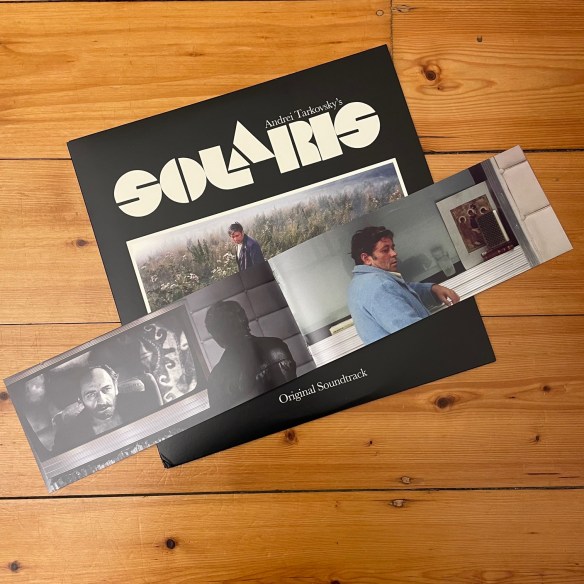
Eduard Artemiev – Solaris (Original Soundtrack) A science fiction film from 1972, and in the vein of JG Ballard or Brian Aldiss, it concerns the strange psychological illness that afflicts scientists on-board a space station orbiting the planet Solaris. The slightly claustrophobic electronic score is offset by a number of compositions by JS Bach. Note the early Zoom call and all-day PJs featured in the accompanying stills from the film.

Various Artists Pacific Breeze: Japanese City Pop, AOR & Boogie 1976-1986 Perfect antidote to lock-down blues, this compilation of mostly up-tempo numbers reveals more depth below the shiny surface – the arrangements, choice of textures and compositional structures make this more than just easy listening. (Released by the excellent Light in The Attic label, there’s also a second volume, plus related compilations that focus on the more ambient and experimental end of the spectrum.) Definitely a mood-enhancer.

Hans-Joachim Roedelius – Drauf Und Dran The prolific Roedelius has released one of the most sublime albums of his lengthy career – which is saying something for an artist closely associated with ambient and minimalist styles. A piano-based album, with very few electronics or effects, the clarity of composition and playing make for a brief but welcome respite from the mental fug of lock-down. In a similar vein, I would also recommend Brian Eno’s soundtrack to the Dieter Rams documentary, and Eno’s recent work with his brother, Roger, the albums Mixing Colours and Luminous.

Mogwai – ZeroZeroZero Another soundtrack, for the TV series of the same name (which I have not seen). Like the Solaris soundtrack, the music is more about the atmosphere than the narrative, and all the more powerful as a result. Also worth mentioning is Mogwai’s recent studio album.

Khruangbin = クルアンビン* ‎– 全てが君に微笑む Khruangbin are a band whose music I heard on a couple of sampler albums, without knowing anything about them. Playing an infectious blend of instrumental Funk, Psychedelia and Dub Reggae, this compilation brings together a number of their early singles (including inspired covers of Serge Gainsbourg and Yellow Magic Orchestra). Rather beautiful for these monochrome times.

Michel Legrand – La Piscine Yet more soundtracks, this deceptively lightweight but lush album, featuring just the right amount of economic violin solos by Stéphane Grappelli (who could let his virtuosity get the better of him), recently got a re-boot for Record Store Day, so it’s pretty hip at the moment. Other soundtrack and library music compilations I have been delving into include Adventures in Soundtracks, The Music Library and Unusual Sounds. Mostly reflecting the anonymous/unsung world of studio session composers and players of the 60s and 70s, most people would recognise at least one or two tunes, if only from their use as samples in other records.

Greg Davis – Somnia Finally, a work of stillness and contemplation – built on sustained drones and minimal instrumentation, this album nevertheless manages to generate immense depth and emotion. Again, perfect listening in this stilted yet listless environment of lock-down, curfew, social isolation and pent-up frustration and sorrow. (Also check out the Davis’ contemporaneous work, Diaphanous.)

Next week: Startupbootcamp Sports & EventTech Demo Day 2021

Getting out of town

This week, if all had gone to plan, I would have been reflecting on my latest stay in regional Victoria. Instead, Melbourne is under lock-down #6, and my mini-break out of the city had to be abandoned. But at least I managed to enjoy a great lunch and a walk in the country, before day release came to an end, and I had less than 4 hours’ notice to get back to town ahead of the latest curfew.

Greetings from Castlemaine – local art for local people….

Despite the abrupt end to my trip, the few hours of freedom were enough to remind me of the benefit (and downside) of living in a regional town.

First, regional and rural towns provide a great sense of belonging. You can experience a form of community in Melbourne’s urban and inner-city areas, but the connections don’t always run as deep, and they can be quite transactional and event-driven – meeting up to watch sport, going to the pub or catching up for dinner. Whereas, regional communities just “are”, and are always there to offer support, especially during challenging times.

Second, people living in regional areas tend to have a very different perspective and outlook on things, with a healthier approach to work/life balance. They have a greater appreciation of the country, nature and the land on which they live – something we can overlook or take for granted in our urban bubbles.

Third, rural and regional towns come with their own individual personalities and identities – something seriously lacking in our sprawling new suburbs with their increasingly cookie-cutter homes, and distinct lack of character.

The recent pandemic has shown that if you can work remotely, and don’t need to meet colleagues or clients face-to-face, regional centres are very attractive locations (even for a temporary tree/sea-change). But while the locals may welcome your city spending power in their shops and cafes, they may not appreciate the impact on property prices.

However, regional towns can take a while to warm to new-comers, and in these edgy pandemic times, strangers are viewed with as much suspicion as they are curiosity. More than once on recent trips I have noticed the locals almost crossing the street to avoid getting too close to the out-of-towners. Not quite dueling banjos (or the country pub scene in “An American Werewolf in London“…), but enough to suggest visitors are not entirely welcome.

Small towns are also notorious for everyone knowing each others’ business, where you can’t even sneeze without the rest of the village knowing about it. It can get to the point of suffocation, along with repressed emotions and dreadful secrets, especially where local traditions are based on very conservative (even regressive) values, beliefs and prejudices. (I was reminded of this recently when watching “The Last Picture Show”.)

In case this reads as overly pessimistic, I should emphasize that I really enjoy visiting regional Victorian towns (lock-down permitting), as they offer a rich variety of scenery and local produce – even if I can’t get there as often as I’d like these days, it’s good to know they are there. (And my wine cellar would be poorer for the lack of choice…)

Next week: More Music for Lock-down

Eileen Agar – My Brush With Surrealism

When I was a teenager, I kept a scrapbook of newspaper and magazine clippings, mostly relating to art, film, music and design. There was no particular theme, other than images that caught my eye. Sometimes, choices were triggered by things I had watched on TV, heard on the radio or seen at exhibitions. But there was one photograph which I cut out for no other reason than it mentioned Surrealism, featuring the artist Eileen Agar standing next to one of her paintings.

Eileen Agar in her studio, 1977 (Photo by David Reed) – Image sourced from The Guardian)

Although I had been interested in surrealist art for a while (probably thanks to ubiquitous reproductions of Dali and Magritte), I don’t think I had heard the name Eileen Agar, nor was I aware of having seen her work. That changed, somewhat, the following year, when I visited the major retrospective of Dada and Surrealism art at London’s Hayward Gallery, where she had several pieces on display. Yet, with such a huge exhibition, I don’t recall registering the name, nor making the immediate connection with the photo I had seen some months earlier.

A few years later, I was working for Kensington & Chelsea Council, where part of my role was to assist local residents with their housing problems. One day, I received a call from a woman who was concerned about her neighbour, whom she described as the “well-known artist, Eileen Agar”. The caller thought that Ms Agar needed some assistance with her accommodation, perhaps even relocating to somewhere more suitable. Following up the call, I duly contacted Ms Agar, but when asked about her housing situation, she replied “I’m fine, thank you, as long as I have enough light to paint by.” So I respected her wish not to be bothered or troubled by the Council.

By now, the penny had dropped, and I made the connection between the name Eileen Agar, her comment about “enough light to paint by” and the photo in my scrapbook – with its enormous studio window behind her.

Soon after, I was talking to some friends who were looking for ideas that would make good subjects for TV documentaries. I suggested a couple of topics, and happened to mention Eileen Agar, who by then was probably the last surviving surrealist artist who had been directly connected to figures like Picasso, Moore, Dali, Eluard, Breton, Man Ray, Penrose et al. Certainly, she was one of the few women included in the International Surrealist Exhibition of 1936.

Eventually, that idea turned into a documentary, called “Colour of Dreams” directed by Susanna White, originally broadcast in 1989. It formed part of Channel 4’s series “Five Women Painters”, with an accompanying book of the same name. Ms Agar was the only artist of the five still living at the time, and was guest of honour at the preview screening I was fortunate enough to attend.

Ironically, despite not receiving the same level of recognition that most of her male counterparts did during their lifetimes, Ms Agar attracted quite a lot of attention in her final years. Apart from being included in the TV series, she was the subject of a significant retrospective exhibition, and published her autobiography, before she passed away in 1991.

On my first visit to Auckland Art Gallery a few years ago, I was reminded again of that tangential connection, when I saw Ms Agar’s mixed media collage called “Tree of Knowledge”. Within the context of a modest collection of European surrealism, this was a significant work, and immediately recalled that original cutting.

(Sadly, unless it tours Australia, I won’t get to see the current Whitechapel show, “Angel of Anarchy”.)

Next week: Getting out of town