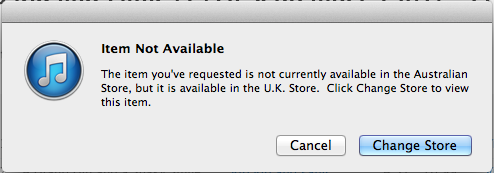
Australian MPs recommend a ban on geo-blocking

In a recent blog about geo-blocking, I commented on the frustrations of Australian consumers in trying to access digital content. That blog was written in light of a parliamentary inquiry into IT price discrimination.

ImageA Report by the House of Representatives Infrastructure and Communications Committee has just been published, and makes for some fascinating reading.

The Report reveals a number of key themes:

  • There is strong evidence that Australian consumers pay between 50 and 100 per cent more for the same product than consumers in comparable markets.
  • Price differentials cannot be fully explained by the so-called “Australia tax” (i.e., the relatively higher costs of doing business locally, due to wages, taxes, market regulation, shipping costs, economies of scale, etc.).
  • Consumer complaints about price discrimination are not being taken seriously by the industry as a whole.
  • Industry participants either deflected responsibility for price discrimination to other parts of the supply chain, or blamed inconsistent market practices as justifying the need for different regional and national price policies.
  • Despite being given the opportunity by the Committee to defend their pricing practices in public, most industry participants declined to co-operate in full; this gave rise to Apple, Adobe and Microsoft each being compelled to give evidence.
  • A number of submissions made by industry participants appeared to be disingenuous, self-serving, evasive and even misleading.

The Committee accepts that IT vendors are entitled to run their businesses as they see fit, and there is nothing to stop them from charging whatever prices they like. There was also general acknowledgment that copyright holders must be able to protect their IP assets.

However, geo-blocking (especially of digital content) simply reinforces price disparity based on a customer’s geographical location, rather than protecting the interests of copyright holders. Further, although so-called “Technological Protection Measures” (TPM) or “Effective Technological Measures” (ETM) and “Digital Rights Management” systems (DRM) may have a legitimate role in controlling copyright (and as such they enjoy protection under the relevant Copyright Law), their net effect has been to limit competition and to lock consumers into “walled gardens” which places considerable power in the hands of IT vendors as to how, when and where consumers access content.

In short, the Committee made several recommendations designed to address price discrimination and restricted market access imposed on Australian consumers, including:

  • Remove any remaining restrictions on parallel imports (in a bid to increase market competition among distributors and retailers).
  • Clarify the legal circumvention of TPM/ETM/DRM barriers that are purely designed as geo-blocking tools (rather than copyright protection measures).
  • Educate Australian consumers about their ability to buy cheaper goods from overseas, or to legally circumvent geo-blocking (without compromising product warranties or infringing copyright).
  • As a last resort, place a ban on geo-blocking and outlaw contacts or terms of service that rely on and enforce geo-blocking.

Unfortunately, while this Report is of great significance to the Australian digital economy, and seeks to achieve a balance between the rights of copyright holders and the interests of consumers, it is likely to be overshadowed by concerns about tax avoidance in respect to multinational companies. No doubt Australian consumers will make a connection between global IT companies whose products they buy, and transnational tax minimization strategies linked to transfer pricing policies and the routing of content royalties and copyright licensing fees via low-tax jurisdictions.

Has digital killed the music industry?

Or, more specifically, has disintermediation broken the business model?

Image

Ever since the invention of compact cassettes in the 1960s and the arrival of the Walkman in the 1970s, pundits have been predicting the end of the music business (remember those “Home Taping Is Killing Music” campaign logos of the 1980s?) – a theory that look set to come true in the 1990s with the launch of mp3 players and peer-to-peer file sharing. Yet, rather like Mark Twain, the death of the record industry appears to be greatly exaggerated.

Most debate about the demise of the music industry is predicated on the impact of technology that facilitates music piracy, whereas in reality the business model has been broken as a consequence of digital disintermediation.

For most of its history, the recording industry was a model of vertical integration. The major record labels owned the content, the means of production (recording and manufacture), the publishing and licensing activities, the distribution channels – and in some cases, they even manufactured the hardware, owned the retail stores and promoted live concerts.

The 1970s began a rapid process of horizontal integration, as the major record labels merged with one another at such a rate that by the late 1990s there were really only four global companies – Sony, Warner, Universal and EMI. At various times, each of these companies has also been affiliated to substantial film, electronics and publishing interests – further proof of the vertical and horizontal integration.

The “Big Four” have now been reduced to just three with the sale of EMI to Universal. European Union Competition rules resulted in parts of the EMI group of labels being divested to Warner, and the music publishing division being sold to Sony/ATV Music Publishing.

EMI was probably the epitome of vertical integration – but over the years, it was forced to sell or close assets like its UK manufacturing plant and the HMV retail chain, and came close to selling off London’s Abbey Road Studios (a decision that was reversed following public outcry and reinforced by a heritage listing). Some observers blame poor business decisions and weak digital strategies for EMI’s demise, but I would argue that the highly integrated model has been found wanting, and EMI was a dinosaur that could no longer survive in its current form. For example, despite some errors of judgement (such as putting “Copy Control” software on their CD’s which affected their ability to play on personal computers), in many ways EMI was something of a pioneer in digital music – being one of the first major labels to remove DRM from its downloads, and licensing its content for streaming services.

Despite the rampant corporate contraction, the growth of digital download platforms and the expansion of music streaming services, it’s clear that record labels still have a role to play in developing and distributing new content. Independent labels, distributors and retailers continue to wax and wane according to the fortunes of the wider industry, and technology makes it even easier for artists to self-release their recordings direct to the customer – but record labels provide the financial and marketing support that are critical to commercial success, and other intermediaries (publishers, distributors, licensees, retailers, promoters, etc.) continue to add value to the supply chain.

In fact, just this week, Billboard has been running a poll on whether Universal and Sony should break away from their parent entertainment conglomerates – the theory being that the music labels represent greater value on their own, especially when unencumbered by ailing electronics and movie businesses. Results so far suggest that ownership does not matter so much as having the best strategies for, and access to, the means of content creation and distribution.

At the same time, the music industry is going through another round of vertical and horizontal integration and disintermediation, driven by new technology, new distribution platforms and new business models linked to the way we access and consume content. So, while Apple’s iTunes platform has been accused of anti-competitive practices in its dealings with content owners, it also faces competition from music streaming services like Spotify, Rdio and Pandora, and new content platforms like Twitter’s #music and Vine. And if sales of new CD’s (and even mp3 downloads) are reportedly declining, there is still healthy demand for live music events especially those linked to the marketing of established back catalogue titles, which is where record labels come into their own as curators of re-released and re-packaged content.

In conclusion, here are some random reasons why I think the music industry is actually in good health:

The Music Collectors’ Guide to Personality Types

ShelvesSomething a little less serious this week. Recently, I’ve been working with various clients across executive coaching, career development, talent management and psychometric testing. Given my former experience in music retailing (it was like Nick Hornby’s “High Fidelity” without the romantic interest….) and in deference to my own lifelong hobby of record collecting, I thought it would be amusing to classify people according to their collecting habits, as a way of helping HR managers and team leaders everywhere understand their colleagues.

So, in no particular order:*

1. Listomaniac – Always making lists of their favourite songs, and then constantly updating them. Whether it’s “Top 10 songs about ice-cream”, or “All-time Top 5 pop songs featuring saxophone”, or “10 Songs containing the word ‘toothbrush’ in the lyrics”, Listomaniacs love to demonstrate their arcane (but selective) musical knowledge, and are so absorbed with the process of list-making that they are incapable of committing to a final, definitive choice. Don’t expect the Listomaniacs on your team to make a decision, let alone stick to it. Definitely don’t give them too many choices or too much time to select the catering menu for the office party. (Cf. Mixologist)

2. Completist – More than a mere fan, the Completist is compelled to collect every record ever released by a particular artist (and some Completists are also driven to seek out unreleased recordings, including juvenilia, studio out-takes and rehearsals…). In more extreme examples, this form of OCD involves collecting the entire output of specific record labels or whole musical genres. While the Completist can demonstrate deep knowledge of their chosen subject, they can also get lost in the detail and don’t realise that not everyone shares their passion. When assigning roles to your team, make sure the Completist is in charge of their chosen specialist subject area, but set well-defined boundaries, and don’t let them near eBay. (Cf. Archivist)

3. Anthologist  – The Anthologist doesn’t have time to read music reviews or even listen to anything that hasn’t been recommended to them or curated for them by someone else. In fact, the archetypal Anthologist relies on the end of year polls and critics’ lists to decide what music to buy. Now, of course, the Anthologist’s task is made even easier through music subscription services, podcasts, and personalised web-streaming. Although capable of making discerning choices and informed decisions, the Anthologist often lacks any original thought, and would be lost without apps like Spotify. On the other hand, the Anthologist can give you the low-down on the latest thinking around best practice in agile software development, productivity tools and structuring compensation packages (because they’ve read some blogs and a few trade newsletters).

4. Populist – Never one to let taste get in the way, the Populist knows that a song is good because it went to Number 1 in the charts. Those “Now That’s What I Call Music…” compilations are made to measure for the Populist, who simply wants to buy the biggest-selling hits of the year all in one go. While many Populists might include a few “Greatest Hits” and “Best Of” albums in their collections, the more adventurous types have been known to buy a “proper” studio album (as long as it has at least 4 top 10 singles on it). On a positive note, the Populist will likely be happy working with numbers or in customer service, as they don’t need to exercise personal discretion, and because the data never lies.

5. Audiophile – The Audiophile has to have the latest and most expensive music hardware, with full 7.1 surround sound, if only to play Dire Straits. (I’m pretty certain that every hi-fi shop in the world only has one customer demonstration CD, namely “Brothers in Arms”.) Some would say that it’s the software not the hardware that matters, but the Audiophile knows the price of everything and the value of nothing. History is littered with music technology that promised the world, but failed to deliver – 8-track cartridge, Quadraphonic, DDC, MiniDisc, DAT – so it may be unwise to let the Audiophile on your team manage any IT projects. Likewise, they may insist on having the most expensive laptop available, but if they only use it update their Facebook page, maybe you should be a bit concerned.

6. Archivist – Like the Completist, the Archivist is a fount of musical knowledge – but unlike their counterparts, Archivists know enough of the received musical canon to be able to differentiate the great from the merely ordinary, and they know that not every artist has an immaculate back-catalogue. The Archivist also understands why Big Star’s “Third/Sister Lovers” is rightly regarded as one of the best (if flawed) albums of all time. At the extreme end of the spectrum, the Archivist is a neo-Trainspotter, able to recall minutiae such as the album catalogue numbers, recording dates, orchestral arrangers and sleeve designers (and studio caterer) of every 5-star album since 1957. But on a good day, the Archivist will display great perseverance in pulling together internal knowledge, external data and other essential information to get the right answers.

7. Mixologist – Finally, the music collector who is so enthusiastic about their personal taste in music that they just have to share it with everyone else, via lovingly created mixtapes. Adept at making tapes for every occasion and at every significant stage in their lives (the break-up tape, the road trip mix, songs for a sunny day), the Mixologist will also have regard to and openly acknowledge their sources, influences and inspirations. Unlike the Listomaniac the Mixologist’s choices demonstrate exquisite musical taste and are backed by erudite concepts, connections, and cross-references – they are not simply motivated by the compilation process. True Mixologists are happy to allow their tapes to be circulated, to be copied, and even to spawn “response” tapes in return. As team players, Mixologists will be more than happy to share information, and they like nothing more than to see their ideas taken up and then built upon by the rest of the team.

*Note: This list does not claim to be exhaustive; and of course as with all profiling tools, music collectors may display two or more of the above traits, often at the same time. But they will likely demonstrate a leading preference for a particular style of collecting. As the music critic once observed, “a little knowledge can be dangerous – but too much can be deadly boring”.

Whose content is it anyway?

Faust 2.0

Every social media and digital publishing platform is engaged in a continuous battle to acquire content, in order to attract audiences and bolster advertising revenues.

Content ownership is becoming increasingly contentious, and I wonder if we truly appreciate the near-Faustian pact we have entered into as we willingly contribute original material and our personal data in return for continued “free” access to Facebook, YouTube, Google, Flickr, LinkedIn, Pinterest, Twitter, MySpace, etc.

Even if we knowingly surrender legal rights over our own content because this is the acceptable price to pay for using social media, are we actually getting a fair deal in return? The fact is that more users and more content means more advertisers – but are we being adequately compensated for the privilege of posting our stuff on-line? Even if we are prepared to go along with the deal, are our rights being adequately protected and respected?

In late 2012, Instagram faced intense public backlash against suggestions it would embark upon the commercial exploitation of users’ photographs. While appearing to backtrack, and conceding that users retain copyright in their photographs, there is nothing to say that Instagram and others won’t seek to amend their end-user license agreements in future to claim certain rights over contributed content. For example, while users might retain copyright in their individual content, social media platforms may assert other intellectual property rights over derived content (e.g., compiling directories of aggregated data, licensing the metadata associated with user content, or controlling the embedded design features associated with the way content is rendered and arranged).

Even if a social media site is “free” to use (and as we all know, we “pay” for it by allowing ourselves to be used as advertising and marketing bait), I would still expect to retain full ownership, control and use of my own content – otherwise, in some ways it’s rather like a typesetter or printer trying to claim ownership of an author’s work….

The Instagram issue has resurfaced in recent months, with the UK’s Enterprise and Regulatory Reform Act. The Act amends UK copyright law in a number of ways, most contentiously around the treatment of “orphan” works (i.e., copyright content – photos, recordings, text – where the original author or owner cannot be identified). The stated intent of the Act is to bring orphan works into a formal copyright administration system, and similar reforms are under consideration in Australia.

Under the new UK legislation, a licensing and collection regime will be established to enable the commercial exploitation of orphan works, provided that the publisher has made a “diligent” effort to locate the copyright holder, and agrees to pay an appropriate license fee once permission to publish has been granted by the scheme’s administrator.

Such has been the outcry (especially among photographers), that the legislation has been referred to as “the Instagram Act”, and the UK government’s own Intellectual Property Office was moved to issue a clarification factsheet to mollify public concerns. However, those concerns continue to surface: in particular, the definition of “diligent” in this context; and the practice of some social media platforms to remove metadata from photos, making it harder to identify the owner or the original source.

Meanwhile, the long-running Google book scanning copyright lawsuit has taken another unexpected twist in the US courts. From the outset, Google tried to suggest it was providing some sort of public service in making long-out-of-print books available in the digital age. Others claim that it was part of a strategy to challenge Amazon.

Despite an earlier unfavourable ruling, a recent appeal has helped Google’s case in two ways: first, the previous decision to establish a class action comprising disgruntled authors and publishers has been set aside (on what looks like a technicality); second, the courts must now consider whether Google can claim its scanning activities (involving an estimated 20 million titles) constitute “fair use”, one of the few defences to allegations of breach of copyright.

Personally, I don’t think the “fair use” provisions were designed to cater for mass commercialization on the scale of Google, despite the latter saying it will restrict the amount of free content from each book that will be displayed in search results – ultimately, Google wants to generate a new revenue stream from 3rd party content that it neither owns nor originated, so let’s call it for what it is and if authors and publishers wish to grant Google permission to digitize their content, let them negotiate equitable licensing terms and royalties.

Finally, the upcoming release of Apple’s iOS7 has created consternation of its own. Certain developers with access to the beta version are concerned that Apple will force mobile device users to install app upgrades automatically. If this is true, then basically Apple is telling its customers they now have even less control over the devices and content that they pay for.