Life During Lock-down

As I write, Victoria is witnessing record numbers of new COVID-19 cases in the so-called second wave of the pandemic. Even as the State Government maintains the Stage 3 lock-down in Greater Melbourne (and most recently mandated the wearing of masks), some members of the public are trying to challenge these restrictions, while others have to keep being reminded to comply with the pandemic measures. Frankly, the way I have been feeling about the latest events, I don’t know whether to laugh, scream or cry.
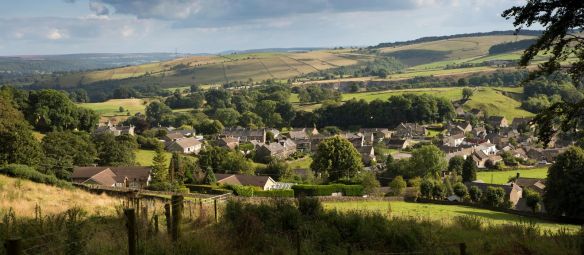
The Village of Eyam – Image sourced from National Geographic

Laugh, because I can’t believe how crass or stupid some of these refuseniks are. Scream, because I am so angry at the State Government’s failure to properly manage the hotel quarantine programme (which has led to the widespread community transmission), and the delayed decision to require masks in public. Cry, because the whole situation is incredibly sad, given all the people who have lost loved ones to the virus, and the many more who are experiencing financial hardship.

The Premier keeps saying that now is not the time to debate the whys and wherefores of who is responsible for the failure in hotel security arrangements, what caused the community transmission, or why so many people continued with their normal routines despite being symptomatic or while waiting for coronavirus test results. OK, fair enough – the Government’s main focus is on protecting public health (and shoring up the local economy), but hopefully there will be plenty of time for analysis and debate once the virus is under control (and hopefully well before the next State election, due in 2022…).

Meanwhile, I don’t know why politicians and health administrators are so surprised when members of the public fail to “exercise common sense”. Maybe the public kept hearing the Government was doing a such a great job (hey, remember Lock-down Pt. I?). Perhaps they over-compensated after a few weeks’ social distancing, became complacent and let down their guard. Or maybe they took their lead from public messages about “returning to normal” – and going to the footy and getting on the beers again….. Perhaps there is a sizeable portion of the community who can’t be trusted “to do the right thing” (or maybe they just don’t trust politicians, public servants, health experts or mainstream media).

As for why those people carried on as usual (despite being symptomatic or awaiting test results): there may be economic factors at play (to be discussed another day, but if that doesn’t include a debate on a Universal Basic Income, it will be a lost opportunity). It could be a lack of information and awareness. It could simply be human nature. But for a culture that celebrates “chucking a sickie” (indeed, one former Prime Minister even suggested it would be a point of national pride to do so following Australia’s success in the Americas Cup), something has gone wrong somewhere if people don’t feel any responsibility or obligation towards the health of their fellow citizens.

In my more existentialist moments (and I seem to have so much more time for that these days…), I can’t help thinking the pandemic is a three-fold challenge to the future of the human race: 1) the virus is nature’s way of inoculating itself against homo sapiens; 2) it will prove Darwin’s theory of evolution (survival of the fittest) by exploiting our weakness as social creatures – it’s figured out how to get us to spread the virus on its behalf; 3) the reduced levels of human activity and pollution will give the earth some time to heal (at least for a while).

At other times, I think about Talking Heads’ song “Life During Wartime”* – especially the line “I got some groceries, some peanut butter to last a couple of days”. With the need to limit shopping trips, the various shortages, and the focus on being prepared for a total lock-down, is it any wonder we may feel some anxiety? Of course, we could be in a far worse situation than what we are currently experiencing in Melbourne, both in terms of the number of cases and the breakdown in social order we see elsewhere. Yet that just underscores how inconsiderate and selfish those people are who can’t bring themselves to wear masks, or observe Stage 3 restrictions. Yes, the restrictions are inconvenient, and at times tedious, but they are hardly onerous compared to a full scale health crisis. And if anyone wants to discuss public sacrifice in the face of a virulent disease, I suggest they do some research on the village of Eyam in Derbyshire, England.

For myself, I know I have been very fortunate so far (probably thanks to some “compound privilege”). I have been able to work from home since March (although as an independent contractor, my monthly income has been reduced), but I have not seen any friends or family face-to-face either, and I won’t be traveling overseas next month for a family wedding, or to visit elderly parents. I am able to walk each day in the nearby park, but apart from food shops and the post office, I’ve not been inside any other retail premises. I haven’t been to pubs or restaurants, but I try to support the local hospitality sector by ordering prepare-at-home meals about once a week. I can’t get to see live music, but this has forced me to revisit my own music-making. And I don’t have to do any home-schooling, but I have friends and relatives who work in the health and education sectors.

My biggest concern, apart from the pandemic itself, is that we miss the opportunity to re-think the large areas of the economy that need restructuring. Politicians keep talking about “jobs, jobs, jobs”, as if the archaic labour structures inherent in the traditional master and servant relationship is the be-all and end-all of social economics. But where are these jobs coming from? COVID19 shows we can consume less, make do with less stuff, and so it can’t just be a demand-led stimulus. Nor should it just be a construction-led recovery (more “Big Build”), unless it is combined with innovation, sustainability, hi-tech, smart cities, etc. There is definitely a need to think about national self-sufficiency, and figure out what to do about supply chains, manufacturing and renewable energy.

Somehow, we have to turn this uncertainty and these challenges into positive outcomes.

Next week: The Limits of Technology

* The whole album, “Fear of Music” is the perfect soundtrack for the nervous paranoia and unease of the pandemic…..
#Rona19 – beyond the memes

More commentary on Covid-19 – at the time of writing, Victoria is at Stage 3 restrictions, with Stage 4 possible very soon. Generally, people seem to adapting to if not actually coping with this daily reality (although people are still flouting their quarantine obligations). But there is still some confusion on how to interpret, observe and enforce the social distancing measures, and of course, huge economic uncertainty remains for many people who have seen their working hours evaporate, especially if they are in vulnerable industries, and/or they can’t work from home.

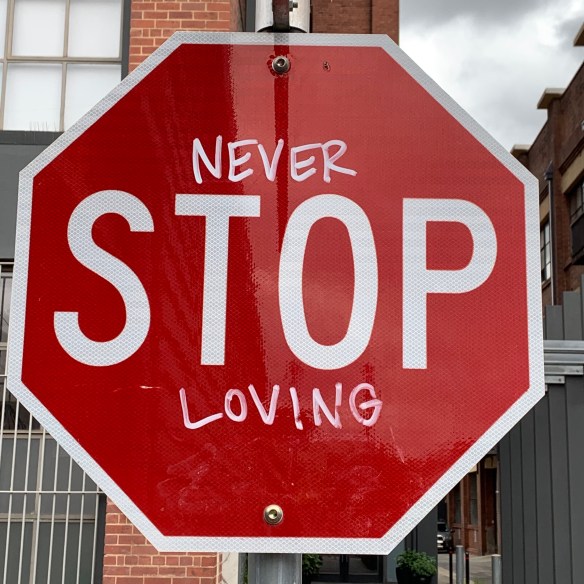
Sign of hope? (Seen on my daily walk)

Meanwhile, the shutdown has prompted a fair number of less serious responses, from toilet paper memes, to “viral” GIFS, from parodies of “My Sharona” and “Bohemian Rhapsody”, to unfortunate examples of the downside of company video conferences while working from home.

But beyond the hashtags, what might we expect once we get through the current pandemic? Here is a somewhat random list of possible outcomes:

  • A renewed appreciation of personal space in public places – will we continue to observe such protocols where and whenever practical, as it becomes a community norm?
  • Greater respect for introverts – possibly better able to handle self-isolation, they are comfortable with their own company and don’t feel the need to seek out crowds  – social distancing does not represent an existential crisis, and they don’t rely on social situations for their personal validation.
  • Passenger airlines and cruise companies are toast – the tourism and travel industries will be hard hit, and may struggle to rebuild in their current form.
  • The online economy will get a boost  – restaurants and providores are already retooling to offer D2C food and meal deliveries (even cutting out the likes of Uber Eats, Deliveroo and Menu Log). Some brick and mortar retail is adapting fast, but will face a reduced share of available discretionary spending.
  • Naturally, digital services will thrive – from communication solutions to virtual classes, from remote working support services to telehealth. But bandwidth capacity and internet down/upload speeds remain a challenge in Australia.
  • The end of physical cash – if retailers prefer contactless payments (less contamination), what use are those notes and coins in your wallet?
  • A higher community standard for the individual duty of care we owe to each other – Covid-19 will certainly test the “duty of care” we owe to neighbours, colleagues, members of the public… if I knowingly infect someone, or act recklessly or negligently, can the victim sue me?
  • Likewise, the corporate social license to operate will be tested and re-cast – in light of monopolistic practices, price gouging, market abuse and disregard for the “new normal”, companies will need to re-assess many of their standard policies.
  • Increased use of facial recognition and other technology for surveillance purposes – if people cannot be trusted to observe their quarantine, self-isolation and social distancing obligations, the authorities will not shy away from further incursions into civil liberties that we currently take for granted.
  • A hybrid of on-site and working from home employment structures – not everyone will want to continue working remotely, nor will everyone be in a rush to head back to the office (or the daily commute), which will likely cause headaches for employers….

More on these themes next week….

Next week: The “new, new normal”


The Ongoing Productivity Debate

In my previous blog, I mentioned that productivity in Australia remains sluggish. There are various ideas as to why, and what we could do to improve performance. There are suggestions that traditional productivity analysis may track the wrong thing(s) – for example, output should not simply be measured against input hours, especially in light of technology advances such as cloud computing, AI, machine learning and AR/VR. There are even suggestions that rather than working a 5-day week (or longer), a four-day working week may actually result in better productivity outcomes – a situation we may be forced to embrace with increased automation.

Image Source: Wikimedia Commons

It’s been a number of years since I worked for a large organisation, but I get the sense that employees are still largely monitored by the number of hours they are “present” – i.e., on site, in the office, or logged in to the network. But I think we worked out some time ago that merely “turning up” is not a reliable measure of individual contribution, output or efficiency.

No doubt, the rhythm of the working day has changed – the “clock on/clock off” pattern is not what it was even when I first joined the workforce, where we still had strict core minimum hours (albeit with flexi-time and overtime).  So although many employees may feel like they are working longer hours (especially in the “always on” environment of e-mail, smart phones and remote working), I’m not sure how many of them would say they are working at optimum capacity or maximum efficiency.

For example, the amount of time employees spend on social media (the new smoko?) should not be ignored as a contributory factor in the lack of productivity gains. Yes, I know there are arguments for saying that giving employees access to Facebook et al can be beneficial in terms of research, training and development, networking, connecting with prospective customers and suppliers, and informally advocating for the companies they work for; plus, personal time spent on social media and the internet (e.g., booking a holiday) while at work may mean taking less actual time out of the office.

But let’s try to put this into perspective. With the amount of workplace technology employees have access to (plus the lowering costs of that technology), why are we still not experiencing corresponding productivity gains?

The first problem is poor deployment of that technology. How many times have you spoken to a call centre, only to be told “the system is slow today”, or worse, “the system won’t let me do that”? The second problem is poor training on the technology – if employees don’t have enough of a core understanding of the software and applications they are expected to use (I don’t even mean we all need to be coders or programmers – although they are core skills everyone will need to have in future), how will they be able to make best use of that technology? The third problem is poor alignment of technology – whether caused by legacy systems, so-called tech debt, or simply systems that do not talk to one another. I recently spent over 2 hours at my local bank trying to open a new term deposit – even though I have been a customer of the bank for more than 15 years, and have multiple products and accounts with this bank, I was told this particular product still runs on a standalone DOS platform, and the back-end is not integrated into the other customer information and account management platforms.

Finally, don’t get me started about the NBN, possibly one of the main hurdles to increased productivity for SMEs, freelancers and remote workers. In my inner-city area of Melbourne, I’ve now been told that I won’t be able to access NBN for at least another 15-18 months – much, much, much later than the original announcements. Meanwhile, since NBN launched, my neighbourhood has experienced higher density dwellings, more people working from home, more streaming and on-demand services, and more tech companies moving into the area. So legacy ADSL is being choked, and there is no improvement to existing infrastructure pending the NBN. It feels like I am in a Catch 22, and that the NBN has been over-sold, based on the feedback I read on social media and elsewhere. I’ve just come back from 2 weeks’ holiday in the South Island of New Zealand, and despite staying in some fairly remote areas, I generally enjoyed much faster internet than I get at home in Melbourne.

Next week: Startup Vic’s Impact Pitch Night


Infrastructure – too precious to be left to the pollies…

With its 3-year Federal parliamentary cycle and fixed 4-year terms in each State and Territory*, Australia is never too far away from an election. South Australia and Tasmania are both currently in full election mode. Victoria doesn’t go to the polls until later this year, but the informal campaigning (rather like a phony war?) is already underway. And although the next Federal election is not due until 2019, the stump speeches are already being wheeled out.

Fiction imitates (or even predicts) fact in ABC TV’s “Utopia” (hard hats obligatory)

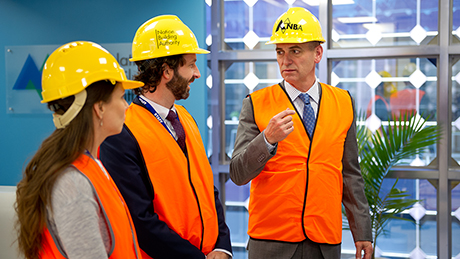
With so much focus on “infrastructure”, it’s going to be a bumper year for hard hats, hi-viz vests and photo opportunities in front of big “stuff”. It’s just such a shame that even with the real life Utopia, Infrastructure Australia (and respective statutory and quasi-independent bodies in each State), so much of the decision-making is left to politicians. Because this “stuff” is far too important to be left to the short-term priorities, self-serving tactics and party preservation shenanigans that most of our elected representatives are forced to succumb to.

Hot infrastructure topics this time around are energy (especially in South Australia), water (Murray Darling Basin), resources (what do we do after the mining boom?), and the call for “jobs” linked to putting up or digging up “stuff”.

I understand that we need employment opportunities both sparked by, and as a driver for, economic stimulus. But there has to be more than simply creating short-term jobs on unsustainable projects (Adani, anyone?). Of course, one could argue that the powerful construction and mining unions (and their infrastructure owning superannuation funds) have a vested interest in maintaining this trajectory.

But if these projects need to take on long-term debt, with the 3 or 4 year election cycles, you can see how difficult it becomes to manage budget priorities. Worse, incoming governments may strive to cancel, overturn or curtail projects of their predecessors, which won’t endear them to the private sector companies (and their banks) who have successfully bid on the contracts.

Roads represent a large chunk of the infrastructure “stuff” in my own State of Victoria, and are already shaping up to be a key election issue (at least in the minds of the parties). For a major city that still doesn’t have a dedicated train service connecting the CBD to its ever-growing international airport, Melbourne probably needs fewer roads, and more planning (especially as we move to ride-sharing and self-driving vehicles). Besides, while we are in an urban and population growth cycle, given the rate at which some of the current new roads are being built, they will be under-capacity before they are even finished.

I would argue that there is just as much demand to upgrade and refurbish existing infrastructure, (which will probably generate just as many employment opportunities) rather than feeding the insatiable demand for shiny new toys. Or revisiting (and even restoring) some “old” ideas that might actually make sense again today, such as the orbital railway concept connecting Melbourne’s suburban hubs. Sure, we have the new Metro Tunnel project under the CBD, and this may lead to extensions to existing suburban services, and even the airport itself. But future projects have not been scoped, and are subject to prevailing party ideologies (not to mention the NIMBY brigades…) – rather than serving  the interests or greater good of the population (and environment) as a whole.

Finally, some sobering news came out of the UK recently, where London is actually experiencing a decline in passenger numbers on public transport. There have been a variety of explanations for this drop (the first in more than 20 years) – from the threat of terrorism, to new work patterns (more people working from home); from changing lifestyles (more Netflix, less Multiplex), to the “on-demand” economy (more Deliveroo, less dining out).  With fewer people likely to commute to the CBD (40% of the population will have self-directed careers), governments, their infrastructure boffins and their policy wonks will need to think about what this does actually mean for roads and rail…. and how much longer must I wait for the NBN in my suburb of Richmond (and will it already be obsolete by the time I have access)?

* For the breakdown see here.

Next week: Blockchain, or Schmockchain?