Music Streaming Comes Of Age

Last Saturday was the 10th International Record Store Day, an annual event to celebrate independent music shops. A key feature is the list of exclusive and limited edition vinyl releases, most of which can only be bought in selected participating stores – in person and on the day. But there are also loads of other promotions and live events, designed to get people browsing the racks in their local retail outlet. In an age when streaming services now account for the bulk of US music industry revenues, what is the future of the neighbourhood record shop (those that are still left, that is)? Will streaming services kill off digital downloads, as well as sales of physical product like CDs and records?
Despite the sense of doom that has permeated the record industry in recent years (if not decades!), there is also a feeling that, just as the internet has not yet managed to kill off the publishing industry, digital has not yet killed the radio star. The independent music industry in particular has found a way to survive, and retail stores are still an important part of the business.

So, what are the recent trends in music industry sales and business models?

First, the continued rebound in vinyl sales (at least in the UK) show that there is renewed interest in this 70-year-old format, with industry data showing a 25-year high (but not yet a return to the 1980s’ peak). Record Store Day is generally credited with boosting vinyl sales. And to be fair, even music streaming services have contributed to this growth, through curated content, recommendation engines and user preferences: meaning that listeners get exposed to a wider range of music and artists than they would from traditional Top 40 radio, and they get to explore and discover new music.

Second, digital downloads, once seen as the industry growth engine, are facing a pincer attack, from streaming services as well as vinyl sales. No wonder that Apple is expected to slowly and quietly retire the iTunes download store, and shift more focus onto its own Apple Music subscription service. The music industry (especially the dwindling number of major labels) didn’t really “get” the internet. Having just competed in the CD-format wars, the major labels then competed on digital file formats, and tried to lock their digital content to proprietary players and software protocols. Some of this reticence was justified – thanks to digital piracy and illegal file sharing – but they didn’t (and still don’t) help themselves by poor CX on their retail websites (if they have an e-commerce presence at all), and adherence to arcane geo-blocking.

Third, many musicians are benefiting from increased exposure via streaming services – although with Apple Music and Spotify seemingly leaving the other platforms far behind, the downside risks from a dominant duopoly don’t need spelling out. Especially as the royalty payments from streaming are generally much smaller than they would have been from physical sales, “traditional” downloads and radio airplay. This source of friction between labels, their artists, music publishers and online content platforms surfaced again earlier this month, in a spat with YouTube over fees for video streaming.

Fourth, in a new move in the streaming wars and the battle to win mobile screen real-estate, Australian startup Unlockd has just secured a deal with MTV UK to stream free music videos in return for viewing ads. It’s also a move designed to counter ad-blockers and locked screens, while finding another way to distribute sponsored content. Elsewhere, some mobile carriers are now including music streaming services as part of customers’ un-metered data consumption, although what this may mean for artist royalties and the revenue share from ad-supported content on Spotify etc. is unclear.

Fifth, as another example of how the music industry is having to adapt, UK startup Secret Sessions is using a combination of social media, independent/unsigned artists and major brand licensing deals to find new ways to generate revenue streams for artists that can no longer count on income from traditional sales-based royalty deals, especially with the diminished licensing revenues from streaming services.

Sixth, as further evidence that all is not well in the world of music streaming, SoundCloud continues to lose its way. Once the music service of choice for user-contributed content created by independent and unsigned musicians, it got greedy and has been subject to recent speculation about its financial health and future.

Initially, SoundCloud was all about the makers and producers – helping artists connect with their audience, via a simple but effective website and mobile app. It also meant that at first, SoundCloud charged musicians and labels under a “pay to publish” model, while listeners could simply stream (and sometimes download) all this content for free. Then, it alienated many of its earliest supporters and champions, by introducing “ad-supported” streaming (with priority access going to labels and artists with big marketing budgets, who could also attract/demand the lion’s share of the advertising revenue).

SoundCloud also seriously messed with the app, making it far less useful to artists, and then introduced its own subscription-based streaming service, SoundCloud Go. Only, it wasn’t satisfied with just one subscription model, and recently announced an “upgrade” – whereby the “old” service became “SoundCloud Go+“, and a “new” SoundCloud Go was launched. Confused? You will be….

Meanwhile, Bandcamp continues to outperform the industry, in terms of annual sales growth, and has become a unique platform that offers music streaming, digital downloads and even physical product. (Frustratingly, Bandcamp is still blocked from selling digital content directly via iOS devices – even though much of this content is unavailable on either iTunes or Apple Music. Surely that’s anti-competitive?) And now there’s an amusing string of “SoundCloud vs Bandcamp” memes doing the rounds which may say a lot about the respective fortunes of these rival services.

Finally, the last word on the current state of music streaming and digital downloads should go to the artist known as L.Pierre. He has just announced the release of his latest and final (vinyl-only) album under that particular moniker, with an accompanying artist statement which could be seen as both an indictment upon and a requiem for the music industry.

NOTE: Apologies to my readers for any confusion regarding the timing and accessibility of this post. Thanks to WordPress, this article “missed” its scheduled time, and the outgoing e-mail notification had a faulty link. Normal service will hopefully be resumed next week…

Next week: Startup Vic’s E-commerce Pitch Night

Personal data and digital identity – whose ID is it anyway?

In an earlier blog on privacy in the era of Big Data and Social Media, I explored how our “analog identities” are increasingly embedded in our digital profiles. In particular, the boundaries between personal/private information and public/open data are becoming so blurred that we risk losing sight of what individual, legal and commercial rights we have to protect or exploit our own identity. No wonder that there is so much interest in what blockchain solutions, cyber-security tools and distributed ledger technology can do to establish, manage and protect our digital ID – and to re-balance the near-Faustian pact that the illusion of “free” social media has created.

Exchanging Keys in “Ghostbusters” (“I am Vinz Clortho the Keymaster of Gozer”)

It’s over 20 years since “The Net” was released, and more than 30 since the original “Ghostbusters” film came out. Why do I mention these movies? First, they both pre-date the ubiquity of the internet, so it’s interesting to look back on earlier, pre-social media times. Second, they both reference a “Gatekeeper” – the former in relation to some cyber-security software being hijacked by the mysterious Praetorian organisation; the latter in relation to the “Keymaster”, the physical embodiment or host of the key to unleash the wrath of Gozer upon the Earth. Finally, they both provide a glimpse of what a totally connected world might look like – welcome to the Internet of Things!

Cultural references aside, the use of private and public keys, digital wallets and payment gateways to transact with digital currencies underpins the use of Bitcoin and other alt coins. In addition, blockchain solutions and cyber-security technologies are being deployed to streamline and to secure the transfer of data across both peer-to-peer/decentralised networks, and public/private, permissioned/permissionless blockchain and distributed ledger platforms. Sectors such as banking and finance, government services, the health industry, insurance and supply chain management are all developing proofs of concept to remove friction but increase security throughout their operations.

One of the (false) expectations that social media has created is that by giving away our own personal data and by sharing our own content, we will get something in return – namely, a “free” Facebook account or “free” access to Google’s search engine etc. What happens, of course, is that these tech companies sell advertising and other services by leveraging our use of and engagement with their platforms. As mere users we have few if any rights to decide how our data is being used, or what third-party content we will be subjected to. That might seem OK, in return for “free” social media, but none of the huge advertising revenues are directly shared with us as ordinary end consumers.

But just as Google and Facebook are facing demands to pay for news content, some tech companies are now trying to democratise our relationships with social media, mobile content and financial services, by giving end users financial and other benefits in return for sharing their data and/or being willing to give selected advertisers and content owners access to their personal screens.

Before looking at some interesting examples of these new businesses, here’s an anecdote based on my recent experience:

I had to contact Facebook to ask them to take down my late father’s account. Despite sending Facebook a scanned copy of the order of service from my father’s funeral, and references to two newspaper articles, Facebook insisted on seeing a copy of my father’s death certificate.

Facebook assumes that only close relatives or authorised representatives would have access to the certificate, but in theory anyone can order a copy of a death certificate from the UK’s General Register Office. Further, the copy of the certificate clearly states that “WARNING: A CERTIFICATE IS NOT EVIDENCE OF IDENTITY”. Yet, it appears that Facebook was asking to see the certificate as a way of establishing my own identity.

(Side note: A few years ago, I was doing some work for the publishers of Who’s Who Australia, which is a leading source of biographical data on people prominent in public life – politics, business, the arts, academia, etc. In talking to prospective clients, especially those who have to maintain their own directories of members and alumni, it was clear that “deceased persons” data can be very valuable to keep their records up to date. It can also be helpful in preventing fraud and other deception. Perhaps Facebook needs to think about its role as a “document of record”?)

So, what are some of the new tech businesses that are helping consumers to take control of their own personal data, and to derive some direct benefit from sharing their personal profile and/or their screen time:

  1. Unlockd: this Australian software company enables customers to earn rewards by allowing advertisers and content owners “access” to their mobile device (such as streaming videos from MTV).
  2. SPHRE: this international blockchain company is building digital platforms (such as Air) that will empower consumers to create and manage their own digital ID, then be rewarded for using this ID for online and mobile transactions.
  3. Secco: this UK-based challenger bank is part of a trend for reputation-based solutions (e.g., personal credit scores based on your social media standing), that uses Aura tokens as a form of peer-to-peer or barter currency, within a “social-economic community”.

Linked to these initiatives are increased concerns about identity theft, cyber-security and safety, online trust, digital certification and verification, and user confidence. Anything that places more power and control in the hands of end users as to how, when and by whom their personal data can be used has to be welcome.

Declaration of interest: through my work at Brave New Coin, a FinTech startup active in blockchain and digital assets, I am part of the team working with SPHRE and the Air project. However, all comments here are my own.

Next week: Investor pitch night at the London Startup Leadership Program

Designing The Future Workplace

Last week’s blog was about reshaping the Future of Work. From both the feedback I have received, and the recent work I have been doing with Re-Imagi, what really comes across is the opportunity to move the dialogue of “work” from “employer and employee” (transactional) to “co-contributors” (relationship). In an ideal world, companies contribute resources (capital, structure, equipment, tools, opportunities, projects, compliance, risk management), and individuals contribute resources (hard and soft skills, experience, knowledge, contacts, ideas, time, relationships, networks, creativity, thinking). If this is this the new Social Contract, what is the best environment to foster this collaborative approach?

Image: “MDI Siemens Cube farm” (Photo sourced from Flickr)

Many recent articles on the Future of Work and the Future Workplace have identified key social, organisational and architectural issues to be addressed:

  1. On-boarding, engaging and “nurturing” new employees
  2. Trust in the workplace
  3. The workplace structure and layout
  4. The physical and built environment
  5. Design and sustainability

Underpinning these changes are technology (e.g., cloud, mobile and social tools which support BYOD, collaboration and remote working), and the gig economy (epitomised by the tribe of digital nomads). Together, these trends are redefining where we work, how we work, what work we do and for which organisations. (For an intriguing and lively discussion on collaborative technology, check out this thread on LinkedIn started by Annalie Killian.)

Having experienced a wide range of working environments (cube farm, open plan, serviced office, hot-desking, small business park, corporate HQ, home office, public libraries, shared offices, internet cafes, co-working spaces, WiFi hot spots, remote working and tele-commuting), I don’t believe there is a perfect solution nor an ideal workplace – we each need different space and facilities at different times – so flexibility and access as well as resources are probably the critical factors.

The fashion for hot-desking, combined with flexible working hours, is having some unforeseen or undesired outcomes, based on examples from clients and colleagues I work with:

First, where hot-desking is being used to deal with limited office space, some employees are being “forced” into working from home or telecommuting a certain number of days each month – which can be challenging to manage when teams may need to get together in person.

Second, employees are self-organising into “quiet” and “noisy” areas based on their individual preferences. While that sounds fine because it means employees are taking some responsibility for their own working environment, it can be counter-productive to fostering collaboration, building cross-functional co-operation and developing team diversity. (One company I worked for liked to change the office floor plan and seating arrangements as often as they changed the org chart – which was at least 3 or 4 times a year – it was something to do with not letting stagnation set in.)

Third, other bad practices are emerging: rather like spreading out coats to “save” seats at the cinema, or using your beach towel to “reserve” a recliner by the hotel pool while you go and have breakfast, some employees are making a land grab for their preferred desk with post-it notes and other claims to exclusive use. Worse, some teams are using dubious project activity as an excuse to commandeer meeting rooms and other common/shared spaces on a permanent basis.

Another trend is for co-working spaces, linked to both the gig economy and the start-up ecosystem, but also a choice for a growing number of small businesses, independent consultants and self-employed professionals. In Melbourne, for example, in just a few years the number of co-working spaces has grown from a handful, to around 70. Not all co-working spaces are equal, and some are serviced offices in disguise, and some are closely linked to startup accelerators and incubators. And some, like WeWork, aspire to be global brands, with a volume-based membership model.

But the co-working model is clearly providing a solution and can act as a catalyst for other types of collaboration (although some co-working spaces can be a bit like New York condos, where the other tenants may get to approve your application for membership).

Given the vast number of road and rail commuters who are on their mobile devices to and from work, I sometimes think that the largest co-working spaces in Melbourne are either Punt Road or the Frankston line in rush hour….

Next week: Personal data and digital identity – whose ID is it anyway?


The Future of Work = Creativity + Autonomy

Some recent research from Indiana University suggests that, in the right circumstances, a stressful job is actually good for you. Assuming that you have a sufficient degree of control over your own work, and enough individual input on decision-making and problem-solving, you may actually live longer. In short, the future of work and the key to a healthy working life is both creativity and autonomy.

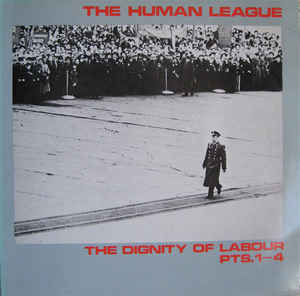
Time to re-think what the “dignity of labour” means? (Image sourced from Discogs)

Context

In a previous blog, I discussed the changing economic relationship we have with work, in which I re-framed what we mean by “employment”, what it means to be “employed”, and what the new era of work might look like, based on a world of “suppliers” (who offer their services as independent contractors) and “clients” (who expect access to just-in-time and on-demand resources).

The expanding “gig economy” reinforces the expectation that by 2020, average job tenure will be 3 years, and around 40% of the workforce will be employed on a casual basis (part-time, temporary, contractor, freelance, consultant etc.). The proliferation of two-sided market places such as Uber, Foodera, Freelancer, Upwork, Sidekicker, 99designs, Envato and Fiverr are evidence of this shift from employee to supplier.

We are also seeing a trend for hiring platforms that connect teams of technical and business skills with specific project requirements posted by hiring companies. Many businesses understand the value of people pursuing and managing “portfolio careers”, because companies may prefer to access this just-in-time expertise as and when they need it, not take on permanent overheads. But there are still challenges around access and “discovery”: who’s available, which projects, defining roles, agreeing a price etc.

Contribution

Meanwhile, employers and HR managers are re-assessing how to re-evaluate employee contribution. It’s not simply a matter of how “hard” you work (e.g., the hours you put in, or the sales you make). Companies want to know what else you can do for them: how you collaborate, do you know how to ask for help, and are you willing to bring all your experience, as well as who and what you know to the role? (As a case in point, when Etsy’s COO, Linda Kozlowski was recently asked about her own hiring criteria, she emphasized the importance of critical thinking, and the ability for new hires to turn analysis into actionable solutions.)

In another blog on purpose, I noted that finding meaningful work all boils down to connecting with our values and interests, and finding a balance between what motivates us, what rewards us, what we can contribute, and what people want from us. As I wrote at the time, how do we manage our career path, when our purpose and our needs will change over time? In short, the future of work will be about creating our own career opportunities, in line with our values, purpose and requirements.*

Compensation

From an economic and social policy perspective, no debate about the future of work can ignore the dual paradoxes:

  1. We will need to have longer careers (as life expectancy increases), but there will be fewer “traditional” jobs to go round;
  2. A mismatch between workforce supply and in-demand skills (plus growing automation) will erode “traditional” wage structures in the jobs that do remain

Politicians, economists and academics have to devise strategies and theories that support social stability based on aspirational employment targets, while recognising the shifting market conditions and the changing technological environment. And, of course, for trade unions, more freelance/independent workers and cheaper hourly rates undermine their own business model of an organised membership, centralised industrial awards, enterprise bargaining and the residual threat of industrial action when protective/restrictive practices may be under threat.

Which is why there needs to be a more serious debate about ideas such as the Universal Basic Income, and grants to help people to start their own business. On the Universal Basic Income (UBI), I was struck by a recent interview with everyone’s favourite polymath, Brian Eno. He supports the UBI because:

“…we’re now looking towards a future where there will be less and less employment, inevitably automation is going to make it so there simply aren’t jobs. But that’s alright as long as we accept the productivity that the automations are producing feeds back to people ….. [The] universal basic income, which is basically saying we pay people to be alive – it makes perfect sense to me.”

If you think that intellectuals like Eno are “part of the problem“, then union leaders like Tim Ayres (who advocates the “start-up grant”), actually have more in common with Margaret Thatcher than perhaps they realise. It was Thatcher’s government that came up with the original Enterprise Allowance Scheme which, despite its flaws, can be credited with launching the careers of many successful entrepreneurs in the 1980s. Such schemes can also help the workforce transition from employment in “old” heavy industries to opportunities in the growing service sectors and the emerging, technology-driven enterprises of today.

Creativity

I am increasingly of the opinion that, whatever our chosen or preferred career path, it is essential to engage with our creative outlets: in part to provide a counterbalance to work/financial/external demands and obligations; in part to explore alternative ideas, find linkages between our other interests, and to connect with new and emerging technology.

In discussing his support for the UBI, Eno points to our need for creativity:

“For instance, in prisons, if you give people the chance to actually make something …. you say to them ‘make a picture, try it out, do whatever’ – and the thrill that somebody gets to find that they can actually do something autonomously, not do something that somebody else told them to do, well, in the future we’re all going to be able to need those kind of skills. Apart from the fact that simply rehearsing yourself in creativity is a good idea, remaining creative and being able to go to a situation where you’re not told what to do and to find out how to deal with it, this should be the basic human skill that we are educating people towards and what we’re doing is constantly stopping them from learning.”

I’ve written recently about the importance of the maker culture, and previously commented on the value of the arts and the contribution that they make to society. There is a lot of data on the economic benefits of both the arts and the creative industries, and their contribution to GDP. Some commentators have even argued that art and culture contribute more to the economy than jobs and growth.

Even a robust economy such as Singapore recognises the need to teach children greater creativity through the ability to process information, not simply regurgitate facts. It’s not because we might need more artists (although that may not be a bad thing!), but because of the need for both critical AND creative thinking to complement the demand for new technical skills – to prepare students for the new world of work, to foster innovation, to engage with careers in science and technology and to be more resilient and adaptive to a changing job market.

Conclusions

As part of this ongoing topic, some of the questions that I hope to explore in coming months include:

1. In the debate on the “Future of Work”, is it still relevant to track “employment” only in statistical terms (jobs created/lost, unemployment rates, number of hours worked, etc.)?

2. Is “job” itself an antiquated economic unit of measure (based on a 9-5, 5-day working week, hierarchical and centralised organisational models, and highly directed work practices and structures)?

3. How do we re-define “work” that is not restricted to an industrial-era definition of the “employer-employee/master-servant” relationship?

4. What do we need to do to ensure that our education system is directed towards broader outcomes (rather than paper-based qualifications in pursuit of a job) that empower students to be more resilient and more adaptive, to help them make informed decisions about their career choices, to help them navigate lifelong learning pathways, and to help them find their own purpose?

5. Do we need new ways to evaluate and reward “work” contribution that reflect economic, scientific, societal, environmental, community, research, policy, cultural, technical, artistic, academic, etc. outcomes?

* Acknowledgment: Some of the ideas in this blog were canvassed during an on-line workshop I facilitated last year on behalf of Re-Imagi, titled “How do we find Purpose in Work?”. For further information on how you can access these and other ideas, please contact me at: rory@re-imagi.co

Next week: Designing The Future Workplace