A Journey Through England

As travel restrictions have eased over the past 12 months, I’ve been taking advantage of the opportunity to visit family and friends overseas.

Late last year, I spent a month in the UK, and it was a trip of very mixed experiences. It was the first time I had been back in nearly 4 years, the longest period of time I have ever been away from the country of my birth.

It’s nearly 30 years since I left London to live and work abroad, and even though I am still “from” the UK, I don’t really consider myself to be “of” it. Despite family ties and social links, with each visit back I feel less and less connected to the place. As a result, I tend to experience my time there as a visitor, rather than a returning expat.

This sense of dislocation has become especially evident since Brexit, and the quagmire that is UK domestic politics. Not only does the political environment feel quite alienating, the profile of the political leadership is almost unrecognisable: last time I was back, Theresa May was still Prime Minister; when I arrived in early November, Rishi Sunak was in the second week of his Premiership.

Luckily, the rolling programme of public sector strikes and other industrial unrest had limited impact on my own travel schedule, even though it has become almost impossible to plan train journeys too far ahead thanks to unreliable timetables and complex booking systems. Fortunately, the grocery shortages evident during the UK winter had yet to take hold, and before I left Australia, I had managed to lock in a favourable exchange rate to offset the effect of inflation.

I spent most of the time in the Peak District, but also visited Manchester, Sheffield, Milton Keynes, London and Kent – a north-west to south-east trajectory. The Dark Peak was my base, and I really appreciate the scenery in and around the town of Glossop, where I stayed – but for a town that used to boast one of the highest number of pubs per capita, quite a few local hostelries were only open from Thursday to Sunday, probably a consequence of Covid, energy costs and broader inflation?

Manchester itself was a dispiriting experience – the city centre (Piccadilly Gardens) resembled a zombie theme park, and there was a palpable sense of anger and an all-pervading threat of violence in the air. Maybe I was there on a bad day, but the overall mood was definitely “off”. By contrast, Sheffield city centre, which I’d not visited since the early 1990s, felt welcoming and had a much more positive vibe.

I have to admit to being pleasantly surprised by my weekend in Milton Keynes. Its reputation, as a planned New Town, for being soulless and devoid of personality is probably undeserved. Yes, it helps if you know how to navigate the network of roundabouts and ring roads (anyone familiar with Canberra would have sense of déjà vu), but I can definitely see the attraction, especially for families, with its acres of space and many recreational activities. If necessary, it’s possible to commute to London, plus there are nearby country parks and village pubs to frequent on the weekends.

Despite my familiarity with the geography and fabric of London, I now see it through the eyes of a tourist. Even though the overall layout remains the same, the constant changes in the built landscape can disorient the infrequent visitor. Because I no longer rely on it every day for work, I actually think London’s public transport has improved, but I’m sure it would only take a strike on the underground, or the wrong type of leaves on the train tracks at Clapham Junction to disabuse me of this situation. While London has always existed in an economic bubble in relation to the rest of the country, it probably wouldn’t take much to undermine the city’s renewed self-confidence as it tries to navigate a post-Brexit role in international banking, finance, trade and commerce.

Judging by a financial services conference I attended, compared to the same conference 4 years ago, there was a lot more focus on regulation as the UK (and the City in particular) disentangles itself from the EU – and as in many other areas, there is confusion about the transition process: understanding which rules continue unaffected; the scope and impact of any interim arrangements; and the anticipation of totally new measures yet to come into force.

Of course, the worst of petty British bureaucracy probably doesn’t even need the headache of Brexit to tie itself in knots. One small example I witnessed: in a country pub, I was told at the bar that I could not be served soy milk with my tea, and that the barman risked losing his license if he complied with my request – but oat milk was OK; and bizarrely, dishes that contained soy and served in the pub restaurant were also available. Go figure. I still can’t work out whether this was a quirk of local licensing laws, a capricious whim of the hotelier, or just a cranky member of staff.

My final port of call was the outer London suburbia of north-west Kent. Close enough to the London bubble to be popular with commuters, it’s also where I spent much of my childhood and teenage years. I wouldn’t say that familiarity breeds contempt, but it gets increasingly hard to feel any nostalgia for the place. Whenever I go back, it naturally feels much smaller (physically, socially, culturally) than when I was growing up there. Fortunately, when I caught up with a bunch of high school friends (all of whom have long since moved away from the area), there was a “very comfortable familiarity”, as one of our group described it afterwards: “not overly nostalgic but warm and generous. It’s the kind of thing I might have disdained when younger but I really enjoy it.” There speaks the wisdom of age(ing).

There’s no doubt a great deal I should be grateful for having been born in the UK, and probably a lot more that I take for granted as a result when I am there: walks in the country, spending some quality time with close family, good pub meals, excellent art exhibitions, even the inter-city train journeys through “England’s green and pleasant land” (no irony intended). All of which make the many varied and minor disappointments even harder to accept – I somehow expect better of the place, even after all this time away.

Next week: Hong Kong – Then and Now
 

Eat The Rich?

There has recently been a spate of satirical films and TV series that take aim at the vanity, self-indulgence and sense of entitlement of the uber-rich. I’m thinking in particular of “The Menu”, “The Triangle of Sadness”, “Glass Onion” and “White Lotus”.  You could also include “Succession” on that list (especially in light of the latest revelations from the House of Murdoch), but this is more of a traditional drama than the others, both in terms of format and content.

Nothing radically new in these stories, their themes or the way they plot their narratives. What is perhaps surprising is the fact that these are not small, independent, art-house productions. They have substantial budgets, exotic locations, stylish design, creative cinematography, and some big names in the credits.

Plus, they receive major theatrical releases, or are luring audiences to premium streaming services. So, they are generally commercial. Best of all, they are attracting awards and nominations – which should hopefully encourage studios to invest in more projects like these (rather than green-lighting yet another sequel in the never-ending round of comic book and super hero franchises).

Of course, these particular stories could simply represent a sign of the times, reflecting current world events, and holding up a mirror to our social-media obsessed age. They also resonate with audiences who are looking for some escapism in the form of critiques of the upper classes, the filthy rich, the social elites, the global power brokers, and those hangers-on who hover and follow in their wake.

I wouldn’t suggest these productions are waging a form of class war, but they represent a kind of morality play: why would anyone want to feel jealous of, let alone become, these people?

Next week: A Journey Through England


I CAN live without my radio…

After posting my last blog on digital vs analog music, I saw the media commentary about the decline in Triple J’s audience numbers. There was a suggestion that younger people no longer listen to the radio, and have shifted to digital formats such as streaming and podcasts. As is often the case, the headline doesn’t necessarily tell the full story – and thanks to Tim Burrowes, we also have a deeper dive into the underlying data.

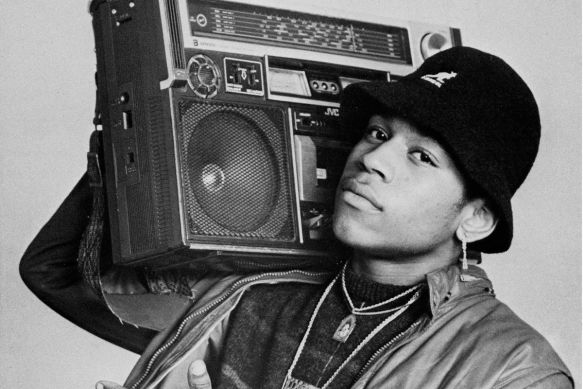
Seems like we CAN live without our radio (especially Triple J…) (Photo of LL Cool J by Janette Beckman, image sourced from Bloomberg)

I’m obviously not part of Triple J’s target demographic (18-24 year-olds), but I find the concept of age-oriented radio (and music) somewhat bizarre. If I was that age again, I’d probably find it highly patronizing that a national broadcaster was trying to force me into a random age bracket, on the assumption that they knew my taste in music, and/or they knew what was good for me. It’s an arrogant, simplistic and reductionist approach to broadcasting. Even now, I may not listen to all the exact same music I liked when I was that age, but my taste in music didn’t suddenly change when I turned 18 (or 24). Humans are much more subtle and idiosyncratic than demographers, marketers and programmers may like to think.

Anyway, it got me thinking about my own experience of listening to the radio, and how it formed my outlook on music. Once I had access to a portable transistor radio, it meant I got to choose which stations I listened to, and what types of music I heard, rather than what my parents or older sisters were listening to in the rest of the house. Although as a young teenager, I still kept an ear out for what was popular, I tuned out of the Top 40 format early on, in favour of pirate stations like Radio Caroline (which played mainly prog rock and psychedelic sounds), and the John Peel show on BBC Radio 1 (during his heyday of 1976-83 – the punk and post-punk era). When I first heard the whole of side 1 of Kraftwerk’s “Autobahn” album played on the radio in 1974 (I was 13 at the time), I realised that the 3 minute, 45 rpm, 7″ vinyl single wasn’t the only option…

Alongside broadcast radio, the UK’s infamous weekly music papers were the major source of information about the industry. With three titles, New Musical Express, Melody Maker, and Sounds, dominating the market in those pre-internet, pre-MTV days of yore, the inkies were the main way to find out about new bands, new releases, upcoming gigs, as well as album and live reviews. Then there were the listing magazines (which covered more than music), and the fanzines that proliferated in the wake of punk.

As I had more access to live music during my teenage years and beyond, music radio became less important. And although my gig attendance is more sporadic these days (no reflection on Melbourne’s excellent live music scene!) the only music radio stations I currently listen to are ABC Jazz, SBS Chill (especially Sunday mornings…) and Stuart Maconie’s Freak Zone on BBC Radio 6. I can’t bear to listen to most commercial radio or so-called popular music stations (age-oriented or otherwise) – it’s not only because of the music they play, it’s the actual production quality, programme format, presentation style and the absence of “space”: everything is crammed into every available piece of bandwidth, compressed within a decibel if its life, and the content lacks variety, depth or subtlety.

When I moved to Melbourne 20 years ago, ABC Radio National had a weekly programme called “Sound Quality”, that featured some of the most varied, interesting and challenging new music around – in fact, it was probably the only place to hear this stuff on national radio. It also encouraged listener-contributed content, and I was fortunate to have several of my own pieces played on air (ok, so I’m biased). Sadly, the programme was decommissioned in 2015, and nothing comprarable has taken its place.

In a further twist, I tend to hear about new (and old) Australian music via my local record stores, particularly the ones that specialise in vinyl, namely RockSteady Records, Northside Records, Dutch Vinyl and The Searchers.

Next week: Reflections on The Kimberley


Digital Perfectionism?

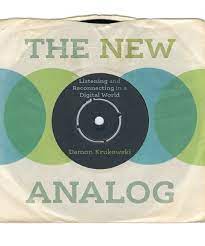
In stark contrast to my last blog on AI and digital humans, I’ve just been reading Damon Krukowski‘s book, “The New Analog – Listening and Reconnecting in a Digital World”, published in 2017. It’s an essential text for anyone interested in the impact of sound compression, noise filtering, loudness and streaming on the music industry (and much more besides).

The are two main theses the author explores:

1. The paradoxical corollary to Moore’s Law on the rate of increase in computing power is Murphy’s Moore’s Law: that in striving for improved performance and perfectionism in all things digital, equally we risk amplifying the limitations inherent in analog technology. in short, the more something improves, the more it must also get worse. (See also my previous blogs on the problem of digital decay, and the beauty of decay music.)

2. In the realm of digital music and other platforms (especially social media), stripping out the noise (to leave only the signal) results in an impoverished listening, cultural and social experience; flatter sound, less dynamics, narrower tonal variation, limited nuance, an absence of context. In the case of streaming music, we lose the physical connection with the original artwork, accompanying sleeve notes, creative credits and even the original year of publication.

Thinking about #1 above, imagine this principle applied to #AI: would the pursuit of “digital perfectionism” mean we lose a large part of what makes analogue homo sapiens more “human”? Would we end up compressing/removing “noise” such as doubt, uncertainty, curiosity, irony, idiosyncrasies, cognitive diversity, quirkiness, humour etc.?

As for #2, like the author, I’m not a total Luddite when it comes to digital music, but I totally understand his frustration (philosophical, phonic and financial) when discussing the way CDs exploit “loudness” (in the technical sense), how .mp3 files compress more data into less space (resulting in a deterioration in overall quality), and the way streaming platforms have eroded artists’ traditional commercial return on their creativity.

The book also discusses the role of social media platforms in extracting value from the content that users contribute, reducing it to homogenised data lakes, selling it to the highest bidder, and compressing all our personal observations, relationships and original ideas (the things that make us nuanced human beings) into a sterilsed drip-feed of “curated” content.

In the narrative on music production, and how “loudness” took hold in the mid-1990s, Krukowski takes specific aim at the dreaded sub-woofer. These speakers now pervade every concert, home entertainment system, desk-top computer and car stereo. They even bring a distorted physical presence into our listening experience:

“Nosebleeds at festivals, trance states at dance clubs, intimidation by car audio…. When everything is louder than everything else, sounds lose context and thus meaning – even the meaning of loud.”

The main issue I have with digital music is that we as listeners have very little control over how we hear it – apart from adjusting the volume. So again, any nuance or variation has been ironed out, right to the point of consumption – we can’t even adjust the stereo balance. I recall that my boom box in the 1980s had separate volume controls for each speaker, and a built-in graphic equalizer. To paraphrase Joy Division, “We’ve Lost Control”.

Next week: I CAN live without my radio…