Content in Context helps companies to define the market for their products and services, to identify customers and build the business pipeline, and to develop their content marketing strategies.
By working with our clients to design, build and grow their business, our primary focus is to extract commercial value from unique assets, including knowledge, data, know-how, processes and transactional information.
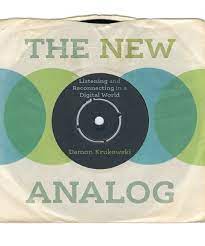
1. The paradoxical corollary to Moore’s Law on the rate of increase in computing power is Murphy’s Moore’s Law: that in striving for improved performance and perfectionism in all things digital, equally we risk amplifying the limitations inherent in analog technology. in short, the more something improves, the more it must also get worse. (See also my previous blogs on the problem of digital decay, and the beauty of decay music.)
2. In the realm of digital music and other platforms (especially social media), stripping out the noise (to leave only the signal) results in an impoverished listening, cultural and social experience; flatter sound, less dynamics, narrower tonal variation, limited nuance, an absence of context. In the case of streaming music, we lose the physical connection with the original artwork, accompanying sleeve notes, creative credits and even the original year of publication.
Thinking about #1 above, imagine this principle applied to #AI: would the pursuit of “digital perfectionism” mean we lose a large part of what makes analogue homo sapiens more “human”? Would we end up compressing/removing “noise” such as doubt, uncertainty, curiosity, irony, idiosyncrasies, cognitive diversity, quirkiness, humour etc.?
As for #2, like the author, I’m not a total Luddite when it comes to digital music, but I totally understand his frustration (philosophical, phonic and financial) when discussing the way CDs exploit “loudness” (in the technical sense), how .mp3 files compress more data into less space (resulting in a deterioration in overall quality), and the way streaming platforms have eroded artists’ traditional commercial return on their creativity.
The book also discusses the role of social media platforms in extracting value from the content that users contribute, reducing it to homogenised data lakes, selling it to the highest bidder, and compressing all our personal observations, relationships and original ideas (the things that make us nuanced human beings) into a sterilsed drip-feed of “curated” content.
In the narrative on music production, and how “loudness” took hold in the mid-1990s, Krukowski takes specific aim at the dreaded sub-woofer. These speakers now pervade every concert, home entertainment system, desk-top computer and car stereo. They even bring a distorted physical presence into our listening experience:
“Nosebleeds at festivals, trance states at dance clubs, intimidation by car audio…. When everything is louder than everything else, sounds lose context and thus meaning – even the meaning of loud.”
The main issue I have with digital music is that we as listeners have very little control over how we hear it – apart from adjusting the volume. So again, any nuance or variation has been ironed out, right to the point of consumption – we can’t even adjust the stereo balance. I recall that my boom box in the 1980s had separate volume controls for each speaker, and a built-in graphic equalizer. To paraphrase Joy Division, “We’ve Lost Control”.
Nowadays, no TV or movie franchise worth its salt is deemed complete unless it has some sort of origin story – from “Buzz Lightyear” to “Alien”, from “Mystery Road” to “Inspector Morse”. And as for “Star Wars”, I’ve lost count as to which prequel/sequel/chapter/postscript/spin-off we are up to. Origin stories can be helpful in explaining “what came before”, providing background and context, and describing how we got to where we are in a particular narrative. Reading Jeanette Winterson’s recent collection of essays, “12 Bytes”, it soon becomes apparent that what she has achieved is a tangible origin story for Artificial Intelligence.
Still from “Frankenstein” (1931) – Image sourced from IMDb
By Winterson’s own admission, this is not a science text book, nor a reference work on AI. It’s a lot more human than that, and all the more readable and enjoyable as a result. In any case, technology is moving so quickly these days, that some of her references (even those from barely a year ago) are either out of date, or have been superceded by subsequent events. For example, she makes a contemporaneous reference to a Financial Times article from May 2021, on Decentralized Finance (DeFi) and Non-Fungible Tokens (NFTs). She mentions a digital race horse that sold for $125,000. Fast-forward 12 months, and we have seen parts of the nascent DeFi industry blow-up, and an NFT of Jack Dorsey’s first Tweet (Twitter’s own origin story?) failing to achieve even $290 when it went up for auction, having initially been sold for $2.9m. Then there is the Google engineer who claimed that the Lamda AI program is sentient, and the chess robot which broke its opponent’s finger.
Across these stand-alone but interlinked essays, Winterson builds a consistent narrative arc across the historical development, current status and future implications of AI. In particular, she looks ahead to a time when we achieve Artificial General Intelligence, the Singularity, and the complete embodiment of AI, and not necessarily in a biological form that we would recognise today. Despite the dystopian tones, the author appears to be generally positive and optimistic about these developments, and welcomes the prospect of transhumanism, in large part because it is inevitable, and we should embrace it, and ultimately because it might the only way to save our planet and civilisation, just not in the form we expect.
The book’s themes range from: the first human origin stories (sky-gods and sacred texts) to ancient philosophy; from the Industrial Revolution to Frankenstein’s monster; from Lovelace and Babbage to Dracula; from Turing and transistors to the tech giants of today. There are sections on quantum physics, the nature of “binary” (in computing and in transgenderism), biases in algorithms and search engines, the erosion of privacy via data mining, the emergence of surveillance capitalism, and the pros and cons of cryogenics and sexbots.
We can observe that traditional attempts to imagine or create human-made intelligence were based on biology, religion, spirituality and the supernatural – and many of these concepts were designed to explain our own origins, to enforce societal norms, to exert control, and to sustain existing and inequitable power structures. Some of these efforts might have been designed to explain our purpose as humans, but in reality they simply raised more questions than they resolved. Why are we here? Why this planet? What is our destiny? Is death and extinction (the final “End-Time”) the only outcome for the human race? Winterson rigorously rejects this finality as either desirable or inevitable.
Her conclusion is that the human race is worth saving (from itself?), but we have to face up to the need to adapt and continue evolving (homo sapiens was never the end game). Consequently, embracing AI/AGI is going to be key to our survival. Of course, like any (flawed) technology, AI is just another tool, and it is what we do with it that matters. Winterson is rightly suspicious of the male-dominated tech industry, some of whose leaders see themselves as guardians of civil liberties and the saviours of humankind, yet fail to acknowledge that “hate speech is not free speech”. She acknowledges the benefits of an interconnected world, advanced prosthetics, open access to information, medical breakthroughs, industrial automation, and knowledge that can help anticipate danger and avert disaster. But AI and transhumanism won’t solve all our existential problems, and if we don’t have the capacity for empathy, compassion, love, humour, self-reflection, art, satire, creativity, imagination, music or critical thinking, then we will definitely cease to be “human” at all.
The Bibliography to this book is an invaluable resource in itself – and provides for a wealth of additional reading. One book that is not listed, but which might be of interest to her readers, is “Chimera”, a novel by Simon Gallagher, published in 1981 and subsequently adapted for radio and TV. Although this story is about genetic engineering (rather than AI), nevertheless it echoes some of Winterson’s themes and concerns around the morals and ethics of technology (e.g., eugenics, organ harvesting, private investment vs public control, playing god, and the over-emphasis on the preservation and prolongation of human lifeforms as they are currently constituted). Happy reading!
The problem with a prodigious talent like Pablo Picasso is: how or where do you begin to make any sort of meaningful assessment of his work? He lived to a ripe old age; he was extremely prolific across multiple media; he befriended so many artists and writers; and he had numerous wives and mistresses, his personal life is a rich subject all on its own. Every few years, a new insight comes into focus, via major retrospectives or academic studies. The closest we have to an official biography extends to 4 volumes, and has so far only reached 1943 (Picasso died in 1973). Then there are the record-breaking art auctions…
So it must be with some trepidation that visitors approach the latest example of “making sense of” Picasso – the NGV’s current blockbuster exhibition, ominously titled “ThePicasso Century”. The sheer volume of his output, the breadth of techniques and the range of styles can be overwhelming. This major exhibition (drawing mainly on the collections held in the Centre Pompidou and at the Picasso Museum, Paris) is arranged fairly conventionally, in chronological order, and reflecting the major periods of Picasso’s work.
There are glimpses of the post-impressionist Blue Period, the flirtation with Primitivism and Fauvism (which sparked a life-long rivalry with Matisse), and his dominance of Cubism (although both Braque and Gris gave him a run for his money). Plus the importance of people like Gertrude Stein who, initially through her brother, became an early admirer, friend and collector.
Then there is his association with the Surrealists, although I’ve never felt he fully embodied their movement. Sure, he was instrumental in furthering their aims, he counted many of its practitioners as close friends and associates, and he participated in many of their exhibitions, manifestos, happenings and publications. But Picasso did not really pursue the juxtaposition and sub-conscious of major Surrealists such as Dali, Magritte or Ernst. That’s not to say Picasso didn’t reveal his sense of humour or his liking for fantasy – but unlike some of his peers, he was always in control, nothing was left to chance, and even his re-telling of ancient myths and legends was self-serving and relatively orthodox.
First and foremost, Picasso was an excellent draftsman, and his lines and mark-making were always deliberate, distinctive and revealing – as seen in some of the archive footage of Picasso at work in his studio. (I think the dismissive argument that “any 3 year old could have drawn that” has long been debunked.)
Of course, when there are so many works to choose from, the curators are spoiled for choice, and narrowing down this selection must have been challenging – even though they stick gamely to their particular narrative(s), resulting in a balanced and consistent presentation. There are a couple of insights which I did find refreshing – Picasso’s association with Wilfredo Lam, and his dabbling in political themes (mainly stemming from his membership of the Communist Party in France). The one weakness in this exhibition is the extensive display of ceramic plates from Picasso’s later years. I’ve never been a fan of these pieces, as I don’t think they add much to his body of work. There is a sense that he would make these almost on demand, and had them at hand for when visitors and souvenir hunters tracked him down to his studio.
Nonetheless, this exhibition is highly recommended, and provides yet another excuse to admire the work of Picasso’s peak artistic years, from 1909 to 1949. Prior to that period, he was still finding his artistic voice (and creating his own myth); and after that, he found himself having to live up to (and even exaggerating) the myth he had built up for and around himself. Whatever else this exhibition may reveal about his life, the work is still what counts.
Recent media commentary suggests we have a housing crisis in Australia – ranging from affordability and supply, to quality and location, as reported here. Renters are being priced out of the market, ageing stock means houses that are too cold in winter or too hot in summer, and there aren’t enough homes to rent where people want to live. I suspect that all of these factors have been in place for several years, but the knock-on effects from the Covid pandemic have exacerbated these trends.
For background, I should explain that at the start of my career, I worked as a housing officer and paralegal in the UK. I worked for three different local councils in inner London, advising tenants, leaseholders and landlords on their respective rights and obligations – and where there were infringements, preparing prosecutions against landlords and their agents. I dealt with people facing harassment, unlawful eviction, homelessness and housing disrepair. Mostly, my work involved advising the parties of their legal position and available remedies, often I helped them reach an amicable solution, and occasionally I had to take enforcement action with the support of the council’s legal powers. The latter included injunctions against the threat of unlawful eviction, the issuance of proper rent records, repair notices, rehousing directives, and even compulsory purchase orders.
It was stressful, and at times confrontational, work – after 5 years, I was pretty burned out, and decided to make a career change. At the time, London (and the UK) was experiencing a huge amount of change that impacted both the public and private rental sectors. First, the Conservative government under Margaret Thatcher had introduced “right to buy” legislation, meaning public housing tenants could apply to buy the homes they lived in. Second, the government also introduced “mortgage interest relief at source” (MIRAS) which meant home buyers received tax relief on their interest payments. Third, central London in particular was going through a period of gentrification, with public money made available to property owners to improve and upgrade period homes. As a result, Georgian and Victorian houses that had been sub-divided into apartments (mainly occupied by long-term tenants) were restored to single family homes. Added to that, one of the council’s I worked for had been engaged in a “homes for votes” scandal, a “policy” to (re-)engineer the local demographics.
In the past, I’ve been both a tenant and a landlord, so I’ve also experienced some of these issues for myself. As a tenant, I’ve had landlords who denied that their properties were poorly wired or had defective plumbing (despite formal notifications from the council), and denied all requests to have the defects fixed. As a landlord, I’ve had tenants sub-letting to their “friends”, and who assured me that these “friends” could pay the rent.
So what is going on in parts of Australia, that there is such a misalignment between where tenants want to live, and vacant housing stock?
First, to touch on property ownership. Home owners don’t receive anything like the former MIRAS scheme in the UK, but there are various financial incentives for first-time buyers (such as zero stamp duty when buying a property off the plan), and during the Covid pandemic, some first-time buyers could access their superannuation (pension) fund to help with the deposit or down-payment. Property investors can take advantage of negative gearing to offset mortgage interest payments and costs of repairs against their income tax. These factors are generally considered to push up house prices – and despite recent interest rate rises, the cost of borrowing has remained at historic lows for more than a decade. Housing inflation means aspiring buyers are priced out of the market (especially as wages have not kept pace with inflation, let alone the rise in property prices). And landlords are now seeking to increase rents to offset rising interest rates.
Second, I’ve never really understood why some landlords don’t maintain their properties to an adequate standard – it surely detracts from the value of their assets, as well as deterring potential tenants. And when there may be improvement funds available (e.g., insulation grants, solar rebates) why wouldn’t they take advantage? On the reverse, should tenants have more powers to undertake essential repairs and improvements, and withhold rent to cover the costs? (Equally, I find it surprising that some tenants don’t feel it is their responsibility to undertake minor maintenance or running repairs, such as mowing the grass, clearing gutters or replacing cracked window panes.)
Third, it’s an economic imperative to have a supply of housing stock in the rental market. It helps people who prefer to rent rather then buy, it allows for workforce mobility, and it supports seasonal demand in industries like agriculture. I don’t believe that all rental stock should be held and managed in the public sector – it represents a huge obligation (not just an asset) on government balance sheets, tying up capital and incurring huge running costs. We need a component of public housing, but otherwise leave it to the private sector, with appropriate safeguards.
Fourth, why the apparent mismatch between supply and demand? On one level, developers are building the wrong types of properties and/or building in the wrong locations. Inner city areas have seen a massive growth in high-rise apartments over the past 20 years, supposedly in response to increased housing demand. In theory, these projects generate more yield for developers, although the apparent over-supply leads to depressed rents, and some banks won’t lend against these properties due to uncertain re-sale value and over-capitalised assets.
In the suburbs, archetypal quarter acre blocks have been sub-divided to cram in more town houses and units, or developers are building bigger houses (McMansions) on smaller plots, leaving minimal gardens and no breathing space between properties, as they build right up to the boundary lines. Many new suburban developments lack proper infrastructure and services (public transport, schools, shops, clinics), making them less attractive to renters – while the owners expect higher rents to cover the cost of their mortgages. Plus, many new properties have been built “on the cheap”, using inferior materials and design – hence the issues with heating/cooling. On the other hand, ageing stock, especially weatherboard and brick veneer structures, can also be hard to heat/cool. Many houses (new and old) lack double-glazing, for example, which would go a long way to resolving this energy conundrum.
Meanwhile, the recent lock downs in Melbourne (and to a lesser extent, Sydney) have meant many urbanites have moved to regional locations, putting upward pressure on property values and rents, pricing out locals who already live and work there. Of course, another reason for the mismatch in supply and demand is the growth in short-term lets, mainly for holiday-makers – such that local stock is taken out of the regular rental market. However, a lot of the Airbnb accommodation I have used over the years would never have been available on the rental market, because they were pre-existing holiday lets, or they are principal homes, where the owners are temporarily working abroad or interstate. And this type of flexible accommodation is also in demand by a mobile workforce that can, and prefers to, work from anywhere (so-called digital nomads).
None of which explains or resolves the current crisis. If governments want to address the bigger issues, they need to consider a range of solutions: updating building standards, upgrading land-use rezoning and planning regulations, encouraging a greater variety of housing development and management (soclal housing, shared ownership, property exchanges, rent holidays in return for repairs and improvements), and the use of modular/portable homes to meet fluctuating demand. All of which requires vision, and most party political objectives are driven by short term goals and the next election cycle.
* Apologies to Pere Ubu for (mis-)appropriating the title of their second album

 The are two main theses the author explores: