Has digital killed the music industry?

Or, more specifically, has disintermediation broken the business model?
Image

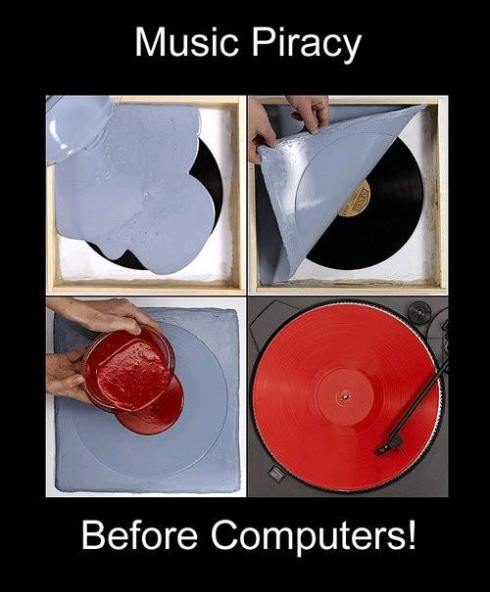
Ever since the invention of compact cassettes in the 1960s and the arrival of the Walkman in the 1970s, pundits have been predicting the end of the music business (remember those “Home Taping Is Killing Music” campaign logos of the 1980s?) – a theory that look set to come true in the 1990s with the launch of mp3 players and peer-to-peer file sharing. Yet, rather like Mark Twain, the death of the record industry appears to be greatly exaggerated.

Most debate about the demise of the music industry is predicated on the impact of technology that facilitates music piracy, whereas in reality the business model has been broken as a consequence of digital disintermediation.

For most of its history, the recording industry was a model of vertical integration. The major record labels owned the content, the means of production (recording and manufacture), the publishing and licensing activities, the distribution channels – and in some cases, they even manufactured the hardware, owned the retail stores and promoted live concerts.

The 1970s began a rapid process of horizontal integration, as the major record labels merged with one another at such a rate that by the late 1990s there were really only four global companiesSony, Warner, Universal and EMI. At various times, each of these companies has also been affiliated to substantial film, electronics and publishing interests – further proof of the vertical and horizontal integration.

The “Big Four” have now been reduced to just three with the sale of EMI to Universal. European Union Competition rules resulted in parts of the EMI group of labels being divested to Warner, and the music publishing division being sold to Sony/ATV Music Publishing.

EMI was probably the epitome of vertical integration – but over the years, it was forced to sell or close assets like its UK manufacturing plant and the HMV retail chain, and came close to selling off London’s Abbey Road Studios (a decision that was reversed following public outcry and reinforced by a heritage listing). Some observers blame poor business decisions and weak digital strategies for EMI’s demise, but I would argue that the highly integrated model has been found wanting, and EMI was a dinosaur that could no longer survive in its current form. For example, despite some errors of judgement (such as putting “Copy Control” software on their CD’s which affected their ability to play on personal computers), in many ways EMI was something of a pioneer in digital music – being one of the first major labels to remove DRM from its downloads, and licensing its content for streaming services.

Despite the rampant corporate contraction, the growth of digital download platforms and the expansion of music streaming services, it’s clear that record labels still have a role to play in developing and distributing new content. Independent labels, distributors and retailers continue to wax and wane according to the fortunes of the wider industry, and technology makes it even easier for artists to self-release their recordings direct to the customer – but record labels provide the financial and marketing support that are critical to commercial success, and other intermediaries (publishers, distributors, licensees, retailers, promoters, etc.) continue to add value to the supply chain.

In fact, just this week, Billboard has been running a poll on whether Universal and Sony should break away from their parent entertainment conglomerates – the theory being that the music labels represent greater value on their own, especially when unencumbered by ailing electronics and movie businesses. Results so far suggest that ownership does not matter so much as having the best strategies for, and access to, the means of content creation and distribution.

At the same time, the music industry is going through another round of vertical and horizontal integration and disintermediation, driven by new technology, new distribution platforms and new business models linked to the way we access and consume content. So, while Apple’s iTunes platform has been accused of anti-competitive practices in its dealings with content owners, it also faces competition from music streaming services like Spotify, Rdio and Pandora, and new content platforms like Twitter’s #music and Vine. And if sales of new CD’s (and even mp3 downloads) are reportedly declining, there is still healthy demand for live music events especially those linked to the marketing of established back catalogue titles, which is where record labels come into their own as curators of re-released and re-packaged content.

In conclusion, here are some random reasons why I think the music industry is actually in good health:

Whose content is it anyway?

Faust 2.0

Every social media and digital publishing platform is engaged in a continuous battle to acquire content, in order to attract audiences and bolster advertising revenues.

Content ownership is becoming increasingly contentious, and I wonder if we truly appreciate the near-Faustian pact we have entered into as we willingly contribute original material and our personal data in return for continued “free” access to Facebook, YouTube, Google, Flickr, LinkedIn, Pinterest, Twitter, MySpace, etc.

Even if we knowingly surrender legal rights over our own content because this is the acceptable price to pay for using social media, are we actually getting a fair deal in return? The fact is that more users and more content means more advertisers – but are we being adequately compensated for the privilege of posting our stuff on-line? Even if we are prepared to go along with the deal, are our rights being adequately protected and respected?

In late 2012, Instagram faced intense public backlash against suggestions it would embark upon the commercial exploitation of users’ photographs. While appearing to backtrack, and conceding that users retain copyright in their photographs, there is nothing to say that Instagram and others won’t seek to amend their end-user license agreements in future to claim certain rights over contributed content. For example, while users might retain copyright in their individual content, social media platforms may assert other intellectual property rights over derived content (e.g., compiling directories of aggregated data, licensing the metadata associated with user content, or controlling the embedded design features associated with the way content is rendered and arranged).

Even if a social media site is “free” to use (and as we all know, we “pay” for it by allowing ourselves to be used as advertising and marketing bait), I would still expect to retain full ownership, control and use of my own content – otherwise, in some ways it’s rather like a typesetter or printer trying to claim ownership of an author’s work….

The Instagram issue has resurfaced in recent months, with the UK’s Enterprise and Regulatory Reform Act. The Act amends UK copyright law in a number of ways, most contentiously around the treatment of “orphan” works (i.e., copyright content – photos, recordings, text – where the original author or owner cannot be identified). The stated intent of the Act is to bring orphan works into a formal copyright administration system, and similar reforms are under consideration in Australia.

Under the new UK legislation, a licensing and collection regime will be established to enable the commercial exploitation of orphan works, provided that the publisher has made a “diligent” effort to locate the copyright holder, and agrees to pay an appropriate license fee once permission to publish has been granted by the scheme’s administrator.

Such has been the outcry (especially among photographers), that the legislation has been referred to as “the Instagram Act”, and the UK government’s own Intellectual Property Office was moved to issue a clarification factsheet to mollify public concerns. However, those concerns continue to surface: in particular, the definition of “diligent” in this context; and the practice of some social media platforms to remove metadata from photos, making it harder to identify the owner or the original source.

Meanwhile, the long-running Google book scanning copyright lawsuit has taken another unexpected twist in the US courts. From the outset, Google tried to suggest it was providing some sort of public service in making long-out-of-print books available in the digital age. Others claim that it was part of a strategy to challenge Amazon.

Despite an earlier unfavourable ruling, a recent appeal has helped Google’s case in two ways: first, the previous decision to establish a class action comprising disgruntled authors and publishers has been set aside (on what looks like a technicality); second, the courts must now consider whether Google can claim its scanning activities (involving an estimated 20 million titles) constitute “fair use”, one of the few defences to allegations of breach of copyright.

Personally, I don’t think the “fair use” provisions were designed to cater for mass commercialization on the scale of Google, despite the latter saying it will restrict the amount of free content from each book that will be displayed in search results – ultimately, Google wants to generate a new revenue stream from 3rd party content that it neither owns nor originated, so let’s call it for what it is and if authors and publishers wish to grant Google permission to digitize their content, let them negotiate equitable licensing terms and royalties.

Finally, the upcoming release of Apple’s iOS7 has created consternation of its own. Certain developers with access to the beta version are concerned that Apple will force mobile device users to install app upgrades automatically. If this is true, then basically Apple is telling its customers they now have even less control over the devices and content that they pay for.

Paywalls go up – Staff numbers go down: a tipping point for Australian news media?

Ownership concentration dominates Australia’s Mass Media

The past 12 months have been a pivotal time for Australia’s mainstream news media. Having seen off controversial regulatory reforms that would have relaxed some cross-ownership controls (but also introduced more onerous oversight of press standards), harsh business truths and painful economic reality have returned, in the form of cost-cutting, new digital subscription models, and foreign competition.

The failed regulatory reforms generated public, industry and political debate around ownership concentration and the lack of media diversity; cross-ownership and the impact of media convergence; the need for revised rules around mergers and acquisitions; and calls for more control over media standards.

What does Australia’s Fourth Estate currently look like?

There are two daily national newspapers, and 10 daily capital city newspapers; all but one of these 12 titles are owned by just two companies: News Limited, and Fairfax Media. Only Sydney and Melbourne have more than one daily local newspaper. Together, News and Fairfax account for about 88% of print media. Both companies have significant interests in broadcast media. The sole “independent” daily newspaper is owned by Seven West Media, itself a major TV broadcaster. As further evidence of Australia’s concentrated content ownership, Seven West has a joint digital venture with Yahoo!, while its rival network broadcaster, Nine Entertainment has a similar joint venture with Microsoft. Prominent in the ownership mix are the names of Rupert Murdoch (News Limited), James Packer (Consolidated Press Holdings) and Kerry Stokes (Seven West Media) – each of whose companies have various interests in Australian pay TV. Meanwhile mining magnate and Australia’s richest person, Gina Rinehart has been buying into both Fairfax (along with John Singleton, a key figure in Australia’s advertising and radio industries) and Network Ten (along with James Packer and Lachlan Murdoch).

Another layer of complex media cross-ownership comes in the form of Australia’s regional TV networks. The main regional networks (WIN, Southern Cross and Prime) each have content affiliation agreements with one or other of the three metropolitan networks (Seven, Nine and Ten), and each have separate interests in radio. Just to confuse things even further, the owner of WIN, Bruce Gordon is a major shareholder in Network Ten, and in the past week it has been reported that he is open to merging WIN with either Nine or Ten. Not only would such a merger lead to further concentration (subject to regulatory approval), it would also see a re-alignment of the metropolitan and regional content agreements; and given past criticism of of reduced local and regional TV news content (and the closure or consolidation of local TV news rooms), I would imagine that without suitable regulatory provisions, local news content will be even further reduced.

What are the news media doing in response to current market challenges?

First, both News and Fairfax have announced staff cuts in an effort to offset declining circulation and advertising revenues from their print editions. The overall results have seen: departures by high-profile journalists; centralized news-gathering operations; outsourced sub-editing; re-alignment of print and on-line assets; and the closure of some local and regional titles. Most recently, Australian Associated Press (AAP) announced that newswire staff numbers are being reduced by 10%. AAP (whose largest shareholders are News and Fairfax) is a major provider of news content and sub-editing services to the mainstream media. The staff reductions among in-house editors and journalists have raised concerns about quality and diversity in Australia’s highly concentrated news media. Partly in response to this perceived decline in editorial standards, The Conversation (a not-for-profit venture, backed by a consortium of universities) was launched in 2011 as a platform for in-depth, objective and authoritative news analysis and commentary.

Second, both News and Fairfax are in the process of building subscription paywalls around their digital content. Fairfax has operated a paywall around its business title, the  Financial Review, for several years; but like News it is introducing freemium models for broader on-line news content. In their latest investor briefings, News and Fairfax have outlined a renewed strategic focus on digital platforms, although neither have given definitive timelines for sun-setting their print editions. Personally, I am somewhat confused by the different subscription models on offer (print, on-line and tablet editions) and what I can access as a subscriber to one or other platform (and as a domestic or overseas reader).

Third, UK publisher Guardian News and Media has launched an Australian edition of its online newspaper. Free to readers, the site is funded by local advertising, and supported by a combined UK/Australia editorial, production and commercial team. As with News and Fairfax, I’m confused by the commercial model for digital content – is there a dedicated Australian subscription within the tablet edition? – and I doubt whether the Guardian Australia can compete effectively with domestic news coverage. The Guardian claims that Australia is one of its largest markets outside the UK, but I wonder if that readership mostly comprises British backpackers wanting to check the latest results from the English Premier League… The Guardian Australia, along with The Conversation has benefited from the staff downsizing at News and Fairfax to co-opt some leading journalists and editors to its cause. Meanwhile, The Conversation has launched a beta site for the UK.

And the rest?

Elsewhere, News, Fairfax and other smaller publishers are building specialist digital content, particularly in business, finance, politics, property, motoring, careers and sport. Most of these assets are funded by advertising and sponsorship, or underwritten by cross-media promotion. A number of these outlets appear to source their content from unpaid bloggers and commentators, as a way of offering free marketing and audience exposure to their writers.

Despite the latest failed attempts at regulatory reform, I expect to see plenty of activity within Australia’s news media (once we get past the forthcoming federal election), fuelled by renewed debates over ownership concentration; the realignment of cross-media interests (especially among Australia’s media barons and billionaires); and the re-positioning of print vs online vs mobile.

Disclosure: the author does not hold a financial interest in, or have a commercial arrangement with any of the publishers mentioned in this article..

6 Melbourne Start-Ups to Watch…

LogoRecently, I blogged about Audiobus, and the success of its collaborative approach to app development. So last week, I attended a very entertaining “pitch’n’pizza” evening for start-ups, to see what other interesting things are going on in app and content development. The event was organised by Lean Startup Melbourne and hosted by inspire9. Other support came from BlueChilli, General Assembly, Startup Leadership, PlayFi and Kussowski Brothers.

The idea was a mix of Open Mic Night, and “Dragons’ Den” – 6 start-ups presented their pitch to a panel of VC’s and angel investors, in front of an audience of 300+ friends, colleagues, hangers-on and curious onlookers all fuelled by free beer and pizza.

Melbourne is something of a “Silicon Laneway” – not quite a valley, but more of an alley, given the city’s landscape of back streets and converted warehouses that are fostering a culture of start-ups, digital creatives and social media entrepreneurs.

On the night, the 6 hopefuls that presented were:

  • Tablo – a self-publishing platform for authors – sort of Bandcamp for books, but with even better content distribution
  • PetHomeStay – an on-line booking system for pet owners who want to leave their animals with a trusted pet lover while they are on holiday
  • CareMonkey – an app that shares childrens’ health care needs with relatives, schools and sporting clubs, so that teachers, coaches and carers have relevant support information at their fingertips
  • CoinJar – a platform that enables consumers and merchants to transact with Bitcoin
  • Fairshare – an app designed to take the hassle out of shared living (but not to be confused with FairShare….?)
  • SwatchMate – a combined app and smart phone device for matching colours, primarily for painting and decorating

Each presentation was of a very high quality, although some were more polished and rehearsed than others, and only a couple really shone through in terms of having both a great idea and a great commercial offering.

The questions asked by the panel of experts provided some helpful insights on what makes a successful or engaging pitch:

  1. Why? Having a personal experience resonates, and can avoid the awkward “is this a solution in search of a problem?”
  2. Competitors? What makes you different – smarter? cheaper? quicker? Are you truly disruptive or innovative? Or have you just designed a better mousetrap?
  3. Commercialisation? Show me the money! What’s the business model? Where is the revenue coming from? (“Simple is not always best, but best is always simple”)
  4. Customers vs Users? If the paying customer is actually different to the end-user, then make sure this is clear and you have a strategy to connect the dots and to monetize the key part of the transaction
  5. Real world vs On-line? Are you replicating something which already happens in the real world? Can real world transactions easily dis-intermediate your on-line business model?
  6. App or Website? Is it a dedicated app, or is it a website that works well on mobile devices? Going for a well-designed website may be cheaper, and lead to greater/faster customer adoption.

And in keeping with the spirit of this blog, I would add that the essence of all of these new businesses is having interesting content and a meaningful way for people to engage and transact with it.

At the end of the presentations, the panel selected their favourite pitch (the winner getting the chance of a meeting with the VC of their choice), while the audience voted for the people’s choice. Not surprisingly, the panel went with CoinJar, while the people went for Tablo (which also got my vote).

Disclosure: The author does not have any connection to or commercial relationship with the presenters or sponsors mentioned in this blog. He didn’t even get there in time for a free slice of pizza or bottle of beer.