Margaret Tan and Dragon Ladies Don’t Weep

Last week, I mentioned the number of ageing rock stars having to cancel concerts. In contrast, Margaret Leng Tan, aged 74, performed a 75-minute one-person show as part of the Asia TOPA festival in Melbourne. She made it look effortless, producing an almost choreographic style of piano playing, as she performed the world premiere of “Dragon Ladies Don’t Weep”.

Both autobiographical and a tribute to two of her greatest influences, John Cage and her mother, the show is a mix of live piano, prerecorded audio, digital art, multimedia and spoken word. It is comprised of anecdotes from her life, personal musings on loss, and practical aphorisms, such as “DRC” – the “daily reality check” – a must for all artists and anyone else needing to make sense of the modern world.

Clearly a very focused and determined musician, Margaret Tan has carved out a niche for herself in the modern classical world, with her championing of the toy piano. She has made it an instrument for serious composition and concert performance.

The physicality of her performance ensured that the digital technology neither dominated nor descended into gimmickry (no “tech for tech’s sake” here). Her presence on stage was captivating yet self-contained – despite largely being all about her, it was authentic and self-effacing in equal measure.

Margaret Tan revealed two key aspects of herself that go some way to explaining her success. First, at an early age she realised she had to concentrate on the piano – she couldn’t maintain her other music and dance studies – from which we get the sense of her single-minded purpose. Second, her lifelong obsession with numbers – almost a form of synesthesia; and given the strong relationship between numbers and music, it felt that she has learned to live with, even appreciate, this “affliction” in the pursuit of her art.

If there was one thing missing, it was Margaret Tan’s own music. While she is best-known for her interpretations of John Cage and other modern composers, I was curious about her own work, and whether she has ever explored composition herself.

Next week: My Four Years in Crypto
 

Stereolab at Melbourne Zoo

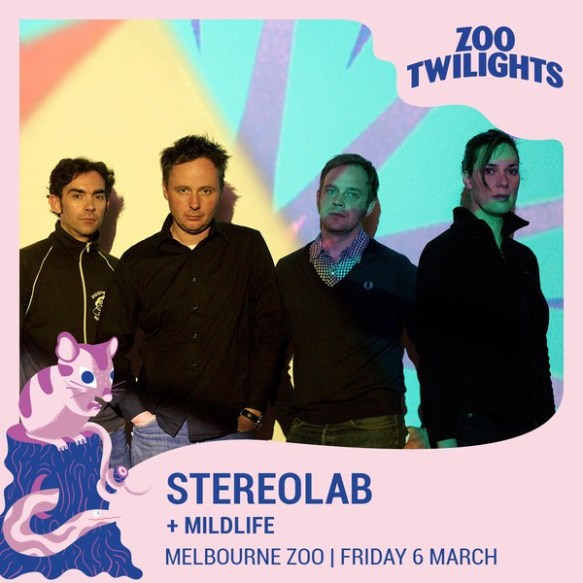
There was a recent newspaper article about the number of older rock stars having to cancel tour dates due to ill health, injury and just plain old age. The irony is that when most of those performers started out as professional musicians, no-one really expected their careers to last 10 or 15 years, let alone 40 or even 50 years. Now that artists increasingly rely on income from ticket sales (rather than royalties from streaming services), there could be lean times ahead for ageing rockers – and that’s before we take the effects of COVID-19 into account. Thankfully, Stereolab were able to play at Melbourne Zoo last week, before cancelling the rest of their Asia Pacific concerts due to the virus. Of course, by comparison to much of rock’s gnarly royalty, they are mere babes, having “only” formed in 1990. And although they have not released any new material for 10 years, during which time the band has been on hiatus, Stereolab have an extensive back catalogue to draw upon now they have started touring again.

Alongside contemporaries Saint Etienne, Stereolab were part of a reaction against late-80s grunge and acid house, and between them they ushered in a return to more interesting melodic and harmonic structures, vintage/retro sounds and complex textures, all informed by an aesthetic that embraces electronica, exotica, soundtracks, bossa nova and dub effects. In fact, both bands have collaborated with similar post-rock artists on each side of the Atlantic such as Jim O’Rourke, Tortoise, Mouse on Mars and To Rococo Rot, not to mention The High Llamas’ Sean O’Hagan. (Both bands also have extensive back catalogues, with frequent non-album, one-off, limited and rare 7″ singles scattered throughout their discographies.)

By going back on the road after such a long break (and with no new material to promote), there was a risk that Stereolab might simply be going through the motions – even coming across as their own tribute act at best, a self-parody at worst. Thankfully, despite the familiarity of the songs, the band managed to keep everything sounding fresh, energetic and full of enthusiasm. And despite maintaining that original aesthetic, Stereolab have enough variety to remain interesting and avoid sounding samey – which has no doubt helped with their own longevity, unlike many contemporary artists who will likely be forgotten quicker than a Crazy Frog ringtone.

Next week: Margaret Tan and Dragon Ladies Don’t Weep


Hicks vs Papapetrou

Another compare and contrast this week, and like last week, based on a current NGV exhibition – this time, head-to-head retrospectives of two Australian photographers, Petrina Hicks and Polixeni Papapetrou.

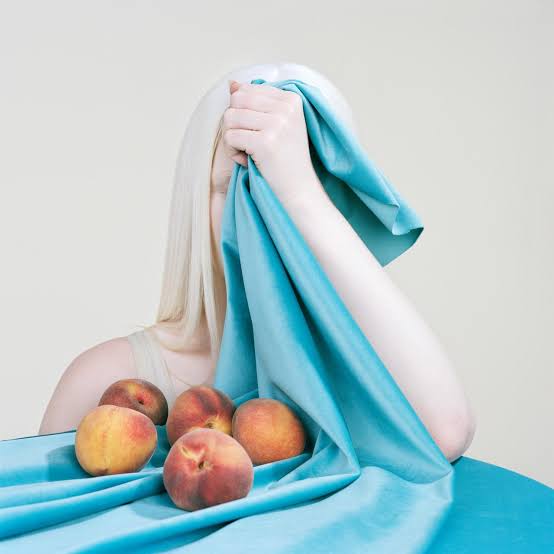
Petrina Hickson – “Peaches and velvet” (2018) – image sourced from NGV

The challenge for contemporary photographers is the ubiquity of the medium. Anyone with a smart phone can be a “photographer”. At a basic level, the technology to capture photographic images is accessible to all, and no special skill is required. Add to this the impact that advertising, magazines, fashion, portraiture, reportage and social media have had on the way we view images, and there is a risk that audiences detect no difference between what they see on a billboard poster, in an on-line news article, on Facebook/Tumblr/Instagram/Twitter or in an art gallery or museum.

In these two particular shows, I think the NGV is trying to re-establish a platform for contemporary photography as an art form, and not merely as a technical means of capturing and creating images. (Selfies, holiday snaps and wedding photos are all very well, but they ain’t necessarily art.) It’s an admirable ambition, but I’m not sure these collections are the best examples on which to build such a thesis.

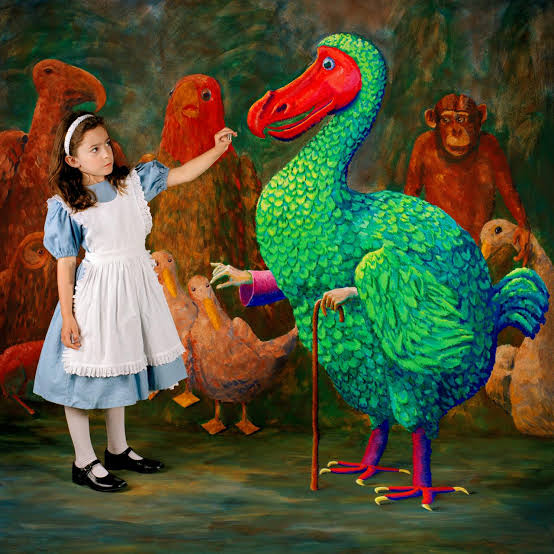
Polixeni Papapetrou – “Prize Thimble” (2004) – image sourced from NGV

Both photographers produce highly stylized, almost trademark images, which reveal a very methodical and deliberate approach to their work. Everything is highly choreographed, deliberately posed and meticulously arranged – nothing is left to chance, giving an overwhelming sense of artifice. These photographs are hyperreal yet also quite literal – what you see is what you get. This is not to say they lack formal narrative or even additional meaning, but despite their obvious visual appeal, it’s hard to see much beyond the images themselves.

In Hicks’ case, as well as recurring images, arrangements and visual motifs, the works on display reveal a very defined (even limited) colour palette, especially as many tones appear washed out, almost over-exposed. While Papapetrou’s work mostly feature her own daughter, in various staged settings, some of which allude to well-known fictional stories,  historical events, myths, legends and fairy tales. Despite both these exhibitions being retrospectives, based on these selections you would be hard-pressed to say there was much in the way of artistic development – there’s a sameness to both sets of images.

Despite each photographer having a distinctive style, there are also echoes of many other photographers – notably Julia Margaret Cameron, Madame Yevonde, Claude Cahun, Meret Oppenheim, Cyndi Sherman and Polly Borland among them.

Next week: The Current State of Popular Music


Cryptopia – The Movie

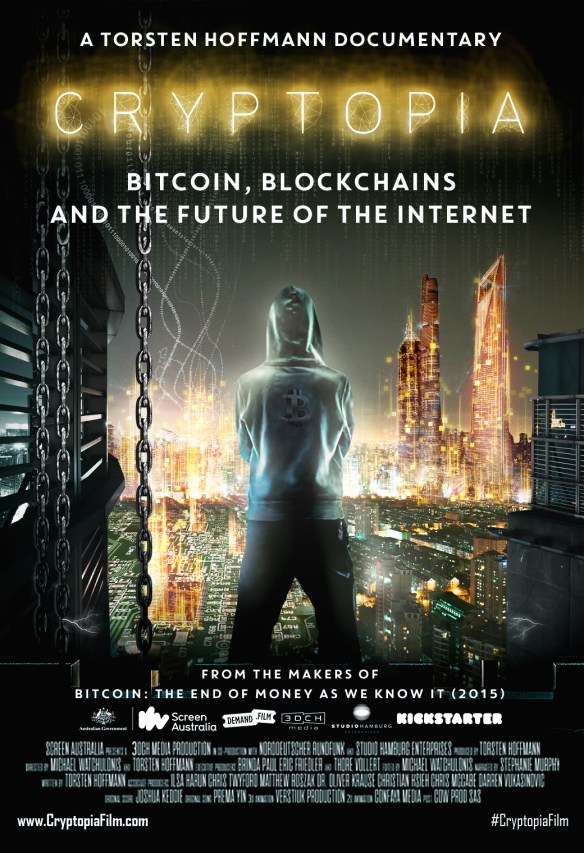
A quick plug for Torsten Hoffman‘s new documentary, Cryptopia: Bitcoin, Blockchains and the Future of the Internet. After a series of preview screenings around Australia and  New Zealand last last year, the film has its world premiere tonight in Melbourne.

Five years after producing Bitcoin: The End of Money As We Know it, the director has gone back and interviewed a number of key figures who appeared in the last film, to update their stories, and to dig deeper into the whole Blockchain, Bitcoin and crypto narrative.

I haven’t yet seen the latest film, but I first met Torsten when he was screening the previous documentary on the meetup circuit. He was kind enough to show me some early edits of Cryptopia, and I have to say the new content looks very promising.

Given the speed at which Blockchain and Bitcoin markets move (a week in crypto is often referred to as a year in any other asset class), it’s actually important that we stand back and take stock of where we are in this new paradigm for FinTech, decentralisation and distributed ledger technology.

Even if you can’t make it to the Melbourne premiere, look out for Cryptopia the movie as it tours globally.

Next week: Tarantino vs Ritchie