Rebooting the local economy

Continuing the theme from my previous, post-lockdown blog, there are definitely some growing challenges ahead as the local economy tries to gather momentum. Yes, the jobs recovery looks encouraging for the hoped-for recovery (at least, based on headline numbers); and property prices (that staple of banks and economists alike) are getting very frothy again. But the end of JobKeeper later this month will hurt both employees and employers – it will be especially hard to stomach when you consider that a few household brands have chosen to keep their government-funded windfalls, despite making significant profits even during (or as a result of) the pandemic, while these same public companies have also been paying out shareholder dividends.

It will be very interesting to monitor ABS data on the number of business entries and exits (CABEE), which is now also being reported quarterly, instead of just annually. The latest annual data released in February (for the period ending June 30, 2020) shows that there were more new businesses registered than the number of businesses that were de-registered – but the net gain was a lot lower than in recent years, as can be seen from this graph:
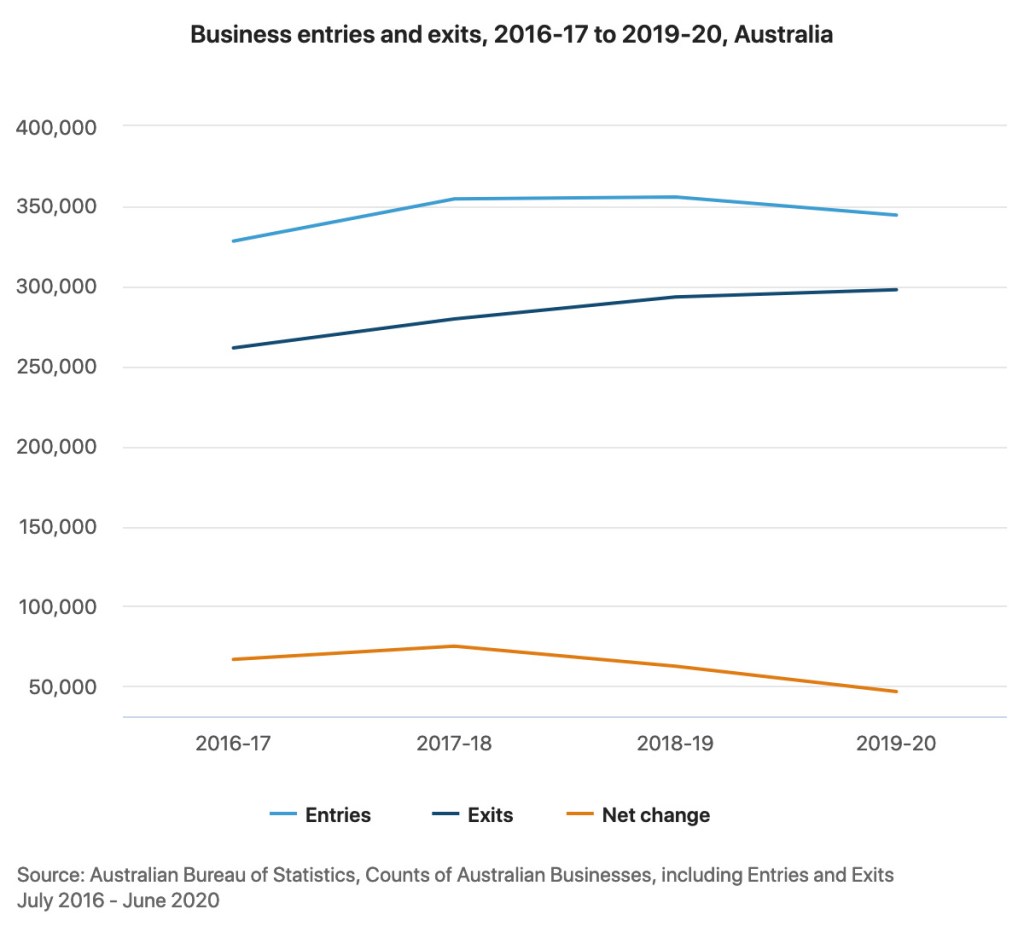
Even after a few months of the pandemic, the number of new entries looks to have declined significantly, with a corresponding rate of increase in exits – and the net increase was already on a steep downward trajectory from 2017-18.

According to the ABS data, “In 2019-20 three industries accounted for more than half of the net annual increase in businesses, these were:

  • Transport, postal and warehousing
  • Professional, scientific and technical services
  • Health care and social assistance”

None of this data should be too surprising; further, we should expect to see a significant number of exits from the retail, hospitality and tourism sectors. Government support in the form of domestic travel vouchers and discounted air tickets will only go so far to reverse the fortunes of airline, hotel and tour operators. (The folks in Queensland must be happy with the twin benefit of being a desirable destination for both domestic holidays and Hollywood film production.)

While on-line shopping has helped to keep retail afloat, bricks and mortar retail has been dealt a heavy blow, from which it will take a long time to recover – many people have no doubt got used to e-commerce, and can’t be enticed back to the shops.

From what I see in Melbourne, the CBD is still running at 40-60% capacity (depending on location, sector, and day of the week). Mondays are definitely quiet, it gets busier on Wednesdays and Thursdays, and then starts to taper off again on Fridays, with people opting to “work from home” as the weekend draws near. Last week, one business group wants companies to close at 4.00pm on Fridays, to encourage workers to hang out in the city after work – but Fridays has always been known as POETS day, so I hardly think anyone still here at the end of the week needs any encouragement to down tools any earlier…

There are still so many construction sites within the CBD, both new build and renovations. But who is going to be occupying this new and refurbished real estate – especially as offices are still limited to 75% capacity, and employees seem reluctant to come back to the office full time? Many shops (old and new) remain boarded up. Some cafes have not even bothered to re-open at all, let alone just on the busy days. Doubtless some current construction projects have been brought forward to take advantage of JobKeeper payments, quieter streets and low interest rates – but it means that in some areas, whole blocks lie empty and virtually devoid of any business, and it feels that many shops don’t see a customer all day.

Unfortunately, with politicians distracted by non-economic matters (plus the small tasks of managing hotel quarantine and rolling out a vaccination programme), we are only seeing short-term responses and band-aid solutions, rather than strategic and visionary policy-making. Neither our governments nor the opposition parties (of all persuasions) seem willing or capable of serious (and non-partisan) debate on things like Universal Basic Income, structural reform of the economy, and instilling innovation across all areas of industry. Instead, they prefer to tinker at the edges (tax, superannuation, industrial relations), engage in Parliamentary point-scoring, and maintain the status quo within their respective supporter base. Something has to change, and soon.

Next week: Victorian Tech Startup Week
Corporate Art

The art world in Melbourne is getting something of a boost from corporate commissions. Last year, Deloitte compiled one of the largest corporate art collections in recent years for their new offices on Collins Street, which was otherwise a lean time for local artists during the recent lock-downs.

Not everyone will get to see this collection, as the works are on selected floors within the building, and access will be limited to staff, business visitors and clients.

But elsewhere, there is a lot of work that is accessible to the public. Here are a few randon examples:

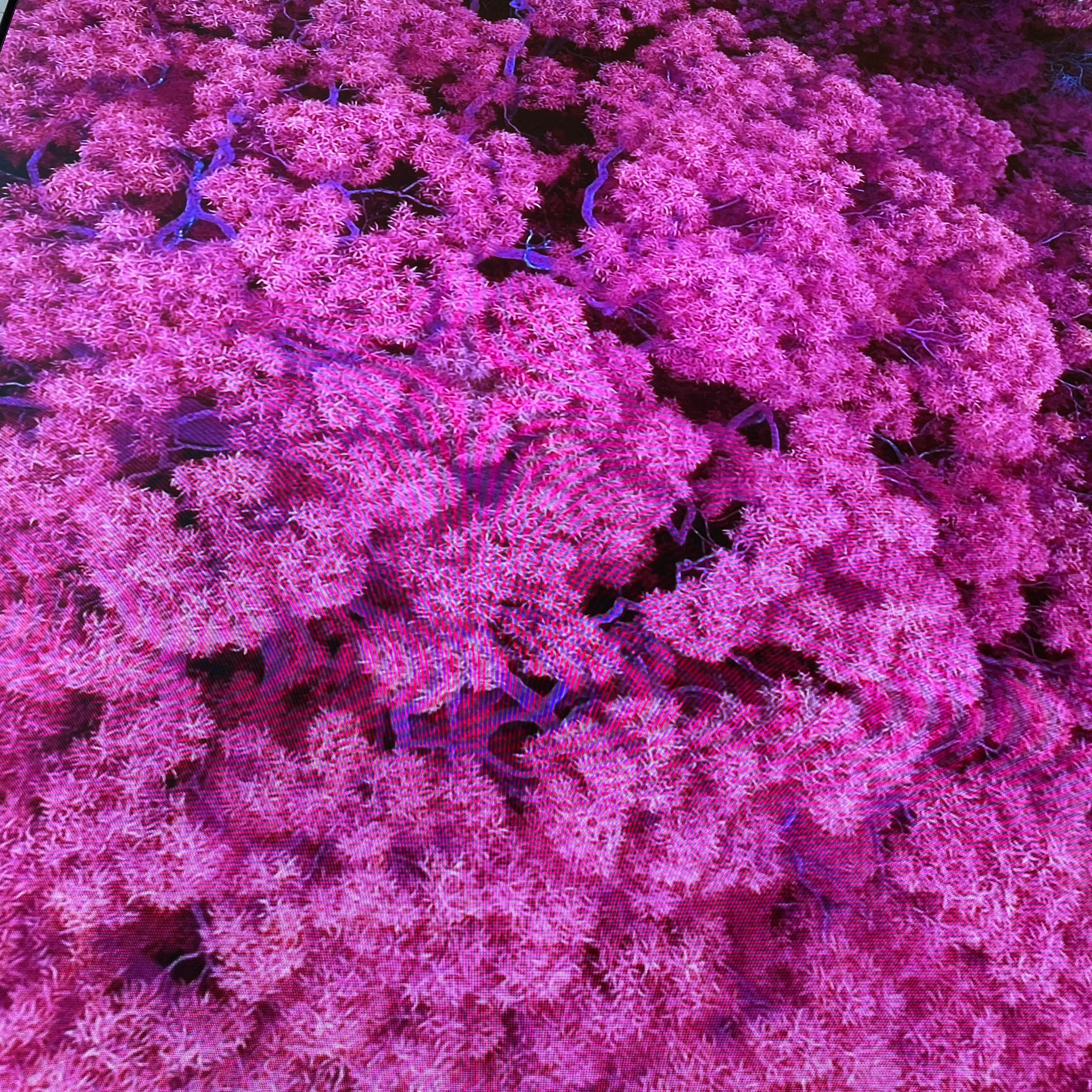
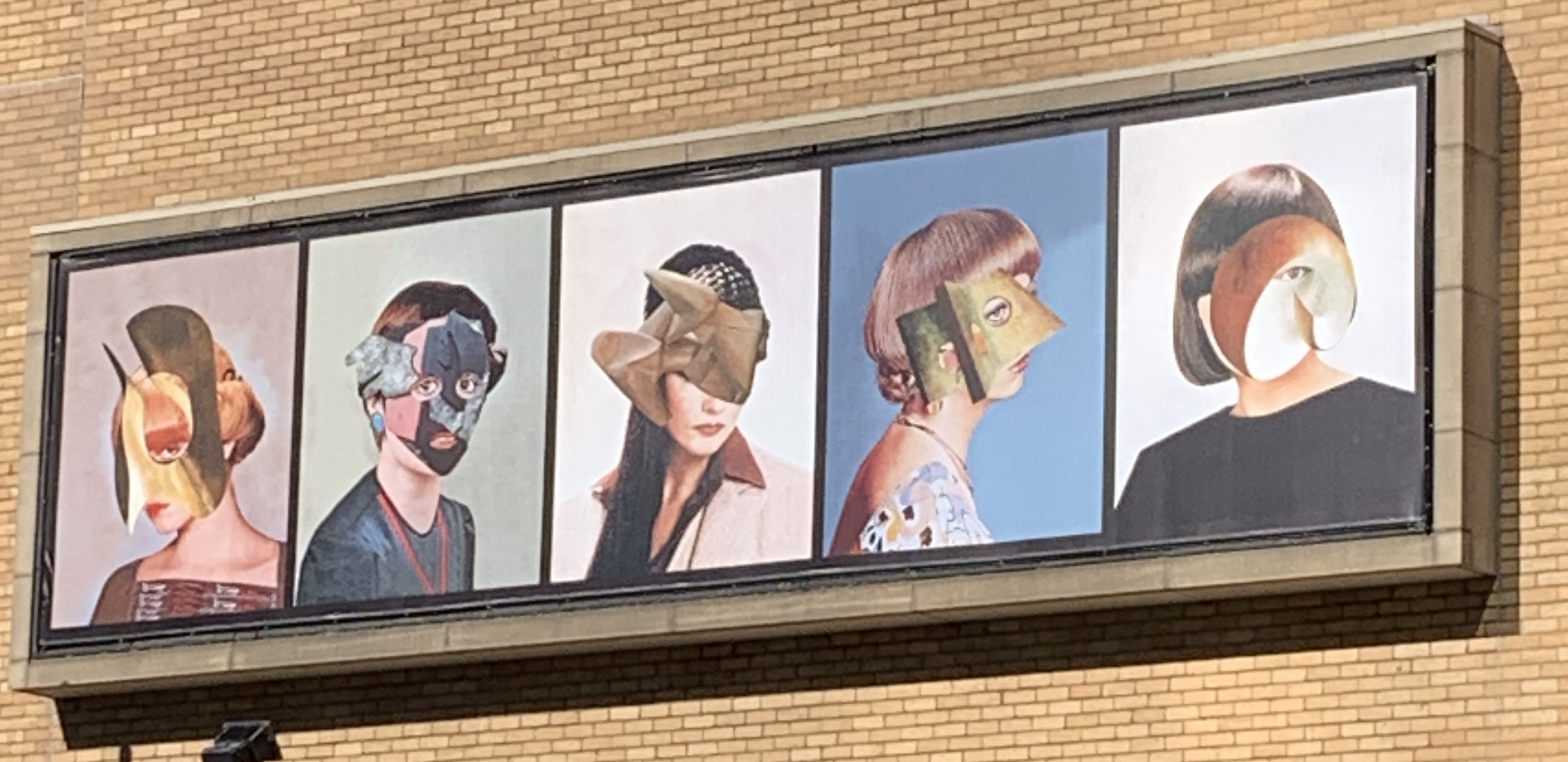
Collage mural, Hero Apartments, Russell Street

Hero Apartments – this former telephone exchange displays unique work on its western-facing wall, usually photographic in nature.

80 Collins Street – the revamped office block has recently undergone a major makeover, including an enormous digital screen in its ground floor lobby, for displaying newly-commissioned works.

Digital mural, 80 Collins Street

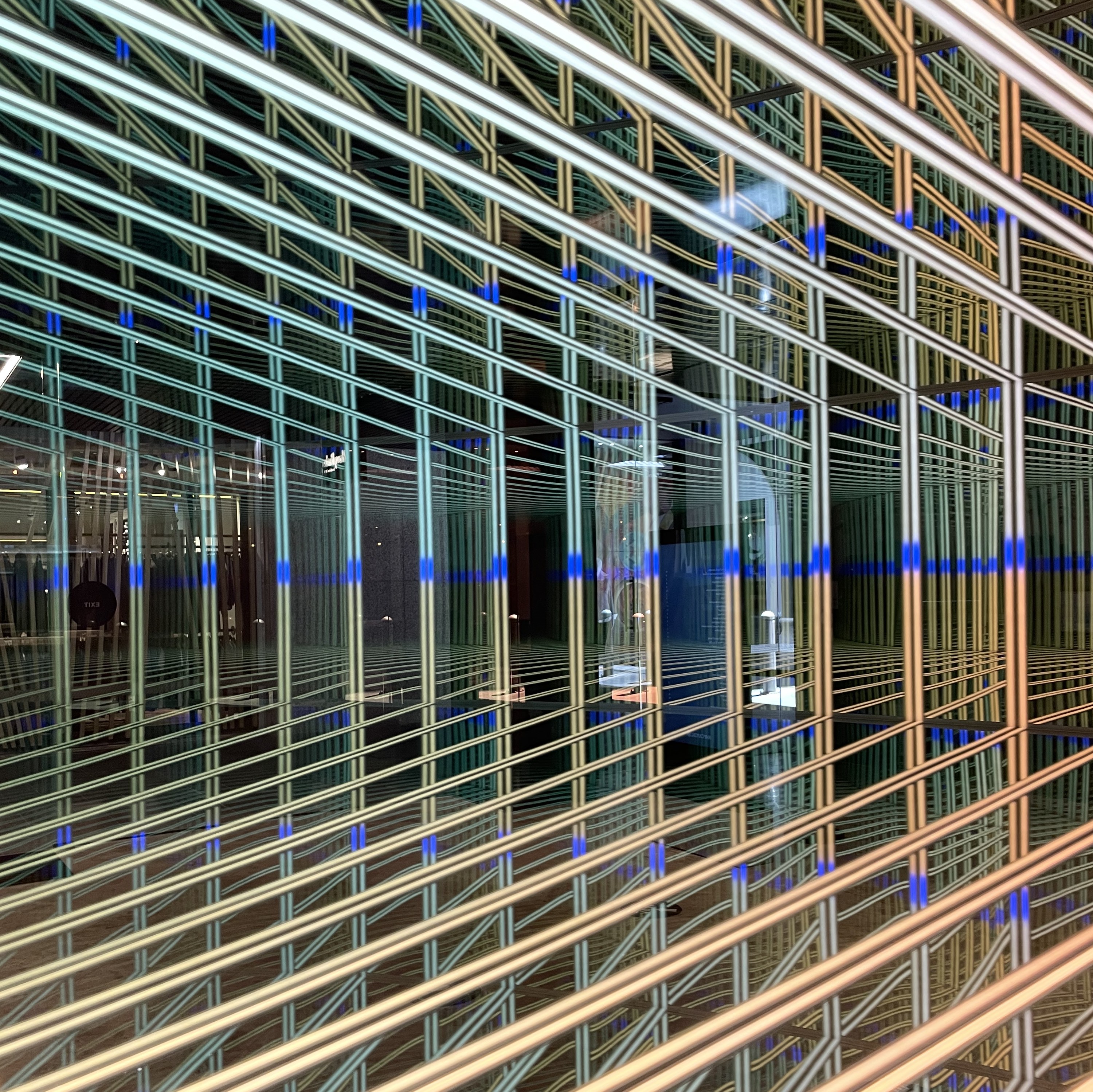
330 Collins Street – the lobby to this otherwise anonymous office building now features a striking piece of op art, in the form of a dual light box and mirror construction.

Lobby Op Art, 330 Collins Street

Grand Hyatt Hotel – as part of its major revamp more than a decade ago, the hotel installed some huge Bruce Armstrong bird sculptures to guard the main entrance.

Docklands – facing the waterfront opposite Marvel Stadium is John Kelly’s quirky “Cow Up A Tree” (which says what it is).

Yarra River – from Birrarung Marr to Webb Bridge (itself a great example of functional public art) there are a sequence of sculptures and installations, including further works by Bruce Armstrong.

Southbank Arts Precinct – not surprising given its function, this area houses numerous sculptural works, permanent installations architectural features, such as Ron Robertson-Swann’s “Vault” outside ACCA.

Laneways Street Art – of course, Melbourne is (in)famous for its extensive “collection” of graffiti and spray-paint murals, although works attributed to Banksy have either been vandalised, stolen or simply painted over.

Next week: Cancel or Recalibrate?

Transition – post-pandemic career moves

Even before the latest lock-down v3.0 in Melbourne, one of the other members of my co-working space in the CBD decided they’d already had enough of being confined to a 5km radius, working from home, and other lock-down related restrictions. Having had their interstate travel curtailed over the past 12 months, and suffering from cabin fever, they have opted to spend the next few months living in and working from various Airbnb locations around regional Victoria. Even though they are used to WFH, recent experience has shown that they don’t need to be confined to one place. And this post-COVID shift in our work/life patterns (already being disrupted and enabled by remote working) is only increasing.

Likewise, a client I spoke to in the USA last week informed me that they had just settled into a new location on the west coast, and was “living the dream” of a nomadic existence.

More extreme is the recent example of a Guardian employee who, having had to travel from Sydney to the UK for a family funeral last year, then took several months to get back home (due to flight cancellations), but managed to keep working remotely from various European locations as he moved around to stay ahead of border closures.

Prior to this past weekend, and despite the city being out of Stage 4 lock-down for 3 months, private offices in Melbourne’s CBD have only been allowed to operate at 50% of capacity – the proposed move to 75% capacity has been put back. It means, for example, that even on a really good day, my local coffee shop is still only doing 60% of its pre-COVID business.

It’s my guess that the combination of office restrictions and many retail and hospitality businesses simply not bothering to re-open at all means the CBD is barely operating at 40-50%. It’s deceptive – some activities (e.g., construction) have continued pretty much unabated (even expanding while there is less traffic on the roads); while others have been shut down altogether (e.g., entertainment). Certainly food delivery services are still in demand, while some retail has been doing a bit better as customers appreciate the novelty of shopping in-person.

Monday to Friday in the CBD is like a bell-curve distribution – Mondays and Fridays are much quieter, as people choose to WFH part of the week. Which is challenging for employers, as they try to revert to “normal”. But assuming a mix of remote and on-site working continues, it probably means less overall demand for office space. (It’s also difficult to assess the impact of the CBD exodus on suburban hubs.)

So all that construction work suggests we will have an over-supply of commercial premises (offices, shops, restaurants and hotels).

Residential property is a similar story – student accommodation is far from full, as overseas students aren’t returning; and more inner-city apartment buildings are still going up, but there is something of an exodus from the city to regional and rural locations.

The latter tree- and sea-changes are being fueled by a number of factors: a desire to leave the city (which is more prone to lock-downs); low interest rates (so, cash out the equity in your suburban home and move to the country where your money buys you more); increased opportunity to WFH (see, 5G and the NBN have their benefits!); and a broader wish for a different work/life balance.

Unfortunately, this shift is also putting pressure on local housing supply – average property prices are going up faster in some regional centres than in the capital cities; and more nomadic lifestyles are driving up demand for short-stay accommodation. The combined effect is higher rental costs and reduced supply, tending to squeeze out the locals.

Ironically, we’ve heard farmers and primary producers in rural and regional Australia complain that they can’t get seasonal workers due to COVID restrictions on international visitors (especially students, back-packers and experienced fruit pickers). Conversely, we’re told that 90% of jobs lost after March last year have now been recovered – although this apparent rebound is mainly in part-time roles, not full-time positions. It would be interesting to see a detailed breakdown by industry, as some sectors (tourism, aviation, universities) are still struggling.

The hiatus (and disruption) brought about by COVID and subsequent lock-downs has no doubt prompted many people to reassess their careers: where do I want to live/work? what type of work do I want to do? which industries or companies are hiring? and for what roles? As part of a wider re- and up-skilling initiative, the Federal and State governments are offering a range of free vocational courses (mostly Cert I to IV programmes), as well as some enhanced “pathways” to trade apprenticeships.

While this is to be applauded, I can’t help feeling the effort is at least 5-10 years too late to address the technological, demographic and societal changes that began at the end of the last century, with the advent of the internet, cheaper technology, an ageing population, increased globalisation, inefficient taxation and tariff systems, and general economic restructuring. If nothing else, COVID has demonstrated the need for more resilience in the domestic economy, (and a reduced reliance on overseas imports and supply chains) such as smart manufacturing and food security.

Meanwhile, a friend of mine recently related that a nephew of his had dropped out of college (like many of his peers in the USA and elsewhere) and decided to become a self-taught expert in DeFi, as there is more chance of financial success (and career satisfaction) than obtaining an “off the shelf” bachelor degree….

Next week: Corporate Art

NGV Triennial

As Melbourne and Victoria continue to emerge from lock-down, it was great to see that the NGV International has re-opened for the summer with the latest edition of its Triennial show. And while we should all be grateful to have the opportunity to visit this exhibition in person (rather than on-line), it’s not without some shortcomings.

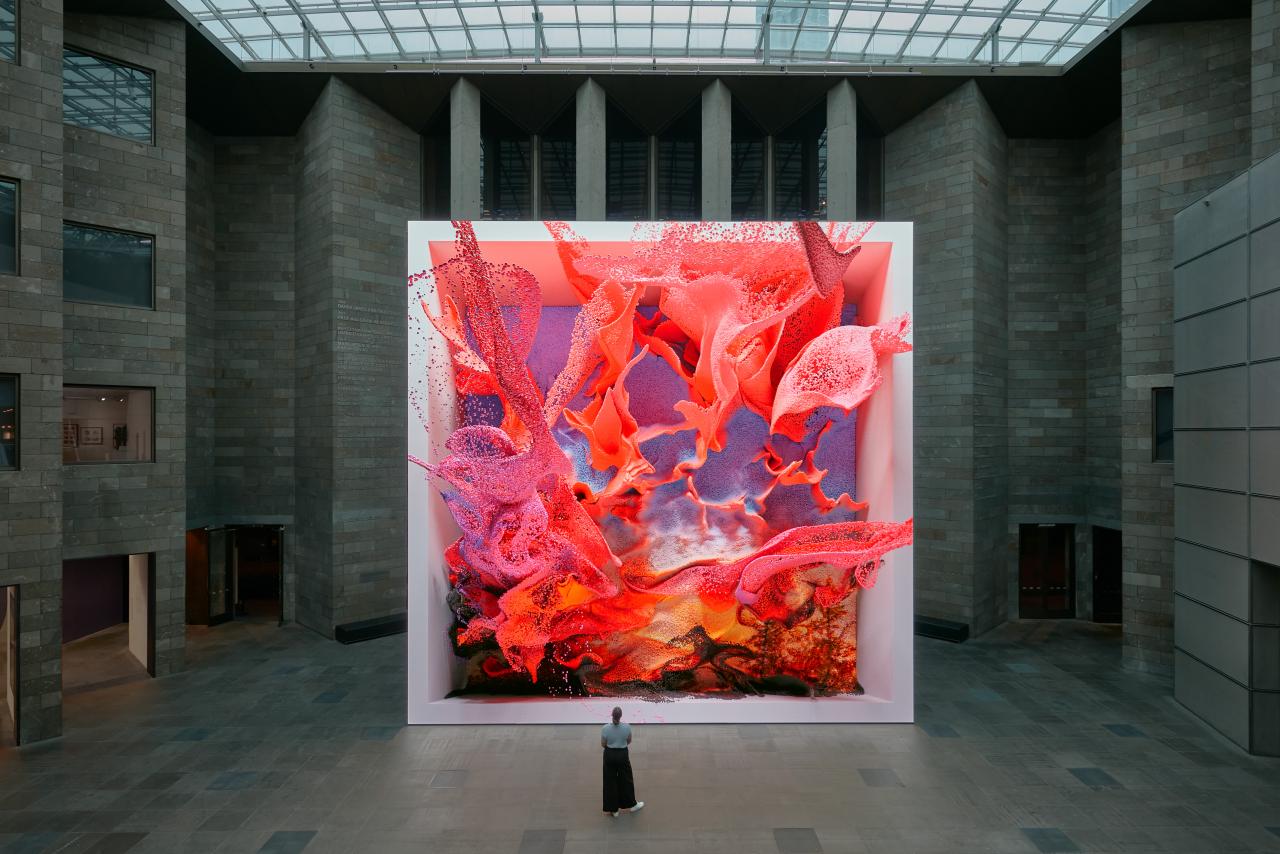
Refik Anadol: Quantum Memories (image sourced from NGV website)

First, the good news: no doubt it was a logistical headache to co-ordinate this exhibition while Melbourne was in strict lock-down for much of the past 10 months. Making admission free is also a wonderful public gesture given that the local population was starved of art exhibitions for most of last year – in particular, we missed out on the NGV’s winter blockbuster season.

The curators are also to be commended on assembling a diversity of artists, work and media; and for placing a great number of these new pieces among the NGV’s permanent collections, which forces visitors to assess these contemporary exhibits within the context of historic work.

But that’s probably where the positive ends.

A major drawback of this exhibition is the lack of anything truly ground-breaking, innovative or even challenging. It all felt very safe – but maybe that’s just what we needed after our extended social isolation: work that is comforting, familiar, cozy, cuddly, soothing, and certainly bright (lots of lively colours).

As a result, however, there seemed to be an emphasis of form over substance, technique over content, and scale over context. Much of the three-dimensional work felt flat and one-dimensional. Even the opening centrepiece, Refik Anadol’s “Quantum Memories” that dominates the entrance lobby, is a classic example of the “medium is the message”. Comprising a giant digital screen (incorporating a clever trompe-l’œil 3-D effect) to stream animated, computer-programmed images, ultimately gave the impression that this was all about the technology and the scale of the work. It was difficult to identify any meaning beyond mere decoration.

And unfortunately, “decorative” was a recurring theme, alongside some rather kitsch and lazy imagery – especially the digital and animated wallpaper that featured in several of the permanent galleries. These “displays” reminded me of cheesy son et lumière or pedestrian CGI effects – it may be technically adept, and even stylish to some degree, but that’s as far as it goes. Perhaps “deep” and “complex” are out of favour at the moment, as we make way for “shallow” and “simple”.

While some work might attempt to convey a more profound response, when shorn of its original context, the message is lost and the result is a void. I wasn’t necessarily looking for “deep and meaningful”, but I was hoping to be provoked or inspired. Or at least have my curiosity piqued.

Triennial? Could try harder.

Next week: Expats vs Ingrates?