Bridging the Digital Divide

Is there still a digital divide in Australia? If so, how do we bridge that gap? If not, how do we address the apparent chasm that is leaving some “digital have-nots” behind? Is it as simple as rolling out the National Broadband Network and equipping every school child with their own tablet device? Or is it also about creating a digital mindset to ensure everyone can take advantage of the educational, social and economic opportunities that the range of digital technologies has to offer?

Mobile phone internet usage is projected to keep growing. Source: Statista

Mobile phone internet usage is projected to keep growing. Source: Statista

Based on consumer research, we would appear to be a well-connected country, with a high concentration of PC, smart phone and tablet devices, if data from Roy Morgan is any indicator. However, some recent research by Scott Ewing of Swinburne University based on ABS data has suggested that despite the narrowing of the divide, there is a deeper disconnect among those who do not have internet access.

There are multiple factors contributing to this disconnect: socio-economic, age, location and education. I would expect that within 5-10 years, age will be a far less relevant factor in who does or doesn’t have access to the internet. You could also argue that with more people accessing the internet via mobile devices, and with the increasing number of free WiFi zones across our cities (cafes, shopping centres, office buildings), public institutions (libraries, museums and galleries) and transport infrastructure (plus the reducing price of data and storage), cost may not be as much of an issue either. And once the NBN is complete, the percentage of the population without physical access to the internet should likewise be much smaller.

So that leaves education – according to the ABS-derived data, the more educated you are, the more likely you are to access the internet. Should this infer that we aren’t doing enough to teach digital skills in the classroom? Or are we teaching the wrong set of skills? Or is it a bit like learning English grammar or applied mathematics – unless you use them in your everyday life, you soon forget them, and never remember why it was important to learn them in first place?

Computer science, programming and coding courses are increasingly being taught in schools, either as part of the core syllabus or as extra-curricular activities. Many pupils have to use tablets as an integral part of their school lessons. And some schools are also running hackathons and entrepreneurial projects to help students navigate the new world of work shaped by innovation, digital disruption and the “gig” economy.

The changing nature of work is challenging schools and parents to think about how we should be preparing pupils for the future. It’s not just learning about the technology (important as it is to study data analytics, automation, robotics, AI etc.), it’s also about understanding the context and the potential for what it can do. It’s also increasingly apparent that more and more of today’s students want to do work that is meaningful, rewarding, challenging and which helps connect them to their values and “purpose”.

I like to think that as part of a well-rounded liberal education, today’s pupils will receive:

  • a solid grounding in digital literacy (as important and as vital as the 3 R’s)
  • an awareness of how “digital displacement” (through automation etc.) may impact their chosen career path (even in ways which we cannot yet predict – we must assume it will happen, as no profession, trade or vocation will be totally immune)
  • an appetite for lifelong learning (as one of the ways to cope with the inevitable changes they will face)
  • a set of life skills that instill self-awareness, curiosity, resilience, empathy, flexibility and adaptability.

Finally, if we are to truly grasp why this ability to adapt and change is important, we only need look beyond the digital debate and ask why the National Innovation and Science Agenda is failing to cut through. In large part, the NISA message failed to connect with the general electorate because many people could not identify with it, and therefore it did not resonate with them. Just as “necessity is the parent of invention”, so adversity often needs to be the catalyst for embracing change.

Notwithstanding the economic, environmental and societal challenges we face, there is considerable complacency and acceptance that “she’ll be right” – especially within the political, institutional and corporate elites that claim to lead us. As long as so few of the main actors among these bastions of power and influence decline to change their own culture, behaviours and ways of doing business, then it’s not surprising that the public feels unwilling or unable to change.

So our only real hope is to empower the next generations to shape their own future, not to be constrained by our traditional notions of “job” (in my view, an increasingly outmoded economic unit of value….) and think for themselves as to what change they want to create with all the technology, resources and opportunities at their disposal.

Next week: My Extended Gap Year
Food for thought at #StartupVic’s #pitch night

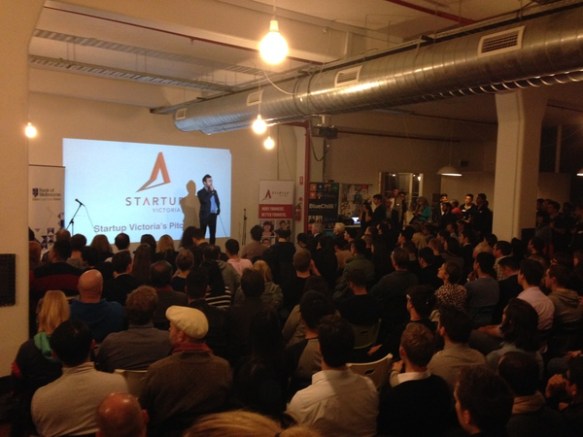
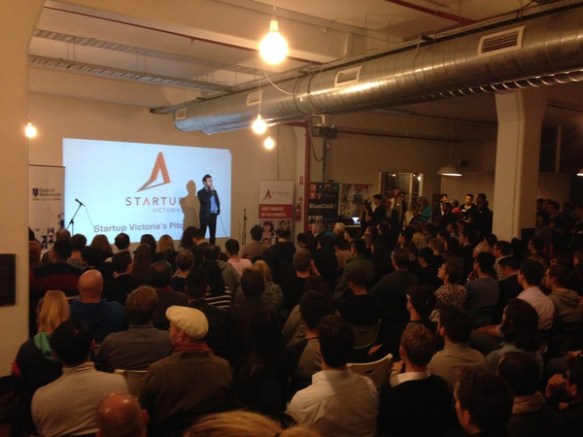
There was something of a different flavour at Startup Victoria‘s pitch night for September – including the new beverage sponsors! – which may have been helped by the large crowd, and the more polished presentations (judging by the feedback).

startupvic

Image sourced from Startup Vic’s Meetup page

I will comment on each pitch in order of appearance:

Studio Ninja

Studio Ninja is described as Client Management software for professional photographers. Aimed at the wedding industry, it also holds some appeal for other event planners, DJs, musicians, make-up artists, hairdressers, caterers and florists. But the primary focus is on weddings, and the specific needs of studio photographers, whose workflow is very particular (according to the founders).

Regular attendees at these pitch nights will recall similar CRM/project management tools for other sectors, such as architects and management consultants – which raises questions about how unique each profession really is?

In essence, the software handles lead management, invoicing and cashflow reporting. It is available via subscription, and integrates with payment systems such as Stripe and PayPal, and other service providers such as Uber, and will soon integrate with Xero.

With a reported 40 new sign-ups per day, and around 2,000 members (of which only 300 are currently paid subscriptions), the Studio Ninja team are aiming to grow to 10,000 users and revenue of $4m. Growth is being driven by strong SEO and organic discovery among photographers, and word of mouth referrals.

The panel of judges were interested to know how the software could be sold via peak bodies and professional associations, under a SaaS or white-labelling model, and what potential there is to integrate lead generation and referral solutions. The judges also thought that camera and photography equipment brands could offer a significant sales channel opportunity.

Deliciou

Something of a different pitch came from this bacon flavoured seasoning, which is actually bacon-free. (I should confess that I was once a vegetarian, but when I started to dream about bacon sandwiches, I realised I was missing out… Maybe if this product had been around all those years ago, things would have turned out different. But I digress.)

There was certainly no lack of passion in this pitch, and the founder had even made sure there were free samples to go around, so strongly does he feel about his product. With a 9% conversion rate from website visits, and 2,000 bottles sold this year, there is obviously a niche in the flavourings market for a “guilt-free” bacon experience.

A graduate of the Melbourne Accelerator Program, the founder has cleverly chosen to use a pop-up popcorn stall to generate market awareness, solicit customer feedback, and create visibility for a product that comes in a small jar, and will compete for valuable shelf space in supermarkets.

The business is seeking $100k in seed funding to expand the range of seasonings,
expand overseas, and to resolve issues with production lead times and logistics. But given the challenges in building consumer brands, especially in the food and beverage category, a better option might be to tie up with another snack food or convenience food brand, and use that vehicle for distribution and market reach.

Reground

Reground is another food-related startup, but this is all about recycling coffee grounds. The business turns coffee waste – which otherwise goes into landfill – into sustainable uses, thereby reducing the amount of methane gas released into the atmosphere.

With a waiting list of cafes who want to access the service (because cafe owners already pay their local council to take away the waste), Reground will divert part of those waste collection fees and can even help cafes save money. Reground also supplies community gardens with free material for their compost. Other uses for the coffee waste include mushroom production.

As well as offering waste assessment services and potential cost savings, Reground runs a newsletter and provides certification for participating cafes. There is also potential for this Melbourne-based business to go national and even to the USA.

They are also offering a customer app to support logistics around collection, and they operate their own van as there are council limitations on more waste trucks on our streets. Asked by the judges about scaling their business, the founders are considering to build their own waste processing plant. (After the event, I did a quick search, and found a similarly-named business in Canada.)

Allume Energy

Finally, Allume Energy, another sustainability business, this time in solar energy distribution. Or, in their own words, “Democratising access to renewable energy”.

As a social enterprise, Allume offers tenants easier access to cheaper solar energy. Basically, Allume contracts with the property landlord to provide initial funding to install and set up a solar system, and then tenants pay for their energy via a contract licensing system. In addition to working with community and social housing projects in remote locations, Allume also offers a shared system for apartment blocks.

Claiming to provide a 30-50% saving to tenants, Allume requires landlords to commit to a 15 year contract, with a 50% break fee (based on the initial installation and set up costs). Given some of the current challenges in renewable energy (weather events, phasing out of government rebates, and reduction in feed-in tariffs), this scheme to implement very local solar systems will no doubt appeal to landlords and bodies corporate.

And on the night, Reground was the people’s choice – probably because it was a simple but effective proposition, and it appealed to Melbourne’s environmentalists and coffee lovers alike!

Next week: A Tale of Two #FinTech Cities – Part 2

101 #Startup Pitches – What have we learned?

During the past 3 years of writing this blog, I have probably heard more than 100 startup founders pitch, present or share their insights. Most of these pitch nights have been hosted by Startup Victoria, with a few on the side run by the Melbourne FinTech Meetup and elsewhere.

Image sourced from Startup Victoria Meetup

Image sourced from Startup Victoria Meetup

Based on all these presentations, I have collated a simple directory of each startup or pitch event I have covered or mentioned in this blog, as well as a few key accelerators and crowdfunding platforms.

What have we learned over that time?

First, apart from the constant stream of new startups pitching each month, it’s been impressive to witness the Melbourne startup community collaborate and support one another.

Second, some of the international founders who have spoken are among the rock stars of startups – and we are fortunate that they have been willing to spend time in Melbourne.

Third, a number of the local startups who have pitched during this time have become well-established and well-known businesses in their own right.

This all means that besides creating great products and services, and being willing to share their experiences, the founders have helped aspiring founders and entrepreneurs to appreciate the importance of:

  • product-market fit;
  • working with agile processes and lean startup models;
  • tackling prototyping and launching MVPs;
  • learning what to measure via key metrics;
  • figuring out funding; and
  • knowing when to pivot or fold.

Looking at the cross section of pitch nights, panel discussions and guest speakers, there are some significant trends and notable startups to have emerged:

Industry focus: Not surprisingly, the pitches are heavily biased towards FinTech, MedTech, Education, Digital Media, Enterprise Services and Consumer Services. There are a some key startups focused on devices (e.g., SwatchMate and LIFX); a smattering in recruitment, fashion, gaming, health and well-being, property services, social media and even logistics. But there are surprisingly few in environmental technology or services.

Business models: Two-sided market places abound, as do customer aggregators, sharing platforms (“the Uber for X”, or “the AirbnB of Y”), freemium apps and subscription services (as opposed to purely transactional businesses). There are also some great social enterprise startups, but surprisingly no co-operative models (apart from THINC).

Emerging stars:  Looking through the directory of startups, some of the star names to have come through during this time, based on their public profile, funding success, awards (and ubiquity at startup events….) include:

CoinJar, LIFX, Tablo, SwatchMate, etaskr, DragonBill, Culture Amp, Eyenaemia, Timelio, Moula, nuraloop,  Konnective, OutTrippin and SweetHawk.

Acknowledgments: Some of the startups and pitches in the list are just ideas, some don’t even have a website, and some didn’t get any further than a landing page. However, I have not been able to include all the startups that turned up at Startup Alley, nor the many more startup founders I have met through these events (but whom I didn’t get to see pitch or present), nor the startup ideas that were hatched during the hackathons I have participated in. And there are a few startups that I could not include because I heard them pitch at closed investor events. Finally, I am and have been very fortunate to work with a number of the startups listed, in various capacities: Brave New Coin, Ebla, Re-Imagi, Slow School of Business and Timelio. To these startups and their founders, I am extremely grateful for the opportunities they have given me.

Next week: Putting a Price on Value


The Day of the Mavericks – the importance of intrapreneurship

As part of my notes on Melbourne’s recent Startup Week, I mentioned an interesting discussion on “innovation from within”, and the importance of intrapreneurship. There has been a steady stream of articles on the rise of intrapreneurship, an often overlooked skill set or resource that all organisations need to tap into, harness and deploy successfully. But what does it take to be an intrapreneur, and where can we find them?

Idea Machine - image sourced from Vocoli

Idea Machine – image sourced from Vocoli

The panel discussion on “Innovation from the inside out” was mostly about what leaders are doing to foster entrepreneurial-thinking from within their own organisations, featuring Janet Egber (NabLabs), Phil Harkness (EY), Martin Kennedy (GE) and Liza Noonan (CSIRO). Much of this effort revolves around connecting individual purpose with collective purpose (team, organisation, society). For example, at EY, there is a program to “promote purpose-led transformation, grounded in humanity and a call to action”, while GE also places importance on purpose. CSIRO, meanwhile, is clearly undergoing some huge transformational change of its own, with a key focus on “making the treasure chest of ideas happen.” (For a couple of related blogs, see here and here.)

When asked about how to incentivize intrapreneurship, and how to prioritise efforts, Liza Noonan was of the view that the “grass-roots” of the organisation “give us permission” to pursue particular projects. While Phil Harkness talked about the need to develop appropriate career paths, and the importance of change management engagement.

In my own experience, intrapreneurs are likely to display a healthy mix of the following characteristics:

Curiosity – This is critical. If you don’t display any interest in what is going on around you;  if you don’t think about how things could be done differently, better or more effectively; or if you don’t care about how things work, you are unlikely to discover anything new or uncover new business opportunities. This is not only about formal technical skills, this is also about personal outlook. It’s not intended to be disruptive, but maverick thinking is often what gets results.

Creativity – While I am not a big fan of formulaic management methodologies, I do see some value in certain aspects of the Six Hats model – of which Green for Creative Thinking is key here. As well as being a vital part of ideation and innovation, having a creative mindset (coupled with innate curiosity) is essential to problem solving – especially when it comes to “what if?” scenarios, and joining the dots between seemingly disparate data.

Commercial – Intrapreneurs don’t need to be financial wizards, or be the best sales people – but they need to be grounded in the commercial realities of how businesses work, how markets develop, what customers think, and what it takes to launch a new product or service. Being open and receptive to customer feedback is essential, along with an ability to manage solution sales and consultative selling.

Uncertainty – Being comfortable with uncertainty, and learning to be resilient, flexible and adaptive are essential to the intrapreneurial mindset. This may include a different approach to risk/reward models, as well as being able to look beyond the normal business plan cycle into the “unknown” of the future.

Scepticism – Having a healthy degree of doubt and not falling prey to over-optimism can help to manage expectations and enthusiasm built on irrational exuberance. We know most new ideas never get off the whiteboard (which is OK!), so the skill is to challenge everything until proven, but in a constructive, pro-active and collaborative way.

The key to intrapreneurship is being able to find your role or niche in the organisation, from where you can develop your expertise, establish your influence and build a foundation for solid outcomes. While at times it can feel a bit like “right person, right place, right time”, there are strategic steps you can take to manage your own career as an intraprenuer, including networking, self-directed learning, volunteering for new projects and taking responsibility for fixing things when they go wrong, even if they are outside your immediate responsibilities. It’s these sorts of behaviours that get noticed.

I know from personal experience that being curious and asking the right questions can lead to exciting new opportunities (in my case, six years in Hong Kong to establish a greenfield business). I also value the advice of a senior colleague soon after I joined an organisation: “You need to be part of the solution, not be part of the problem” when it comes to organisational change. And some of the best indirect feedback I ever received was from a colleague who introduced me to a new hire: “This is Rory, he’s our lateral thinker”.

Finally, it’s not always easy or comfortable to challenge the status quo from within (which is what a lot of intrapreneurship involves). Intrapreneurship can also feel lonely at times, which is why it’s vital to make the right connections and build sustainable relationships because, in army terms, you don’t want to get a reputation for being part of the “awkward squad”.

Next week: “Language is a virus” – a look at coding skills