The Tech in My Life #11: Productivity Tools

When I began my working life at the start of the 1980s, desktop computers were still scarce. During my last year at university, I had some exposure to productivity tools (word processing and spreadsheets), but this was to assist with preparing my CV as part of my post-graduate job search. I also taught myself BASIC on a Sinclair ZX computer, but didn’t pursue my coding skills any further.

For my first full-time, permanent job I had access to a shared terminal, linked to a database of client records. This was a read-only or “dumb” terminal, as data was uploaded via written forms transcribed by an authorised data entry officer. Any written documents had to be requested from the typing pool, or we used carbon copies of hand-written forms as proof of outbound communications.

In my next role, I still didn’t have a PC on my desk, but at least I could dictate letters using an in-house phone system linked to a bank of micro-cassettes. These audio tapes would be transcribed by the typing pool upstairs, and if I was lucky, a letter would go out within 2-3 days (as long as it didn’t need to be sent back for corrections in the internal office mail). The office also had a dedicated terminal with a dial-up modem connection to an online legal information network called Lexis-Nexis. (Years later, I worked for its competitor, Westlaw.) I remember with horror the first time I looked for some law reports on Lexis-Nexis, and inadvertently running up a bill of over £150.00, because I was inexperienced and my search parameters were too wide. Luckily, my pay wasn’t deducted.

When I started working in the publishing industry in London in the late 1980s, I finally had access to my own computer, albeit with a DOS interface. (I didn’t get Windows-enabled until the mid-1990s.) As well as using the PC for drafting client letters, internal memos and other documents, I also had to handle author manuscripts submitted on floppy disks. Sometimes, these files required converting from one word-processing package to another format that was compatible with our content management and publishing systems (even though we were still using physical CRC (camera ready copy) for typesetting and printing purposes). We had both a LAN (mainly for internal office comms), and a WAN connection with our warehouse and distribution centre outside London. The latter meant we could track inventory, and run sales reports.

The shift to digital publishing (initially CD-ROM) brought with it another layer of content management and layout specifications, as those early digital publications needed to replicate the visual appearance of the printed editions, as well as being searchable by the end user. And converting decades of historical texts to digital formats was a mini-industry in itself, with techniques such as “double-key and verify” in use before document scanning and optical character recognition (OCR) became more accessible. Other advances in digital publishing were achieved by SGML, HTML and XML – protocols which we take for granted (as we do with TCP/IP, HTTP, DNS, SMTP and FTP) yet without which we wouldn’t be able to connect with the internet or make sense of the data.

My first Windows PC was a laptop, and this coincided with my relocation to Hong Kong. Not only did I have to learn a new operating system, I also had to navigate the early days of the internet so I could communicate with head office back in the UK. At the time, most consumers were accessing the internet via services such as AOL and CompuServe. In my case, I got on-line by installing a dial-up modem (PCMCIA card), and accessing the internet via Hong Kong SuperNet (HK’s first ISP, launched by the HK University of Science and Technology) and linking to whatever inter-continental networks (PIPEX, UNMET?) were connected in the process. At times, it felt like sending and e-mail from Hong Kong to London was like communicating with the moon, given the effort to set up the connection and then the wait for “send” and “receive” to complete. And that’s before attaching any files….

Meanwhile, my work in digital media and on-line publishing continued apace, especially as my team won a contract to digitise 100+ years of Hong Kong law reports. (More thoughts on my career in publishing and the associated technological developments can be found here.) Interestingly, even before Google Search was launched in 1998 (and long before Google Translate launched in 2006), I was having meetings with a tech vendor pitching their “universal browser” at publishers, designed to translate any on-line text, including the handling of double-byte characters – important for bi-lingual content in English and Chinese. From memory, I think this project was called “ZUB”, or “Zircon Universal Browser”, but despite the potential, nothing came of this project as my then employers felt that translation would become browser native, rather than requiring a dedicated browser and/or extension. This was in the days when the only browsers in widespread use were Netscape and Internet Explorer, so I can understand the scepticism shown by my colleagues – why would anyone need (or want) a third browser?

And on that note, I will go off and resume my daily battle with whichever AI “assistant” or “help” that pops up in my chat, e-mail, browser, document management, conference calls and general online “life”.

Next week #12: From WiFi to DeFi…


Severance….

My recent blog on Unstructured Hours has generated a fair amount of interest, especially on LinkedIn (where, contrary to popular belief, people still go to talk about career development and work/life balance). One former colleague I spoke to expressed some relief at having been made redundant, because they wouldn’t have to join any more early morning or late night conference calls (at least, not until the next corporate gig….).

Is it possible to separate “work” from “life”? (image sourced from IMDB)

The continued debate about “getting back to the office” suggests that employers are having to bribe and coerce staff to turn up in person. It reminds me of the 1980s, working in London, when some firms were offering free breakfast to ensure employees came in early. It was also a time when Friday drinks took on a social and cultural significance all of their own (until the lawsuits started rolling in).

When thinking about the desire to establish boundaries between our work hours and our non-work hours, I can’t help think about the TV series, “Severance”. Leaving aside the science fiction narrative, the basic premise is that it is possible to hermetically seal our working hours from the rest of our lives.

The irony is that when in the office, the staff of “Severance” are often (and inevitably) thinking about their “outies” (their external, outside selves from whose memory they are “detached” for 8 hours a day). And when outside, they may reflect upon their office “self” (and ponder on what type of work they actually do – I think we’d all like to know that!).

While some logistical considerations have been factored in (like, knowing whom to phone when taking sick leave), this hard delineation means that it must be very difficult to schedule your external social life, or attend to other personal tasks such as on-line banking, home shopping, booking holidays or the myriad of other needs we navigate during our working hours. (Again, I’m reminded of the 1980s, when we were allowed 15 minutes a week to go to the bank!)

On the hand, the ability to disconnect completely when you walk out of the office and leave your work behind you feels very appealing!

Next week: The Five Ws of Journalism


The Startup of You v2.0

Through my blogs on startups, meetups and portfolio careers, I was recently interviewed by Peter Judd from News Corp., who is trying to bring the discussion on entrepreneurship, startups and innovation to a wider audience, particularly people who may be looking at a career change. (We both agree that the National Innovation and Science Agenda is not cutting through to the general public.)  Apart from being an advocate for portfolio careers, I also pointed out that entrepreneurship or working with startups is not for everyone. Instead, it may be possible to change your current role to the one you want. Alternatively, taking a new look at your current circumstances can provide some fresh perspective on finding your dream career.

Francis Kenna: The Unbearable Lightness of Seeing (2016) [Photo by Rory Manchee]

Francis Kenna: The Unbearable Lightness of Seeing (2016) [Photo by Rory Manchee]

The impetus following the 2012 publication of “The Startup of You” has done much to fuel the current entrepreneurial phenomenon, combined with lean startup business models and agile product development processes. The drive for innovation in response to digital disruption and lowering technology costs also means that launching your own venture can be increasingly de-risked.

For example, I recently saw some data by Ian Gardner from Amazon Web Services, that showed the “cost of failure” has come down from $5m to $5k, in just 15 years. This is based on a comparison between what it typically cost to launch a new business at the height of the dot.com boom/bust in 2000, and what it costs today. With a mix of open source tools, cloud computing, APIs, SDKs and social media platforms, launching a new business has never been cheaper or easier.

Of course, there is a paradox here: if an increasing number of people, especially younger graduates and new entrants to the workforce, are more interested in doing their own thing and less interested in joining large or established organisations, it’s going to get harder for employers to attract and retain the best talent; on the other hand, without appropriate experience, on-the-job training and personal development, how do these aspiring entrepreneurs acquire the necessary business, technical and leadership skills to succeed in their own ventures?

For some people, it may be appropriate to take their entrepreneurial spirit of adventure into a “traditional” role to test some of their ideas, as well as build networks and get some practical experience. Equally, I can see a huge opportunity for companies to create the right opportunities to engage employees for flexible roles aligned with specific projects or objectives (rather than plugging them into org charts). Companies are also finding new ways of tapping into their existing workforce to identify hitherto hidden and unknown skills and knowledge. Many employers also recognise that leadership roles will increasingly be filled by people who are comfortable with rapid change, increasing complexity and heightened uncertainty, as well as having enhanced soft skills. (There’s even some current thinking that utilising “rebel talent” is a good thing.)

Whether you are starting out on your entrepreneurial journey, looking to reboot your career, or searching for meaningful work that aligns with your values and purpose, there are numerous opportunities (via meetups, hackathons, pitch nights and networking forums) to explore your options before you make a decision. And for companies looking to re-invigorate your workforce and unleash hidden talent, there are many ways to experiment through taking informed risks, by building in-house innovation hubs, running consultative and collaborative workshops, and inviting ideas and inspiration from your existing people, who are familiar with the challenges you face.

Next week: Banksy – an artist for our times?

The changing economic relationship of #work

Whether or not we are comfortable with the notion, the work we do can come to define us. In some societies, family names are derived from our forebears’ occupations or professions (Butcher, Baker, Smith, Cartwright, etc.).  The rapid shift to the knowledge economy is challenging our traditional economic relationship with work, and what it means to be an employer or employee. For example, the idea of a “job for life” within the same industry, let alone the same company, is no longer the norm.

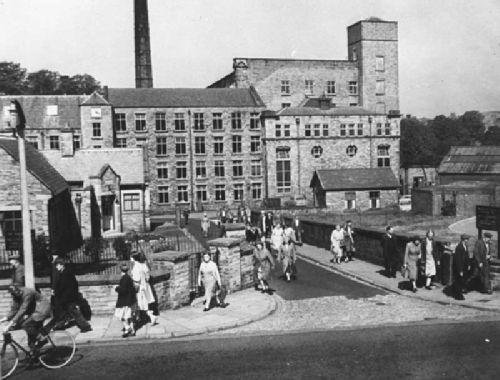
Workers leave Waterhouse Mill, Bollington, Cheshire, UK (1959)

Workers leave Waterhouse Mill, Bollington, Cheshire, UK (1959)

“Welcome to the working week”

This past week I have been listening to the latest thinking on the nature of “work”, from the perspective of technology and its impact on task-based activity (courtesy of Donald Farmer from Qlik), and from the perspective of organizational culture and its importance in motivating knowledge workers (courtesy of Didier Elzinga of Culture Amp). If you are not familiar with either of these thought leaders, than I thoroughly recommend them to anyone interested in organisational behaviour, career development, business transformation and lifelong learning.

Technology and changing demographics require each of us to reframe our ideas about work as a homogenous lifelong activity, because the economic bargain between employer and employee is no longer as simple as a 40 hour working week and a regular paycheck.

Reframing “employment” #1:

By 2020, average job tenure will be 3 years, and around one-third of the workforce will be employed on a casual basis (part-time, temporary, contractor, freelance etc.). The proliferation of services such as Freelancer, O-desk/Elance, Sidekicker, 99designs, Envato and Fiverr are evidence of this shift from employee to supplier.

“The Dignity of Labour, Pts. 1-4”

Around 200 years ago, at the height of the Industrial Revolution in England, the typical worker was employed in a factory or mill, lived in housing owned by the employer, and was paid some or all of his wages in the form of vouchers that could only be spent in shops also owned by the employer. A hundred years later, my grandparent’s generation were still exposed to the practices of indentured labour (“master and servant”) or the idea of “going into service” (as domestic workers). My father’s generation is certainly the last in my family to have had a 30-year salaried career within the same organisation.

So, in just a few generations we have transitioned from the idea that employment provides for all our needs, to the increasingly common perception that every worker is in fact a micro-business, supplying their labour to multiple employers or clients via fee-based services. (The potential irony here is that in a world of freelancers and contractors, the time-based or task-linked approach to employment pricing starts to resemble Marx’s idea of the labour theory of value…..).

“Cottage Industry”

It’s also interesting to note that before workers were employed in factories, and as agrarian labourers transitioned from toiling in the fields to working in manufacturing production, they were hired on piece-rates, working from home in the form of (literally) cottage industries. Of course, this was not exactly self-employment, as their tools (looms and lathes) were probably provided by their “client” who also set the prices (for raw materials and finished goods), had exclusive rights over the finished goods, and determined the number of units required. But, within the constraints of meeting target numbers and societal norms such as Sunday observance and customary holidays, these labourers were “free” to work for as many hours as they wanted, and at times that suited them. So, like many contemporary issues we still seem to be struggling with, flexible working arrangements are nothing new….

“Work is a four-letter-word”

Aside from connecting with your purpose, understanding your personal value proposition and knowing what you are “worth” in the market, one of the biggest challenges I see for employees/workers is the paradox between shorter careers (witness the increasing unemployment rates among older workers) and longer working lives.

Thanks to medical advances, we are living longer, but there is a mismatch between workforce participation rates and increased welfare and social security costs, leading to continuous policy tinkering on pensions, tax and superannuation.

As individuals, we need to build up sufficient financial assets to sustain us both post-retirement, and during erratic periods of personal income. As “free agents”, we have to learn to live with:

  • increasing job insecurity (companies continuously de-layering and restructuring)
  • significantly different career paths (compared to personal aspiration/expectation)
  • rapidly changing working environments (hot-desking, co-working spaces)
  • greater self-reliance (“bring your own device”) and
  • heightened resilience (“shape up or ship out”)

“Opportunity”

The good news is that the model of portfolio, portmanteau and protean careers means that new jobs and new forms of working are emerging all the time – and with personal resilience etc., come flexibility, adaptability, knowledge sharing, skills transfer and new opportunities for personal development, along with self-defined roles, self-directed learning, self-managed performance and self-determined accountability.

We are no longer defined just by what we do, but how/where/why/when we do it.

Reframing “employment” #2:

A friend recently asked me for some advice on how to transition from “employment” to “self-employment”. She has regular part-time work with one organisation (which she views as employment), but wants to find more of her “own work” with other clients. She does not want to give up the part-time gig just yet, but feels that it is preventing her from growing her own business. So I suggested that she should see herself as being self-employed already, and that the part-time work is her first client, allowing her to build a portfolio of new business.  

“Earn enough for us”

What does this brave new world of work mean for employers – in particular, what is the new economic bargain organisations need to have with their workers?

If companies are no longer willing/able to offer long-term, permanent employment opportunities, how do they manage their labour requirements, attract and retain the best talent (when they need it), and engage highly motivated and skilled people?

First and foremost, the idea of workplace flexibility has to be truly reciprocal – but obviously aligned and clearly articulated – to be of any real benefit to both parties.

Second, if employers are increasingly reliant on freelance resources, this does not obviate their obligations to invest in their workforce – whether that includes benefits, training or rewards and recognition – the same as they would have in their employees.

Third, companies will need to do an even better job of attracting and retaining the skills and knowledge they require – and be willing to offer different kinds of incentives (e.g., opportunities to work on engaging projects and to collaborate with interesting people) beyond basic pay and conditions.

Fourth, employers may have to adjust to the idea of “syndicating” their talent resources (“it’s the shared economy, stupid”) not just within their own workplaces, but across their client organisations, suppliers, service providers and other collaborators – sometimes, even their competitors. Employers can no longer expect to have a total monopoly on their workforce talents, unless they make it really interesting, financially or otherwise…

Fifth, if companies continue to espouse the message that “our people are our best asset” then they need to update their asset management model to demonstrate they mean what they say. For example, more needs to be done in helping employees to retrain and up-skill (for jobs and roles that haven’t yet been thought of), even if that may mean employees are more likely to move on. The amount of goodwill that this will create in the wider community cannot be underestimated.

Reframing “employment” #3:

Employers and HR managers are re-assessing how they evaluate employee contribution. It’s not simply a matter of how “hard” you work (e.g., the hours you put in, or the sales you make). Companies want to know what else you can do for them, how you collaborate, do you know how to ask for help, and are you willing to bring what you know to the role?  

Finally, rather like their employees, employers are increasingly expected to connect with their purpose and to align their values with their objectives. New entrants to the workplace are better informed about the organisations they work for and want to work for, because free agents know they have a choice.

Next week: How to work with Boards