Music with literary leanings

A few weeks ago, I responded to a question posted on Twitter about “songs named after books”, little realizing the rabbit warren I would subsequently find myself going down (social media can have that effect…).

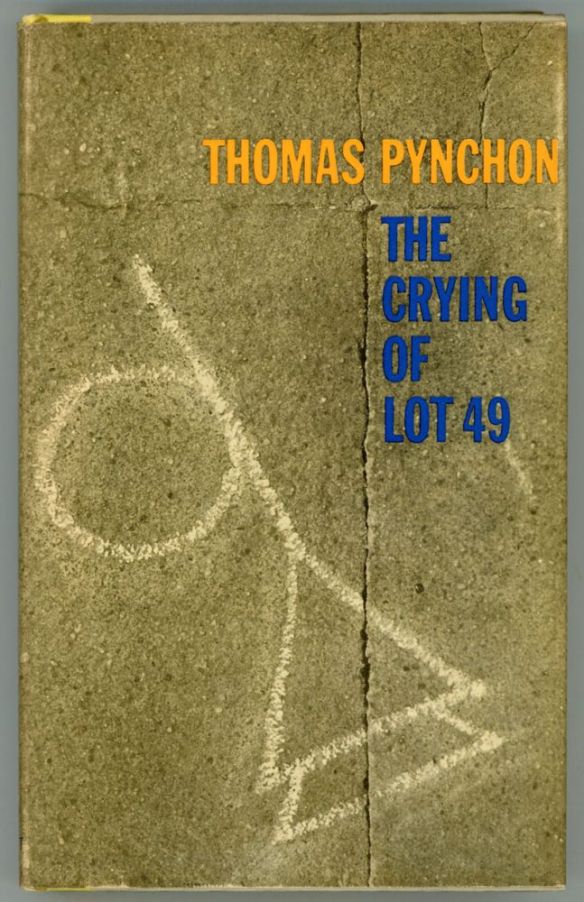
Image sourced from L.W.Currey, Inc.

There has long been a close relationship between popular music and literature – think about the connection between “West Side Story” and William Shakespeare, for one. Songwriters are often inspired by the titles or themes of books and plays for their own compositions – “Wuthering Heights” by Kate Bush being one of the most obvious, and “White Rabbit” by Jefferson Airplane being one of the more lysergic…

Some bands even name themselves after literary references; William Boroughs can claim credit for bestowing both Steely Dan and Soft Machine with their monikers. (In Australia, The Triffids, The Go-Betweens and Sexing the Cherry offer similar examples of groups taking their names from novels.) And of course, David Bowie employed Burroughs’ cut-up technique for writing his lyrics, as well as being inspired by Nietzsche, Orwell and Burgess, etc.

A number of bands I listened to in the late ’70s drew on their own teenage reading as key reference texts. Groups like Joy Division, Magazine, The Cure, The Buzzcocks, The Fall (naturally!), Josef K (of course!) and even The Jam all revealed their familiarity with Penguin Modern Classics and Pan paperback editions of Kafka, Sartre, Dostoevsky, Gogol, Fowles, Ballard, Murdoch, Bukowski, Plath, Nabokov and Huxley, to name but a few.

Of course, this traffic is not all one-way. Writers such as Ian Rankin and Nick Hornby, in their respective ways, have made use of musical themes and references for their novels. Elvis Costello is an interesting example of this flow and ebb of influences (conscious or otherwise). In his 1982 album, “Imperial Bedroom”, Costello name-checks books by Evelyn Waugh, Mary Scott and Emlyn Williams. In turn, the album seems to have inspired Brett Easton Ellis and Stephanie Bishop.

However, for sheer worm hole appeal, the works of Thomas Pynchon deserve a Nobel Prize for inspiring a whole thread of academic research in this area of literary influences. There’s probably a PhD thesis or two out there on this exact topic. At the risk of making this an indulgent and self-referencing blog, the band I was in from 1979-1983, Greenfield Leisure, recorded a song called “Too Fat To Frug” (the one song of ours that John Peel liked). The words were adapted from “Miles’s Song”, one of the lyrics Pynchon wove into “The Crying of Lot 49”, published in 1966. Even back in the ’60s, Pynchon was a source for popular culture, if the title of a 1967 comic is anything to go by, and a trend which seems destined to continue.

Finally, my thanks to Gary Wigglesworth for triggering this post.

Next week: My love/hate relationship with Science Fiction


When is a print not a print?

Alongside drawing, painting and sculpture, print-making is one of the oldest forms of visual art. Although it wasn’t generally recognised as a fine art discipline in the west until the European Renaissance (with the work of Dürer, among others), the practice can be traced back to Paleolithic times when humans first made hand-prints on cave walls. It evolved largely through developments in paper-making and image creation, such as Japanese wood-block printing 1200 years ago, or metal plate engravings in the Middle Ages, and has developed alongside related technologies in lithography, etching, off-set press printing, photography, lino-cut and silk-screen printing, to name a few key methods.

Print-making in this “classical” sense uses a combination of mechanical, manual and chemical processes to transfer an image (created from one or more media) from one surface to another, using ink or paint to “carry” the image between the plate and paper or other printed surface.

While the printing industry has been using the same techniques for centuries (in the service of book publishing, newspapers, advertising, packaging, textiles, etc.) there are key differences between the commercial and the artistic.

First, traditional print-making still retains a high-degree of manual process, and the work is usually produced in limited numbers (sometimes in single editions), and even where multiple copies are generated, variations and differences will appear thanks to inherent “imperfections” of the process.

Second, despite the importance of technical process in print-making, the practice should not be seen as a mere mechanical exercise in reproducing an image – the resulting image is still far more important than the actual technique (i.e., content over form should be the order of the day).

Third, the role of “mark-making” in print-making is as significant as the brush strokes in an oil painting, and are part of the artist’s signature. Equally, choice of materials is also important, just as an artist working in oils will make specific decisions about their brushes, pigments, medium and canvass.

In terms of art curation, print-making can get lumped in with other “works on paper”, which may extend to collage, photography, photo-montage, graphic design and illustration. Photography itself can be used in the course of print-making (e.g., rayographs), but a photographic print of a film-based negative is not the same as print-making in this context.

Likewise, the use of digital processes to capture, create, manipulate, transfer and reproduce an image on paper (or other medium) is further blurring the boundaries as to what constitutes a “print” as opposed to a “technique”.

This delineation between traditional print-making and image creation processes was further highlighted by the recent Experimental Print Prize organised by Castlemaine Art Museum in Victoria’s gold field region. While there were examples of etching, lino-cut, lithography, photographic and other techniques on display, the prize is intended to push the boundaries into more conceptual notions of “what is a print?”.

Examples included the use of light-sensitive paper to create long-delay images, a neon-light to generate an after-image on the viewer’s retinas, and a muon particle detector to track and plot their “image” onto a computer monitor. Although these are all interesting approaches, they perhaps over-step the boundary of permanence, which is usually a feature of print-making, to the extent that the fixed paper and ink endure long after the artist has made his or her mark. Nevertheless, the museum is to be applauded for bringing a new dimension to an ancient art-form.

Next week: Literary legacies


Dead Pop Stars

Back in the 1960s, rock stars weren’t expected to have long careers. “I hope I die before I get old,” sang The Who. Soon after, the likes of Hendrix, Jones, Morrison and Joplin joined the 27 club. Nobody associated pop music with longevity, let alone a pension fund. But now we have octogenarian rockers releasing new albums and even touring (health permitting). It’s almost indecent….

Of course, most musicians don’t go out in a blaze of glory, at the height of their career. Instead, they fade away gracefully after their 15 minutes of fame (or pursue a career in reality TV). With better management of their back catalogues (and thanks to streaming services, box-set reissues, band reunions and come-back package tours), a decent living can even be had by artists from the second and third divisions.

As we ourselves age, we may measure our own mortality against the stars we were fans of. I’m not quite old enough to remember (or register) the passing of Hendrix or Joplin, but I certainly remember where I was when Elvis Presley, Keith Moon and Sid Vicious each left this mortal coil. For various reasons, none of these untimely deaths were totally unsurprising, based on their lifestyles. I was somewhat shocked when I heard about the death of Ian Curtis – I was still a teenager, he was only a few years older than me, and I’d even spoken to him, albeit briefly, at one of his last ever gigs. But again, not totally unexpected in the circumstances.

Understandably, John Lennon’s murder was pivotal in popular culture (due both to the manner and timing of his demise), but otherwise, major rockers from the 60s & 70s have reached old age intact (but not always with dignity). Sure, there have been many exceptions, mostly thanks to lifestyle choices or misadventure. But it’s not uncommon for pop, rock and jazz musicians to live (mostly happily) to a ripe old age – in recent times, we have lost Harold Budd, Jon Hassell, Lee Perry, McCoy Tyner and Charlie Watts, who each enjoyed more than their three score years and ten. Bob Dylan and Ringo Starr are still troubling the charts in their 80s (and what about Sir Elton!), while the remaining members of the Beatles and The Stones are close to joining octogenarian rock royalty.

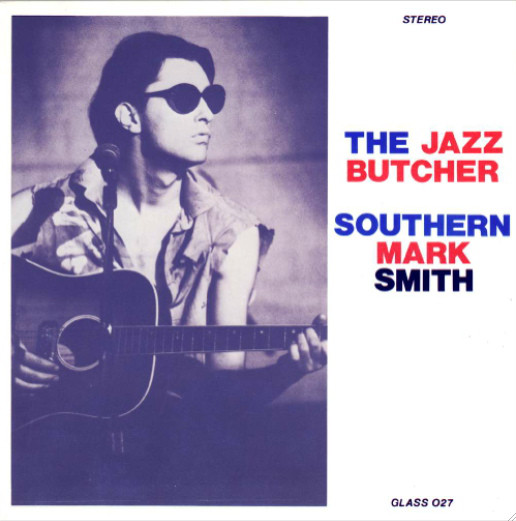
So it was with some sadness that I read about the recent death of Pat Fish, aka The Jazz Butcher. Not only was he just a few years older than me, but I’d enjoyed seeing his band play several times around London (most memorably, supporting R.E.M. in late 1985). I’d also met Pat a few times via a mutual friend, and he was always charming and entertaining.

Pat was one of the last “gentleman rock and rollers” – he wasn’t just in it for the money or glory (although both help to sustain a long music career). He was a chronicler of the absurd, the whimsical and the eccentric (in the nature of other English songwriters such as Ray Davies, Syd Barrett, Robyn Hitchcock and Julian Cope), and as epitomized by “Mr. Odd” and the self-referential “Southern Mark Smith”. Yet, despite this, he found loyal audiences across North America and Europe, where he was probably more appreciated than in the UK. (For example, a Paris-based American musician I knew at the time only became aware of The Jazz Butcher thanks to a tribute to Olaf Palme they recorded after the Swedish prime minister’s murder.)

If the calibre of a band can be measured by the songs and artists they cover, The Jazz Butcher made some interesting choices, revealing their influences and personal tastes: “Road Runner” (Jonathan Richman), “Sweet Jane” (Velvet Underground), “Take The Skinheads Bowling” (Camper Van Beethoven) and “Spooky” (Dusty Springfield). And Pat was also supportive of other bands that were associated with his home base in the East Midlands, or signed to the same labels he was. In this way, and at various times, he was connected to the likes of Bauhaus, Spacemen 3, Eyeless in Gaza, In Embrace, The Pastels, Teenage Fanclub, Bron Area and The Woodentops.

Finally, in keeping with the times, The Jazz Butcher have been the subject of a recent reissue campaign, and there may be a posthumous album released shortly.

Cheers, Pat!

Next week: Opening Up…


Telstar!

The quality of a song can often be reflected in the number and variety of cover versions it prompts. Think of tunes that have become jazz standards, or key songs like “Yesterday” or “My Way” which have become some of the most covered compositions in the pop canon. Sometimes, the original can be overshadowed by a later interpretation, to the point where it becomes the definitive recording. (For me, John Cale’s version of Leonard Cohen’s “Hallelujah” outclasses both the original and later, more popular renditions). Too often, though, cover versions are pale imitations, mere pastiche or karaoke cannon fodder for TV talent shows.

One of the first records I am conscious of hearing at home and playing on the family Dansette is “Telstar” by The Tornados (the 7″ version with the deep blue Decca label, and distinctive striped orange and white sleeve). Although the main melody is quite simple (and total ear-worm), the original 1962 version features strange noises and curious effects, while the overall instrumental tone is appropriately other-worldly. Both of its time (reflecting the emerging space age) and timeless, “Telstar” has given rise to numerous versions, and thanks to the current lock-down in Melbourne and the wonders of YouTube, last week I killed a few hours searching and compiling this playlist.

I’m sure there are many more tributes out there, but this list comprises 20 or so key recordings I came across during my internet trawl:

Chronologically, the first couple of tracks on the playlist are quite faithful renditions by The Tornados’ contemporaries, The Ventures and The Spotnicks. (Strangely, the latter put out a later, and rather pointless “updated” version.)

The record’s initial success led to a vocal version by Bobby Rydell which has a certain naive charm. This in turn inspired (directly or indirectly) a couple of wonderful European vocal recordings – by Slovenia’s Marjana Deržaj and Finland’s Laila Halme. They both stay just the right side of kitsch, and bring some unique elements of their own.

These vocal recordings are followed by a cluster of orchestral/easy listening renditions, typical of the time both in style and context: there’s Billy Vaughn‘s big band recording, featuring sax and guitar; The Hawaiians‘ exotica; and James Last‘s cheesy string arrangement. All great examples of the hits of the day played in styles to suit all tastes…

We shift gears for The Pyramid‘s ska take, followed by Al Casey‘s faithful version from the early 70’s, that features an interesting opening. Also around this time came Hot Butter‘s sanitized synths, that feels like a missed opportunity to go further out in space…

If we take “disco” to be a broad church, then the oddities by Venus Gang and Ovni would just about qualify in that category – while The Shadows‘ early 80’s take sounds like those awful Stars on 45 records.

Also in the 80’s, we find a couple of versions that are either ironic, or so post modern it hurts. The Models‘ 1981 recording attempts to add some new wave atmosphere, while Ad Infinitum‘s 1984 effort is notable for coming out on Manchester’s very hip Factory record label. (It also features a tongue-in-cheek piano bar version on the b-side.)

Finally, a couple of more recent versions that each add another dimension. First, from 1997, Takako Minekawa‘s neo-loungecore interpretation (very on message for the time), which would appeal to fans of Saint Etienne and Stereolab alike. Lastly, from 2014, Bill Frisell‘s restrained but lush slide guitar that presents a fitting tribute to this classic space age instrumental.

[“Telstar” cover versions that I wish existed: the outake from Bowie’s “Low” sessions; Kraftwerk’s 1975 sound check from London’s Festival Hall; Esquival’s bachelor pad stylings; Jacques Loussier channelling Bachian counterpoint; and Marlene Dietrich’s vocal rendition…]

Next week: Living in limbo