After nearly six weeks in Melbourne’s current lock-down (#6 if anyone is keeping count…), I have nothing to blog about this week.
The lack of external stimulus has finally beaten me, and I have nothing much to say. The muse is gone, the well is dry, and there’s only so much you can say about being confined to quarters.
One benefit of this enforced inactivity has been the opportunity to catch up on recent movies, that I either missed at the cinema, or which were not widely distributed upon release.
A few of these films seem perfectly suited to these times – mainly because nothing much happens. These particular stories are more concerned with slow observation and self-reflection.
In “The Truffle Hunters”, there is a stillness bordering on stagnation, as a group of elderly men respond in different ways to the changes being foisted upon their cottage industry. It’s not just the fact that their traditional way of life is coming to an end – it’s the nagging inevitability of their situation, and the growing realisation that there’s probably nothing they could have done to avoid this happening.
Stagnation of a different kind informs the main characters in “Another Round”. They see their lives as being stuck in a rut (although outwardly, they have a comfortable existence), and they feel relatively helpless. Until, that is, they stumble upon the idea of a social experiment, which involves maintaining a consistent blood-alcohol level. They embark on the project to see if they can enliven their mundane existence, with vastly different results.
A similar sense of helplessness pervades “Brad’s Status”. Similarly dissatisfied with his life, and with a growing awareness that perhaps he has misread key social relationships, a middle-aged father uses a trip with his son to re-assess his friends, reflect on his values, and re-connect with what sustains him. He also finds contentment in his achievements, and achieves a sense of acceptance about what he can and can’t change or control.
Finally, a journey of self-realisation also befalls the protagonist in “People Places Things”. When his marriage collapses (and he didn’t see it coming…), our hero finds a way to use his work to explore and resolve this apparent failure to read the situation. In the process, he learns how to communicate his feelings, and more importantly, he gets comfortable with who he is.
During the latest Melbourne lock-down, I have been revisiting the music of The Fall. A strange (or should that be Kurious?) choice, but at a time when you feel like ranting (or mithering) at the absurdity of it all, The Fall make perfect sense. It might not always be comfortable listening, but sometimes you need a bit of grit and gristle as a catalyst to move on.
When exploring The Fall, it’s hard to know where to begin (and, just as importantly, how to end). Although they emerged from the 70’s punk movement and were associated with the Manchester music scene, The Fall identified with neither. But if punk hadn’t happened, and without that link to Manchester, I doubt they would have got as far. They out-lived all of their contemporaries, without the tired reunions or desperate comeback tours of their peers. Perhaps only Wire or Gang of Four can claim a similar longevity, but they both had long periods of inactivity.
Named after an Albert Camus novel, The Fall were not afraid to acknowledge their influences and interests, in particular those of their core founder and only consistent member, Mark E Smith. Scattered across lyrics, album covers, sleeve notes, press interviews and side projects, it is possible to find references to literature, art, theatre, dance, philosophy, politics, psychology, spiritualism and the occult. Elements of Wyndham Lewis, Samuel Beckett, Edgar Allan Poe, Aleister Crowley, Jean-Paul Sartre, William Blake, H.P. Lovecraft, Luke Rhinehart, Bertolt Brecht, Alfred Jarry and Kurt Schwitters can be found strewn across The Fall’s output.
This should not be too surprising: during a 40-year recording career, The Fall released 30+ studio albums, 60+ singles and EPs, and more than a hundred live albums and compilations. Integral to their recording career are the two-dozen sessions The Fall recorded for John Peel’s BBC Radio 1 program. (Peel was an early champion, and often cited them as his favourite band – he is also credited with the quotation that provides the title of this blog.) It’s the sort of discography that will keep fans busy for years – and represents something of a licensing headache for record labels and music publishers alike.
The Fall’s prolific (and challenging) body of work only came to an end when Smith died in early 2018, although the posthumus re-issues and compilations have continued with almost indecent frequency – I hope his estate are keeping tabs.
Of course, with that sort of work ethic, quality control can suffer. Smith was equally feted and feared for his wilful determination and unwillingness to conform. His refusal to compromise or comply with current fads and fashion was certainly an admirable trait. But this steadfast and stubborn control over his content reveals a weakness – the absence of any discernible editorial oversight means that there is a law of diminishing returns, especially in the band’s later years. Although it must also be acknowledged that even on the last few albums, there was something of a return to form.
When Smith died, he was honoured with an obituary in the Washington Post, which must have had more than a few readers perplexed – (Mark E who? Marquis Cha-Cha of course!). Smith would have loathed/laughed at the attention. He had a love/hate relationship with journalists, but he also understood the value of the media to reach his audience, especially in the pre-internet heyday of the UK’s weekly music press (the NME, Melody Maker and Sounds). At the same time, he could be dismissive towards certain sections of his fans, although he saved most of his bile for other bands, especially those whom he felt were mere plagiarists.
Trying to summarise what The Fall represent musically is no easy task. Their antecedents can be traced to 1950’s rockabilly, 1960’s garage rock and 1970’s glam. In terms of outlook and attitude, it’s possible to discern similarities to American groups such as Captain Beefheart and Pere Ubu, and German bands such as Can and Faust. Yet another reference point might be their choice of cover songs, ranging from The Kinks to Sister Sledge, from Hank Mizell to Lee Perry.
Another way to approach their music is to break it down into chronological chapters: the post-punk and dense sounds of their first few albums, the rapid evolution into art rock and neo-pop in the mid-1980s, the brief period with a major label in the early-19990s that saw a transition to a more electronic sound (and mild flirtations with techno and big beat), the peaks and troughs of the middle-aged years, and then the erratic coda in their dotage that showed glimpses of former glories. But this hardly does their back catalogue justice. If you asked fifty fans to list their top 10 tracks by The Fall, you would get as many different compilation albums.
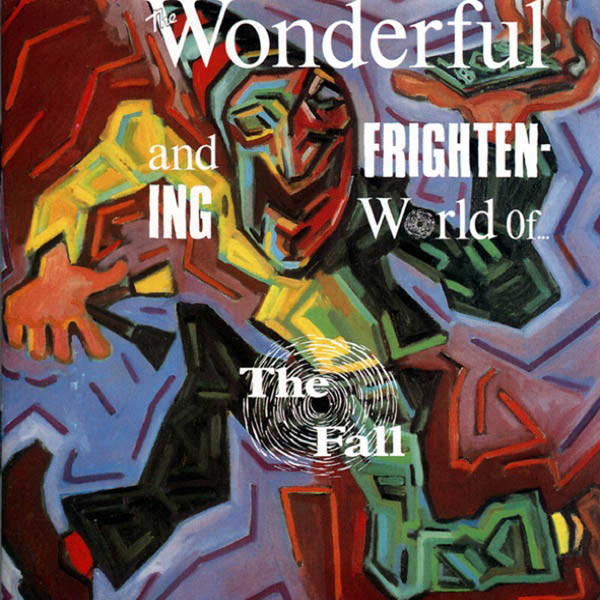
I was fortunate to see The Fall in their early- and mid-1980s peak – so my own preferences mainly stem from that era – the run of albums that comprises “Grotesque (After The Gramme)”, “Perverted by Language”, “Hex Enduction Hour”, “Room to Live”, “The Wonderful and Frightening World of The Fall”, “I Am Kurious Oranj”, “Bend Sinister”, “This Nation’s Saving Grace” and “The Frenz Experiment”, plus the myriad singles and EPs dotted around those releases.
If pushed, I’d have to say my favourite track is “Leave the Capitol”, from 1981 – to me, it sums up what The Fall represent.
Just prior to the latest COVID-related lock down in Melbourne, I managed to visit the exhibition of drawings and prints by Goya at the NGV. Although these works were produced 200 years ago, they are still relevant today.
Working at the time of the Enlightenment, and despite his status and reputation as a court painter, Goya still had to navigate the political oppression of both Spanish and French rulers, and the religious persecution in the form of the Inquisition.
His series of drawings and etchings reveal a very personal side to Goya’s work, combining allegory, satire, reportage, surrealism and the sub-conscience. The images provide a commentary on the horrors of war and its aftermath, while his domestic scenes on courtship, gold diggers and hapless suitors would not be out of place on Married at First Sight or The Bachelor… There’s a lot that’s familiar about these images.
The exhibition provide some insights into Goya’s working methods – from his use and development of preparatory drawings, to the different etching techniques he deployed to create the finished prints.
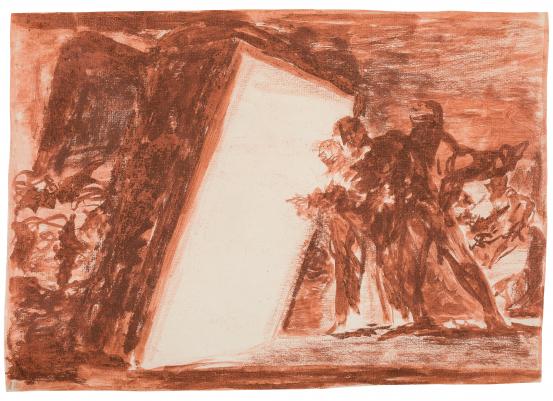
One drawing in particular caught my attention – a red crayon sketch entitled “Two People Looking into a Luminous Room”. It’s a remarkable image on a number of levels. The room of the title does not look like a typical building or structure. It almost resembles the bellows of a giant camera, except that photography had not yet been invented. Perhaps it refers to a type of camera obscura or similar device that Goya had seen? On the other hand, it could be a metaphor for Hell, a glimpse into the white heat of the Inferno. For me, it even suggests Goya’s prescience for the work of James Turrell. It’s a remarkable piece in an absorbing exhibition.
Next week: The Fall – always different, always the same
In the wake (sic) of wokeness and cancel culture, it was interesting to read that Disney has decided to add a health warning of “negative depictions of cultures” to re-runs of the Muppet Show. So rather than cancel these programmes, it has chosen to (re-)contextualise the content for a contemporary audience.
I don’t have a problem with this type of labelling, or indeed on any other content, if it helps to aid understanding, generate debate, and acknowledge past lapses of taste or judgement. Especially as programmes like the Muppet Show were huge in the heyday of mass-market network television, before cable and streaming fragmented audiences into pre-defined sub-genres and segregated demographics.
Indeed, I’ve grown used to similar health warnings attached to re-runs of many BBC radio dramas, from the 1950s through to the 1980s, when “social attitudes were somewhat different to today”.
But, if we continue along those lines, should we be applying similar health warnings to Shakespeare’s plays, Greek tragedies, French farces, Norse legends, European folklore as told by the Brothers Grimm, or Roman accounts of gladiatorial victories over their hapless victims?
In which case, I look forward to the same contextualisation (and health warnings) of any programmes that quote, cite, promote or reference key religious texts, most of which were written hundreds and thousands of years ago, yet which similarly offend our current values and societal norms.