Startup Victoria: supporting successful founders

I’ve been attending Startup Victoria’s meetups for more than 5 years, and have been a paid-up member for most of that time. The event formats and the key personalities have changed over the years, but the mission has always been to help create more founders and better founders, and to support the broader startup ecosystem. At last month’s AGM and panel discussion, the Board announced that the focus has now shifted to “helping founders to succeed”. A subtle change, but an indication that the local startup scene is finally maturing.
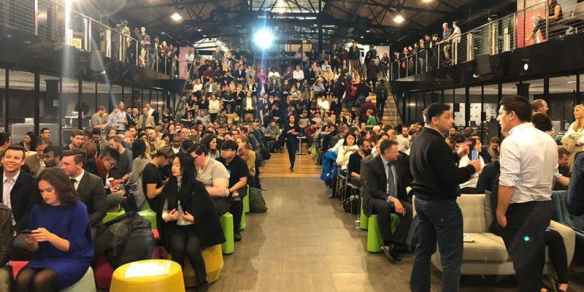
As part of this renewed focus, Startup Vic wants more corporates to engage with local startups – as suppliers, strategic partners and potential target acquisitions. Given the challenges startups face in meeting enterprise procurement processes (especially in the public sector…), this will not be easy. The path to engagement with startups has to be considerably de-risked before purchasing managers will get the sign-off to onboard new vendors.

That challenge aside, another observation from the panel discussion of founders and advisors was that Startup Vic needs to connect newer founders with more experienced founders, those who have already taken a startup to scale up to exit. Plus, as a leadership organisation, Startup Vic recognises that more needs to be done to highlight local success stories. That doesn’t just mean the startup community celebrating itself – it means spreading the word publicly and getting more media airtime for businesses that are building sustainable growth in the new economy.

One of the panelists asserted that “some of our politicians would rather have their photo taken with the winner of the Melbourne Cup, than be seen with the founders of Atlassian”. A bit harsh, perhaps – but I know that they mean. Aligning themselves with sporting heroes probably does more for their public profile, compared to hanging out with our key tech entrepreneurs in order to learn what government could do to foster more startup success.

To be fair to the Victorian Government, it has been trying to implement an innovation strategy that brings participants together – founders, investors, incubators, accelerators, etc. This has resulted in: the Victorian Innovation Hub (plus a number of sector-specific tech centres); LaunchVic (to provide grants to projects designed to foster the startup community); and engagement with overseas VC funds and offshore tech companies (to position Victoria as an investment destination, and as a national, regional or even global HQ).

Meanwhile, the panel also debated whether too many local founders are more interested in building a “lifestyle business” for themselves, rather than creating say, a $250m company. This apparent lack of ambition was seen as something of a local phenomena, partly linked to Melbourne’s status as one of the world’s most livable cities, partly linked to a generally benign Australian economy (but with a growing number of stress points), and the usual cultural factors such as the tall poppy syndrome. There are also some structural challenges in the economy (restrictive trade practices, a lack of competition in highly concentrated markets, continued economic uncertainty post-mining boom, delays in rolling out the NBN, a potential credit squeeze…), plus a growing distrust of public institutions and major corporations. This disenchantment and disengagement is not helped by a lack of strong leadership in government and in business – so why would anyone with any sense want to get involved, and hence the desire to take care of one’s own needs first.

Finally, emphasizing the need to re-think the founder mindset and to provide a better foundation for building the businesses of the future, Startup Vic is also committed to both the professional and personal development of founders.

Next week: Blipverts vs the Attention Economy


Manchester, so much to answer for….

I spent most of the festive season in and around Manchester, once a focal point of the industrial revolution (and the home to dark satanic mills), now a city that is as much about technology and culture (and the location for MediaCityUK). Plus, it’s a city that takes its hedonism very seriously, a place where a table is simply something to dance on…

Manchester Town Hall – photo by Mark Andrew – image sourced from Wikimedia under Creative Commons

I have had a direct connection with Manchester going back nearly 40 years. Prior to that, Manchester for me was probably defined by its famous football club (and that other one), Coronation Street (the world’s longest-running television soap opera), and the Manchester Guardian newspaper (now one of the few remaining sources of objective news coverage).

Then, in the late 1970s, Manchester started producing some of the most innovative music in the wake of punk. Manchester was the home to cutting-edge bands, labels, producers, designers, writers and fanzines – many of which outshone the best of what even London had to offer at that time. Record labels such as Factory, New Hormones, Object and Rabid helped launch the careers of Joy Division, Durutti Column, A Certain Ratio, Buzzcocks, John Cooper Clarke, Martin Hannett, Peter Saville, Ludus, Malcolm Garrett, The Passage, James and even Jilted John; while bands like The Fall, Magazine, The Frantic Elevators and The Distractions (plus fanzine City Fun) all added to the colourful mix. Then came New Order and The Smiths, followed by the Hacienda, Happy Mondays, Stone Roses and the rest of the Madchester era (as brilliantly told in the film “24 Hour Party People”).

So Manchester’s cultural output from that period has definitely shaped and informed a lot of my musical (and reading) choices. Just before Christmas, it was announced that musician and lyricist Pete Shelley had died. Along with Howard Devoto, he formed Buzzcocks, who inspired many other bands and independent labels with their debut 1977 release, the Spiral Scratch EP (also one of the first UK punk records). Their appreciation of visual artists like Marcel Duchamp and Odilon Redon, and writers like Franz Kafka, Jean-Paul Sartre, Aldous Huxley, Albert Camus, Dostoyevsky and Gogol meant that (along with many of their contemporaries) they made music that was not just about 3 minute pop songs. Plus, these literary influences prompted me to seek out those Penguin Modern Classics – much more interesting than my high-school set texts….

Every time I visit Manchester, I’m also reminded of the wry sense of humour, and the general tendency towards gritty resignation (along the lines of, “If you can’t laugh about it, you may as well give up now”).

One example – while checking my luggage in at the airport, I had the following exchange with the staff member behind the counter:

ME: “How are you today?” (it being a very early morning during the festive season, and goodwill to all people etc.)

THEM: “I’m full of it”

ME: “Full of the joys of Christmas?”

THEM: “No, the flu”

Another example (see opening reference to tables) – a quotation from Mark Twain, appearing in a public art gallery, had been modified to read:

“Explore, Dream, Disco…”

And as if by way of reinforcement, for Christmas I was given two books, essential reading for anyone wanting to further their appreciation of Mancunian (and Salfordian) pop culture – “The Luckiest Guy Alive” by John Cooper Clarke, and “Messing Up the Paintwork – The Wit and Wisdom of Mark E. Smith”.

The late Mark E. Smith, founder of The Fall (and no relation to the band The Smiths…) led  a group famous for its longevity, its voluminous discography, and its revolving door of musicians. In reference to the latter, he once said:

“If it’s me and yer granny on bongos, it’s the Fall.”

Next week: Startup Victoria – supporting successful founders


Recap on the New Education

My series late last year on the New Education (Agility, Resilience and Curiosity) prompted several comments from friends and acquaintances, a number of whom work as teachers or in the broader education sector.

Some of the feedback expressed frustration with the rigid structure and expected learning outcomes of current curricula – some teachers feel constrained by what/how they can teach. Rather than taking into account the holistic learning needs of students, most primary, secondary and even tertiary education is fixated on quantitative results, much of it geared towards formal STEM subjects. Whereas, in early childhood education, there is more of a focus on well-being and resilience, along with core learning and life skills. (But of course, if that resilience, agility and curiosity is not re-enforced at home or sustained beyond the classroom during those formative years, it may be a wasted effort….)

No doubt STEM subjects are important (to build the core technical skills we need for the future). Just as important is the inclusion of the arts (STEAM), for without creative skills, it becomes harder to interpret and then apply our technical learning to new situations. And let’s not forget the importance of play, even in a learning environment. A friend of mine provides extra-curricula classes in coding and robotics to primary school children. She finds that once the students have grasped the basics, unless they remain curious and are willing to explore what they have learned through play, they can’t progress to adaptive tasks such as creative problem-solving or identifying bugs in their programs. So they get bored and frustrated. The situation is not helped by many parents who want to know when their 10-year old “genius” is going to get to degree level computer science….

At the other end of the age spectrum, it’s clear that if we stop learning, and if we stop being curious, our agility in adapting to the career demands of the new world of work will be seriously depleted. The need to pursue our goals, passions and interests was explored in a recent discussion about late stage career transition on ABC Radio National. A major point being that if don’t put effort into managing our career, someone else will decide our future for us. Or we end up resenting the work we do. Similarly, I get frustrated by some former colleagues, who reach out to me for advice on how they can find their next work opportunity. When I explain my own recent journey, how I participated in a number of weekend hackathons, joined various meet-up groups, and attended numerous networking events, they say things like, “That sounds like hard work” – well, of course it is, otherwise it wouldn’t be worth doing.

The final word on curiosity should go to style icon, Iris Apfel. She maintains that being curious, and having a sense of humour, are vital to our existence. In fact, she goes as far as suggesting that she doesn’t have time for people who are not curious.

Next week: Manchester, so much to answer for…


Looking back on 6 years of blogging

It’s that time of year to reflect on the past 12 months, the season of lists and growing wistfulness (to misquote Keats). Time to think about the year that was, and what might have been. I have been writing this blog for 6 years, and it seems like a good opportunity to take stock, as Content in Context takes a break until the new year.

First, some facts. The most popular post this year has been “I’m old, not obsolete”, even though it was published more than three years ago. In a similar vein, my most popular posts of all time could both be regarded as evergreen articles: one about crate digging in Japan, and another about the new conglomerates (update here). This year’s most popular new posts were both about Blockchain (here and here). In fact, I have mentioned the broader topic of Blockchain, cryptocurrencies and digital assets more than 50 times in the past 5 years, starting with a reference to CoinJar in mid-2013. Not too surprising, given this is where I have been focusing most of my efforts over the past two and half years.

Second, as regular readers will know, I have tried to be very disciplined about the frequency and scheduling of my posts. Whether this is purely for my benefit, or whether it helps my audience, I don’t know – but it seems to work, as I need a regular deadline, and posting on a weekly basis avoids the risk of fatigue (my own and the readers’).

Third, I realise it took me a while to find my voice – and to gain confidence in sharing my thoughts and ideas in public. Some of my early efforts didn’t quite hit the mark, as I was either trying too hard or I hadn’t yet identified what made my content have impact. Over time, based on reader feedback, the more I express my own opinions (rather than regurgitating other people’s’ views) the more that people engage with the content.

Fourth, I have always maintained two key principles in producing this blog: 1) every word is my own; and 2) no cash for comment. Over the years, I have been approached by numerous freelance bloggers who want to produce articles for me (for a fee, of course); and by PR firms who want to push sponsored content on behalf of their clients. I have managed to avoid going down that path. Nothing wrong with either activity, but it’s not in keeping with what I set out to do, and it would undermine my desire to be authentic – plus, I think it would potentially compromise my independence.

Finally, writing this blog often helps me to work out my thoughts, and develop them into ideas that I can use for my consulting work. At the same time, this platform allows me to air my views on topics which don’t immediately relate to my professional life – but which are consistent with my personal perspective and tastes. And while this blog doesn’t define who I am, it does form part of my personal branding, and I also hope it is a true reflection of my beliefs and values.

On that note, my I wish all my readers a safe, peaceful and reflective festive season. Usual output will resume in the New Year.