Another #pitch night in Melbourne…

If there is one basic theme emerging from Startup Victoria‘s monthly pitch nights, it is this: whatever market you are in, regardless of your business model, and however disruptive you are trying to be, if you don’t know how to engage or reach your customers your idea is far less likely to succeed. This message came across loud and clear during last week’s event where four startup hopefuls pitched their business ideas to a panel of judges in front of a packed audience.

Picture sourced from Startup Victoria Meetup page

Picture sourced from Startup Victoria Meetup page

So let’s look at this specific issue in respect to each of the pitches:

First came JobPokes, an online recruitment service designed to help candidates match job opportunities to their career preferences. Because it claims to be addressing the hidden job market, candidates aren’t applying for specific roles – instead, it’s a form of reverse enquiry, where recruiters target potential applicants via their registered profiles. I applaud the focus on the non-advertised job market, but while it may well offer an additional channel for recruiters, I’m not sure there was a clear strategy to reach job candidates who need to create a user account, and who are probably already using platforms like LinkedIn and Seek.

Next was Airly, which is sort of “Uber for private aircraft”. The business model involves signing up a minimum number of customers (who pay a monthly subscription fee, entitling them to unlimited flights), and securing sufficient seat capacity via scheduled charter contracts. There is no doubt that the idea of flight flexibility, and an element of passenger exclusivity met with audience approval (Airly took out the people’s choice vote on the night). Also, the PR around Airly has generated in-bound enquiries, suggesting there is demand. But how does this market interest convert to individual customers, when many corporate travel policies rely on wholesale and bulk-purchase models (i.e., aggregation, consolidation, vendor discounts, agency rebates, preferred airlines) rather than catering for individual travel needs or preferences? Unless the target customers are business travelers that manage and pay for their own tickets?

If Airly was about the Uberisation of air travel, RagRaider revealed another aspect of the shared economy model. Squarely aimed at fashion- and budget-conscious women, RagRaider offers a peer-to-peer service whereby customers can hire clothes for one-time use. No doubt there is a market (high school formal, spring carnival, wedding reception…) but the question is how to connect with actual lenders and hirers? We know that the per customer cost of acquisition for 2-sided markets is a key metric, and it wasn’t clear how the founders were addressing this, other than a pre-launch website and some social media. As one observer has commented, the “model is focusing on the ‘product’ part first which is the reverse of how it should be”, and another commented that despite a defined market, the barriers to entry are considerable. The judges also questioned some of the proposed pricing, commission rates and logistics.

Finally, Rounded is another FinTech startup looking to service the SME sector, specifically sole traders, freelancers, sub-contractors and tradies. Another spin on the invoice solution when suppliers need to get paid efficiently, Rounded does not claim to be a full-service accounting software – but, as one attendee commented, key to success will be reaching and educating the end-user market.  Also, they are entering a competitive space, where a new entrant like Xero has already disrupted incumbents like QuickBooks, Reckon and MYOB. I wasn’t able to stay for the pitch, but I did have the opportunity to speak with the founders beforehand. Clearly driven by their own experience and needs, there is a solid but simple idea here – but as Xero and others are increasingly able to serve similar customers, Rounded will find it really difficult to compete.

If anything, these latest pitches showed how hard it is to compare apples with oranges, although the voting criteria (market traction, product viability, team composition, pitch presentation, and responses to judges’ questions) are designed to deliver a consistent evaluation. It was also apparent that these pitches divided audience opinion more so than previous contestants – which is probably a good thing as variety is the spice of life….

Acknowledgments: thanks to Graphican, Marlene M., Cornell and Dale G. for their input.

Next week: Re-Imagining Human-led #Innovation

 

Update on the New #Conglomerates

My blog on the New Conglomerates has proven to be one of the most popular I have written. I’d been contemplating an update for a while, even before I heard this week’s announcement that Verizon is buying the bulk of Yahoo!. Talk about being prescient…. So, just over two years later, it feels very timely to return to the topic.

Image sourced from dc.wikia.com

Image sourced from dc.wikia.com

Of the so-called FANG tech stocks, when I was writing back in May 2014, Facebook had recently acquired WhatsApp and Oculus VR. However, apart from merging Beats Music into its own music service, Apple has not made any big name deals, but has made a number of strategic tech acquisitions. Meanwhile, Amazon has attempted to consolidate its investment in delivery company, Colis Privé, but got knocked back by the French competition regulators. Netflix finally launched in Australia in March 2015, and within 9 months had 2.7 million customers, a growth rate of 30% per month. Finally, Google has since renamed itself Alphabet, and purchased AI business Deep Mind.

Over the same period, Microsoft appears to have reinvigorated its strategy: back in May 2014, Microsoft had just completed its acquisition of Nokia. Since then, Microsoft has announced it is buying LinkedIn (following the latter’s purchase of Lynda.com in 2015), but has also shut down Yammer, which it had only bought in 2012. The acquisition of LinkedIn has been framed as a way to embed corporate, business and professional customers for its desktop and cloud-based productivity tools (and maybe give a boost to its hybrid tablet/laptop PCs). On the other hand, Microsoft has a terrible track record with content-based products and services, as evidenced by the Encarta fiasco, and the fact that Bing is an also-ran search engine. I think the jury is still out on what this transaction will really mean for LinkedIn’s paying customers.

So, what are the big tech themes, and where are the New Conglomerates competing with each other?

First, despite being the “next big thing”, VR/AR is still some way off being fully mainstream (although Pokémon GO may change that….). Apple and Google will continue to go head-to-head in this space.

Second, content streaming is not yet the new “rivers of gold” for publishing (and the sale of Yahoo! might confirm that there’s still gold in those advertising hills….). But music streaming (Apple, Spotify, Amazon and Google – plus niche services such as Bandcamp and Mixcloud) is gaining traction, and Amazon is building more content for SVOD (to compete with Netflix, Apple and Google). But quality public broadcasters such as BBC, ABC and NPR are making great strides into audio streaming (via native apps and platforms like TuneIn) and podcasting. One issue that remains is the fact that digital downloads and streaming still suffer from geo-blocking, and erratic pricing models.

Third, Amazon continues to build out its on-line retail empire, even launching private label groceries. Amazon will also put more of a squeeze on eBay, which does not offer fulfillment, distribution or logistics and is a less attractive platform for local used-goods sellers compared to say, Gumtree.

Fourth, Amazon is making a play for the Internet of Things (which, for this discussion, includes drones), but both Apple and Google, via their hardware devices, OS capabilities and cloud services, will doubtless give Amazon a run for its money. Also, watch for how Blockchain will impact this sector.

Finally, payments, AI, robotics, analytics and location-based services all continue to bubble along – driven by, for example, crypto-currencies, medtech, fintech, big data and sentiment-based predictive tools.

Next week: Another #pitch night in Melbourne…


Level 3’s Enterprise #Pitch night

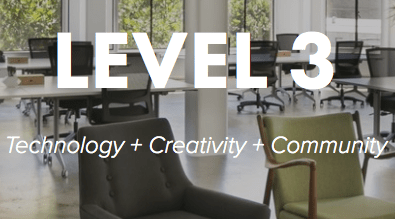
As part of the recent Melbourne #Startup Week, IT consulting firm, Versent hosted a B2B pitch event at their product development lab, Level 3. Introduced by Thor Essman, the judges for the evening were Grant Thomson from York Butter Factory, Paul Naphtali of VC fund Rampersand, and Carl Rigoni, Head of Digital at Australia Post. It presented a very focussed cohort of enterprise solutions, that covered employee comms and engagement, design thinking and cybersecurity.

Screen Shot 2016-07-03 at 2.14.42 PMPax Republic

Pax Republic is positioned as an employee engagement platform that grew out of the founders’ background in mediation. Recognizing that organisational change programs have a high failure rate, the founders explained that lack of project or employee data isn’t the problem; it’s a shortage of actionable insights and recommendations.

The solution offers text-based content and scripted dialogue combined with AI and online facilitators. Many traditional enterprise tools don’t work, either because they don’t reduce time and cost, or they can’t scale.

When asked if AI can measure sentiment or mood, the founders explained that the system makes use of emoticons to capture employee feedback plus keystroke analysis. In terms of a commercial model, the goal is to train up internal facilitators to deliver the service, rather than getting involved with specific change management projects.

The judges felt that the pitch needed to refine the problem statement and the solution proof points, as well as explain what makes this solution different. In particular, who is the buyer? It’s also important to tell the sales story, and expand on the risk transfer and pricing benefits.

Forticode

Forticode has developed an elegant and deceptively simple password protection solution, to remove the risk and costs of password resets for their corporate clients. Basically, it can support multi-factor authentication using colour coding and a randomized keypad, incorporating character sets as well as emojis.

It can provide context aware authentication, and native protection from endpoint hacking attacks, via a plug-in architecture and 3-factor authentication, using patented technology.
According to the founders, finger prints are immutable, but still do not provide 100% identity confirmation on touch screen devices.

There were questions from the judges and the audience about alternative solutions. Compared to an IPA gateway for trust and authentication or password aggregators, Forticode offers a much more robust solution and can support machine-to-machine verification.

The sales model is to target security teams within risk and compliance departments, and price on a per user per month basis. Importantly, there is no third-party software in the stack. And, there was even an offer to introduce the founders to Auspost….

Naked Ambition

With the tag line of “Always Be Creating”, Naked Ambition is a consultancy for innovation and design thinking. Their process is to focus on future needs, help clients get closer to their customers, and in doing so, help employees to leverage customer insights. The ultimate goal is to make design thinking skills ubiquitous. Naked Ambition’s aim is to embed the teaching in the organisations they work with.

The judges questioned who exactly is the customer, and what segments do they work in? There was also some discussion whether the service was more about personal branding and intrapreneurship, rather than pure solution design.

In particular, the judges wanted to know what gives Naked Ambition the “license” to offer their services? Despite hiring a leading design thinking expert from IBM, there was a sense that there is an oversupply of similar services, and that clients are not looking for yet another program. Instead, they are thinking about “buying units of innovation” for specific projects, as and when they need them.

Konnective

Last to present was Konnective, a business I have blogged about before. In short, this is an employee messaging app for frontline staff, many of whom do not have corporate e-mail addresses, let alone access to a their own desktop computer.

As part of the product development, Konnective now offers Groups, dashboards, analysis of what’s working and employee reach. Charging a basic annual fee per employee, Konnective has clients in mining, healthcare and manufacturing. The platform supports OH&S comms, promotes shift availability that can reduce agency hiring fees, and help reach hourly employees who don’t access corporate e-mail.

The judges asked about BYOD, and the risk of/resistance to having organisational data on personal mobile phones. Plus, why Konnective and not, say Yammer or Slack? These are answers that need to be made more explicit. Finally, Konnective is still working on data analytics, and there was a suggestion of opportunities among travel companies and tour guides, but that would require some multilingual capabilities.

On the night, Forticode won the judges over and took out first prize. This was the second of these events, and I look forward to attending more in future.

Next week: Startup Victoria’s #Pitch Night for #Startup Week

Whose IP is it anyway?

Why should we claim ownership of our IP? This was the topic up for discussion at the recent Slow School dinner on Collaborative Debating presented by Margaret Hepworth. I won’t reveal how a collaborative debate works (I recommend you sign up the next time Slow School runs this class…), but I do want to share some of the issues and insights that were aired. In particular, the notion that shared knowledge is the basis for greater prosperity.

The use of Creative Commons means knowledge becomes easier to share (Photo by Kristina Alexanderson, image sourced from flickr(

The use of Creative Commons means knowledge becomes easier to share (Photo by
Kristina Alexanderson, image sourced from flickr)

First, the discussion centred on IP issues relating to ideas, content, knowledge, creative concepts and theoretical models. Not surprising, as the participants were all independent professionals, consultants, bloggers, creatives, facilitators, teachers and instructors. So we didn’t address the areas of patents, registered designs or trade marks.

Second, as someone who has worked in the publishing, data and information industries for nearly 30 years, I believe it is essential that authors, artists, academics, musicians, designers, architects, photographers, programmers, etc. should be allowed both to claim copyright in their work, and to derive economic benefit from these assets. However, I also recognize that copyright material may often be created in the course of employment, or under a commercial commission or as part of a collaborative project. In which case, there will be limitations on individual copyright claims.

Third, the increasing use of Open Source and Creative Commons means that developers, authors and end users have more options for how they can share knowledge, access resources and foster collaboration through additive processes and “common good” outcomes. A vital component of these schemes is mutual respect for IP, primarily through acknowledgment and attribution. Equally, an online reputation can be established (or destroyed) according to our own use of others’ material, especially if we are found to be inauthentic.

Leaving aside the legal definitions of IP and how copyright laws work in practice, the discussion explored the purpose and intention of both authors (as “copyright creators”, narrowly defined) and end users (as “licensees”, broadly defined). There was general agreement that sharing our content is a good thing, because we recognise the wider benefits that this is likely to generate.

But there is a risk: merely acknowledging someone else’s authorship or copyright is not the same as accurately representing it. Obviously, plagiarism and passing off someone else’s ideas as your own are both copyright infringements that can give rise to legal action. Even with the “fair use” provisions of copyright law, a critic or even an acolyte can mis-interpret the content or attribute a meaning that the author did not intend or even anticipate. As one participant noted, “Copyright is not just concerned with what we claim ownership over, but what others may claim as their own.” Not for nothing have we developed “moral rights” in respect to authorship of copyright material.

Although we did not discuss specific issues of copyright remuneration (e.g., through royalties, licensing fees or financial consideration for copyright assignment), there was a proposition that establishing copyright protection can lead to social, intellectual and even economic limitations. The understandable, but often misguided need to protect our copyright (as a form of security) is driven by fear, underpinned by scarcity models. Whereas, a more generous approach to copyright can actually lead to greater shared prosperity, based on the notion of the abundance of ideas and knowledge. And since, as one speaker put it, “there is no such thing as an original concept because all ideas build on previous knowledge”, the inherent value in IP is in how we contribute to its nurturing and propagation.

At the end of the discussion, and reflecting on my own recent experiences with copyright infringement and geo-blocking, I found I had shifted my position – from one that tends to take a more absolute view on copyright ownership, to one that identifies the need for some further modification to the current copyright regime, along the lines of the following:

  • Copyright ownership should not entitle the owner to abuse those rights – if anything, the copyright holder ought to be placed in a position equivalent to a trustee or custodian, to ensure that they act in the best interests of the IP asset itself, not merely their own interests. That should not preclude the owner from being compensated for their work or being allowed to commercialize it, otherwise, why would anyone bother trying to create new ideas or content?
  • Establishing copyright in ideas and creative concepts needs to be supported by a notion of “intent” or “purpose” (a bit like mens rea in criminal law). For example, if the intent is to merely prevent anyone else using or sharing the idea, then any copyright protection might be limited to a much shorter duration than the usual “life of author plus XX years” model.
  • Equally, under a “use it or lose it” provision, if copyright owners (and/or their publishers, distributors and license holders) elect to take their content out of circulation from a market where it had been widely available, then they would need to establish good cause as to why the copyright should not be open to anyone else to use and even commercialize (subject to reasonable royalty arrangements).
  • If we accept that all knowledge is additive, and that the proliferation of collaboration and co-creation is because of the need to share and build on what we and others have already created, how can we ensure the integrity and mutual benefits of open source and creative commons initiatives? One analogy might be found in the use of blockchain technology to foster contribution (adding to and developing an existing idea, concept, model or platform) and to support authentication (to validate each idea extension).

Perhaps what we need is a better IP model that both incentivizes us to share our ideas (rather than rewards us for restricting access to our content), and encourages us to keep contributing to the furtherance of those ideas (because we generate mutual and ongoing benefits from being part of the collective knowledge). I’ve no idea what that model should look like, but surely we can agree on its desirability?

Next week: Finding purpose through self-reflection