Recent Notes from Europe

Over the past few weeks I have been travelling in Europe – Switzerland, Croatia and Italy. It was a great trip, and prompted a few observations along the way. Here are some key recollections.
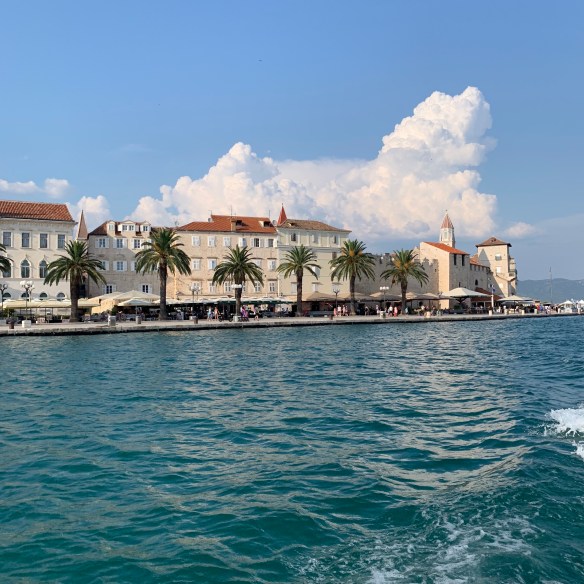
First, after making a number of trips by train, bus and boat, it reinforced the sense that in Europe, public transport is seen as an essential service and not just a means of last resort (you know, that notion we sometimes experience elsewhere that suggests “only losers take the bus”). As a result, public transport is generally clean, safe, efficient, punctual and largely affordable. One counterpoint is that as a temporary visitor, accessing and paying for tickets such as multi-day / multi-system travel passes is not always straightforward.

Second, despite the close proximity of the three countries I visited, I had to use different fiat currencies in each location – and in the case of Croatia, although it is a member of the EU, the Euro is not always accepted and it maintains a separate currency (the Kuna) that is not easy to exchange outside the country. And when you get cash out of an ATM, it’s mostly in denominations of HRK200 – but local shops hate having to change large notes. Plus, there are still instances where plastic money is not accepted.

Third, visiting the extensive national art collections in Zurich (the Kunsthaus) and Milan (the Museo Del Novecento) was a great opportunity to see works by significant twentieth century artists beyond the Dadaists and Futurists respectively – including many works that rarely travel abroad.

Fourth, for all my reservations about organised religion, you can’t deny that a key legacy of European Christianity is church architecture, and the associated patronage of the arts. The Duomo in Milan even affords visitors the opportunity to walk along the roof terraces to get closer to the decorative flying buttresses and mini-spires topped with hundreds of statues.

Finally, along with all the excellent food I was lucky enough to order in restaurants, the trip was a great opportunity to sample local and regional wines, especially while in Switzerland and Croatia. We just don’t see that much of these in Australia, for obvious reasons. Plus, the global phenomenon of craft beer is still alive and well, all adding to the gastronomic experience.

Next week: Recent Notes from Hong Kong
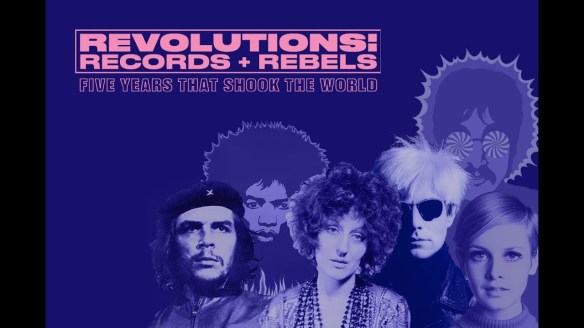
You said you wanted a revolution?

In terms of popular music and the “revolutionary” counter-culture, the Hippie Dream was born during the Summer of Love in 1967 (Haight-Ashbury to be precise) and died in December 1969 (The Rolling Stones’ concert at Altamont). The tipping point was probably The Beatles’ “White Album” released in 1968, featuring “Helter Skelter” and “Revolution 9”. Along the way, we had the “14 Hour Technicolour Dream (April 1967); the Monterey Pop Festival (June 1967); the first Isle of Wight Festival (August 1968); the Miami Pop Festivals (May and December 1968); Stones In The Park (July 1969); oh, and Woodstock (August 1969). From visiting the current “Revolutions: Records + Rebels” exhibition at Melbourne Musuem, the most significant outcome from this era was Woodstock, even though it came close to being a self-inflicted human, environmental and logistical disaster. It was only saved by a combination of the emergency services, the military, local residents – and sheer luck.

This ambitious and uneven exhibition spans the years from 1966 (The Beatles’ “Revolver”, The Beach Boys’ “Pet Sounds”, and Bob Dylan’s “Blonde on Blonde”) to 1970 (Deep Purple’s “Deep Purple in Rock”, Black Sabbath’s “Paranoid”, and The Stooges’ “Fun House”). Despite covering the peak psychedelic era of “Sergeant Pepper”, “Their Satanic Majesties Request” and “The Piper At The Gates Of Dawn”, the exhibition leaves you with the impression that Woodstock is the only enduring musical or cultural event from this time. Yet, the music portrayed in Woodstock is far from revolutionary – being mostly a bland collection of highly-derivative (and by then, almost passé) rock, blues and folk.

It almost feels like the curators of this exhibition set themselves up for failure. By trying to cover such a broad spectrum of political, social, economic and cultural themes, and then view them primarily through the rather narrow lens of popular music, the net effect is a grab bag of museum artifacts assembled with little coherence, all accompanied by a rather insipid soundtrack selection.

I’m not doubting the importance and lasting significance of the topics included (civil rights, peace movement, feminism, class war and gay liberation) – but the attempt to tack on some Australian relevance almost backfires. Let’s not forget that homosexuality was not decriminalised in Tasmania until 1997, and abortion is still not decriminalised in NSW. In fact, Australia was possibly more progressive on some issues in the early 1970s (anti-Vietnam War, ecology, feminism) than it is today with the current resurgence of populism, nationalism and religious conservatism.

Anyway, back to those “Records + Rebels”. I was surprised there was nothing about the radical developments in jazz or improvised music by the likes of Miles Davis (“In A Silent Way, “Bitches Brew”), The Art Ensemble of Chicago and Ornette Coleman, or labels like ESP, BYG and ECM. Absent also was any reference to the mod and early skinhead movements that were the antidote to hippiedom, embracing soul, r’n’b and reggae music. No mention of Soft Machine (who were contemporaries and colleagues of both Pink Floyd and Jimi Hendrix). Very little significance given to The Velvet Underground (probably the most influential band of the era in terms of inspiring the music that came after the hippie dream dissipated). And where were the likes of Can, Tangerine Dream, and Kraftwerk (their first album came out in 1970….) to represent the German rejection of traditional Anglo-American rock and roll?

On a somewhat depressing note, apart from Woodstock, two of the other enduring “brands” of this era that were on display were Richard Branson’s Virgin empire, and Time Out magazine…. So much for the Children of the Revolution.

Next week: Top 10 Gigs – revisited.


The Metaphorical Glass Jaw

As I get older (maybe not necessarily wiser), I feel that as a society, we are becoming far less tolerant and yet far more sensitive – something of a paradox, possibly linked to a decline in personal resilience and a lack of quality and robustness in public discourse. And for a country that is both a secular state and a liberal democracy (and definitely not a theocracy), there has been a surprising amount of debate in Australia recently, about the need for a new or revised “freedom of religion“.

John Stuart Mill – Image sourced from Wikimedia

Much of the commentary has been prompted by the thoughtless and potentially harmful remarks by a professional sports player, who espouses a particularly fundamentalist strain of Christianity. Because the very public expression of his personal beliefs led to the termination of his employment, this has been interpreted as a curtailment of the player’s freedom of religion.

Without getting too legalistic (and there is an administrative review pending), the player’s public statements were out of line with the social values and civil rights espoused by his employer – to the extent that they could bring this particular sporting code into disrepute. It was also a repeat incident. At the very least, these comments could have led to a reduction in the employer’s revenue from sponsors or spectators. (And let’s consider that his comments drew so much attention because he had the privilege of a public platform, one which came as a result of his employment status and his professional profile.)

According to this player’s particular creed, his human-constructed belief system permits, condones and even encourages the use of language that bullies and belittles people who don’t adhere to his own views on sexuality, lifestyle choices or even “belief” itself. While much has been said about the homophobic nature of the said player’s tweet, let’s not forget he also targeted atheists in the same context, simply because they are non-believers.

As I frequently tell customer call centres, who often like to blame the “system” for their own organisation’s failings, a system is only as reliable as the people who design and run it. So, if being an adherent to a particular belief system means you have to hold and profess abhorrent views, especially those that are out of step with civil society, then clearly there is something at fault at the heart of that mechanism.

I recently heard a speech by a retired judge on human rights and civil liberties. He referred to an aphorism attributed to John Stuart Mill, in connection with his treatise “On Liberty”, and the harm principle:

“Your Liberty To Swing Your Fist Ends Just Where My Nose Begins”

In other words, you may be free to say what you like, but Isaiah Berlin’s concept of negative freedom means that (despite Voltaire’s standpoint in defence of free speech) even your verbal punches are not permitted to interfere with or harm someone else’s rights – yet alone instill in them a fear for their personal safety and human dignity.

Nowadays, some might say that too many people are prone to having a metaphorical glass jaw – that they take offence too easily, and seek to find malicious intent in any views or comments that they find objectionable or that do not accord with their own world view. Equally, people can (metaphorically) stick their jaw out, seeking to provoke a reaction by drawing attention to themselves, so that they can claim “foul” when they bang up against a countervailing fist. The boundary between personal rights and freedom of expression is becoming increasingly blurred.

When it comes to calls for the special protection (and even promotion) of religious freedoms, I have something of a problem. Quite apart from the entrenched social prejudices inherent in many organised religions, it seems incongruous that such institutions can claim tax benefits as charitable bodies, and receive public funding while enjoying exemptions from certain anti-discrimination laws.

Although we don’t have a law against heresy in Australia, we still have blasphemy laws in most States. Even though they are rarely invoked, the fact that they exist reinforces the notion that far from needing a “freedom of religion”, religious beliefs are somehow already seen to be above the law. Surely, in a multi-cultural, secular and pluralistic society, religious beliefs will have to take their chances alongside (and rub up against) the rest of human constructs and natural systems – science, history, psychology, philosophy, politics, sociology.

Next week: Startup Vic’s Health Tech & Med Tech Pitch Night


Brexit Blues

Reading the latest coverage of the Brexit farce combined with the inter-related Conservative leadership contest, I am reminded of Oscar Wilde’s description of fox hunting:

“The unspeakable in pursuit of the uneatable”

Whichever candidate wins the Tory leadership race and, as a consequence, becomes the next UK Prime Minister, they will inevitably fail to deliver a satisfactory Brexit solution, simply because there is no consensus position.

But the underlying cause for this impasse is a series of flawed processes:

First, the promise made by previous Prime Minister David Cameron to hold a referendum on EU membership was flawed, if not highly disingenuous – because from the start, there were no terms of reference. Cameron chose to make it part of his manifesto pledge ahead of the 2015 general election campaign. Even at the time it felt like a desperate ploy to appease the mainly right-wing and Eurosceptic faction of the Conservative party. Despite being generally in favour of the UK remaining within the EU (but with “looser ties”), Cameron probably never expected that he would have to deliver on his referendum promise let alone lead the Brexit negotiations. Behind in the polls, the Tories were expected to lose the election. Instead, they won, but with a much reduced majority – which should have been the first warning sign that all was not going to be plain sailing with Cameron’s EU referendum pledge.

Second, the referendum question put to the electorate in 2016 was itself flawed. Cameron had originally talked about renegotiating the UK’s terms of EU membership, much like Margaret Thatcher had done with some considerable success in the 1980s. There was certainly no mention at all in Cameron’s January 2013 speech of a “No-deal Brexit”. However, the referendum question put to the voters was a stark, binary choice between “Remain” or “Leave”. As some have argued, the design of the referendum should have been enough to render it invalid: both because the voters were not given enough reliable data upon which to make an informed decision; and because there was no explanation or guidance as to what type of “Leave” (or “Remain”) outcome the government and Parliament would be obliged or expected to negotiate and implement. Simply put, the people did not and could not know what they were actually voting for (or against). I am not suggesting that the voters were ignorant, rather they were largely ill- or under-informed (although some would argue they were actually misinformed).

Third, the respective Leave and Remain campaigns in the 2016 referendum were both equally flawed. The Leave campaign was totally silent on their proposed terms of withdrawal (I certainly don’t recall the terms “Hard Brexit” or “No-deal Brexit” being used), and their “policy” was predicated on the magic number of “£350m a week“. And the Remain campaign failed to galvanize bipartisan support, and was totally hindered by the Labour leadership’s equivocation and ambivalence towards the EU (which has only deepened as Jeremy Corbyn refuses to confirm what his policy actually is).

Finally, the Parliamentary process to implement Brexit was flawed from the start. Cameron jumped ship and ending up passing the poisoned chalice to Theresa May. The latter had supported Remain, but now had to lead the UK’s withdrawal from the EU. However, rather than trying to build consensus and broker a truly bipartisan solution (this is not, after all, a simple, one-dimensional party political issue), May proved to be a stubborn, inflexible and thick-skinned operator. Now, there are threats to prorogue Parliament in the event that MPs vote against a No-Deal or Hard Brexit, if a negotiated agreement cannot be achieved by the October 31 deadline. May’s negotiation tactics have only resulted in deeply entrenched and highly polarised positions, while she ended up painting herself into a corner. Good luck to her successor, because if nothing else, Brexit is casting division and national malaise across the UK.

Next week: Pitch X’s Winter Solstice