Cancel or Recalibrate?

In the wake (sic) of wokeness and cancel culture, it was interesting to read that Disney has decided to add a health warning of “negative depictions of cultures” to re-runs of the Muppet Show. So rather than cancel these programmes, it has chosen to (re-)contextualise the content for a contemporary audience.

I don’t have a problem with this type of labelling, or indeed on any other content, if it helps to aid understanding, generate debate, and acknowledge past lapses of taste or judgement. Especially as programmes like the Muppet Show were huge in the heyday of mass-market network television, before cable and streaming fragmented audiences into pre-defined sub-genres and segregated demographics.

Indeed, I’ve grown used to similar health warnings attached to re-runs of many BBC radio dramas, from the 1950s through to the 1980s, when “social attitudes were somewhat different to today”.

But, if we continue along those lines, should we be applying similar health warnings to Shakespeare’s plays, Greek tragedies, French farces, Norse legends, European folklore as told by the Brothers Grimm, or Roman accounts of gladiatorial victories over their hapless victims?

In which case, I look forward to the same contextualisation (and health warnings) of any programmes that quote, cite, promote or reference key religious texts, most of which were written hundreds and thousands of years ago, yet which similarly offend our current values and societal norms.

Next week – Facebook and that news ban

From Brussels With Love (Revisited)

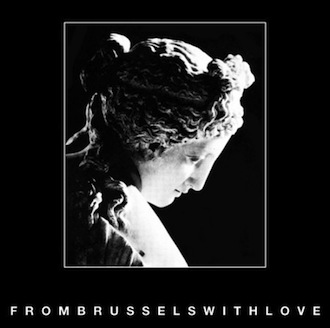
40 years ago this month, an obscure record label in Belgium released a cassette-only compilation album, which became a reference point for many post-punk projects. “From Brussels With Love”, originally put out by Les Disques du Crepuscule, has just been re-issued, so during the recent lock-down, I thought I would exhume my original copy and remind myself of why this was such a landmark album, and why its influence continues to this day.

To add some context, Sony had launched the Walkman cassette player in 1979, the first truly portable device for pre-recorded music. This led to a renewed interest in the cassette format among independent artists and labels, as it was also a cheaper means of manufacture and distribution than vinyl records (and long before CDs, mp3 and streaming services). And in the wake of the DIY aesthetic promoted by punk, some new music was being released on cassette only, such as Bow Wow Wow’s “Your Cassette Pet” and BEF’s “Music for Stowaways” (the title referencing an early model of the Sony Walkman). Some of these cassette-only releases (especially by independent, lo-fi, DIY electronic artists such as Inertia) are now highly collectable.

What made “From Brussels With Love” so significant was not just the format. It was not even alone in combining music with interviews and fully illustrated booklets. Fast Forward in Melbourne also launched their first audio-magazine in November 1980, and other similar projects followed such as Edinburgh’s “Irrationale”, Manchester’s “Northern Lights”, and London’s “Touch” label which began life releasing a series of curated audio gazettes, including both spoken-word and musical contributions.

The importance of “From Brussels With Love” was the cross-section of artists it managed to bring together: mercurial musicians such as Bill Nelson, John Foxx and Vini Reilly; side projects from members of established post-punk bands from the UK (Wire, Joy Division/New Order, the Skids and Spizzenergi); a cluster of emerging European bands (Der Plan, The Names and Radio Romance); and several leading names in modern classical and ambient music (Harold Budd, Michael Nyman, Gavin Bryars, Phil Niblock, Brian Eno and Wim Mertens). Oh, and an interview with actor Jeanne Moreau.

This eclectic mix of contemporary artists (and this deliberate approach to curation) was no doubt highly influential on subsequent projects such as the NME/Rough Trade “C81” or Rorschach Testing’s “Discreet Campaigns” – these were not compilations reflecting a single musical style or even the usual label sampler, nor were they simply collections of what was new or current. Instead, they reveal an aesthetic attitude (curiosity combined with open-mindedness mixed with a high level of quality control and a hint of audience challenge) that is harder to find today. Now we have “recommender engines” and narrow-casting streaming services that would struggle to compile similarly diverse outcomes. And more’s the pity.

I know there are a number of on-line platforms and print publications that try to bring a similar approach to their curation, but for various reasons, and despite their best intentions, they generally suffer from being cliquey, self-referencing/self-identifying, and all driven by a need to capture eyeballs to attract advertising, so they quickly lose any claim to independence or even originality. Which is a shame because there is so much great music out there that we don’t get to hear, simply because it is not mainstream, or it doesn’t conform to a particular style, or it doesn’t meet “playlist criteria”, or it doesn’t have enough marketing dollars behind it.

Next week: Is the Party over?

Steam Radio in the Digital Age

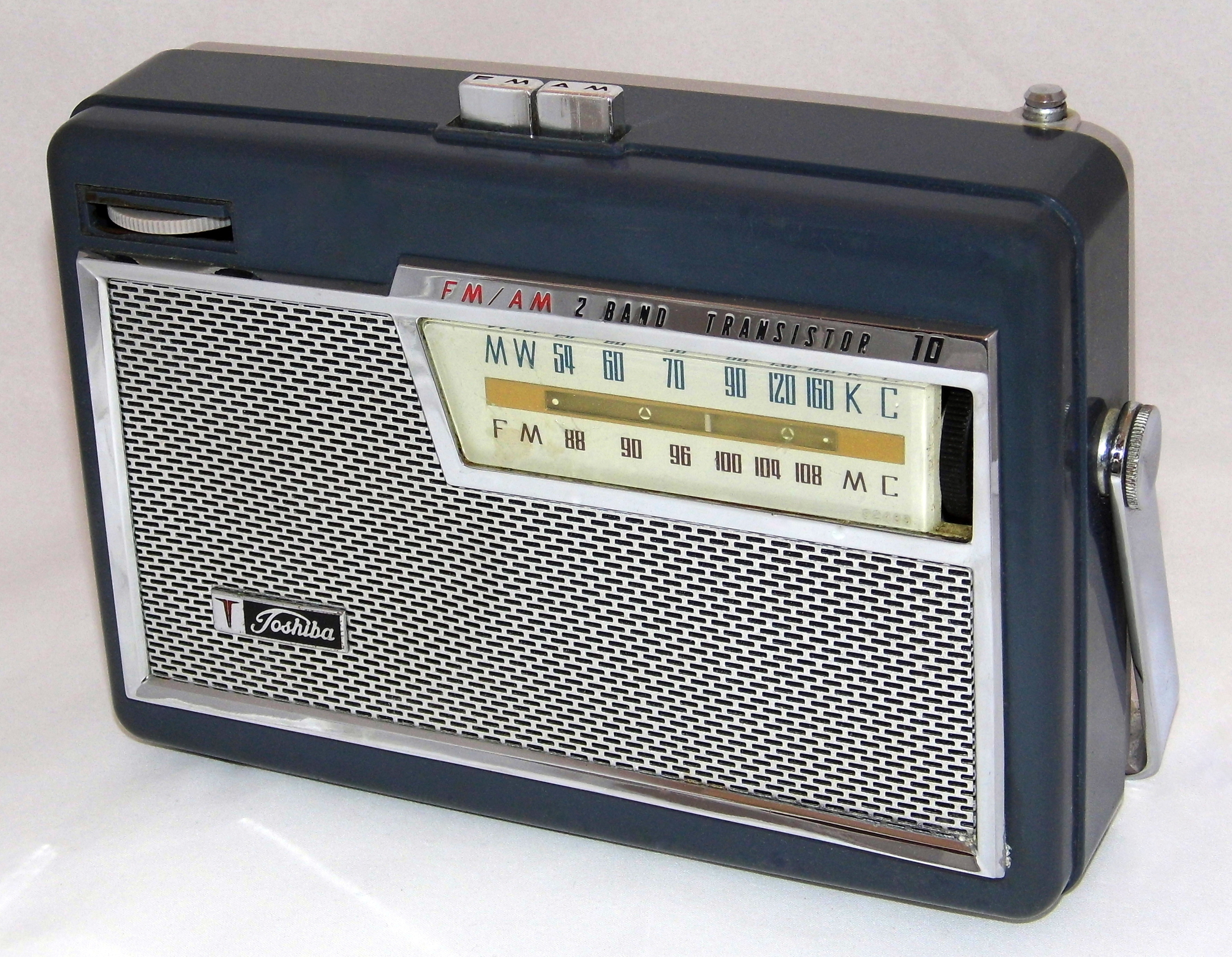
A few years ago, I wrote a blog on how radio had come of age in the era of social media. And despite podcasts and streaming services making significant inroads into our listening behaviour, radio is still with us. Plus it now gets distributed via additional media: digital radio (DAB), internet streaming, mobile apps and digital TV.

Image sourced from flickr

Most mornings I get my first information hit from the radio. Likewise, the midnight radio news bulletin is usually the last update of the day. When I’m on my way to or from the office I’m either catching up on a podcast or streaming radio, via TuneIn or dedicated station apps.

I particularly enjoy the BBC’s catalogue of on-demand content – both contemporary material, and archive programmes. There’s something inexplicable about the appeal of listening to 50-60 year old recordings, themselves being dramatisations of books and plays first published 100 years or more earlier.

The main reason I turn to these relics of steam radio is because I can curate what I want to listen to, when I want to listen. These programmes are also an antidote to much of what gets broadcast on commercial radio stations, which I find is mostly noise and no substance. (Blame it on my age, combined with being a self-confessed music snob.)

Most of these archive radio recordings still work because of two things: the calibre of the material; and the high production values. The former benefits from tight script editing and strict programme lengths. The latter is evident from both the engineering standards and the sound design.

One of the paradoxes of modern technology is that as the costs of equipment, bandwidth and data come down (along with the barriers to access), so the amount of content increases (because the means of production is much cheaper) – yet the quality inevitably declines. And since in the internet era, consumers increasingly think that all online content should be “free”, there is less and less money to invest in the production.

The importance of having a high level of quality control is inextricably linked to the continued support and funding for public broadcasting. With it, hopefully, comes impartiality, objectivity, diversity and risk-taking – much of which is missing in commercial radio. Not that I listen very often to the latter these days, but it feels that this format is destined to increased narrowcasting (by demographic), and parochialism.

In this era of fake news and misinformation (much of it perpetrated and perpetuated by media outlets that are controlled or manipulated by malign vested interests), and at a time of increased nationalism, divisive sectarianism and social segregation, it’s worth remembering the motto of the BBC:

“Nation shall speak peace unto nation”

Notwithstanding some of the self-inflicted damage that the BBC has endured in recent years, and the trend for nationalistic propaganda from many state-owned news media and broadcasters, the need for robust and objective public broadcasting services seems more relevant than ever.

Next week: Craft vs Creativity


All that jazz!

I’d be the first to admit I’m a music snob. Not that I think my tastes are better than anyone else, just that they are very particular. I like to think I have an informed opinion about the listening choices I make.
When I went to university, I was asked if I had any preferences about whom I shared student accommodation with. “No heavy metal freaks or jazz buffs”. I’ve still not changed my opinion of heavy metal, but my attitude towards jazz, like my appreciation for red wine, has only improved with age.

Not all, jazz, mind. Two words that strike dread in me are “gypsy jazz” – along with trad, dixieland and rag time, I find it most of it too fiddly, over-ornate, bordering on cheesiness. Similarly, for me, listening to “smooth” artists like Kenny G is akin to wading through treacle. There are certain instruments that I find very difficult to stomach in a jazz context – trombone, soprano saxophone, violin and acoustic guitar. And the big band sound is something I can only endure very selectively. Much of what is labelled fusion also leaves me cold, although I do make an exception for Soft Machine.

I suppose my point of entry is post bop, along with modal and free jazz. And while cool jazz can take itself far too seriously, at least it generally doesn’t fall into the trap of virtuosity for its own sake. (I’m always reminded of the criticism of Mozart attributed to Emperor Joseph II – “too many notes!” – when it comes to the noodly end of the jazz spectrum.)

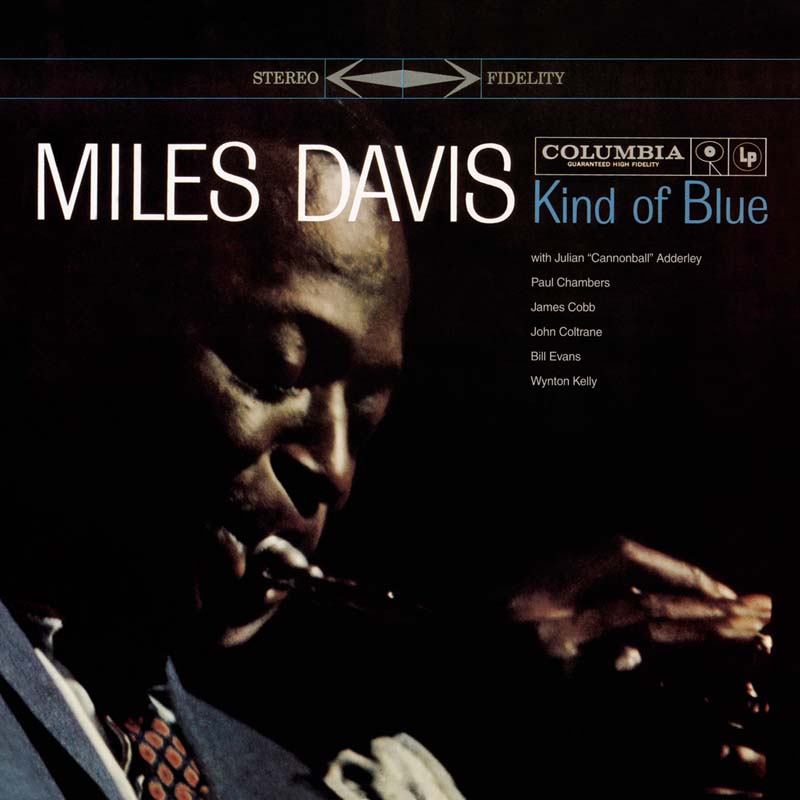
Like many people, one of my first real engagements with jazz was Miles Davis’s “Kind of Blue”. As a self-contained statement on “modern” jazz, it still astonishes with each listen. Despite its ubiquity, I never tire of hearing it. (In point of fact, the first Davis album I sought out was “In A Silent Way”, after it was used as a reference point in a review of A Certain Ratio’s debut album. Strange but true.) I’ve since come to appreciate the full canon of Davis’s work, although I have never warmed to his final records, recorded for the Warner Brothers label. His albums are often grouped into specific periods, rather like Picasso’s art, which only adds to his status and legacy.

At various times, my personal journey (and at specific stages in their careers) has encompassed Thelonious Monk, Modern Jazz Quartet, John Coltrane, Oscar Peterson, Ornette Coleman, Herbie Hancock, Pharoah Sanders, Alice Coltrane, Nina Simone, Stan Getz, Keith Jarrett, Freddie Hubbard, Wayne Shorter, Ahmad Jamal, Mulatu Astatke, Sun Ra, Chet Baker, Antonio Carlos Jobim, McCoy Tyner, Eric Dolphy, Hank Mobley, Joe Henderson, Cecil Taylor, Marion Brown and Albert Ayler.

In terms of newer and contemporary artists, the only one who has managed to sustain my interest is Brad Mehldau, in particular his live solo performances – where he seems to have picked up from where Keith Jarrett left off in the 1990s.

And as I get older, I find that the only music radio station I can listen to is ABC Jazz….

Next week: Wholesale Investor’s Crypto Convention