The Maker Culture

London’s newly re-opened Design Museum welcomes visitors with a bold defining statement of intent. According to the curators, there are only designers, makers and users. To me, this speaks volumes about how the “makers” are now at the forefront of economic activity, and how they are challenging key post-industrial notions of mass-production, mass-consumption and even mass-employment. Above all, as users, we are becoming far more engaged with why, how and where something is designed, made and distributed. And as consumers we are being encouraged to think about and take some responsibility for our choices in terms of environmental impact and sustainability.
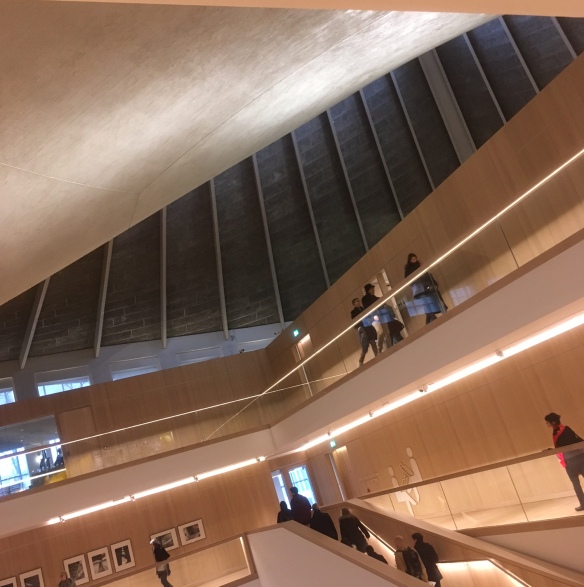
Design Museum, London (Photo: Rory Manchee)

Design Museum, London (Photo: Rory Manchee)

There are several social, economic, technological and environmental movements that have helped to define “maker culture”, so there isn’t really a single, neat theory sitting behind it all. Here is a (highly selective) list of the key elements that have directly or indirectly contributed to this trend:

Hacking – this is not about cracking network security systems, but about learning how to make fixes when things that don’t work the way that we want them to, or for creating new solutions to existing problems – see also “life hacks”, hackathons or something like BBC’s Big Life Fix. Sort of “necessity is the mother of invention”.

Open source – providing easier access to coding tools, software programs, computing components and data sources has helped to reduce setup costs for new businesses and tech startups, and deconstructed/demystified traditional development processes. Encompasses everything from Linux to Arduino; from Github to public APIs; from AI bots to widget libraries; from Touch Board to F.A.T. Lab; from SaaS to small-scale 3-D printers.

Getting Sh*t Done – from the Fitzroy Academy, to Andrea de Chirico’s SUPERLOCAL projects, maker culture can be characterised by those who want: to make things happen; to make a difference; to create (social) impact; to get their hands dirty; to connect with the materials, people, communities and cultures they work with; to disrupt the status quo; to embrace DIY solutions; to learn by doing.

The Etsy Effect – just part of the response to a widespread consumer demand for personalised, customised, hand-made, individual, artisan, crafted, unique and bespoke products. In turn, platforms like the Etsy and Craftsy market places have sparked a whole raft of self-help video guides and online tutorials, where people can not only learn new skills to make things, they can also learn how to patch, repair, re-use, recycle and re-purpose. Also loosely linked to the recent publishing phenomena for new magazines that combine lifestyle, new age culture, philosophy, sustainability, mindfulness, and entrepreneurism with a social conscience.

Startups, Meetups and Co-working Spaces – if the data is to be believed, more and more people want to start their own ventures rather than find employment with an existing organisation. (Under the gig economy, around 40% of the workforce will be self-employed, freelance or contractors within 5 years, so naturally people are having to consider their employment options more carefully.) While starting your own business is not for everyone, the expanding ecosystem of meetups and co-working spaces is enabling would-be entrepreneurs to experiment and explore what’s possible, and to network with like-minded people.

Maker Spaces – also known as fabrication labs (“FabLabs”), they offer direct access to tools and equipment, mostly for things like 3-D printing, laser-cutting and circuit-board assembly, but some commercial facilities have the capacity to support new product prototyping, test manufacturing processes or short-run production lines. (I see this  interface between “cottage industry” digital studios and full-blown production plants as being critical to the development of high-end, niche and specialist engineering and manufacturing services to replace the declining, traditional manufacturing sectors.) Some of the activity is formed around local communities of independent makers, some offer shared workshop spaces and resources. Elsewhere, they are also run as innovation hubs and learning labs.

Analogue Warmth – I’ve written before about my appreciation for all things analogue, and the increased sales of vinyl records and even music cassettes demonstrate that among audiophiles, digital is not always better, that there is something to be said for the tangible format. This preference for analogue, combined with a love of tactile objects and a spirit of DIY has probably reached its apotheosis (in photography at least) through Kelli Anderson’s “This Book Is A Camera”.

Finally, a positive knock-on effect of maker culture is the growing number of educational resources for learning coding, computing, maths and robotics: Raspberry PI, Kano and Tech Will Save Us; KidsLogic, Creative Coding HK and Machinam; Robogals, Techcamp and robokids. We can all understand the importance of learning these skills as part of a well-rounded education, because as Mark Pascall, founder of 3months.com, recently commented:

“I’m not going to advise my kids to embark on careers that have long expensive training programs (e.g. doctors/lawyer etc). AI is already starting to give better results.”

Better to learn how things work, how to design and make them, how to repair them etc., so that we have core skills that can adapt as technology changes.

Next week: Life Lessons from the Techstars founders
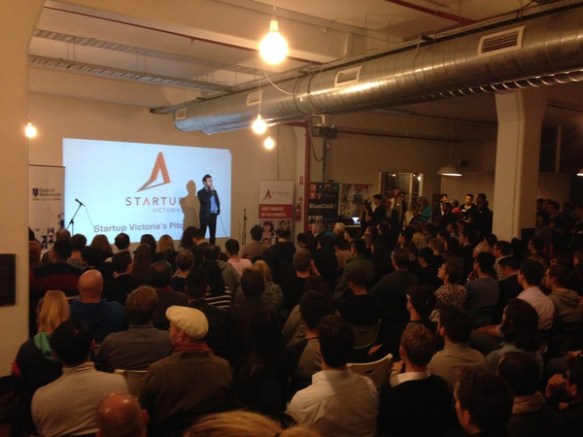
 

Food for thought at #StartupVic’s #pitch night

There was something of a different flavour at Startup Victoria‘s pitch night for September – including the new beverage sponsors! – which may have been helped by the large crowd, and the more polished presentations (judging by the feedback).

startupvic

Image sourced from Startup Vic’s Meetup page

I will comment on each pitch in order of appearance:

Studio Ninja

Studio Ninja is described as Client Management software for professional photographers. Aimed at the wedding industry, it also holds some appeal for other event planners, DJs, musicians, make-up artists, hairdressers, caterers and florists. But the primary focus is on weddings, and the specific needs of studio photographers, whose workflow is very particular (according to the founders).

Regular attendees at these pitch nights will recall similar CRM/project management tools for other sectors, such as architects and management consultants – which raises questions about how unique each profession really is?

In essence, the software handles lead management, invoicing and cashflow reporting. It is available via subscription, and integrates with payment systems such as Stripe and PayPal, and other service providers such as Uber, and will soon integrate with Xero.

With a reported 40 new sign-ups per day, and around 2,000 members (of which only 300 are currently paid subscriptions), the Studio Ninja team are aiming to grow to 10,000 users and revenue of $4m. Growth is being driven by strong SEO and organic discovery among photographers, and word of mouth referrals.

The panel of judges were interested to know how the software could be sold via peak bodies and professional associations, under a SaaS or white-labelling model, and what potential there is to integrate lead generation and referral solutions. The judges also thought that camera and photography equipment brands could offer a significant sales channel opportunity.

Deliciou

Something of a different pitch came from this bacon flavoured seasoning, which is actually bacon-free. (I should confess that I was once a vegetarian, but when I started to dream about bacon sandwiches, I realised I was missing out… Maybe if this product had been around all those years ago, things would have turned out different. But I digress.)

There was certainly no lack of passion in this pitch, and the founder had even made sure there were free samples to go around, so strongly does he feel about his product. With a 9% conversion rate from website visits, and 2,000 bottles sold this year, there is obviously a niche in the flavourings market for a “guilt-free” bacon experience.

A graduate of the Melbourne Accelerator Program, the founder has cleverly chosen to use a pop-up popcorn stall to generate market awareness, solicit customer feedback, and create visibility for a product that comes in a small jar, and will compete for valuable shelf space in supermarkets.

The business is seeking $100k in seed funding to expand the range of seasonings,
expand overseas, and to resolve issues with production lead times and logistics. But given the challenges in building consumer brands, especially in the food and beverage category, a better option might be to tie up with another snack food or convenience food brand, and use that vehicle for distribution and market reach.

Reground

Reground is another food-related startup, but this is all about recycling coffee grounds. The business turns coffee waste – which otherwise goes into landfill – into sustainable uses, thereby reducing the amount of methane gas released into the atmosphere.

With a waiting list of cafes who want to access the service (because cafe owners already pay their local council to take away the waste), Reground will divert part of those waste collection fees and can even help cafes save money. Reground also supplies community gardens with free material for their compost. Other uses for the coffee waste include mushroom production.

As well as offering waste assessment services and potential cost savings, Reground runs a newsletter and provides certification for participating cafes. There is also potential for this Melbourne-based business to go national and even to the USA.

They are also offering a customer app to support logistics around collection, and they operate their own van as there are council limitations on more waste trucks on our streets. Asked by the judges about scaling their business, the founders are considering to build their own waste processing plant. (After the event, I did a quick search, and found a similarly-named business in Canada.)

Allume Energy

Finally, Allume Energy, another sustainability business, this time in solar energy distribution. Or, in their own words, “Democratising access to renewable energy”.

As a social enterprise, Allume offers tenants easier access to cheaper solar energy. Basically, Allume contracts with the property landlord to provide initial funding to install and set up a solar system, and then tenants pay for their energy via a contract licensing system. In addition to working with community and social housing projects in remote locations, Allume also offers a shared system for apartment blocks.

Claiming to provide a 30-50% saving to tenants, Allume requires landlords to commit to a 15 year contract, with a 50% break fee (based on the initial installation and set up costs). Given some of the current challenges in renewable energy (weather events, phasing out of government rebates, and reduction in feed-in tariffs), this scheme to implement very local solar systems will no doubt appeal to landlords and bodies corporate.

And on the night, Reground was the people’s choice – probably because it was a simple but effective proposition, and it appealed to Melbourne’s environmentalists and coffee lovers alike!

Next week: A Tale of Two #FinTech Cities – Part 2

Another #pitch night in Melbourne…

If there is one basic theme emerging from Startup Victoria‘s monthly pitch nights, it is this: whatever market you are in, regardless of your business model, and however disruptive you are trying to be, if you don’t know how to engage or reach your customers your idea is far less likely to succeed. This message came across loud and clear during last week’s event where four startup hopefuls pitched their business ideas to a panel of judges in front of a packed audience.

Picture sourced from Startup Victoria Meetup page

Picture sourced from Startup Victoria Meetup page

So let’s look at this specific issue in respect to each of the pitches:

First came JobPokes, an online recruitment service designed to help candidates match job opportunities to their career preferences. Because it claims to be addressing the hidden job market, candidates aren’t applying for specific roles – instead, it’s a form of reverse enquiry, where recruiters target potential applicants via their registered profiles. I applaud the focus on the non-advertised job market, but while it may well offer an additional channel for recruiters, I’m not sure there was a clear strategy to reach job candidates who need to create a user account, and who are probably already using platforms like LinkedIn and Seek.

Next was Airly, which is sort of “Uber for private aircraft”. The business model involves signing up a minimum number of customers (who pay a monthly subscription fee, entitling them to unlimited flights), and securing sufficient seat capacity via scheduled charter contracts. There is no doubt that the idea of flight flexibility, and an element of passenger exclusivity met with audience approval (Airly took out the people’s choice vote on the night). Also, the PR around Airly has generated in-bound enquiries, suggesting there is demand. But how does this market interest convert to individual customers, when many corporate travel policies rely on wholesale and bulk-purchase models (i.e., aggregation, consolidation, vendor discounts, agency rebates, preferred airlines) rather than catering for individual travel needs or preferences? Unless the target customers are business travelers that manage and pay for their own tickets?

If Airly was about the Uberisation of air travel, RagRaider revealed another aspect of the shared economy model. Squarely aimed at fashion- and budget-conscious women, RagRaider offers a peer-to-peer service whereby customers can hire clothes for one-time use. No doubt there is a market (high school formal, spring carnival, wedding reception…) but the question is how to connect with actual lenders and hirers? We know that the per customer cost of acquisition for 2-sided markets is a key metric, and it wasn’t clear how the founders were addressing this, other than a pre-launch website and some social media. As one observer has commented, the “model is focusing on the ‘product’ part first which is the reverse of how it should be”, and another commented that despite a defined market, the barriers to entry are considerable. The judges also questioned some of the proposed pricing, commission rates and logistics.

Finally, Rounded is another FinTech startup looking to service the SME sector, specifically sole traders, freelancers, sub-contractors and tradies. Another spin on the invoice solution when suppliers need to get paid efficiently, Rounded does not claim to be a full-service accounting software – but, as one attendee commented, key to success will be reaching and educating the end-user market.  Also, they are entering a competitive space, where a new entrant like Xero has already disrupted incumbents like QuickBooks, Reckon and MYOB. I wasn’t able to stay for the pitch, but I did have the opportunity to speak with the founders beforehand. Clearly driven by their own experience and needs, there is a solid but simple idea here – but as Xero and others are increasingly able to serve similar customers, Rounded will find it really difficult to compete.

If anything, these latest pitches showed how hard it is to compare apples with oranges, although the voting criteria (market traction, product viability, team composition, pitch presentation, and responses to judges’ questions) are designed to deliver a consistent evaluation. It was also apparent that these pitches divided audience opinion more so than previous contestants – which is probably a good thing as variety is the spice of life….

Acknowledgments: thanks to Graphican, Marlene M., Cornell and Dale G. for their input.

Next week: Re-Imagining Human-led #Innovation


Field report from Melbourne #Startup Week

The third Melbourne #Startup Week has confirmed Startup Victoria‘s pivotal role in supporting local entrepreneurs, founders, startups and anyone interested in innovation and disruption. Over the next few posts, I will be commenting on some of the events I attended. Meanwhile, here is a brief summary of the key themes that emerged.

Screen Shot 2016-06-26 at 1.43.16 PMFirst, there is a continued shift from B2C and 2-sided markets, to B2B and enterprise solutions among the startup pitches I saw. Medtech is also getting some renewed attention, as are XaaS business models. And of course, there has to be scale in the idea.

Second, nearly all of the feedback from the judges at the pitch events centred on “why you?” –  What makes your idea different to the competition? What is the problem statement? Where are the solution proof points?

Third, there was an interesting session on “innovation from within” and the rise of intrapreneurship. There were also discussions on whether (and how) aspiring founders should leave an existing job to embark on a startup project, and how to navigate an entrepreneurial career. (More on this to follow.)

Fourth, the notion of “disruption for disruption’s sake” is being challenged – it’s not enough to be disruptive, there has to be substance (and purpose) to back it up.

Fifth, the use of design thinking, human-centred design and CX mapping in fostering creativity is breaking through to large corporations, but it is just one of many available innovation techniques – without context and framing, it can simply become a process.

Finally, I heard very little (in fact, absolutely nothing) about the role of government(s) in fostering innovation and entrepreneurship, and in supporting startup founders – notwithstanding LaunchVic, and the National Innovation & Science Agenda. Maybe there is so much election campaign fatigue that the startup community has already discounted the impact politicians (of any persuasion) can have on their business aspirations. Certainly, the numbers of Gen X and Gen Y attending some of last week’s events is testament to how engaged younger citizens are in finding purpose through the type of work they do (and what sort of organisations they work for), that they are less focussed on securing a “job”, and more concerned about building a career.

Next week: Level 3’s Enterprise Pitch night