Bread And Circuses

At the risk of sounding like a broken record, here in Melbourne we are waiting for signs that the State Government is preparing to lift some or any of the restrictions that have kept us in Stage 3 & 4 lock-down for most of the past 7 months.

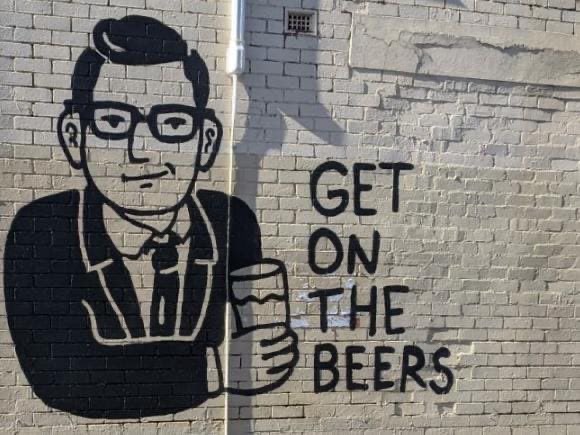
Photo sourced from Twitter (thanks, Warwick…) https://twitter.com/peely76/status/1309750743331606533?s=21

Data on new cases and community clusters released over the past few days suggest we won’t be “getting on the beers” with our mates any time soon, and certainly not with the Premier’s blessing.

The slow drip feed of information at the Premier’s daily press conferences, and the painful revelations at the recent Board of Inquiry into the failed hotel quarantine program, somehow suggest a Head Teacher who is forever saying, “This hurts me more than it hurts you” before handing out another punishment. Believe me, the audience increasingly feels like it is being tortured for its own good – because even though most of us understand why we had to have the first lock-down, the blatant failures within government, the civil service, certain public agencies and their private sector contractors have made it seem we are paying for their mistakes.

In Roman times, the general populace stayed docile as long as there were “bread and circuses” to feed and entertain them.

Now, apart from some toilet roll shortages early in the piece, and the occasional binge shopping on pasta and tinned tomatoes, by and large, the supply chains have been kept open, and the supermarket shelves replenished. (Some small grocers and independent producers may actually have benefited, as people are forced to shop local, and as restaurants pivoted towards cook-at-home meals – but equally, others may have been forced out of business if the major chains have used their market power to commandeer supply. Hopefully, the ACCC under Rod Sims will be keeping the latter honest.) Plus food delivery services have flourished due to the increased demand. So most of us can’t be said to be going hungry (although food banks have likewise never been busier).

So, in the words of Kurt Cobain, since we are still in lock-down, “Here we are now, entertain us!”

Box set bingeing and non-stop streaming only get us so far (I gave up about 3 weeks into lock-down Part 1). Broadcast sports are patchy given the limits on live crowds. Home-gigs/domestic-busking are not the same as a night at The Corner Hotel in Richmond. The lack of access to cinemas, theatres, galleries and museums means my need for culture is not easily satisfied. And while I have been digging into my library, revisiting classic albums, and trawling the BBC sound archives (as well as creating my own electronic music), the additional stimulus provided by in-person and on-location events is sorely lacking.

It’s clear that many of our artists and performers are also struggling, but their particular plight is not being fully recognised or acknowledged. In the UK, for example, the arts and entertainment community argues that their industry is under-appreciated for the financial contribution it makes to the national economy. This is not to overlook the social, cultural and mental health benefits of a thriving creative sector.

Meanwhile, the tedious cat and mouse game being conducted between the Premier and some sectors of the media (plus the highly divisive commentary generated by the Premier’s fervid supporters and detractors on social media) is no substitute for proper entertainment – and even though a couple of heads have been dispatched thanks to the Board of Inquiry (so, that was a thumbs down from the Emperor?), the lock-down song remains the same. Time to change the (broken) record?

Next week: Golden Years

Making Creeping Assumptions

Even if the recent Board of Inquiry into Victorian Hotel Quarantine Program does not reveal who actually made the now fatal decision to engage private security companies, it will have at least added a new phrase to the lexicon of public discourse – the notion of “creeping assumptions”.

To recap, based on the evidence presented during the public hearings, we have been led to believe that no single person, department or government agency made the all-important decision. Instead, we are left to conclude that this was a decision made by default, based on a series of “creeping assumptions”.

What this suggests is that rather than a conscious or affirmative decision, the parties relied on their own interpretation of unfolding events and information flows to conclude that someone else had made the call to outsource hotel security, and as a consequence everyone involved simply went along with it. As I have pointed out before, the decision to engage private contractors is not the issue. But it does beggar belief that even if nobody could recall who made the decision, they could not point to the information that informed their assumptions, nor could they specify who instructed the drawing up of the commercial contracts. As a result, the Victorian Government has spent $6m to find out who signed off on $30m of expenditure.

Anyway, one of the consequences of these so-called creeping assumptions is that the decision-making was deeply flawed because it lacked process, scrutiny and accountability:

  • Process was clearly missing (unless the Inquiry finds otherwise), because of the absence of documented minutes or formal note-taking.
  • There was no scrutiny of the “decision”, to confirm the various dependencies and delegated authorities that initiated the contracts issued to private contractors.
  • And the fact that no-one can be identified as being responsible for the decision, could mean that no-one can be held accountable.

If nothing else, this will become a case study for students of politics, public administration, and corporate governance.

Next week: Bread & Circuses

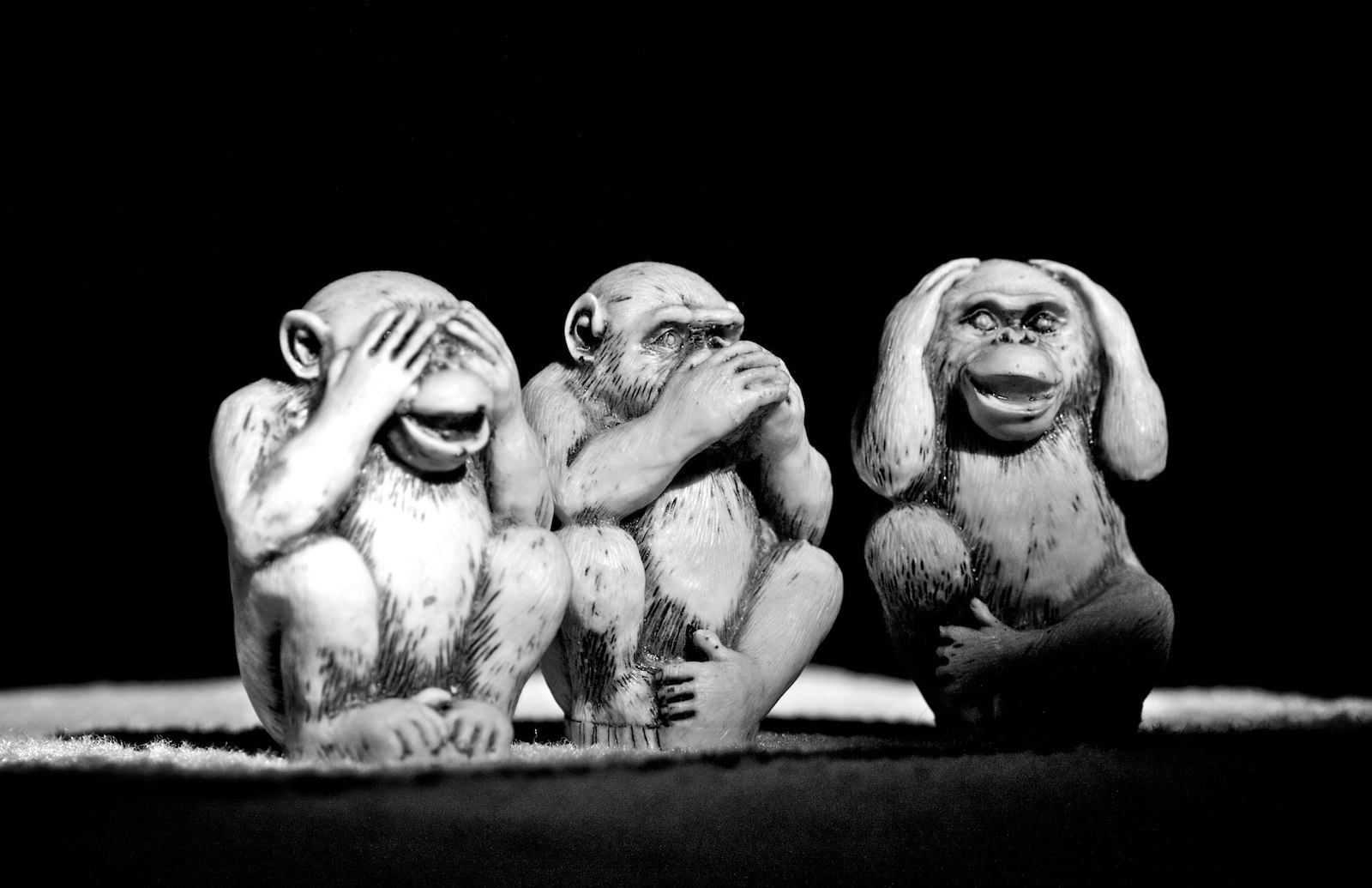
Three Wise Monkeys

At the time of writing, Melbourne is poised to move out of Stage 4 lock-down – but don’t hold your breath in anticipation: we have become used to the drip feed of information, contradictory policy narratives, and the political process of softening up the public not to expect too much too soon.

Three Wise Monkeys – Image by Anderson Mancini, sourced from Flickr

Meanwhile, the Public Inquiry into the failure of the Hotel Quarantine Programme will this week feature three key political witnesses, namely the State Premier and his Ministers for Health and Jobs respectively. Based on the evidence given to the Inquiry so far, plus the Premier’s daily press briefings, it’s clear that no-one in public office or in a position of authority can say specifically who, how and when the decision was made to engage private security firms to implement the hotel quarantine arrangements.

Of itself, the decision to outsource the hotel security should not have been an issue – after all, the State Government engages private security firms all the time. However, it has now been established that nearly 100% of the community transmission of Covid19 during Victoria’s second wave of infections can be traced back to returning travellers who were in hotel quarantine. On top of that, the Inquiry has seen evidence of people breaching the terms of their quarantine, and has heard a litany of errors and mismanagement at every level of administration.

Although the Premier as leader of the Government has claimed overall responsibility for the quarantine debacle (and which led to him imposing the Stage 4 lock-down), it’s worrying that no-one in his administration (himself included) can recall the details of the fateful decision. Pending the outcome of the Inquiry (and the result of the next State Election), it remains to be seen whether the Premier or anyone else is actually going to be held directly accountable for the blatant quarantine failures.

Not only that, but Ministers, their senior civil servants and key State Administrators all seem to be denying responsibility for making any concrete decisions on the hotel quarantine security arrangements, let alone to knowing who did, when or how. It’s like a bizarre remake of the Three Wise Monkeys, in triplicate: first, we have the Premier and his two key Ministers; then you have their respective Departmental Secretaries; finally there is the Chief Health Officer, the Chief Commissioner of Police and the Emergency Management Commissioner.

Instead of “see no evil, speak no evil, hear no evil” it’s more a case of: “I didn’t see who made the decision, I didn’t speak to anyone who made the decision, and I certainly didn’t hear from anyone who did make the decision“. In exchanges with the media and at the Inquiry, some of the players have even tried to deflect responsibility onto their counterparts, along the lines of, “I assumed X had made that decision”, or “the decision had been made before I got to the meeting”.

Yet, somehow, a decision was made.

So was the decision taken telepathically, organically or via a process of osmosis – the people involved simply “knew” or “sensed” that a decision had been made?

In case anyone think I am being unfair or I am deliberately misconstruing the situation, let’s follow the logic of what we are being told, and as a consequence, what we are being asked to believe. Earlier this month the Hotel Quarantine Inquiry heard evidence about an apparent administrative “decision” to exclude the Chief Health Officer “from taking control of the state’s coronavirus response against his wishes and in contradiction to the state’s own pandemic plan”.

A few weeks prior, the Premier was reported as saying:

“I wouldn’t want anyone to assume that anyone had made an active decision that [the Chief Health Officer] should be doing certain things.”

And there is the nub of the issue – as voters and tax payers, we are expected to believe that none of our elected representatives, civil servants or public officers have made specific decisions about key aspects of the public health response to the pandemic.

In his evidence to the Hotel Quarantine Inquiry, the Secretary to the Department of Premier and Cabinet gave further insight into the decision-making processes. Like his colleagues and counterparts, he was “unaware” who ultimately made the decision to use private security firms. Instead, he suggested that decision-making was shared among key experts:

“I have a strong view that the concept of collective governance where you’re bringing together the special skills of different actors to deal with complex problems is an important part of how we operate,” he said. “So you’ve asked for my response, as the head of the public service, I can see some legitimacy in the idea of there being collective governance around an area such as this.”

So does “collective governance” mean that no single person is responsible for decision-making (and as such, no individual can take the credit or be blamed for a specific decision)? Or does it mean that everyone involved is responsible, and as such they are all accountable for the decisions made by the “collective”, or which are made in their name or on their behalf? In which case, if the decision to engage private security firms was the root cause of the second wave and the Stage 4 lock-down (and all its consequential social and economic damage) should the “collective” all fall on their swords?

As the Guardian commented last week:

“The hearings have been running for several weeks now, and no one has yet claimed personal responsibility for the decision to use private security guards in hotel quarantine. The murkiness around this decision […] has become almost more significant than the decision [itself]. In inquiries like these, being unable to elicit a clear answer to such a key and really simple question is usually not a good indicator of the underlying governance protocols in place.”

Having once worked in the public sector for five years, I know that there are basically four types of decision-making outcomes in Public Administration:

  1. A good decision made well (due process was followed, and the outcome was positive and in accordance with reasonable expectations – job done)
  2. A poor decision made properly (the due process was followed, but unfortunately it turned out badly – shit happens)
  3. A good decision made poorly (we stuffed it up, but sometimes the end justifies the means – high-fives all round)
  4. A poor decision made poorly (no-one in their right minds would have come to that conclusion, and the results speak for themselves – we’re toast)

Subject to the evidence to be presented to the Inquiry this week (and depending on how the transition out of Stage 4 lock-down goes), I fear that in the case of the decision to outsource hotel quarantine security, it sits squarely in category #4.

I can almost imagine the scenario when the “decision” to hire private security guards was communicated to the various Ministers, Civil Servants and Public Officers:

Member of the Collective #1: “OK, the State Government has been asked to implement the Hotel Quarantine programme on behalf of the Commonwealth, so we need you, you and you to organise the security hiring arrangements. We don’t care how you do it, or who you use, but just get it done, and make sure that any poor outcomes can’t be attributed to any of us.”

Member of the Collective #2: “Can we take up the offer of assistance from the ADF?”

Member of the Collective #1: “Don’t ask. (Don’t get.)”

Member of the Collective #2: “Oh, so we’re working under a policy of plausible deniability?”

Member of the Collective #1: “You didn’t hear that from me.”

Member of the Collective #3: “Is so-and-so aware of this decision?”

Member of the Collective #1: “I don’t know, and you don’t need to know either.”

Member of the Collective #4: “Got it. Didn’t see it, didn’t say it, didn’t sort it.”

Of course, this dialogue is pure conjecture on my part, but I think we’ve all seen enough episodes of “Yes Minister”, “The Hollowmen” and “The Thick of It” to know how these things play out….

Next week: The Age of Responsibility


Blockchain and the Limits of Trust

Last week I was privileged to be a guest on This Is Imminent, a new form of Web TV hosted by Simon Waller. The given topic was Blockchain and the Limitations of Trust.

For a replay of the Web TV event go here

As regular readers will know, I have been immersed in the world of Blockchain, cryptocurrency and digital assets for over four years – and while I am not a technologist, I think know enough to understand some of the potential impact and implications of Blockchain on distributed networks, decentralization, governance, disintermediation, digital disruption, programmable money, tokenization, and for the purposes of last week’s discussion, human trust.

The point of the discussion was to explore how Blockchain might provide a solution to the absence of trust we currently experience in many areas of our daily lives. Even better, how Blockchain could enhance or expand our existing trusted relationships, especially across remote networks. The complete event can be viewed here, but be warned that it’s not a technical discussion (and wasn’t intended to be), although Simon did find a very amusing video that tries to explain Blockchain with the aid of Spam (the luncheon meat, not the unwanted e-mail).

At a time when our trust in public institutions is being tested all the time, it’s more important than ever to understand the nature of trust (especially trust placed in any new technology), and to navigate how we establish, build and maintain trust in increasingly peer-to-peer, fractured, fragmented, open and remote networks.

To frame the conversation, I think it’s important to lay down a few guiding principles.

First, a network is only as strong as its weakest point of connection.

Second, there are three main components to maintaining the integrity of a “trusted” network:

  • how are network participants verified?
  • how secure is the network against malicious actors?
  • what are the penalties or sanctions for breaking that trust?

Third, “trust” in the context of networks is a proxy for “risk” – how much or how far are we willing to trust a network, and everyone connected to it?

For example, if you and I know each other personally and I trust you as a friend, colleague or acquaintance, does that mean I should automatically trust everyone else you know? (Probably not.) Equally, should I trust you just because you know all the same people as me? (Again, probably not.) Each relationship (or connection) in that type of network has to be evaluated on its own merits. Although we can do a certain amount of due diligence and triangulation, as each network becomes larger, it’s increasingly difficult for us to “know” each and every connection.

Let’s suppose that the verification process is set appropriately high, that the network is maintained securely, and that there are adequate sanctions for abusing the network trust –  then it is possible for each connection to “know” each other, because the network has created the minimum degree of trust for the network to be viable. Consequently, we might conclude that only trustworthy people would want to join a network based on trust where each transaction is observable and traceable (albeit in the case of Blockchain, pseudonymously).

When it comes to trust and risk assessment, it still amazes me the amount of personal (and private) information people are willing to share on social media platforms, just to get a “free” account. We seem to be very comfortable placing an inordinate amount of trust in these highly centralized services both to protect our data and to manage our relationships – which to me is something of an unfair bargain.

Statistically we know we are more likely to be killed in a car accident than in a plane crash – but we attach far more risk to flying than to driving. Whenever we take our vehicle out on to the road, we automatically assume that every other driver is licensed, insured, and competent to drive, and that their car is taxed and roadworthy. We cannot verify this information ourselves, so we have to trust in both the centralized systems (that regulate drivers, cars and roads), and in each and every individual driver – but we know there are so many weak points in that structure.

Blockchain has the ability to verify each and every participant and transaction on the network, enabling all users to trust in the security and reliability of network transactions. In addition, once verified, participants do not have to keep providing verification each time they want to access the network, because the network “knows” enough about each participant that it can create a mutual level of trust without everyone having to have direct knowledge of each other.

In the asymmetric relationships we have created with centralized platforms such as social media, we find ourselves in a very binary situation – once we have provided our e-mail address, date of birth, gender and whatever else is required, we cannot be confident that the platform “forgets” that information when it no longer needs it. It’s a case of “all or nothing” as the price of network entry. Whereas, if we operated under a system of self-sovereign digital identity (which technology like Blockchain can facilitate), then I can be sure that such platforms only have access to the specific personal data points that I am willing to share with them, for the specific purpose I determine, and only for as long as I decide.

Finally, taking control of, and being responsible for managing our own personal information (such as a private key for a digital wallet) is perhaps a step too far for some people. They might not feel they have enough confidence in their own ability to be trusted with this data, so they would rather delegate this responsibility to centralized systems.

Next week: Always Look On The Bright Side…