Life During Lock-down

As I write, Victoria is witnessing record numbers of new COVID-19 cases in the so-called second wave of the pandemic. Even as the State Government maintains the Stage 3 lock-down in Greater Melbourne (and most recently mandated the wearing of masks), some members of the public are trying to challenge these restrictions, while others have to keep being reminded to comply with the pandemic measures. Frankly, the way I have been feeling about the latest events, I don’t know whether to laugh, scream or cry.
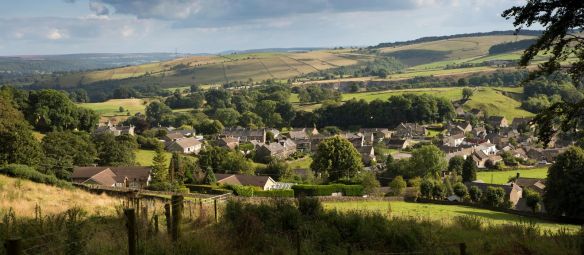
The Village of Eyam – Image sourced from National Geographic

Laugh, because I can’t believe how crass or stupid some of these refuseniks are. Scream, because I am so angry at the State Government’s failure to properly manage the hotel quarantine programme (which has led to the widespread community transmission), and the delayed decision to require masks in public. Cry, because the whole situation is incredibly sad, given all the people who have lost loved ones to the virus, and the many more who are experiencing financial hardship.

The Premier keeps saying that now is not the time to debate the whys and wherefores of who is responsible for the failure in hotel security arrangements, what caused the community transmission, or why so many people continued with their normal routines despite being symptomatic or while waiting for coronavirus test results. OK, fair enough – the Government’s main focus is on protecting public health (and shoring up the local economy), but hopefully there will be plenty of time for analysis and debate once the virus is under control (and hopefully well before the next State election, due in 2022…).

Meanwhile, I don’t know why politicians and health administrators are so surprised when members of the public fail to “exercise common sense”. Maybe the public kept hearing the Government was doing a such a great job (hey, remember Lock-down Pt. I?). Perhaps they over-compensated after a few weeks’ social distancing, became complacent and let down their guard. Or maybe they took their lead from public messages about “returning to normal” – and going to the footy and getting on the beers again….. Perhaps there is a sizeable portion of the community who can’t be trusted “to do the right thing” (or maybe they just don’t trust politicians, public servants, health experts or mainstream media).

As for why those people carried on as usual (despite being symptomatic or awaiting test results): there may be economic factors at play (to be discussed another day, but if that doesn’t include a debate on a Universal Basic Income, it will be a lost opportunity). It could be a lack of information and awareness. It could simply be human nature. But for a culture that celebrates “chucking a sickie” (indeed, one former Prime Minister even suggested it would be a point of national pride to do so following Australia’s success in the Americas Cup), something has gone wrong somewhere if people don’t feel any responsibility or obligation towards the health of their fellow citizens.

In my more existentialist moments (and I seem to have so much more time for that these days…), I can’t help thinking the pandemic is a three-fold challenge to the future of the human race: 1) the virus is nature’s way of inoculating itself against homo sapiens; 2) it will prove Darwin’s theory of evolution (survival of the fittest) by exploiting our weakness as social creatures – it’s figured out how to get us to spread the virus on its behalf; 3) the reduced levels of human activity and pollution will give the earth some time to heal (at least for a while).

At other times, I think about Talking Heads’ song “Life During Wartime”* – especially the line “I got some groceries, some peanut butter to last a couple of days”. With the need to limit shopping trips, the various shortages, and the focus on being prepared for a total lock-down, is it any wonder we may feel some anxiety? Of course, we could be in a far worse situation than what we are currently experiencing in Melbourne, both in terms of the number of cases and the breakdown in social order we see elsewhere. Yet that just underscores how inconsiderate and selfish those people are who can’t bring themselves to wear masks, or observe Stage 3 restrictions. Yes, the restrictions are inconvenient, and at times tedious, but they are hardly onerous compared to a full scale health crisis. And if anyone wants to discuss public sacrifice in the face of a virulent disease, I suggest they do some research on the village of Eyam in Derbyshire, England.

For myself, I know I have been very fortunate so far (probably thanks to some “compound privilege”). I have been able to work from home since March (although as an independent contractor, my monthly income has been reduced), but I have not seen any friends or family face-to-face either, and I won’t be traveling overseas next month for a family wedding, or to visit elderly parents. I am able to walk each day in the nearby park, but apart from food shops and the post office, I’ve not been inside any other retail premises. I haven’t been to pubs or restaurants, but I try to support the local hospitality sector by ordering prepare-at-home meals about once a week. I can’t get to see live music, but this has forced me to revisit my own music-making. And I don’t have to do any home-schooling, but I have friends and relatives who work in the health and education sectors.

My biggest concern, apart from the pandemic itself, is that we miss the opportunity to re-think the large areas of the economy that need restructuring. Politicians keep talking about “jobs, jobs, jobs”, as if the archaic labour structures inherent in the traditional master and servant relationship is the be-all and end-all of social economics. But where are these jobs coming from? COVID19 shows we can consume less, make do with less stuff, and so it can’t just be a demand-led stimulus. Nor should it just be a construction-led recovery (more “Big Build”), unless it is combined with innovation, sustainability, hi-tech, smart cities, etc. There is definitely a need to think about national self-sufficiency, and figure out what to do about supply chains, manufacturing and renewable energy.

Somehow, we have to turn this uncertainty and these challenges into positive outcomes.

Next week: The Limits of Technology

* The whole album, “Fear of Music” is the perfect soundtrack for the nervous paranoia and unease of the pandemic…..
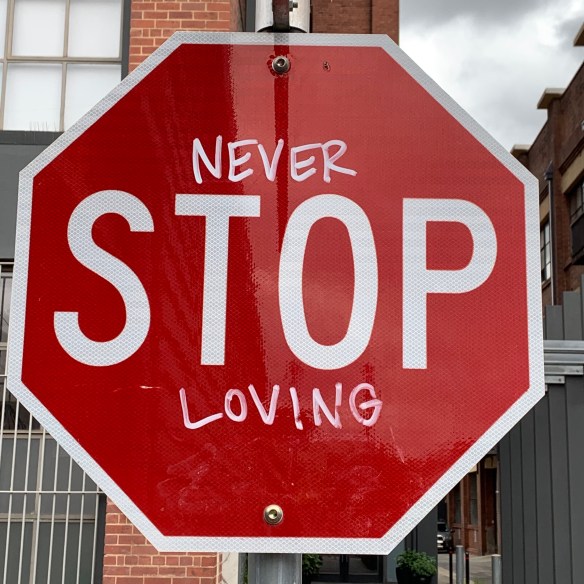
Business as Unusual

At the time of writing, the Victorian Government has decided to defer the easing of Covid-19 restrictions, in the wake of a sudden spike in community transmissions. There was always a risk that opening up too much, too soon, would result in a second wave of coronavirus infections, as people returned to work, as shops, restaurants and bars started to re-open, and as people began socializing on a larger scale. There is even talk of more drastic local restrictions in so-called hot-spot areas.

Meanwhile, the deferment (and the extended State of Emergency) is creating further uncertainty for businesses in an already fragile economy. In recent weeks, I have been attending a number of on-line seminars on the broad theme of business in the post-pandemic era. Variously described as the “new normal”, the “new new normal”, and even the “next normal”, things are unlikely ever to be the same, and not many punters are willing to bet on the resumption of business as usual.

Here are some of the challenges and opportunities that lay ahead:

Future of Work

As employees head back to the workplace, employers will need to balance the need for productivity and business continuity with the obligation to provide a safe working environment. Some staff can’t wait to get back to the office, some will prefer to continue working from home (if they can), while a large number would probably welcome a mix between the two. This has prompted debate on introducing a 4-day working week, the introduction of team rostering (e.g., alternating one week in, one week out), and possibly the end of hot-desking.

Overall, new work practices will necessitate a re-think on office space, workplace location and employee facilities. Some commentators have predicted that companies will need to extend their current premises (to allow for adequate space per employee); while others suggest CBD workplaces may need to decentralize towards more suburban or regional hubs (to reduce commuting times, to relieve congestion on public transport and to allow people to work closer to home). The latter may also stimulate local economies as people reallocate their commuting costs and daily expenses into local shops, cafes and services.

Innovation

Change and uncertainty should drive companies to innovate – in fact, former Prime Minister Malcolm Turnbull recently spoke about innovation in light of the pandemic. His view is that current technological trends will only accelerate, and industries facing disruption will be displaced even faster. So no time for complacency, and no point waiting for normal service to resume.

Necessity has driven many retail and restaurant businesses towards more online engagement with their customers, and those that have been shown to be creative, resilient and agile appear to have found a way through the lock-down. Equally, many businesses used to delivering their services in person have had to find ways to embrace digital solutions – no doubt enhancing their digital transformation in the process.

Self-sufficiency

We’ve heard about the need for food and fuel security – especially when supply chains are disrupted, and when countries pursue “domestic first” policies in relation to essential goods and commodities.

While Australia is a net food exporter, we still have to import many daily staples. Primary producers have come to rely on lucrative export markets, so in the light of trade wars and import bans, local farmers and consumers alike will need to adjust their expectations – on choice, price, seasonal availability and market volumes.

Australia is also in the enviable position of being potentially self-sufficient in energy – but although we are rich in renewables, we are still reliant on fossil fuels, and recent events revealed our vulnerability to volatility in the oil markets. It suggests the current environmental and economic debates around weaning ourselves off coal, oil and gas are only going to become more critical.

There has also been a call for a larger domestic manufacturing base – not only to enhance workforce skills and productivity, but also to ward off supply chain disruption. Some have called for a return to domestic car production. Even if that were desirable, let alone a realistic option, I don’t imagine that anyone would welcome the bad old days of churning out Australian-made gas guzzlers that nobody wants to buy. We would need to advocate for smarter cars, energy efficient and non-fossil fuel vehicles, environmentally sustainable materials and manufacturing process, and possibly different car ownership models (in line with the trend for ride share businesses and smart city solutions) and more creative financial incentives to the industry than wholesale subsidies.

Other manufacturing sectors that are getting attention include medicines and medical supplies (surely there must be a market for domestically-produced PPE made from bio-degradable materials?), clothing (again, an opportunity for environmentally sustainable materials and manufacturing processes), processed goods (after all, we already have much of the raw material), domestic appliances and technology.

One area where Australia has also proven vulnerable is in recycling. China and the Indian Sub-continent are pushing back at taking and processing our exported waste. So we have to get smarter at recycling household waste (paper, plastic, glass and metal) especially if in a post-pandemic world we see a return to single-use items and additional sterile and protective packaging for foodstuffs and personal products. We also need to look at e-waste, and find ways to extract more recycling value from obsolete devices.

The lock-down during the pandemic has also highlighted an opportunity to re-connect with the “make do and mend” mentality of our parents and grandparents. Again, if supply chains are disrupted, buying a replacement item might not be an option. But often, nor is it possible to buy replacement parts – either they rely on the same supply chains, or there are no user-serviceable parts available. What if manufacturers and distributors had more of an obligation to take back and recycle their products, or to include more interchangeable parts in their designs, and enable consumers to become more self-sufficient in repairing and maintaining their electronic and electrical goods?

Federal, state and local governments have a huge role to play here – from mandating the use of more recycled and recyclable materials, to incentivizing recycling schemes, from supporting local repair workshops and “maker” projects, to creating more common and open standards around components and replaceable parts.

Finance and Digital Money

At a time when many people are on reduced income and/or or relying on government welfare, the pandemic has also demonstrated a need to rethink our relationship with money in general, and cash in particular.

The latest round of QE by governments and central banks to offset the financial impact of the pandemic has highlighted once again the fragility of current monetary policies, including fractional reserves and treasury buy-backs. The decision to print money on demand will only increase public appetite for crypto currencies as a legitimate store of value – including stable coins and (ironically) central bank digital currencies – and paradoxically, accelerate the removal of physical cash from the economy.

In times of crisis, digital currencies can also transfer money to remote recipients faster and cheaper than traditional means (i.e., incumbent remittance businesses, bank transfers, payment gateways), and actually increase transparency and traceability.

The lock-down also revealed that many people did not have a sufficient financial buffer to withstand job losses, especially in the casual workforce and the so-called gig economy. This suggests a new approach is required for how people are remunerated for their labour and services, taxed on their income, and incentivized to save for the future. Current systems cannot address these issues because they are over complex, far too rigid, and totally dis-empowering of the people they are designed to serve and support.

Digital currencies (along with the benefits of Blockchain technology, and the new economic models represented by digital assets and tokenization) will enhance trends such as decentralization, peer-to-peer networks, trust-less systems, fractional ownership and more sophisticated barter structures.

Bitcoin was created in response to the GFC, it has now come of age in the post-COVID-19 era.

Next week: Antler Demo Day – Rewired


“How do I become a business strategist?”

I was recently asked for some career advice, specifically on how to move from a technical role to a more business strategy role, within a corporate environment. Like a lot of the questions I receive regarding career development (especially on LinkedIn….), the initial question was quite broad, a little bit vague, so I needed to frame it before responding.

At the outset, I should stress that I am neither a qualified career counselor (although I have done some related coaching work), nor an organisational behaviorist/industrial psychologist (but I have some formal experience of using personality profiling tools, and trained as a counselor very early in my career). Plus I have had a varied career path and some in-depth corporate experience to draw on!

I have never worked in a full-time Business Strategy role – rather, Business Strategy has been integral to the whole of my corporate and consulting career, whether I have been working in product management, market expansion, business development or start-up roles. So while Business Strategy can be defined (and practiced) as a specific discipline, from my experience it’s just another management component or business tool everyone needs to understand and apply, especially on a practical level.

First, my exposure to business strategy really began when I was in a product management role. So I it was part technical (requiring some formal qualification and subject matter expertise), part production (understanding the design and manufacturing processes), part strategic (managing the commercial, financial and market dynamics). That framework continues to inform my approach to business strategy, even in my consulting work – and helps in understanding my clients’ business.

Second, business and management tools come and go; some are mere passing fads, others are the result of changing technology or market conditions – so there is little point in trying to grapple with each and every one, or whatever happens to be in current fashion. Rather, I believe that we should each identify some core models and frameworks that work for us, which can also be adapted to different situations either organically or by analogy. For example, even the over-used Johari window and SWOT analysis can be useful techniques for mapping out markets, customer segments, or growth options. And having some basic accounting, legal and risk management ability is really useful!

Third, a key personal skill is being curious, and remaining open to possibilities. Simply asking the right questions (Q “Why do we do it this way?” A “Because we’ve always done it this way”) can uncover opportunities for improvement or alternative solutions. Without being a perpetual rebel, it is possible to constructively challenge the status quo, to find ways to do things better, more efficiently, more ethically, more environmentally friendly etc.

Fourth, if there was one thing I had understood better before entering the corporate world and management roles, it is the function of teams, the role of team dynamics, and the importance of open communications, pro-active stakeholder engagement, and bringing people on the journey with you. Never underestimate how stubborn, stupid, wilful or malicious some people can be – but often, they are acting out of a position of fear, ignorance or weakness. It’s rarely personal (it’s just business, right?), but it can feel that way. So, whether you are managing up, down or sideways, be prepared to overcome objections, present solutions (not just problems), and get buy-in early on. Making the team collectively and individually responsible for decisions means that they are personally invested in the outcomes. It’s also a way of empowering people.

Fifth, this leads me to the whole issue of decision-making. Companies will always make some poor decisions – but worse is sub-optimal decision-making. Partly this comes from not having appropriate systems and oversight (proper matrix processes, clearly delegated authorities, well-defined mandates, strong governance frameworks, transparent and accessible policies, and documented audit trails, etc). Partly this is a lack of cognitive skills (empathy, self-awareness, communication). And partly it is an absence of informed decision-making (e.g., understanding any inter-dependencies), and the misalignment of goals and incentives.

As a follow-up question, I was asked about some of the tools I have found useful for being successful in my strategy roles. Personally, I think the jury is still out on the value of an MBA vs gaining hands-on experience, or learning as you grow into a role. MBAs have their place, but they are not the Be all and End all of a corporate career.

I’ve also been dipping into a few of the “leading” business text books of their day, that were recommended to me over the past 15-20 years or so (Blue Ocean Strategy, the Long Tail of markets, defining Metanational companies, etc.). While they all provide some insights, and even some practical examples, they feel very dated in terms of current technology, business models, and market environment. Hence my comment above on passing fads…

Even though I worked for major multinationals for over 20 years, I think I’ve learned a lot more from working with and for startups and entrepreneurs over the past 10 years – and to me, that’s where a lot of the more interesting stuff is happening, notwithstanding the challenges of founding a new business. But I realize it’s not for everyone as a career choice.

Finally, no doubt there will be huge lessons for business and corporate strategy as we come out of lock down and it’s how we apply those lessons that will determine the next generation of success stories.

Next week: “There’s a gap in the market, but is there a market in the gap?”


#Rona19 – beyond the memes

More commentary on Covid-19 – at the time of writing, Victoria is at Stage 3 restrictions, with Stage 4 possible very soon. Generally, people seem to adapting to if not actually coping with this daily reality (although people are still flouting their quarantine obligations). But there is still some confusion on how to interpret, observe and enforce the social distancing measures, and of course, huge economic uncertainty remains for many people who have seen their working hours evaporate, especially if they are in vulnerable industries, and/or they can’t work from home.

Sign of hope? (Seen on my daily walk)

Meanwhile, the shutdown has prompted a fair number of less serious responses, from toilet paper memes, to “viral” GIFS, from parodies of “My Sharona” and “Bohemian Rhapsody”, to unfortunate examples of the downside of company video conferences while working from home.

But beyond the hashtags, what might we expect once we get through the current pandemic? Here is a somewhat random list of possible outcomes:

  • A renewed appreciation of personal space in public places – will we continue to observe such protocols where and whenever practical, as it becomes a community norm?
  • Greater respect for introverts – possibly better able to handle self-isolation, they are comfortable with their own company and don’t feel the need to seek out crowds  – social distancing does not represent an existential crisis, and they don’t rely on social situations for their personal validation.
  • Passenger airlines and cruise companies are toast – the tourism and travel industries will be hard hit, and may struggle to rebuild in their current form.
  • The online economy will get a boost  – restaurants and providores are already retooling to offer D2C food and meal deliveries (even cutting out the likes of Uber Eats, Deliveroo and Menu Log). Some brick and mortar retail is adapting fast, but will face a reduced share of available discretionary spending.
  • Naturally, digital services will thrive – from communication solutions to virtual classes, from remote working support services to telehealth. But bandwidth capacity and internet down/upload speeds remain a challenge in Australia.
  • The end of physical cash – if retailers prefer contactless payments (less contamination), what use are those notes and coins in your wallet?
  • A higher community standard for the individual duty of care we owe to each other – Covid-19 will certainly test the “duty of care” we owe to neighbours, colleagues, members of the public… if I knowingly infect someone, or act recklessly or negligently, can the victim sue me?
  • Likewise, the corporate social license to operate will be tested and re-cast – in light of monopolistic practices, price gouging, market abuse and disregard for the “new normal”, companies will need to re-assess many of their standard policies.
  • Increased use of facial recognition and other technology for surveillance purposes – if people cannot be trusted to observe their quarantine, self-isolation and social distancing obligations, the authorities will not shy away from further incursions into civil liberties that we currently take for granted.
  • A hybrid of on-site and working from home employment structures – not everyone will want to continue working remotely, nor will everyone be in a rush to head back to the office (or the daily commute), which will likely cause headaches for employers….

More on these themes next week….

Next week: The “new, new normal”