Literary legacies

As more classic works of literature come out of copyright protection, and enter the public domain, publishers and booksellers can look forward to sales of re-packaged titles, for which they won’t have to pay royalties. With the right combination of content and marketing, it’s as good as free money.

Under the Berne Convention, copyright in published works is the life of the author plus 50 years, although many territories have extend this to life plus 70 years (100 in Mexico!). These periods may be subject to extensions if the executors of literary estates are able to renew the existing copyright (under previous copyright regimes) or by issuing revised editions of existing works which are sufficiently different to the original so as to constitute an entirely separate publication – but these are exceptions.

By allowing copyright to lapse, this should mean key works will always be in print, and even more obscure titles can be revived with little to no production cost. For nearly 20 years, Google Books has been scanning works out of copyright and putting them online. But even this process can run into copyright limitations, and questions of provenance (as illustrated by the treatment of George Orwell’s “1984”). But this has also encouraged some enterprising individuals to sell “reprints” of facsimile copies of scanned titles, when the buyer thought they were purchasing an authentic copy, or a contemporary edition (i.e., newly typeset and printed).

Intellectual property law may be complex, and in need of reform to reflect modern technology and contemporary society. But as copyright works pass into the public domain, there remains the issue of moral rights. These give writers the right to be identified as the author of a work (“attribution”), and to protect their work against inappropriate use (“derogatory treatment”). Moral rights also protect writers against “false attribution” – i.e., a publisher can’t claim a work was written by an author who didn’t actually write it.

Moral rights vary from country to country (e.g., Germany, UK, USA, Australia), but generally do not survive when copyright expires. Which can mean that unscrupulous publishers may feel emboldened to “modify” original texts at will, given some recent examples of key 20th century novels. Surely not what authors and their legacies should be subject to?

Next week: Public Indifference?

When is a print not a print?

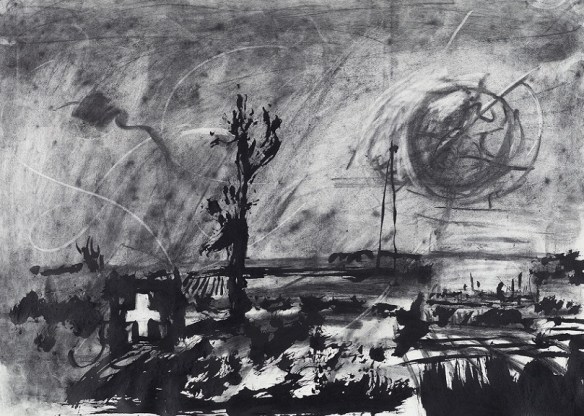
Alongside drawing, painting and sculpture, print-making is one of the oldest forms of visual art. Although it wasn’t generally recognised as a fine art discipline in the west until the European Renaissance (with the work of Dürer, among others), the practice can be traced back to Paleolithic times when humans first made hand-prints on cave walls. It evolved largely through developments in paper-making and image creation, such as Japanese wood-block printing 1200 years ago, or metal plate engravings in the Middle Ages, and has developed alongside related technologies in lithography, etching, off-set press printing, photography, lino-cut and silk-screen printing, to name a few key methods.

Print-making in this “classical” sense uses a combination of mechanical, manual and chemical processes to transfer an image (created from one or more media) from one surface to another, using ink or paint to “carry” the image between the plate and paper or other printed surface.

While the printing industry has been using the same techniques for centuries (in the service of book publishing, newspapers, advertising, packaging, textiles, etc.) there are key differences between the commercial and the artistic.

First, traditional print-making still retains a high-degree of manual process, and the work is usually produced in limited numbers (sometimes in single editions), and even where multiple copies are generated, variations and differences will appear thanks to inherent “imperfections” of the process.

Second, despite the importance of technical process in print-making, the practice should not be seen as a mere mechanical exercise in reproducing an image – the resulting image is still far more important than the actual technique (i.e., content over form should be the order of the day).

Third, the role of “mark-making” in print-making is as significant as the brush strokes in an oil painting, and are part of the artist’s signature. Equally, choice of materials is also important, just as an artist working in oils will make specific decisions about their brushes, pigments, medium and canvass.

In terms of art curation, print-making can get lumped in with other “works on paper”, which may extend to collage, photography, photo-montage, graphic design and illustration. Photography itself can be used in the course of print-making (e.g., rayographs), but a photographic print of a film-based negative is not the same as print-making in this context.

Likewise, the use of digital processes to capture, create, manipulate, transfer and reproduce an image on paper (or other medium) is further blurring the boundaries as to what constitutes a “print” as opposed to a “technique”.

This delineation between traditional print-making and image creation processes was further highlighted by the recent Experimental Print Prize organised by Castlemaine Art Museum in Victoria’s gold field region. While there were examples of etching, lino-cut, lithography, photographic and other techniques on display, the prize is intended to push the boundaries into more conceptual notions of “what is a print?”.

Examples included the use of light-sensitive paper to create long-delay images, a neon-light to generate an after-image on the viewer’s retinas, and a muon particle detector to track and plot their “image” onto a computer monitor. Although these are all interesting approaches, they perhaps over-step the boundary of permanence, which is usually a feature of print-making, to the extent that the fixed paper and ink endure long after the artist has made his or her mark. Nevertheless, the museum is to be applauded for bringing a new dimension to an ancient art-form.

Next week: Literary legacies


Doctrine vs Doctrinaire

The recent “debate” surrounding the Federal Government’s proposed Religious Discrimination Bill was a staggering example of political overreach combined with poor policy management. It was also a stark reminder that although we live in a secular, pluralistic and liberal democracy, some politicians cannot refrain from bringing religion into the Parliament and on to the Statute Books, even where there was neither a strong mandate nor an overbearing need to change the existing law in the way the Government attempted.

As far as I can tell, the Bill was originally intended to give people of faith additional protection against discrimination on the basis of their religion. But when linked to related Sex Discrimination legislation, it would likely have given religious institutions some degree of protection against claims of discrimination in the areas of gender and sexual orientation, particularly in respect of children’s access to education and in relation to employment by faith-based organisations.

If that wasn’t worrying enough, the Bill was underpinned by a controversial “statements of belief” provision. As drafted, this would have granted a person immunity from prosecution for the consequences of their words or actions if such deeds were based on a “genuine” religious belief. I find this particularly troublesome, not because I think people should be vulnerable to persecution for their faith; rather, it sets a dangerous precedent for what religiously-motivated people may feel emboldened to do in the name of their particular faith, especially where their actions cause actual or genuine apprehension of harm (the “God told me to do it” defence).

The shift from doctrine to doctrinaire is all too palpable. It’s one thing to believe in Transubstination, yet another to use a public platform (including social media) to proclaim that “gays will burn in hell”  unless they renounce their ways. The problem with a very literal application of ancient religious texts (most of which are open to wide and sometimes contradictory interpretation) is that this approach does not allow for any concept of progress (scientific, cultural, societal). It also gives rise to extreme forms of fundamentalism, such as banning music or refusing to ordain women priests. History has also shown us that people purportedly adhering to the same religion frequently disagree, leading to turbulent schisms, violent sectarianism and untold bloodshed. Then there are the religious death cults that kill themselves and their children for the sake of achieving their own “beliefs” (in which their offspring surely couldn’t have been compliant or willing participants).

As Luke Beck wrote recently in The Conversation, “There is broad agreement a person should not be discriminated against on the basis of their faith or lack of faith. However, the extent to which religion should be a licence to discriminate against others remains enormously contentious.”

This putative “license” may be an unintended consequence of the Bill, but the implications, should it be enacted, could be far-reaching: archeologists being sacked for saying the earth is older than 6,000 years; anthropologists for saying that the first humans were living 2 million years ago; astronomers for saying the earth orbits around the sun…. And that’s just in the area of science.

I understand that a person of faith may have a deep-seated belief against birth control, or pre-marital sex, or alcohol, or tattoos, or marriage equality – but that doesn’t mean their faith should impose their choices on the rest of the population. (Just as people of faith aren’t being forced to consume booze or get inked against their will.) As it is, religious institutions enjoy significant tax benefits, public funding and legal exemptions, and this current “debate” is bringing some of these discrepancies into sharp focus.

The last time I looked, here in Australia we aren’t living in a theocracy, people of faith aren’t being fired from their jobs because of their religion, and secularists, agnostics and atheists aren’t calling for places of worship to be demolished. What the latter do expect is people of faith not to use their beliefs either as a pretext to justify any form of discriminatory, pejorative or harmful acts or statements, or as a protection against being accountable for their words and deeds.

Next week: When is a print not a print?

How digital brands are advertising

During a recent visit to the cinema, I was surprised to see adverts for major digital brands on the big screen, ahead of the main feature.

I’ve always thought of cinema advertising as falling into one or more of the following categories:

  • ads you don’t see on TV (often longer than their small screen counterparts)
  • luxury names and aspirational brands (travel, spirits, fashion, financial services)
  • local businesses (the pizzeria “just a short walk from this theatre…”)
  • movie tie-ins (highlighting the product placement in the film you are about to see)
  • seasonal themes (especially Christmas)

What struck me on this occasion were the ads by three DNBs (digitally native brands), featuring LinkedIn, Tik Tok and Audible. Despite the disparate nature of their businesses, I realised that there was a common element.

As the above-linked McKinsey report states, successful DNBs are really good at connecting with (and understanding) their audience, identifying and fulfilling very specific needs with unique solutions, and leveraging the very technology they are built on to promote their services and engage with their customers. Witness the well-timed “alerts” from food-delivery platforms in the early evening, the viral campaigns designed to enforce brand awareness, and the social media feeds designed to build customer engagement and loyalty. (Note that the report features Peleton as a poster child for its thesis, before the personal exercise brand ran into recent difficulties.)

If you look at most DNB campaigns, they are primarily generating demand via very specific human drivers:

1. Aspirational – the pure FOMO element (not unique to DNBs, of course, but they do it more subtly than many consumer brands)
2. Experiential – highlighting the tangible benefits (of mostly intangible products)
3. Socialisation – the paradox of building a trusted relationship through hyper-personalisation and constant sharing…

These three cinema ads each contained implicit “story-telling“. LinkedIn positioned itself as a platform for establishing our own narrative (telling our own truth?); Audible promoted its audio content (books and podcasts) as a means to find authentic stories that resonate with us (and this was long before the recent shenanigans over at Spotify); and Tik Tok used a well-known viral video as the basis for building community around shared stories.

Of course, story-telling is hardly a new concept in brand marketing, and has been eagerly adopted by digital brands (think of campaigns during the pandemic which have featured on-line connectivity and remote working). However, it has become an over-used technique, and is often cynically exploited in the service of corporate green-washing, jumping on social bandwagons, and blatant virtue signalling.

Call me jaded, but I’m old enough to remember the fad of consulting firms pitching their clients on building a “corporate narrative“, drawing on employee stories and customer experiences, as the foundation for those anodyne mission/vision “statements” – but they typically ended up as exercises in damage control in case the truth got out.

These particular cinema ads managed to use story-telling to create a human dimension (authenticity, connectivity, community, sharing, etc.) that is more than simply “buy our product” or “use our tech” (although obviously that’s the ultimate goal). It would be very interesting to read the briefs given to their creative agencies, given that the ads were all in the service of corporate branding.

Next week: Doctrine vs Doctrinaire