And the public gets what the public wants?*

Another Australian General Election comes and goes – although with a mere 3 years between federal polls, our politicians and their parties seem to be in constant campaign mode. Certainly, the formal election campaign lacked any significant new policies, so it felt like the leadership “debates” were simply a continuation of the stale language, petty point-scoring and tedious soundbites we hear day in, day out.

Cue the constant and familiar references to crises in housing, the cost of living and climate change. Both major parties tried to build platforms promising financial incentives for first-time home owners, with policies that were expensive, ill-conceived (albeit well intentioned), and with little regard for the consequences on the housing market or the broader economy. There was a failed attempt to have an informed debate about nuclear power, and tons of the usual pork-barrelling for pet industries and favoured constituencies. Even a major credit rating agency suggested that the Commonwealth’s coveted AAA status could be at risk as a result of all the campaign largesse. And of course, any lowering of the AAA rating would likely see an increase in interest rates, which would largely defeat the object of the first-time home owner policies.

At the time of writing, the Australian Labor Party has retained power with a significantly increased parliamentary majority, based on the projected number of seats it will win. But while the seats total may look like a landslide, it’s clear that a significant portion of the electorate voted tactically to either: a) keep the Liberal Coalition out of power; b) increase the chance of a minority Government and/or hung Parliament; or c) maintain the current status quo in a turbulent and uncertain world.

Based on the counts so far, both the ALP and Liberals have each only managed to garner about one-third of the total primary votes (4,678,061 – 34.81% and 4,315,961 – 32.1% respectively). While the national swing to Labor was around 2.3% since 2022 (with the Liberals seeing an opposite swing of -3.6%), this is enough to give them a large majority in the House of Representatives, thanks to the preferential voting system.

By contrast, in 2022, the ALP secured fewer primary votes than the Liberals (4,776,030 – 32.58% and 5,233,334 – 35.70% respectively), but managed to secure government with a slim majority. The point is, that the two major parties combined face a continued decline in their share of the primary vote. Given the performances by the Greens and Independents in recent elections, there could be a case for adjusting the current system of preferences to include a weighting or allocation based on the total primary vote by party. This might seem fairer in those constituencies with very marginal results, or where parties draw a significant share of primary votes nationally, but not enough to win (m)any seats, even with preferences. But given that most independent candidates (by their very nature) are not affiliated to any party, and usually focus on local issues (and often on single policy platforms), that allocation would be very difficult to calculate on a federal scale.

Meanwhile, it felt like the number of early-voting facilities was limited compared to previous elections, and there was little or no promotion of postal vote applications. This could have been due to the relatively short campaign period (although it always feels much longer…) combined with the large number of public holidays during that time. Cynics might suggest that this was a deliberate tactic by the incumbent government as early voting and postal votes are traditionally considered to favour the Liberal Coalition. I can’t find any compelling evidence for this theory. Partly, I suspect, because the major parties recognise that undecided, wavering and swing voters make a huge difference to the final results, so encouraging people to cast their ballot on election day helps them in that regard, even though more and more voters opt to vote before the big day itself. Whether the promise of an election sausage is sufficient incentive, I’d rather not speculate!

I experienced a huge feeling of disengagement with this latest election, mainly because I didn’t identify with any policies, parties or candidates that I could really get behind. When it came to voting for the Senate, I couldn’t see 6 parties (above the line) let alone 12 candidates (below the line) that I considered deserving of my vote. But we are forced to express our preferences for a minimum number of parties/candidates, hence the candidate lists are usually very long. I always think the large Senate voting slips are problematic, especially if you want to complete the full “below the line” choices, as we don’t really know what preference deals have been done behind the scenes.

Like many voters, I had issues with the unsolicited text messages I received, on behalf of candidates and/or parties. Apart from not disclosing how they obtained my number, some of the SMS did not carry the relevant authorisation statement; the sender’s number was anonymous (presumably they use automated systems); and blocking the sender had little or no effect – they still kept sending them! Since political parties are deliberately exempt from complying with laws against spam and invasion of privacy, the Australian Electoral Commission is relatively powerless to act. Presumably it’s in the parties’ interests to keep the status quo?

I was also surprised that polling stations still use a paper-based system to tick off who has turned up to vote. (I was using the same system when I was a polling clerk back in the 1980s in London.) Although the polling officers are required to ask me if I have already voted in another location, there is no immediate way to cross-check the electoral rolls. Surely an electronic tracking system would be a better solution? And on that note, I’ll end with a suggestion that it’s about time we put voter registration, voting and campaign donations on a blockchain to support voter ID and verification with privacy, secure proof of polling and force campaign funding transparency… as well as a speedier vote count!

*(with apologies to The Jam)
“What Should We Build?”

Over the past week, the Leader of the Federal Opposition has been asking a series of questions on Twitter and elsewhere, about “what should Australia be building?”. As well as building the foundations of Labor’s Federal Election policy platform for boosting jobs in the manufacturing sector, it also provides lots of photo ops for pollies in hard hats and hi-viz clothing. (I do wonder why the potential Prime Minister hasn’t thought of this idea before, or why he appears to not know the answer – isn’t that his job? It also makes me wonder whether we need Parliament anymore, since our elected representatives prefer to conduct their “debates” via Social Media and Press Conferences…. it would save a lot of time and money!)

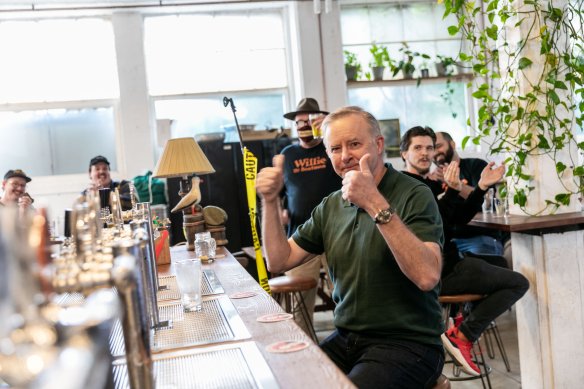
By this time next year, Albo could be PM (Photo sourced from Twitter)

There has been no shortage of suggestions from the Twitterati, which fall into the following main categories:

  • Renewable energy
  • Trains
  • Trams
  • Ferries
  • High-end engineering

But there has also been commentary around Labor’s ambivalence on the coal and gas sector (especially in the key state of Queensland), and the irony that we export cheap raw materials and import expensive finished goods. Then there is debate on the amount of local manufacturing content that already exists in Australia’s state-based trains and urban trams/light rail systems (skewed by the question of local vs foreign ownership). Plus, there’s the thorny issue of high-speed inter-city trains…

As I commented recently, the manufacturing sector accounts for fewer than 1m local jobs (less than 10% of the working population), and 6% of GDP. It has been declining steadily as a contributor to GDP since the 1960s, and more rapidly in recent years since we abandoned key subsidies to the car industry. I don’t think anyone is suggesting we return to the days of metal bashing and white goods. And while we’ve got to be selective about the type of manufacturing base we want to to develop, we also have to be realistic about the manufacturing capabilities we want to encourage and enhance.

The latter involves developing transferable skills, creating interoperable production lines, deploying modular designs and inter-changeable components, and recycling/repurposing. All of which should mean we don’t need to make every part of every item domestically, but we know how to assemble, service, maintain, repair and replace goods locally, and we can focus on adding value that can be fed back into the supply chain, which in turn can be exported (via know-how and services). Australia has some decent research and development capabilities, but we are not always very good at raising domestic investment, or commerciliasing our IP (so this value ends up being transferred overseas, with little to no return accruing locally).

I’m not a huge fan of simplistic “buy local goods/support local jobs” campaigns, or local content quotas. The former can degenerate into trade protectionism and economic nationalism; while the latter tend to favour inefficient incumbents within cozy duopolies (see the broadcasting and media sector). The current debate has also raised questions about procurement policies, and I for one would welcome a total revamp of government IT purchasing and deployment at Federal, State and LGA levels.

There’s also the consumer angle: Australians are notoriously “cost conscious”, so will they be prepared to pay more for locally-made goods, even if they are better designed, well-made and energy efficient, compared to cheaper, less-sustainable imports? (This is also linked to the question of wage growth and restrictive trade practices.)

The recent pandemic has highlighted some challenges for the structure of the local economy:

  • Disruption to distribution networks and supply chain logistics
  • Food security
  • Energy self-sufficiency
  • Inability to service equipment locally or source spare parts
  • Different standards across the States
  • Medicine and vaccine manufacture, sourcing and distribution

For an up-to-date perspective on where Australian manufacturing policy needs to be heading, I recommend taking a look at the Productivity Commission’s latest submission to a current Senate enquiry. (Am I alone in thinking that the PC, along with the ACCC, is doing more to develop and advance economic policy than our elected representatives?)

The PC’s submission addresses a number of key points:

  • R&D incentives are hampered by complex tax treatment
  • Policies (and subsidies) favouring one industry create uncertainty for others
  • Need for IP reform (especially “fair use” of copyright)
  • The National Interest test needs clarifying
  • More effort on up-skilling through more relevant education and training
  • The role of manufacturing capabilities in supporting supply chain infrastructure

Finally, while I agree that there needs to be some focus on renewable energy and public transport, we should not ignore food and agriculture, bio-tech, IT, automation, robotics, materials science and other high-end capabilities in specialist design, engineering and recycling (including reclaiming precious minerals from obsolete equipment).

(And did I mention the “Innovation Agenda” and the revolving door at the Federal Ministry?)

Next week: Dead Pop Stars

Here We Go Again…

At the time of writing, Melbourne is once again under a COVID19-related lock down. Currently, we are three-quarters of the way through a 14-day “snap” lock down or “circuit breaker”. Variously known as #lockdown4, v4.0 (now v4.1 with the added week), or simply “The South Australian One”. Along with a prevailing sense of déja vu, much of the political, media and social coverage has a very familiar ring to it – like, here we go again!

Overall, I would much rather be in Australia at the moment, compared to many other places in the world that are still struggling to cope with the pandemic. But there is no doubt that this latest lock down is once again revealing some political and structural weaknesses in the Australian Federal and State system – and the people of Victoria (and especially Melbourne) are paying a heavy price for these combined failings.

The blame game between Federal and State politicians is becoming a farce – most of us would rather see some effective leadership and practical solutions, as well as a bit more owning up and taking responsibility for where and when things have gone wrong. After all, the first known case of COVID19 was reported in Australia in late January 2020, so our elected representatives at levels and of all persuasions have had nearly 18 months to sort this out. It doesn’t help that our Prime Minister is generally regarded as being absent whenever there is a crisis – on the other hand, does it help to have him turn up in hi-vis and hard hat for another photo opportunity? And sometimes when he does bother to make it, he’s often made to feel unwelcome.

Here are just a few of the disconnects between Federal and State roles and responsibilities when it comes to managing COVID19:

First, the Federal government is responsible for external border control (i.e., immigration and quarantine). It’s generally argued that the Feds have failed to deliver a workable quarantine solution for anyone coming to or returning to Australia. For whatever reason (and we’ll probably have to wait 20 years before the relevant papers are released), National Cabinet in March 2020 agreed to delegate the management of hotel quarantine (HQ) to the individual States and Territories. The big question is: why did the States agree? Where there incentives on offer, or did they do so because they could see no solution coming from the Federal government? At the same time, the States have applied inconsistent border controls as between each other, and at times, Victoria has been able to suspend in-bound international flights, putting more demand on the other States’ HQ programmes.

On the other hand, Melbourne still managed to host an international Grand Slam tennis event in the summer (notwithstanding some COVID scares and cases), and our nation’s softball players have already been vaccinated prior to heading off to Japan for the Tokyo Olympic Games (which many locals want to cancel for obvious reasons). Plus, AFL teams were somehow able to travel interstate from Melbourne immediately prior to the lock down (did they get a tip-off?). Yet, at least one AFL club has breached COVID regulations, when travelling on a domestic passenger flight. I’m so glad we have got our priorities right when it comes to professional sport!

Second, health services (along with education, aged care and social services) are a strange mix of Federal and State responsibilities, services and delivery. As a result, there is bound to be some overlap and double handling, as well as some obvious gaps. The Federal government is being blamed for failing to secure and distribute adequate vaccine supplies when and where they are needed, and for failing to meet their own aspirational targets in terms of vaccine roll-out. Yet, as with so many public services, there is a (confusing) dual delivery system. Victoria set up a number of vaccination hubs – only it still hasn’t deployed an online booking system: only phone bookings (or walk-ins) are available. But the Federal delivery is via health clinics and GPs, with each service provider offering different booking systems.

Third, the vaccination roll-out (by age and priority categories) has seen the criteria move around, somewhat arbitrarily. There is anecdotal evidence that due to low take-up rates in March and April, some people within one of the priority age categories (initially 60, it was suddenly moved to 50 in May) could access a jab at a clinic or hub at short notice, as otherwise those stocks were going to waste. It doesn’t help that there was/is confusion over the vaccine requirement for certain front line workers (e.g., in aged care) and who is responsible for administering those vaccinations. Of course, since the latest lock down in Victoria, demand is outstripping supply, and it is difficult to verify data on whether anyone who was in a priority category was initially unable to access a vaccine (or was denied access) at the time they became eligible and wanted a jab.

Fourth, hotel quarantine continues to be the key weak point in the transmission chain. I’m not going to dwell on the systemic failure that led to Victoria’s second (and lengthy) lock down last winter/spring – from which we were only just starting to recover when #lockdown4 was imposed. The fact that the latest lock down was triggered by an apparent breach in South Austalia’s HQ is of some significance, as it re-introduced the Kappa “Variant of Interest” into Victoria. More worrying is the presence of the Delta “Variant of Concern”, whose precise source in Victoria is still unknown, but likely to have come from our own troubled HQ system.

Fifth, the calls for the Federal government to pay for dedicated and purpose-built quarantine facilities in each State are understandable – but I’m not sure why Victoria in particular didn’t just go ahead and build their own (and then later stick the Feds with the bill). It’s not as if there is a shortage of construction work going on at the moment in Victoria (much of it State-funded), so it would have been quite easy to pull that project together without waiting for the Feds to come to the party. After all, construction was one of the few industries to continue relatively unscathed during last winter’s lock down – and with the Federal job keeper and job maker subsidies available at the time, Victoria could easily have completed the task by now, especially with the support of a key developer such as the union-backed Cbus.

Sixth, Victoria has only just mandated a universal QR code system for checking visitors in at all business, commercial, retail and hospitality premises. Why it took so long, and why it allowed a mish-mash of third party apps and pen and paper systems is yet another example of poor IT implementation by government. (The Feds appear to be no better with their own COVID tracing app.)

Seventh, the Federal Government, via last week’s National Cabinet, appears to have established a common definition for a COVID19 “hot spot”. Again, it’s only taken the best part of 18 months, and we still don’t have consistent and national terms for defining “red zone”, “complex case”, “cluster”, “mystery case”, “complex case”, “unknown case”, “fleeting transmission”, “stranger to stranger transmission”, “primary contact”, “close contact” or “exposure site” tiers. Nor do we have a consistent framework for responding to a “hot spot”, especially when comparing Victoria to other States.

Finally, the latest lock down again reveals weaknesses and vulnerabilities in Australia’s manufacturing capabilities and supply chains (in terms of producing and distributing sufficient vaccines). It’s also shown up economic fragility with many people living pay cheque to pay cheque, and many small businesses, especially in retail, tourism and hospitality, will not manage to bounce back from a fourth shut down.

Next week: How about that AAA rating?

Is the Party over?

In the wake of allegations and revelations concerning election shenanigans, branch stacking, dodgy donations, and other improper behaviour by MPs, our trust in the democratic process is being severely challenged.

At the heart of the democratic process are the core principles of universal suffrage, and the open nomination and free election of individual candidates. However, in reality, it’s the party system that gets people elected, even though political parties are not mentioned in the Australian Constitution.

Thanks to factional disputes, evidence of corruption and general party machinations, I don’t believe voters are being well-served by their elected representatives. The highly partisan nature of party politics is making it increasingly difficult to build consensus or build inclusive, progressive and sustainable policy outcomes – even within the same party!

At the risk of making a huge generalisation, the problem I have with most politicians is that they have to play the party game in order to get selected, elected and re-elected. Thus they are overly beholden to the party that “backs” them (factional elements and all) rather than the electorates they purport to represent.

Look what happened to both Kevin Rudd and Malcolm Turnbull during their (brief) terms as Prime Minister: neither had a sufficient power base in their respective parties that they could rely on for support. (Both essentially came unstuck on energy and climate policies. And interesting to note that despite their differences whilst in office, they seem to have found a modicum of mutuality around media ownership – and I’m sure they agree on a whole lot more, they just aren’t allowed to admit it in public.)

Also, it’s a paradox that once elected (especially to leadership roles) most politicians seem to lose the power of natural speech. Instead, they feel compelled to use tortuous and convoluted verbiage to avoid saying what they actually think, because the internal logic and policy constraints of party-think over-rules common sense.

Over the years, I’ve heard various politicians speaking at first hand at non-party and non-Parliamentary events, including Keating, Hockey, Tanner, Turnbull, and Morrison. As a general observation, they are far more engaging, authentic and sincere when they are away from the hustings, pressers or dispatch boxes. It seems as if they all appear to lose a huge part of their humanity as a result of elected office, and the strictures of the party machine.

So has the political party had its day? Increasingly, that feels to be the case. Which is a dangerous thought, given the fundamental requirement to build policy platforms to take to the electorate, and the essential nature of Parliamentary democracy to have a functioning opposition to hold the Government accountable. Plus, we need a healthy democracy to ensure a pluralistic, inclusive, secular and liberal (small ‘L’) society. Dictatorships thrive in one party states, theocracies and autocracies alike.

Unfortunately, the media finds itself having to pander to the increasingly shrill, strident and destructive discourse of party politics. The press has to play along with “gallery briefings” and “doorstops” (i.e., selected disclosure at best, selected leaking at worst). I also hate the whole process of policy testing via party focus group soundbites rather than considered debate in Parliament.

I have seen some recent suggestions that political parties should be banned (dangerous precedents there…) or that election candidates shouldn’t reveal in advance their party affiliation. Whilst the latter idea has some appeal, how would we know where their backing comes from if they don’t disclose their party membership? Perhaps we should also ban all political donations, campaign funding and paid-for ads (and/or introduce stringent “truth in advertising” laws). Or, what if every candidate can only spend an equal amount, whose budget is drawn from Government funds, and only once they have secured the minimum amount of voter support to stand for election in the first place?

I don’t have the answers, and even with “non-party affiliation”, candidates would self-identify or be tagged as belonging to a particular vested interest. But the party system looks increasingly broken, and the nature of binary politics is not helping us to address or solve the enduring problems of our age.

Next week: Coming out of our shells