Technology vs The Human Factor

Several times over the past month I have been reminded that the pursuit of technology for its own sake can give rise to misguided innovation; so-called solutions that are divorced from real world problems cannot justify the effort or resources. It feels like we are entering a new phase of the post-industrial revolution era, where a lack of “the human touch” will render many new inventions as worthless, irrelevant or redundant.

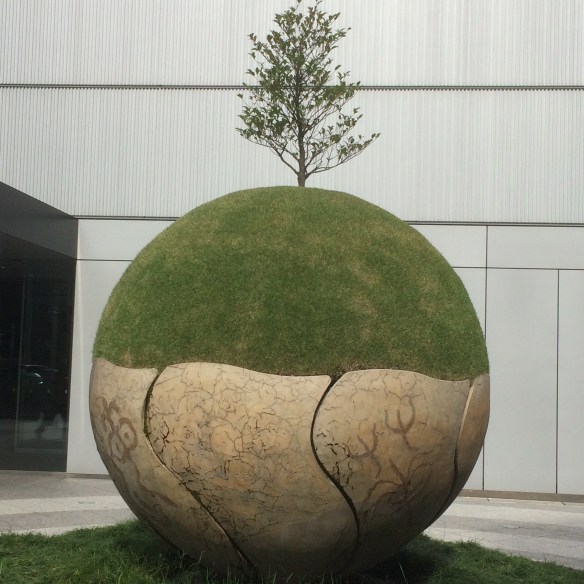
Street scultpure, Nagoya. Photo © Rory Manchee (all rights reserved)

Street sculpture, Nagoya. Photo © Rory Manchee (all rights reserved)

In no particular order:

  • At the second Above All Human conference in Melbourne, there was a consistent theme: how do we make sure there is a real connection between human needs and bleeding edge technology?
  • A Slow School of Business excursion to an eco-friendly homestead in rural Victoria offered a practical lesson on how to create harmony between technology and nature, and still achieve a modern (but modest), highly personal and comfortable home.
  • The economic debate about whether technology is improving our standard of living (as reported in the latest CPA magazine), which also echoes a recent CEDA report on automation and the implications for job losses.
  • A Q&A with Shayne Elliott, the new CEO of ANZ Bank, which prompted the observation that big data analytics, process automation and digital disruption are all very well, but will prove meaningless unless they can improve the customer experience. (But Elliott also conceded that the likes of Uber and Airbnb have succeeded because of complacency among industry incumbents.)

Advances in technology don’t have to lead us to the dystopian worlds of “Modern Times” or “Metropolis” (or any of the other post-apocalyptic visions that cinema and literature like to give us). However, the understandable focus on innovation must take the “human factor” into greater account when making design decisions, undertaking cost-benefit analysis and opting for one technology format over another.

Conclusion? It’s not totally clear whether we are entering another dot.com market correction, but there is a case to be made for whether or not we are seeing enough of a “technology dividend” from the current digital disruption and economic displacement centred on the use of cloud, social and mobile platforms; and whether we need a new methodology to measure the impact of the Internet of Things, robotics, AI, nano-technology, AR/VR, cognitive apps, wearables, 3-D printing, etc.

Next week: It’s never too late to change….

David Bowie Was – “It’s a god-awful small affair…”

The music of David Bowie was the soundtrack to my teenage years, coinciding with the extraordinary run of albums he released in the 1970s, the like of which we will never see again. He was the first (and probably last) 20th century mega pop star, with a prescient knack for reinvention and innovation. He will be remembered as one of the few truly original musicians of his era, a legacy that he has confirmed with his final studio album, released on his 69th birthday, just two days before he died. Talk about timing…. Even his long-time collaborator, Tony Visconti was moved to say “His death was a work of art.”
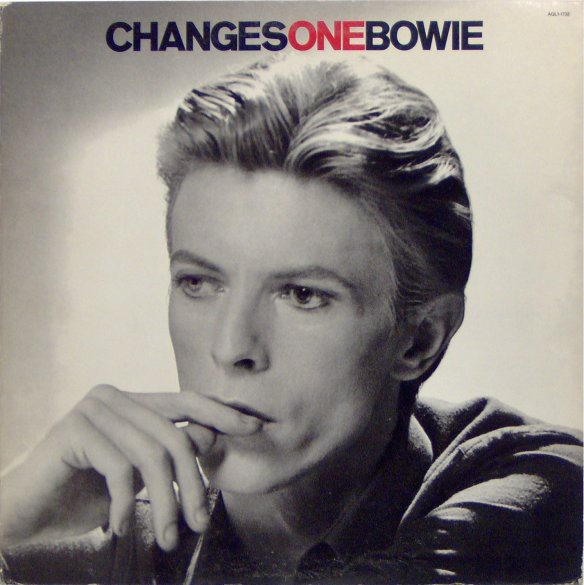
Sleeve of 1976 compilation album released by RCA Records. Portrait by Tom Kelley. (Image sourced from Discogs.com)

Sleeve of 1976 compilation album released by RCA Records. Portrait by Tom Kelley. (Image sourced from Discogs.com)

Overture

My own journey with Bowie began with “Life on Mars?” (from “Hunky Dory”), which was released as a single in June of 1973. I was 12 years old, and my family had just returned to suburban London after three years living in Australia. The re-entry was bewildering.

The UK of my childhood had disappeared in my absence: there was decimal currency, membership of the EEC, a Tory government, colour TV, and the Three-Day Week. And then there was glam rock, with Bowie at the forefront. The kids at school were all wearing platform shoes, outrageously wide shirt collars, flared trousers, and Bowie haircuts. If they’d been allowed, they’d probably be wearing glitter and makeup as well. There certainly hadn’t been anything like this in staid, suburban Adelaide, which felt like it was firmly stuck in the 1950s.

Prologue

Although I had probably heard “Space Oddity” (and even “The Laughing Gnome”) on the radio as a child, “Life on Mars?” is the first Bowie song I connected with. I couldn’t fathom the lyrics, but their sense of alienation (along with the song’s outsider perspective) must have resonated with me. It also suggested a loss of innocence, time and place. It was hard to avoid or ignore Bowie during this period. There was a constant stream of hit singles released to an eager market that was happy to keep him in the charts week in, week out.

Act I

At the time, I was more in tune with Top 40 radio than album releases, so for me Bowie was “just” a singles artist. I was mostly oblivious to the stage and album personas of “Ziggy Stardust”, “Aladdin Sane” and “Diamond Dogs”. It took me a while to backtrack through those albums, especially “The Man Who Sold The World”, which was only known to me through Lulu’s cover version of the title song. As for “Pin Ups”, although it was not his strongest effort at the time, it was a significant portal into 60s psychedelic, progressive and underground rock music for those of us too young to have been there.

The first Bowie album I actually bought was “ChangesOneBowie” because it was an excellent primer, and it contained two of my favourite tracks of the mid-70s, “Fame” (from the pivotal “Young Americans”) and “Golden Years” (from the even more significant “Station to Station”, which Kraftwerk name-checked on their contemporaneous album, “Trans-Europe Express”). “ChangesOneBowie” was not a typical greatest hits collection, but stood as an album in its own right.

From there, it was headlong into the Berlin trilogy of “Low” (still an astonishing collection of post-modern rock songs, electronic and ambient music), “Heroes” (confirming Bowie as one of the few pre-punk musicians it was still OK to like) and “Lodger” (tackling issues of cold war politics, gender identity and domestic violence against a backdrop of Eastern, Reggae and Krautrock influences – “world music” before the term had even been coined).

In 1980, Bowie said farewell to the 70s with “Scary Monsters (and Super Creeps)”, which thanks to the video for “Ashes to Ashes”, helped usher in the MTV era. It remained his strongest work for more than 30 years (apart from “Heathen”, and maybe “Let’s Dance”) until “The Next Day” in 2013 (which acted as both a coda to and summation of his musical career), and the valedictory released early last month.

Act II

For much of the 80s and 90s, Bowie seemed to flounder. In the 70s, he had been the instigator of change and the artist to follow; witness the legion of artists who cite him as a key influence. But after “Let’s Dance” he became more of a follower as he tried to catch up with the latest trends rather than setting them, and much of the material on the resulting albums sounds outdated, stodgy and formulaic, lacking the deft touches of his earlier work. While I can even understand why he formed the Tin Machine, I have no time for their music. To my ears their albums are no better than much of the vapid, soulless and synthetic rock that polluted mainstream radio and TV as the major record companies tried to re-corporatise pop and rock music following the disruption of punk, new wave, post-punk, electronic and independent artists and labels.

Act III

I’m sure history will treat the “third act” of Bowie’s career (from “1. Outside” to “Reality”) more kindly than when some of those late albums were first released. Overall, it’s a reasonably solid body of work, and still a lot better than what most of his contemporaries were churning out at the time. It feels as if Bowie was treading water, biding his time, waiting for new inspiration while he explored other interests – whether securitising his back catalogue via Bowie Bonds, or launching his own ISP, BowieNet.

Then came the growing silence: no new material, no live tours, and gradual withdrawal from the spotlight. Only the odd glimpse, and the occasional rumours about his health. Maybe the curtain had finally fallen on Bowie’s recording career.

Epilogue

Suddenly out of nowhere, after an 11-year hiatus, in January 2013 came a startling new single, “Where Are We Now?”, which caught most of us by surprise. It was both new and comfortably familiar – the sonic palette had been updated (without trying to sound “trendy”), but the lyrical themes were the same. Bowie himself sounded wiser but world-weary, and there was an abiding sense of loss, regret and redemption.

The accompanying album, “The Next Day” did not herald any great musical surprises, yet it was good to have him back with such a solid album. The songs avoid being Bowie pastiches (which is a trap many comeback albums fall into), but each track could have appeared on one or more of his classic 70s albums. At one point, too, his vocals sound reminiscent of Scott Walker‘s recent work (surely not mere coincidence?). Despite the lingering thought that this really was the last Bowie album, “The Next Day” was soon followed by new material, various remixes, the “David Bowie Is” touring exhibition, a stage show based on “The Man Who Fell To Earth”, and yet more Bowie compilations, box-sets and re-issues.

All this renewed activity now seems like a diversion, designed to catch us off our guard. Because we were hardly prepared for what happened next: the huge anticipation, when yet another new album was scheduled for release on January 8, 2016; and deep sorrow, when Bowie’s death was announced just two days later.

I haven’t managed to listen to “” more than a couple of times. The lyrics are loaded with poignant references to death, resurrection and final endings. It feels like we are listening in on someone predicting and meditating upon their own imminent demise, contemplating their life with quiet reflection. While the accompanying music is not exactly funereal, nor it as avant-garde or as cutting-edge as some reviews might suggest; but it’s still quite experimental for a mainstream artist. Inevitably, the album will be regarded as Bowie’s final artistic act, a grand gesture, signing off on his own terms. Not many of us will get to do that…

Postscript

When I heard the news that Bowie had died, I was walking home through the park. The city was bathed in a golden glow of a rain lit sunset, and there was a huge rainbow across the sky…. Starman indeed.

Without the benefit of Bowie, I probably wouldn’t have explored or appreciated loads of other music: the Velvet Underground, Lou Reed, Iggy & the Stooges, John Cale, Brian Eno, Neu!, Roxy Music, Robert Fripp, Can, Wire, Faust, Buzzcocks, The Cure, Nico, Devo, TV on The Radio, Arcade Fire, Blur, The Associates, Nick Cave, Au Pairs, The Doors, Tindersticks, Air, Magazine, Kraftwerk, Gang of Four, Sonic Youth, Joy Division, Pixies, Talking Heads, Television, A Certain Ratio, Echo & The Bunnymen, and many more.

If I had to choose one song that best epitomizes Bowie’s personal perspective on stardom (and notoriety), along with a sense of his own mortality and place in the world, it would be “It’s No Game”, from 1980’s “Scary Monsters (And Super Creeps)”. Bowie was neither politician nor philosopher (and he certainly wasn’t a saint), but this existentialist anthem is a perfect statement on the human condition that is still valid today, which is why I for one will miss his presence.

Acknowledgment: Thanks to my fellow presenters David Whiting and Steve Groves at North West FM Community Radio for the great times we had with our special Bowie programs over the past few years.

Next Week: Tech vs The Human Factor
Is this The Conversation we should be having?

Here’s a barbecue topic for Australia Day: What is happening to the quality of public discourse? Over the holidays, I read The Conversation’s 2015 yearbook, “Politics, policy & the chance of change”. It’s a collection of individual articles from the past 12 months, grouped into broad themes, covering key issues of the day, at least among the academic and chattering classes. As a summary of the year in Australian political, economic, cultural and social reportage, it’s not a bad effort. With “news” increasingly bifurcated between a dominant commercial duopoly and a disintermediated social media maelstrom, The Conversation can offer a calm rational voice and an objective alternative.

Screen Shot 2016-01-24 at 6.43.50 PMThe title promises a new direction in political debate, and I went to the book’s Melbourne launch at the start of the summer, where Michelle Grattan, The Conversation’s Chief Political Correspondent held court in an audience Q&A. I was looking forward to the event, because part of The Conversation’s remit is to foster informed debate that is more than tabloid headlines, news soundbites and party room gossip. It has also positioned itself as a non-partisan, independent and authoritative source of news analysis.

I was hoping the Q&A would provide a considered discussion on some of the key policy issues facing the country – long-term tax reform, addressing climate change, updating Federation, dealing with the post-mining boom economy, improving the quality and efficiency of our education, health and infrastructure systems, etc.

Instead, the first three questions from the audience concerned Mal Brough, Ian Macfarlane and Tony Abbot. How demoralising. Haven’t we moved on from this cult of personality? Haven’t we learnt anything from the past 10 years or so? If the same event had been held during Julia Gillard’s term as PM, the names would have been different (Craig Thomson, Peter Slipper, Kevin Rudd?) – and for quite separate reasons, I hasten to add – but the context and implication would have been very similar: “Never mind policies, what’s the chance of (another) leadership spill? How are the numbers stacking up in Parliament? When’s the court case?”

Although I admire the aims of The Conversation, and I understand why it exists, I have some concerns about the type of discourse that The Conversation is actually fostering among its audience. As with many public institutions, I appreciate that it’s there (even though I am not a frequent reader), but like other news media, it risks confirming the bias and prejudices of its audience. It can also feel as if it is serving only the vested interests of its contributors, partners and sponsors.

So much of Australia’s recent political history has been dominated by self-delusional egos, nefarious party factions, insidious vested interests and character assassination (which I blame for giving us five prime ministers in as many years).

When it was my turn to ask a question, it concerned the recent bipartisan compromise between the Coalition and The Greens to publish the tax records of companies generating more than $200m in revenue (as a step towards tackling corporate tax avoidance). I asked, “Should we expect to see more of this seemingly new approach to politics?” Although Ms Grattan gave a detailed (and somewhat technical) explanation for this particular Parliamentary outcome and its likely implications, I felt that most of the audience were not interested. They would probably have preferred to be talking about the ins and outs of the party rooms. For me, this does not bode well for the level and quality of public debate we are having on (non-party) political issues that really matter.

I also have a few other niggles about The Conversation and the 2015 Yearbook:

  1. By only sourcing content from “recognised” academic experts and policy wonks, I think this overlooks contributions from commercial and industry experts which are just as valid. As long as such authors also declare any interests, it should ensure balanced commentary – but to exclude them from the debate just because they don’t have academic, public or research tenure is self-limiting.
  2. The site as a whole (and the book in particular) is rather thin on actual data references, and when research data is included in articles, there are rarely any charts, tables or infographics. I think this is a shame and a missed opportunity.
  3. The book hardly mentions the critical issue of tax reform (which barely merits half a dozen pages). Whereas, reform of the education system (including academic research funding) gets around 40 pages – which rather smacks of self-interest (and bias?) on the part of the academic authors

Finally, The Conversation provides a valuable (and from what I have seen, an impartial) service via its factcheck section, which in tandem with the ABC’s Fact Check is doing a sterling job of trying to keep our pollies honest (at least in Parliament…). More power to it.

Next week: David Bowie Was – “It’s a god-awful small affair”


Idea over Form – Gehry vs Ando

Frank Gehry and Tadao Ando are two of the most famous architects in the world. Each has a distinctive style: Gehry produces organic and free-flowing designs, incorporating unexpected shapes, angles and materials to produce logic-defying structures that appear to float above the ground; while Ando creates solid concrete structures, very much tied to the earth (even buried within it), but ultimately deriving their form from the elements of space and light that they encapsulate.

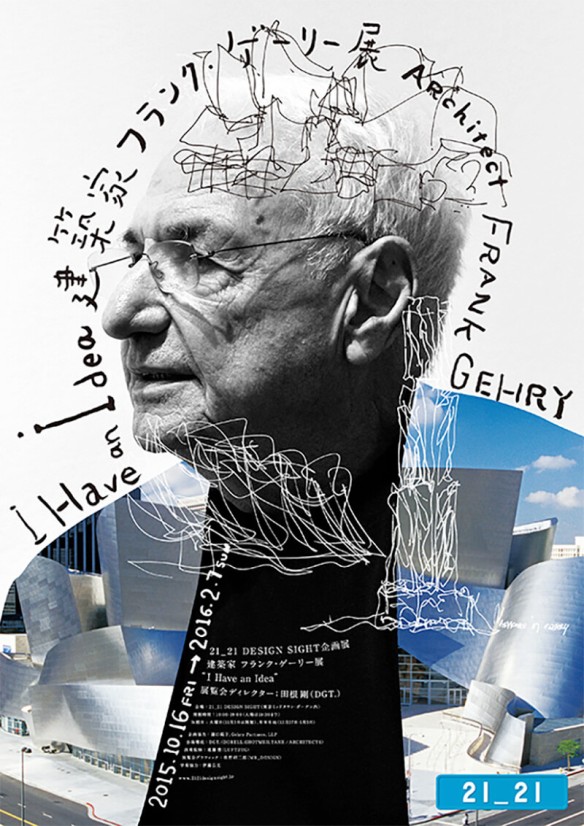
Frank Gehry: "I have a dream" (image sourced from Archilovers.com)

Frank Gehry: “I have an idea” (Image sourced from Archilovers.com)

During my trip to Japan in late 2015, I had the pleasure of seeing examples of both their work: Gehry’s giant fish in Kobe and a show based on his recent project for the Fondation Louis Vuitton; and Ando’s series of galleries and museums that form part of the Naoshima Art Island project (including the Ando museum itself). It all came together at a major retrospective of Gehry’s work, “I have an idea” which, fittingly, is showing at 21_21 Design Sight in Roppongi, a building designed by Ando.

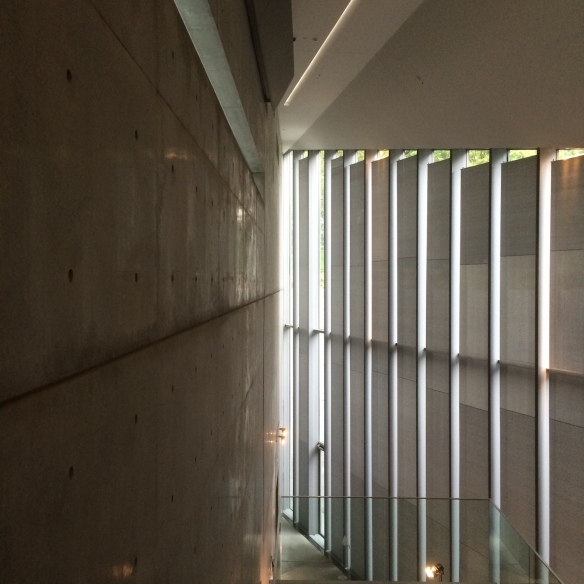
Interior of 21_21 Design Site (Photo © Rory manchee, all rights reserved)

Tadao Ando: Interior of 21_21 Design Sight (Photo © Rory Manchee, all rights reserved)

Despite the differences in their work, there are strong similarities, even commonalities – for example, they have both pushed aesthetic boundaries, and both have developed significant signature styles. They are also highly attuned to the use of space, light and materials. Their work is never pure ornament, everything has a purpose, even if it is “only” to maximise light or enhance the use of space. And their goal is to create a connection between the function of the building and its use or purpose. It’s architecture as facilitator, because it prompts, even demands, a reaction from the occupants: inhabitants, students, patients, patrons, visitors, employees.

For me, a key difference is how they appear to solve the problem of designing unique solutions for site-specific locations, while maintaining their distinctive styles. In his own words, Gehry starts with “an idea”, and then explores, extends and extrapolates the idea until he ends up with a design solution that lends itself to the desired outcome. His ideas may originate from the client brief, but the buildings always impose themselves upon their location, because in spite of the organic forms, they appear out of context (but not out of step) with their natural surroundings.

Whereas Ando’s work only truly reveals itself once the internal space has been created, usually achieved by removing the earth, and burying or submerging the building in the ground. From some angles, a number of Ando’s buildings have no visible superstructure, suggesting the intention is for them to be subsumed, even absorbed by the landscape. A few of his designs only “exist” when you are deep inside them, or when the natural light is used to achieve a specific effect.

Despite Gehry’s random designs and the somewhat chaotic nature of the iterative modelling process, he is actually a thorough technician; his design methodology has resulted in numerous software programs and other digital applications that are licensed for commercial use. The idea is a vital starting point, but the final form is more important.

By contrast, Ando’s singular use of polished concrete suggests a cold or even clinical approach to his practice; in fact, he is more of a purist in his search of form, and actually strives to establish a connection with and respect for nature. One senses that the form is actually subservient to the idea, however perfect the physical outcome.

Of course, idea and form are equally important, so I think the goal is to achieve a balance (not necessarily harmony) between the two. Even better is the creative tension where one continuously questions and informs the other. The best architecture is never fully resolved, and always asks more of us, however often we see it; mediocre buildings simply get ignored, or taken for granted. (And hopefully, the bad designs never get built…)

Next week: Is this The Conversation we should be having?