6 Melbourne Graduates of Boot Camp for Start-Ups

Another Monday night in Melbourne’s silicon laneway, another Monday night meeting of Lean Start-Up Melbourne. This month’s event, generously supported by inspire9, Kussowski Brothers, BlueChilli and Alphastation, featured 6 start-ups who have recently completed the AngelCube accelerator programme.

Screen Shot 2013-08-18 at 11.51.49 AM

In no particular order, here are Angelcube’s Class of 2013:

A couple of the presenting founders, Tablo and Coinjar, have both been mentioned previously in this blog. I’m still very impressed with the simplicity of Tablo, a self-publishing platform for ebooks, and if they can figure out a B2B or aggregation model, I think they will have a great future.

As for Coinjar, the idea is right (a trading and merchant platform for Bitcoins) but there are still too many regulatory uncertainties and other risks associated with virtual currencies. And as the good people of Hong Kong know only too well, even established voucher schemes such as cake coupons backed by real money and physical goods can have a detrimental effect on local markets…

OutTrippin is a cross between 99Designs, TripAdvisor and Airbnb – selling curated travel itineraries and booking facilities for FITs (free and independent travellers). My sense is that while there is an opportunity in this space, the trick will be to successfully match trip planners and holidaymakers. Given the initial focus on the niche honeymoon market, it will be interesting to see how much traction OutTrippin can generate in the next 12-18 months (given the long-term planning logistics of most wedding events….).

etaskr is an insourcing solution for larger companies – combining elements of Elance, Freelancer, oDesk, Yammer and LinkedIn. It aims to match employee skills (not job function or department) with specific tasks, to enable organisations to better utilise available resources to meet fluctuating workflow volumes. Based on audience questions raised on the night, etaskr may need to look at back-end solutions that facilitate intra-company cost allocation and revenue recognition – good luck with that one!

I will be the first to admit that I can’t really get my head around c8apps – a mobile gaming platform for fantasy sports. I’m probably the wrong demographic for this type of offering, so I can’t really express a view – but the fact that c8apps claim to have some significant media deals in the pipeline and are engaging with several major sporting codes probably means they are doing something right; unfortunately, I just don’t get it myself.

Finally, OziRig is bringing custom-designed professional rigging equipment to the global  film and photography industry. Essentially a component sourcing and assembly model, OziRig aims to undercut the competition on price and service – but several members of the Lean Start-Up audience wondered about the risks of copyright and design infringement.

These 6 graduates of the boot camp for start-ups are now embarking on a round of investor pitches in the USA. I wish them well and every success.

Footnote: Thanks to the sponsors for some much appreciated beer and pizza on the night. And for a couple of alternative perspectives on the evening’s events, please check out my fellow bloggers: Chris Chinchilla and Innerloop.

Australian MPs recommend a ban on geo-blocking

In a recent blog about geo-blocking, I commented on the frustrations of Australian consumers in trying to access digital content. That blog was written in light of a parliamentary inquiry into IT price discrimination.

ImageA Report by the House of Representatives Infrastructure and Communications Committee has just been published, and makes for some fascinating reading.

The Report reveals a number of key themes:

  • There is strong evidence that Australian consumers pay between 50 and 100 per cent more for the same product than consumers in comparable markets.
  • Price differentials cannot be fully explained by the so-called “Australia tax” (i.e., the relatively higher costs of doing business locally, due to wages, taxes, market regulation, shipping costs, economies of scale, etc.).
  • Consumer complaints about price discrimination are not being taken seriously by the industry as a whole.
  • Industry participants either deflected responsibility for price discrimination to other parts of the supply chain, or blamed inconsistent market practices as justifying the need for different regional and national price policies.
  • Despite being given the opportunity by the Committee to defend their pricing practices in public, most industry participants declined to co-operate in full; this gave rise to Apple, Adobe and Microsoft each being compelled to give evidence.
  • A number of submissions made by industry participants appeared to be disingenuous, self-serving, evasive and even misleading.

The Committee accepts that IT vendors are entitled to run their businesses as they see fit, and there is nothing to stop them from charging whatever prices they like. There was also general acknowledgment that copyright holders must be able to protect their IP assets.

However, geo-blocking (especially of digital content) simply reinforces price disparity based on a customer’s geographical location, rather than protecting the interests of copyright holders. Further, although so-called “Technological Protection Measures” (TPM) or “Effective Technological Measures” (ETM) and “Digital Rights Management” systems (DRM) may have a legitimate role in controlling copyright (and as such they enjoy protection under the relevant Copyright Law), their net effect has been to limit competition and to lock consumers into “walled gardens” which places considerable power in the hands of IT vendors as to how, when and where consumers access content.

In short, the Committee made several recommendations designed to address price discrimination and restricted market access imposed on Australian consumers, including:

  • Remove any remaining restrictions on parallel imports (in a bid to increase market competition among distributors and retailers).
  • Clarify the legal circumvention of TPM/ETM/DRM barriers that are purely designed as geo-blocking tools (rather than copyright protection measures).
  • Educate Australian consumers about their ability to buy cheaper goods from overseas, or to legally circumvent geo-blocking (without compromising product warranties or infringing copyright).
  • As a last resort, place a ban on geo-blocking and outlaw contacts or terms of service that rely on and enforce geo-blocking.

Unfortunately, while this Report is of great significance to the Australian digital economy, and seeks to achieve a balance between the rights of copyright holders and the interests of consumers, it is likely to be overshadowed by concerns about tax avoidance in respect to multinational companies. No doubt Australian consumers will make a connection between global IT companies whose products they buy, and transnational tax minimization strategies linked to transfer pricing policies and the routing of content royalties and copyright licensing fees via low-tax jurisdictions.

10 Reasons why the Lean Startup Business Model is here to stay

Is the Lean Startup Business Model a passing fad, or the “new normal”?

Here are 10 reasons why I think the Lean Startup model is here to stay:

1. Technology – Everything’s social, mobile and cloud-based, meaning reduced establishment costs, enhanced flexibility, and easier scalability for startups.
2. Millennials – The younger generation have different work drivers, informed by their lifestyle ambitions, career aspirations and personal expectations. Startups may often meet their needs more easily than established businesses, and can therefore attract talent better-suited to their requirements.
3. Everyone is their own CEO“The Start-Up Of You” reinforced the idea that individuals are responsible for managing their own career, that they need to take control of their career decisions, and that a career does not always follow a continuously upward trajectory. Startups can allow people to make non-linear career moves.
4. Crowdsourcing – There’s no need to be an expert in everything – startups can outsource, collaborate, and rent rather than buy.
5. Crowdfunding – It’s no longer a pre-requisite to launch an IPO or negotiate an investment bank deal. The lean startup model has been key to the development of alternative funding models.
6. The waning fortunes of “big” corporates – With a few notable exceptions, large corporations can be slow to react to new market dynamics, and can miss out on new opportunities. The lean startup model is the antithesis to many traditional corporate ecosystems.
7. The post-industrial age – Before the industrial revolution and the arrival of factories, production lines and mass manufacturing, we had cottage industries – people working independently from home, in small-scale operations, often doing outsourced, piece-rate work, or bartering their skills. Startups are fostering a new era of cottage industries, where goods and services are traded through networks and peer-referrals.
8. Lessons from the dot.com boom & bust – We are wiser (after the event). Don’t assume the technology in itself is the solution or the product; don’t burn the cash and have nothing to show for it; start small but position to grow quickly through agile processes and nimble methodologies.
9. Flexibility is the key – Adapt and survive! This is the DNA of the Lean Startup Model.
10. Experience is sometimes better than a formal qualification – People are keen to learn and acquire new skills through direct exposure to interesting projects. Startups can offer this in abundance.

Acknowledgement: I am grateful to Brad Dunn of Nazori for triggering this blog.

Product Development 101: What we learned at Start-Up School

Lean Model 001

Another large turn-out last Monday evening for Melbourne Lean Start-Up’s monthly event, hosted by Inspire9 and supported by SmartStartCity, Kussowski Brothers, Blue Chilli and AlphaStation.

This month’s theme was “Validated Learning – what to do before you launch your start-up” or as I like to call it, “Product Development 101”.

The evening kicked off with a lightning talk video presentation by Ash Maurya discussing his lean canvas 1-page business model. Well worth investigating before you even start writing a single line of code!

Next up, Tweaky offered some insights on the value of using PPC (Pay Per Click) pre-launch analysis targeting Search Intent (Google) and Demographic Intent (Facebook) to generate interest in your new product.

GetViable followed up with a discussion of the old-age conundrum for any new product or business: “Have you built a solution in search of a problem?” And even if you have correctly identified the problem, is it actually worth solving? The bottom line was, talk to your customers, listen and learn about their problems, then figure out whether they are willing to pay for your solution (and how much).

Then Flippa talked about the value of “observing your customers in the wild” – to gain insights and identify opportunities. Again, talking to and engaging with customers is critical to the product development process.

Finally, Envato presented some models and processes for collaborative design, essentially taking a look at user-centred design within a lean start-up context.

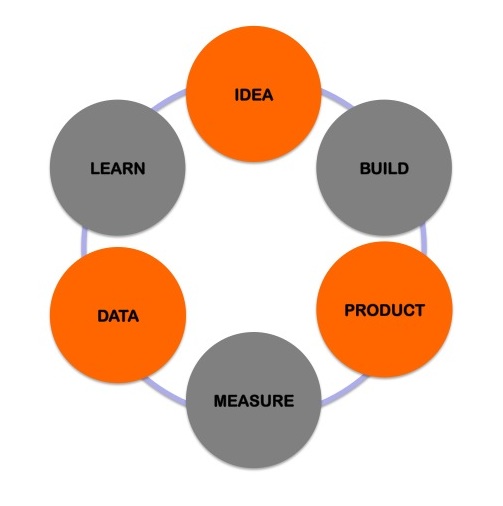
It’s very easy to lose sight of fundamental product development principles in any business start-up, especially for tech-based projects. But what each presenter stressed was the need to do your homework, to apply a coherent and sequential methodology to your new product development, and to adopt a continuous feedback loop to capture market insights and embed customer learning into the process.

To summarise, here is a tried-and-tested Product Development Cycle I have used for many years:

  • Idea
  • Market Research
  • Design Specification
  • Business Case
  • Build
  • Pre-sell
  • Production
  • Launch
  • Evaluation

Repeat ad infinitum.

Disclosure: The author does not have any connection to or commercial relationship with the presenters or sponsors mentioned in this blog. He did manage to grab a couple of free beers.