Outside of a small circle of friends, there’s only connections…

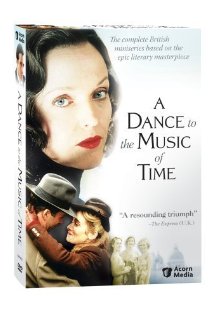
"A Dance to the Music of Time" is an epic tale of friendships and relationships

How many true friends can a person really have? Friends you would go to the cinema with, and who would walk out with you if you didn’t like the film? Friends whom you would invite to stay at your home for the holidays? Friends who would tell you when you had made a fool of yourself, but not hold it against you? Friends from whom you would borrow money or to whom you would lend money?

Social networking makes it all too easy to connect with people we’ve barely or never met. Instead of investing our time and effort in cultivating meaningful and lasting friendships, social media encourages us to “collect” as many virtual friends as possible, and we spend increasing amounts of time in vicarious “sharing” – but how many of these “connections” can we actually count on as our friends?

The question occurred to me as I read the First Movement of Anthony Powell’s “A Dance to the Music of Time”, a literary tour de force situated somewhere between Marcel Proust’s “À la recherche du temps perdu” and Evelyn Waugh’s sequence of novels from “Decline and Fall” to the “Sword of Honour” trilogy.

At the heart of Powell’s 12-novel saga is a group of four friends – Jenkins, the narrator, and his three contemporaries from school – Templer, Stringham and Widmerpool. As we follow their adventures over a 50-year period, we discover the interweaving relationships and often tangential connections that run through their lives. We also witness the subtle change in relationships between the main characters – especially the ebb and flow of their individual circumstances as they fall out of favour and lose contact with one another for years at a time. The reflective and considered format of the novel allows us to see that as in real life, there are periods when the friends positively dislike each other and are frequently disappointed by their personal shortcomings and irritated by their annoying habits.

Powell’s epic work of fiction reminds us that even among our strongest and most enduring friendships, there can be episodes of absolute dislike, as well as times of empathy, loyalty and support; and of course, being only human, our opinions and views of our friends can change over time. Powell’s perspective also confirms that most of the people we encounter in social and professional situations are mere acquaintances. We must surely recognize that our personal friendships are each valued on their own merits, and we enjoy different friendships for different reasons – we do not simply have a homogenous group of “connections” that are all exactly the same. There is nothing wrong with being part of well-connected and inter-related networks, but we must guard against reducing all these relationships to a single dimension.

Unfortunately, most social networking platforms operate on a binary structure where we are forced to make simplistic choices of either “friend” or “unfriend”, “like” or “unlike”, “follow” or “unfollow”. And there is something rather materialistic and incredibly narcissistic in the way that the number of “likes”, “follows” and “shares” we collect on-line is not only representative of our popularity, but it is somehow an indication of how fabulous a friend we really are.

Unlike the real world, these on-line platforms do not recognize the subtle dynamics of our true friendships, nor do they acknowledge that we value each of our friendships for the different experiences that we draw from them. We also have different friends with whom we enjoy doing different things, and we probably don’t introduce all our friends to one another (and certainly not at the same time).

Of course, younger generations who have grown up with social media may have no qualms about the reductionist nature of social networking, and the inherent opportunity it affords them to “connect” with as many different people as they can. But for someone like myself who is quite happy to count fewer than a score of people as my true friends, I relish the quality of my friendships, not the quantity.

Apologies to Phil Ochs for (mis-)appropriating his song title.

Social Media – finding its own level?

Social media is accessible to all...

Social Media is accessible to all…

Recently I’ve come to see that as a communication tool Social Media is just like any other resource or commodity – it’s not an end in itself, it’s what you can do with it that makes it valuable.

If I had to make a comparison, I would say that Social Media is most like water – not just because we seem to be swimming (if not drowning) in the stuff; but because like water, it will find its own level. And as Myer CEO Bernie Brookes found out this week, something that sustains us can also be unleashed against us.

As content pours into our Social Media aquifers, it will naturally flow, collect and disperse. The rivers of content being uploaded daily* suggest that unlike other resources, Social Media will not run out any time soon:

  • Twitter: 400 million Tweets posted per day
  • Instagram: 40 million photos uploaded per day
  • YouTube: 72 hours of videos posted every minute
  • Facebook: 2.5 billion content items shared per day
  • LinkedIn: 175,000 new profiles created every day
  • SoundCloud: 10 hours of audio uploaded every minute

These reservoirs of digital content that we are creating could be put to good use (like dams that provide hydro-electricity). Viewed from this perspective, Social Media can be seen as a potential source of energy. Rather like waterwheels that harness the power of rivers, Social Media can be used to drive a range of applications; but left to its own devices, and with nowhere else to go, all this content will simply collect in stagnant pools – sometimes you need to use part of that energy to keep the water flowing downstream.

In just the past week I’ve been exposed to three more Social Media platforms, each of which is at advanced beta stage: @IFTTT – a tool to re-publish selected updates to multiple platforms via a series of automated decision trees; @Poptip – a tool for conducting polls via Twitter; and a personalized viral marketing tool which I probably cannot mention by name because I had to sign an NDA in order to participate in the pre-launch.

Each of these new platforms is trying to harness the potential of Social Media and keep the communication flowing (the waterwheel analogy). Similar to other Social Media platforms, these tools also act like aqueducts carrying water to where it’s needed. It’s as if we are using the content to feed a Social Media irrigation system – the results of which allow us to harvest followers, “likes” and customers.

The question is, who will we look to for inspiration when we come to write Social Media’s epitaph – will it be Smith, Bell, Coleridge or Goethe?** Will we end up drowning in the stuff (but no-one will notice until it’s too late)? Will we wish we had used it more sparingly? Will we be faced with an abundance that we cannot actually make use of? Or will it be a case of “be careful what you wish for”? (Clearly, King Canute is of no assistance, as it’s far too late to turn back the tide….)

* Note: Statistics gathered from a casual internet search of company websites, press releases and industry commentaries. No claims as to accuracy, currency or verification.

** Literary references: Stevie Smith – “Not Waving but Drowning”; William Bell – “You Don’t Miss Your Water (Till Your Well Runs Dry)”; Samuel Taylor Coleridge – “Water, water, everywhere, nor any drop to drink”; Johann Wolfgang von Goethe – “The Sorcerer’s Apprentice”

Portfolio, Portmanteau or Protean: what shape is your career?

In a previous article, I commented on the non-linear nature of career development in the Information Age, in response to changes brought about by new technology, market dynamics and demographic trends.

Following recent research and policy proposals on workforce flexibility and workplace productivity by the Australian Workforce and Productivity Agency and the Australian Industry Group it is clear that more than ever, employees must take more responsibility for managing their own career, and be willing to embrace life-long learning and skills re-training to navigate non-traditional career paths.

Whether it is the need to address the current shortage of IT skills, or the need to prepare for the post-mining boom, employers will have to re-think traditional approaches to hiring, engaging and performance managing the workforce; and employees will be obliged to re-think the shape of a traditional career trajectory to take advantage of new opportunities, and to remain relevant in the modern workplace.

There are essentially three career models emerging: Portfolio, Portmanteau and Protean.

Portfolio Career: this model is probably quite familiar to more mature workers, who have embarked on a mix of different career activities, either as a planned transition to retirement or as a means to re-enter the workforce; or by default in response to external changes in employment circumstances.

In this scenario, someone might work part-time in a paid job or consulting role, volunteer part-time for a not-for-profit organisation and hold 1 or 2 non-executive board positions. In my own case, for example, I consult to a number of corporate clients on a regular basis, I am a member of an advisory board for a family owned business, I am working on start-up projects, and I have also been known to do some broadcasting on community radio. My significant other, meanwhile, balances a part-time job in accounting with her practice as an artist and art teacher.

This portfolio career model is no longer the exclusive domain of baby-boomers – witness a former and much younger colleague of mine who undertakes a series of HR contract roles, while helping to build a new IT business with her partner. The portfolio career typically appeals to people who enjoy a variety of different activities, have a broader mix of skills and experience, or who wish to create a personal work-life balance.

Portmanteau Career: this is a term I have coined myself, in an attempt to describe a career model that applies to either meaning of “portmanteau” – a) a travelling case, or b) a compound word.

In the former meaning, a portmanteau career is one where an employee’s skills are easily transferable to another role, a different organization, or even a new industry – the skills are literally portable, and can be carried from place to place. In my own case, I once transitioned from law publishing to financial information services, even though at the time I knew little about the latter – it was the core skills around content development, product management and commercial publishing models that were applicable and relevant.

In the latter meaning, a portmanteau career can be a product of new and emerging technologies or sectors. For example, digital media and social networks (in themselves, “portmanteau” industries) are attracting people with a mix of IT and marketing skills, a combination that would have been highly unlikely 10-15 years ago.

Protean Career: the protean career model is not a new concept but has been brought into the spotlight by the current economic environment, a supply/demand mismatch in skills, and the challenge of employees taking responsibility for their own careers. This challenge especially applies to employees coming into the workplace for the first time – even recent graduates who have gravitated towards a specific career path or vocation based on their choice of courses and qualifications  must be cognizant of the fact that they need to maintain and update their skills and knowledge once they enter the workforce.

In my own case, after graduating in law, and following a career as a paralegal, I decided I wanted to make a move into publishing. I retrained as an editor, and then looked for roles where I could combine my academic qualification with my personal interest – resulting in a successful career in law publishing.

I would summarise the protean career model as one where the individual defines, manages and determines his or her own destiny, rather than letting a career “happen” to them. It requires a pro-active approach to career management, combined with continuous skills improvement, supported by formal and informal learning, a willingness to embrace flexibility, an appetite for taking informed risks – and all underpinned by heightened self-awareness gained through experience and enhanced personal development.

The person who understands and pursues a protean career will likely be creating their own work, managing their own work preferences, and making easier and happier work choices.

In each of these career models, employers must also be willing to embrace flexibility, to adopt creative solutions for hiring and engaging their workforce, and to resist traditional “square pegs for square holes” resourcing models. As the productivity and flexibility debate continues to gain traction, the opportunity to re-think traditional approaches to career development and career management should not be lost in the noise.

“I blogged the news today, oh boy…”

In the week when eyewitness photos posted on social media helped to break the story of an Indonesian aeroplane that landed in the sea off Bali, we cannot ignore the potency of Netizen journalism  to create the news (even if we have concerns about accuracy and quality). And in the same week when “The Voice” returns to our TV screens for a 3-month season, we cannot ignore the potency of audience voting via SMS and social media to create new pop stars (even if we have concerns about accuracy and quality….).

As The Beatles might have sung, “I blogged the news today, oh boy…”

News and music are now confirmed as the key social network content for attracting audiences, if recent market activity is any indication of where the competition for eyeballs and eardrums is being played out.

  • Google’s decision to close down its popular Reader service simply drove customers into the arms of the competition. Unless Google rethinks the service closure, or has another product in development for Google+, Readers will be switching to alternative solutions. The community backlash has been significant, which suggests the audience for news aggregation is large, passionate and willing to be loyal to services that meet their needs. (For reviews on a range of Reader substitutes, see the links below.)*
  • Just a few days ago, LinkedIn announced it has acquired Pulse, a news-aggregation app, as part of a strategy to enhance its news content and build on LinkedIn Today’s curated news feed. Pulse is promoting itself heavily as a Reader replacement, so I am curious as to when LinkedIn settled the purchase price for Pulse – was it before or after Google’s March 13 announcement about the closure of Reader?
  • At the same time, Twitter has followed up its recent announcement to introduce better contextualization for trending news stories with the curious (but not surprising) decision to acquire We Are Hunted, a service that helps users discover new music, based on internet-sourced analysis of what other people are listening to. Expect to see millions of Justin Bieber fans tweeting his #music as a way to influence what Twitter pushes to its audience… and then wait for the feedback
  • Meanwhile, the other Justin has been working on the relaunch of Myspace as a “free” streaming music library (because no-one actually buys this stuff anymore, do they….?) Based on personal attempts to explore the new Myspace and upload my own music to this platform, it would be fair to say this relaunch is an “extended beta” version
  • Oh, and in case you missed the story, Yahoo! bought Summly, another news aggregation app, developed by someone younger than Justin Bieber…

* Here is a non-exhaustive and random selection of blogs offering reviews of Reader substitutes:

Life Hacker: Five Best Google Reader Alternatives

Extreme Tech: Google Reader Replacements

Edudemic: Google Reader Alternatives

Digital Trends: Best Google Reader Alternatives

CNET TV: Alternatives to Google Reader