Richmond 3121

What makes a great suburb? Location? Infrastructure? Public transport? Affordable housing? Great coffee? Schools, shops, restaurants and amenities? Probably all these and more…. Although housing costs are comparatively high, Melbourne is frequently rated as one of the world’s most livable cities. I would argue that part of its success lies in the distinct personalities of many of its key suburbs, such as Richmond (postcode 3121).
img_1284

I have lived in this inner city suburb for the past 14 years, which is by far the longest time I lived in one place. I love the convenience (within walking distance to the CBD, close to the river and parks, and well served by trains and trams) and the diversity (it’s comfortable yet retains a somewhat grungy character). I must admit to feeling spoiled at times, because I don’t need a car, and often take for granted the proximity to Melbourne’s cultural and sporting precincts.

Although there have been some enormous changes in the past 10 years, mainly thanks to more apartment developments that have brought in high-end restaurants, hipster bars and cafes, and artisan food outlets, even I was surprised when a new branch of Avenue Bookstore opened on Swan Street a few months ago. Maybe this was the missing ingredient? It turns out that the most popular categories are cooking titles (inspired by all the new eateries?) and children’s books (a result of the recent influx of younger couples starting families?). In any event, this probably plays up Richmond’s aspirations to being a bit intellectual – after all, it is within the administrative boundaries of the People’s Republic of Yarra…

A while back, in a Saturday newspaper article on Melbourne’s trendier suburbs, Richmond was described as being like Switzerland: neutral territory between the hipster-filled Bo-Bo* land of Fitzroy and Collingwood to the north, and the fashionista playground of South Yarra and Toorak to the south. And although in the Corner Hotel, Richmond has one of the best live music venues in Australia, it no longer has any record stores (which are now clustered in Collingwood’s Johnson Street, and Fitzroy’s Brunswick Street).

In recent times, Richmond (along with the adjacent suburb of Cremorne) has also become an epicentre for Melbourne’s thriving startup community and co-working culture. Co-working spaces such as Inspire9, Lennox Street Exchange and Launchpad, along with a multitude of shared creative spaces, have helped to host, incubate or entice local and global startups like LIFX, Stripe, Culture Amp, Uber, Tablo, CareMonkey, RomeToRio, etaskr and CoinJar to set up in Melbourne. Much of this activity has grown to occupy the factories, warehouses and light-industrial spaces once home to the local textile industry – and along with the increased apartment living has been a spur to the area’s urban renewal. So, for an increasing number of people, Richmond is both home and workplace.

Finally, while Richmond’s median property prices have maintained pace with recent growth rates for Melbourne’s established suburbs, they are still more favourable than some of the leafier neighbouring suburbs. True, plots and properties here are generally smaller, and you would be hard placed to find any McMansions – but I think this just adds to the area’s appeal.

*Bo-Bo = Bourgeois-Bohemian

Next week: Summing up the FinTech summit
My Extended Gap Year

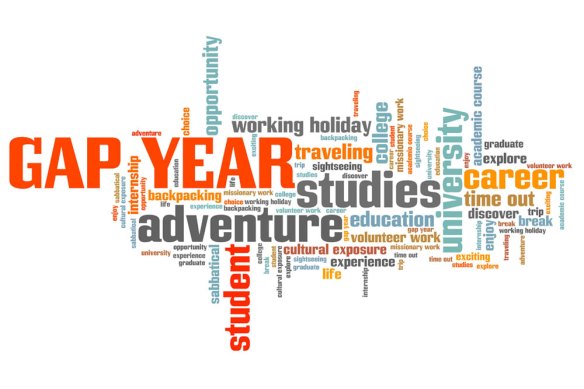
I was recently interviewed for a story about the Future of Work. One of the questions asked how I had arrived at my current portfolio career. As I reflected on the past few years of my working life, I realised that my ongoing journey resembled something of an extended gap year, because of the wide range of interests I have been exploring and the variety of projects I have been working on.

gap-year

Image sourced from Ivy League Admissions Club

During my “original” gap year between school and university, I was a postman, I volunteered at a community law centre, I worked in a bread factory, on a building site and at a law firm, and travelled abroad. My primary goals then were to get some “real” life and work experiences and think about what I might like to do as a career once I graduated. If nothing else, it showed me how to work with other people, develop some resilience and resourcefulness, and discover what I might be passionate about. And while my career went in quite a different direction to the one I had imagined, the gap year experience was an invaluable part of the learning process.

Since my last corporate gig, I have embarked on what feels to be a continuous personal development programme. Aside from undertaking some professional development, participating in hackathons, serving on advisory boards, guest blogging, co-presenting numerous radio shows, developing a prototype HR app, joining various Meetup Groups, and working with a number of startups and entrepreneurs, most recently I have been working in the digital asset space (Bitcoin, Blockchain etc.) and in innovation using design thinking and collaboration models.

As part of my extra-curricular activities, I have continued to explore various digital tools and platforms for composing, recording and distributing my music – I even wrote a piece for Melbourne’s Federation Bells which is on semi-regular rotation – and I have learned some practical skills in picture framing and constructing display boxes out of Perspex.

What this all adds up to is a continuous desire to keep learning, to keep exploring interesting stuff, maintaining a sense of curiosity and not standing still – stagnation is the death of creativity! And while I may not have imagined embarking on such a career path after working in senior corporate roles for many years, the current journey is varied, seldom boring, and frequently rewarding.

For anyone who may feel they are stuck in their current work, or cannot see where there career is going, I would encourage you to think about taking a “gap year” – to explore, experience and experiment with your career options, to challenge your current perceptions, to take yourself out of your comfort zone, and above all to embrace the potential for change. Even if this does not feel like re-inventing yourself, it should be an invigorating and rewarding experience – and I’m more than happy to share some of my own insights if you want to contact me via this blog.

Next week: Spaghetti in the Cloud


The arts for art’s sake…

Last week I wrote about the importance of learning coding skills. This prompted a response from one reader, advocating the teaching of STEM (science, technology, engineering and maths) in schools: “Coding and the STEM subjects are our gateway into the future.” I would agree. But, as other commentators have noted elsewhere, we also need to put the A (for art) into STEM to get STEAM to propel us forward….

Equivalent VIII (1966) Carl Andre (b.1935) Purchased 1972 http://www.tate.org.uk/art/work/T01534

Equivalent VIII (1966) Carl Andre (b.1935) Purchased by Tate Gallery in 1972 http://www.tate.org.uk/art/work/T01534

I recently attended a talk by renowned arts administrator Michael Lynch, as part of the FLAIR art event, where he expressed frustration at the state of the arts in Australia, the lack of a public arts policy, and the associated cuts to government funding. It can’t help that from John Howard onward, we have had a sequence of Prime Ministers who, while not total Philistines, have shown little enthusiasm, appetite or appreciation for the arts. And during Q&A, Mr Lynch referenced the conservative and “safe” nature of so much arts programming as evidenced by the lack of risk-taking and the stale and over-familiar choice of repertoire, although he did acknowledge some arts organisations were doing exciting work.

The debate then shifted to whether we need a new method to evaluate the benefits of a strong arts sector that is not purely dependent on economic terms or financial performance. It was not possible in the time available to come up with a suitable indicator, but I suggest we can derive a range of benefits from putting more emphasis on teaching, supporting and sponsoring the arts. This RoI might be measured in such terms as the following:

  • Enhancing creativity among students will benefit individual problem-solving skills and collective innovation;
  • A healthy arts scene is indicative of a balanced, self-assured and progressive society;
  • Participating in the arts can give people a sense of confidence and well-being;
  • Through art we can learn about culture, philosophy and history – especially of other societies;
  • Giving people the means to express themselves through art is an important outlet for their skills, talent and interests.

We agonize about the amount of investment in our Olympic athletes in pursuit of gold medals, and whether the money can be justified (goodness – Australia only just made the top 10!)  But no-one (yet) has suggested it’s not worth doing, even if we don’t win as many medals as is often predicted. And of course, together with the wider popular entertainment industry, professional sports attract more dollars, airtime and support through sponsorship, advertising, broadcasting rights, gambling revenue, club memberships and merchandise than the arts could ever hope to.

Part of the challenge lies in the popular notion that arts are either elitist, worthy, self-important, or simply frivolous – which makes it harder to build an economic case for the arts, but which can also lead to the worst kind of cultural cringe. Also, if the arts are really doing their job, they hold up a mirror to our society, and we may not like what we see. Populist politicians can’t afford to be associated or identified with such critiques – either as the targets or as de facto protagonists – so would they rather be seen shaking hands with gold medalists (or attending a Bruce Springsteen concert…) than maybe attending a cutting-edge performance by The Necks?

Next week: The latest installment of Startup Victoria pitch night

“Language is a virus” – a look at coding skills

We are fast-approaching the point when a lack of some basic coding skills will be likened to being illiterate. If you are unable to modify a web page or use an HTML text editor, it will be like not knowing how to create a Word document or edit a PDF file. Coding does appear on some school curricula, but it is primarily taught in the context of maths, computer programming or IT skills. Whereas, if we look at coding as a language capability (part of a new literacy), it should be seen as an essential communication tool in itself.

quote-William-S.-Burroughs-language-is-a-virus-from-outer-space-92713First, I am aware that a number of programs for children are trying to teach coding and maths in more relevant ways, and having talked to some of their creators, I admire their ambition to place these skills in a broader context. Coding might be described as the “4th R”: alongside reading, writing, arithmetic we have reasoning”. So a program like Creative Coding HK (as it name implies) focuses on students making things; in the USA, KidsLogic is placing as much emphasis on contextual learning as on robotics; while Australia’s Machinam is re-writing the maths curriculum to teach practical, everyday problem-solving skills.

Second, as we know, learning the foundations of coding is like learning the syntax of a foreign language. However, while Latin and Greek can provide the basis for learning the structure (and many words) of many European languages, it’s not much use when learning character-based languages (Chinese, Japanese) – although there are common grammatical elements. But if we understand that a line of any code has to be structured a certain way, contain essential elements, define key attributes and run in a particular sequence or order, we may come to “read” and interpret what the code is saying or doing.

As an aside, I’m struck by the comments made by the founder of AssignmentHero during a recent pitch night. Although he had studied computer sciences at Uni, he did not use any of the formal computing languages he had learned when building his product. This highlights the downside of learning specific languages, which can become obsolete, unless we have a better grasp of “which languages for which purposes”, or find ways to easily “interpolate” components of one language into another (just as languages themselves borrow from each other). Or do we need an Esperanto for coding?

Third, even if I don’t want or need to learn how to program a computer or configure an operating system, knowing how to define and sequence a set of instructions for running some software or a dedicated program will be essential as more devices become connected in the Internet of Things. For myself, I have dabbled with a simple bluetooth enabled robot (with the original Sphero), acquired a WiFi-enabled light bulb (the programmable LIFX) and experimented with an iOS music app that incorporates wearables (the MIDI-powered Auug motion synth).

Finally, just like a virus, coding is contagious – but in a good way. At a recent event on Code in the Cinema (hosted by General Assembly as part of the Melbourne International Film Festival), there were three demos which captured my attention, and which I will be investigating over the coming months:

I think they show why, where and how many of us “non-computing” types will want to learn the benefits of coding as a new language skill. If nothing else, getting comfortable with coding will help mitigate some of the risks of the “digital divide”.

Next week: The arts for art’s sake….