Re-Imagining Human-led #Innovation

Following my previous blog on Innovation, I recently participated in an on-line forum on the Future of Innovation, hosted by Re-Imagi, and facilitated by Jesper Christiansen from NESTA, a UK-based think-tank. You can read about it here, including the infographic output of the discussion. As a result of working with my fellow Re-Imagineers, I developed some ideas on what I call the “Innovation Dichotomy”, which I shared last week at an Re-Imagi event on the Future of Financial Services, hosted at NAB Village in Melbourne.

Screen Shot 2016-08-07 at 3.03.52 PMThe Innovation Dichotomy revolves around an over-emphasis on technology, as illustrated by the following:

  1. Innovation is heavily tech-led, but design thinking is very much human centred and is all about mapping people’s’ needs;
  2. Innovation is often based on digital disruption, and is mostly about devaluing existing processes, de-layering management levels, and increased automation; and yet human skills (cognition, empathy, client-facing, service delivery) are going to be in increasing demand;
  3. Innovation usually happens in tech-labs and silos (external and internal), but it will be people (employees, customers, stakeholders) who actually implement the changes – so there has to engagement through alignment of values and purpose.

And as one of our participants at NAB Village commented, if the organisational culture and communications are not right, any innovation-led change will be destined to fail.

Finally, Re-Imagi will be in Sydney this week, so get in touch if you’d like to find out more: rory@re-imagi.co

Next week: The Day of the Mavericks – the importance of intrapreneurship


Challenging Monocultures via Crop Rotation

Agricultural scientists are advocating a return to crop rotation. They argue that if farmers diversify what they grow each season, they can achieve more sustainable environmental and economic outcomes. Whereas, industrial-scale, intensive and single crop farming depletes the soil, and requires the use of expensive (and potentially harmful) pesticides and chemical fertilizers. In short, monocultures are self-limiting and ultimately self-destructive.
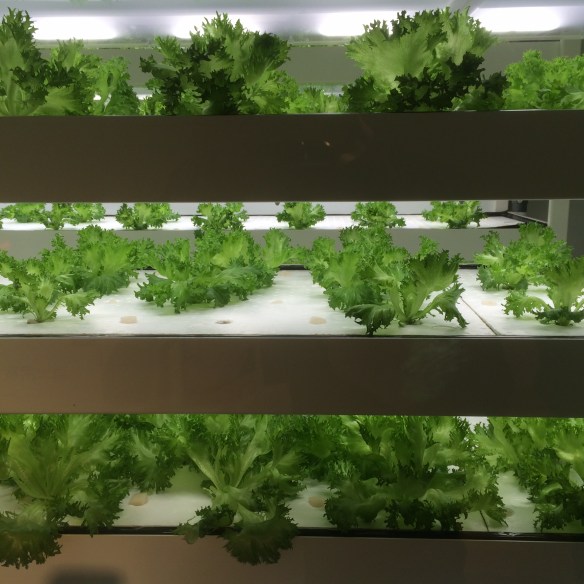
Indoor salad garden, Itoya department store, Ginza, Japan (Photo © Rory Manchee, all rights reserved)

Indoor salad garden, Itoya department store, Ginza, Japan (Photo © Rory Manchee, all rights reserved)

The same concept applies to teams and organisations. If we only associate with people who look, talk, sound, think and act like us, we not only risk group-think, we also promote unconscious collective bias. While it might seem comfortable to only deal and interact with “people like us”, it creates unrealistic cognitive and cultural homogeneity.

I understand why we often talk about “finding our tribe”, but for me, I find connections and shared values among several tribes: partly because no single community can provide for all our needs; partly because at their worst, monocultures can result in in-breeding….

One antidote to organisational monocultures is to promote diversity (especially cognitive diversity), so you mix up the elements that make up a team or an entity. Another solution (a bit like crop rotation itself) is to alternate and rotate roles on a project, within a team or at the executive level. (Some corporate boards already practise this.)

I once had a marvellous CEO who liked to boast that he had worked in every department within the company, from editorial to production, from sales to marketing. Not only did he have a more complete view of the organisation, he also had a much better understanding of how to get each department to collaborate.

At the individual level, alternating roles within the organisation can help them to acquire new skills, develop fresh perspectives, build different networks, gain valuable experience, and avoid going stale.

If you are uncomfortable with the horticultural or biological analogies, then perhaps the work of Michael Simmons is more palatable. From his research, “simply being in an open network instead of a closed one is the best predictor of career success”.*

Another way of looking at this notion of “crop rotation” is through the lens of a corporate turnaround, or a company trying to move from start-up to scale-up.

In the former scenario, the owners, board and CEO recognise that they need to bring in different people, even if only on a short-term basis, to help them:

  • Review the status quo objectively
  • Identify new ideas and fresh thinking
  • Enhance in-house skills and resources
  • Apply a circuit-breaker to unblock the stalemate
  • Join the dots between different parts of the organisation, the market and the client base

In the latter situation, bringing in specialist advisers, or “pop-up boards”, can:

  • Provide an injection of strategic focus
  • Develop a dynamic business planning process
  • Ramp up capacity or capability in a very short space of time
  • Open up new networks or provide access to capital, resources and markets
  • Expand the team’s “bench strength” at critical times

As an independent consultant with a portfolio of interests, I provide an interim resource to my clients, fulfilling different roles depending on their specific requirements. I also serve on pop-up and advisory boards.  And because I am naturally curious, and like to immerse myself in different ideas, I am an “open networker”, meaning that I engage and connect with different people across the various groups of which I am a member. Where I increasingly add value is in joining the dots between otherwise unconnected or seemingly disparate elements.

Next week: Latest #FinTech Round-Up

* Thanks to Jessica Stillman at Inc.Com for bringing this article to my attention

Finding purpose through self-reflection

We hear a lot about “finding your purpose” these days, whether it’s to develop a personal career plan, or to validate a business idea. My colleague Carolyn Tate, founder of the Slow School of Business, spoke on “purpose” at the recent Huddle Design Fest drawing on her TEDx talk for Telstra entitled “Profit on Purpose”. During her presentation, Carolyn referenced the Japanese concept of 生き甲斐 (“ikigai” = “a reason for being”) which is sometimes represented in the following diagram:

Ikigai-EN-optimized-PNG

“Finding the purpose of your life”. Graphic representation by @emmyzen (Emmy van Deurzen). Image sourced from Wikimedia Commons

Variations on this theme include, for example, the work of Lianne Bridges and Susan Biali. Earlier, more prosaic, interpretations might be found in the work of Richard N. Bolles (“What Colour is Your Parachute?”) or Spencer Johnson (“Who Moved My Cheese?”).

What it all boils down to is connecting with your values and interests, and finding a balance between what motivates you, what rewards you, what you can contribute, and what people want from you.

For me, a the starting point is developing a personal narrative, to understand how you have arrived at this particular point in your life and/or career, in particular your influences, achievements, challenges, experiences and insights. Through this self-reflection, some common themes should emerge that can form of the basis of defining your own purpose. This should include your core values, the things that are important to you, and your own particular passion.

Where I may differ in my interpretation of “purpose” is that I believe that our purpose can change over time. I don’t see purpose as singular or even linear – it’s multi-dimensional, dynamic, situational and contextual. Our needs and our circumstances don’t stay the same. Likewise, our relationships and the the external environment are constantly changing. So our purpose will likewise be different at different points in our life. For example:

  • Early in our career we may be technically qualified, but without relevant experience we may not be able to command the most senior roles or the highest pay – so our purpose may be to hone our skills and knowledge
  • Later, we may find that our focus on things like marriage, children and a mortgage means we may be willing to get well-paid for work that we don’t actually enjoy – someone I was coaching recently stated that “I’m caught in a job” which was preventing him from pursuing his passion (thankfully, he has since decided to pursue a portfolio of interests, rather than stick with a single job he no longer enjoys)
  • During the “third act” of our career, financial or material rewards may not be so important, but we still need to be engaged in work that we enjoy, that motivates us and which can still sustain us at more than just a basic level of food and shelter
  • Throughout, I think it is essential to keep connected to our true passions (especially creative outlets), in part to provide a counterbalance to work/financial/external imperatives, in part to explore alternative ideas, find linkages between our other interests, and even to connect with new technology – for example, in my own case, my interest in electronic music has led me to recording an album using iOS devices, releasing it via social media sites Soundcloud and Bandcamp, getting it broadcast on the ABC, and beta-testing new music apps

When working with clients to help them re-connect with their business or their career purpose, I like to do an audit of where they are now, and where they could be in 3-5 years time. Through a process of exploring what might be possible, and reframing the present to re-position it for future growth and development, we can discover ways to regain balance by prioritising what’s important, reconfigure or even abandon what isn’t working, and re-establish goals and objectives.

While it is important to strike a balance between the “four pillars” of the ikigai model, my experience is that rarely will all four be in equilibrium – at times they may even be in conflict with one another, or at least in a state of flux. But it’s the resulting points of friction, when we look at them objectively, that can be the source of ideas, context, clarity and resolution. Making time for regular self-reflection enhances our pursuit of purpose, and allows us to take stock of our current situation, without undermining our core values or abandoning our particular interests.

Next week: Challenging Monocultures via Crop Rotation

More In The Moment

In an earlier blog on “being in the moment”, I confessed that I often find the prospect (and practice) of meditation to be daunting and somewhat overwhelming. I forgot to mention that there is a park bench in one of Melbourne’s inner-city gardens which I have found to be a useful starting point. It features a quotation from Dr Ainsley Meares:

“Sit quietly, for it is in quietness we grow”

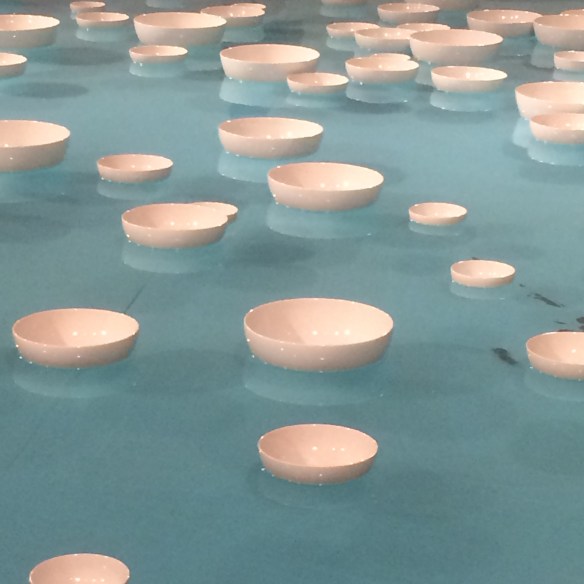
"clinamen" by Celeste Boursier-Mougenot (2013), purchased by NGV Foundation (Photo © Rory Manchee, all rights reserved)

“clinamen” by Celeste Boursier-Mougenot (2013), purchased by NGV Foundation (Photo © Rory Manchee, all rights reserved)

The significance of this insightful instruction has been driven home by some recent experiences:

  • Through my involvement with the Slow School of Business, I have participated in some Slow Coaching, where I was a Listener. The practice of “deep listening” really does require you to be present in the moment, to focus on what is being said by the Speaker, to observe how it is being expressed, and to give constructive feedback on what you have heard without judging or critiquing. It’s an extension of “active listening”, a technique I learned many years ago as a counsellor helping clients with their consumer debt problems, and I later used it as a manager to provide employee feedback during performance reviews. The key difference is that deep listening is not so concerned with exploring a linear narrative or identifying specific solutions, and is more about giving space to the Speaker to articulate what concerns or issues they are currently facing.
  • At a concert the other week I was struck by the number of people in the audience who were avidly taking photos and videos on their smart phones, or busy talking at the bar rather than appreciating the live performance in front of them. It made me wonder why some people bother going to gigs at all – it often seems like they are not there to watch and listen to the musicians! Apart from being disrespectful to the performers and other members of the audience, the happy snappers and the chatty drinkers can’t really be in the moment because they are too busy trying to capture a transient event for posterity (and who actually watches shaky live concert footage shot on a phone?). Or are they so self-absorbed that they are actually oblivious to what is going on around them?
  • Similarly, last weekend I visited the Twelve Apostles and was dismayed by the ubiquitous selfie-sticks and constant preening and posing at every vantage point. As the sun went down, hardly anyone was actually observing the dusk, let alone being still and listening to the waves below. Instead, everything was being reduced to a diluted digital experience. Again, who goes back and looks at all those photos (and do they do so more than once)? How do these images enhance the experience of simply being there? Did these visitors really appreciate the natural beauty and breathtaking views in front of them? Is a digital camera the only way to interpret the scene for themselves? Is it only “real” when they take a picture? Can it only “exist” as a bunch of pixels?

To underscore quite how significant “being in the moment” can be, I’m reminded of the Above All Human conference in January, where theoretical astrophysicist Dr Katie Mack scared the living day lights out of the audience when she discussed the impact of vacuum decay theory. In (very, very, very) short order, a shift in the current state of the Universe would wipe out life as we know it in a millisecond. It would happen so quickly, that no-one would see it coming. The effect would be catastrophic, but we wouldn’t know it was happening. As Dr Mack so eloquently put it, there would be no point in worrying about FOMO, because:

(a) there would be nothing left to be missing out on;

(b) no trace of your existence would remain; and

(c) in any event, there would be no-one left to miss you….

While I understand the need to validate our existence through “capturing the moment”, if we are too pre-occupied with taking photos, rather than focussing on our actual presence, we risk surrendering our experience to mere digital simulacra.

Next week: Whose IP is it anyway?