Musical Memories – Of Time and Place

Although sound is supposed to be the weakest sensory trigger for recalling memories, I suspect most of us can readily associate a song or a piece of music with a significant time, event or place we heard it. Indeed, music is often more evocative of our emotional response than either smell or taste, which at a primal level are readily connected with survival and self-preservation. (Music cannot kill or harm us, but poisonous or rancid food can.)

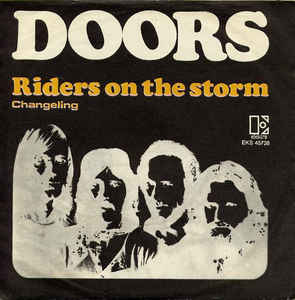
This thought occurred to me recently when I was on a weekend trip to the country with a group of friends. Sitting round the log fire under a starlit sky, The Doors’ “Riders on the storm” came on the streaming playlist. At that particular moment, it seemed an ideal setting to hear this track. Even though I have heard the song many times before, this latest airing has now created a new memory association – the time, the setting, the people I was with, the food and drink we enjoyed.

Of course, in this particular context, it also reminded me of the first time I consciously heard the record. As a young teenager in the mid-seventies, I used to fall asleep listening to my transistor radio, usually tuned into the original UK pirate station, Radio Caroline. Caroline mostly broadcast classic and progressive rock – often playing a whole album without interruption. It introduced me to a lot of bands and music I did not hear on Top 40 or daytime radio – so it was an important part of my musical education.

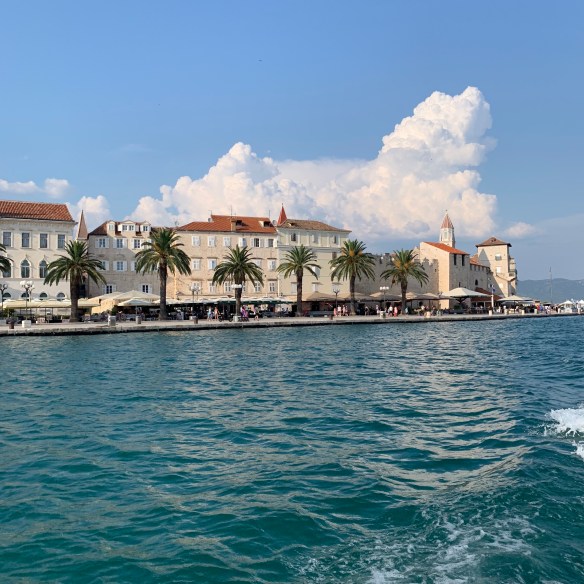
Road trips seem particularly adept at forming musical associations: in my case, a drive to the Yorkshire coast accompanied by a bootleg tape of the Beach Boy’s “Smile” sessions; a night time journey through the Anza-Borrego Desert, with the roof down, listening to Primal Scream’s “Screamadelica”; and just a couple of months ago, hearing the Pink Floyd song “Wish You Were Here” while touring part of the Croatian coast. Even though I was very familiar with those records before these particular journeys, the specific context of those trips means the music will forever be linked to the events.

I suspect this memory association is largely because our response to, and engagement with music is often dependent on our mood. If we are more alert to and in tune with our surroundings, this receptive state of mind leads us to make mental and emotional links via the accompanying musical soundtrack. These triggers mean that we are more able to recall or even replicate that mood via the use of the associated songs.

All this as The Beatles’ “Abbey Road” celebrates its 50th anniversary. As a child, this was the first Beatles album we had in our home. We already owned a number of their singles, which had a huge impact on my early listening adventures. But “Abbey Road” was probably the first album I really engaged with. Even now, there are large sections I can replay in my head. The song order is likewise entrenched, thanks to the format of the vinyl LP in the pre-shuffle and pre-streaming era. The cathartic extended coda of “I Want You (She’s So Heavy)” at the end of side 1, that gives way to the upbeat and optimistic “Here Comes The Sun” at the start of side 2. I have every expectation that when I next listen to “Abbey Road”, it will still trigger memories of my childhood and listening to the record with my older sisters.

Next week: School Reunion


Startup Vic’s Impact Pitch Night

Last month’s Startup Vic’s Pitch Night focused on Impact investing. Hosted by Startup Vic and the Giant Leap Fund (part of the Impact Investment Group), it was held at the Goods Shed with support from Stone & Chalk, Weploy, Pawa, Pak360, Waste Ninja and Marketing Entourage. The MC on the night was Mike Davis of the Humans of Purpose podcast, with an opening address by The Hon, Martin Pakula, Victorian Minister of Jobs, Innovation and Trade. The Minister made some announcements regarding the establishment of Angel Networks in Victoria.Given that Impact investment is demonstrating a propensity to generate better returns, this is a topic of growing interest alongside ethical investing, corporate social responsibility and the move towards ESG (Environmental, Social and Governance) reporting.

The Judging Panel was drawn from Work180, YourGrocer, Australian Impact Investments and Impact Investment Group.

Pitches in the order they presented (websites embedded in the names) were:

The Neighbourhood Effect

With the goal of making the transition to green living easier, this startup has been featured here before. It comprises an app-based solution and uses behavioural science to map a user’s carbon footprint. It also uses gamification to make recommendations linked to location and lifestyle preferences.

Generating revenue from referral fees and subscriptions, the team are targeting energy retailers and banking services among the first commercial partners, and have already attracted $100k via paid pilots and Crowdfunding. The judges sought clarity on what exactly the product “does”, and how localised the solutions can be.

Gecko Traxx

Unusually for these regular pitch nights, this is a tangible, manufactured product – a solution for portable and affordable off-road access for wheelchair users. It takes the form of an accessory attached to the existing wheels – expanding the surface area and increasing traction. With a James Dyson national design award, and as a member of the University of Melbourne Accelerator Prgram for 2019, the team already have15 re-sellers lined up. With a proposed retail price of $599 (and costing $95 to manufacture) the device is NDIS eligible, making it more accessible.

The judges were keen to understand the addressable market as opposed to the profile and size of the actual user base – for example, does the device appeal to users of both motorised and self-propelled wheelchairs? How does it fit in with other categories of assisted mobility products and devices? Had the team considered crowdfunding? What is the startup’s status as a NFP? What is the marketing plan?

Sempo

This startup offers a solution for inclusive payments and savings for the 1.7bn people in emerging markets who remain unbanked. Using Blockchain technology, Sempo claims to be backed by a global reserve token pegged to multiple local currencies – but it wasn’t clear which assets comprise the treasury ecosystem.

Part of the use case is to get cash to victims in crisis quickly without the associated NGO costs. With 4% transaction fees (as opposed to the typical 20% incurred by other soluitons) Sempo seeks to avoid regulatory controversy since it is not claiming to be an unofficial local currency.

Typical transaction costs comprise a 1-3% exchange fee, and a 0-1% transfer fee. Part of the solution is to grow local, in-market capacity, particularly for remittance services. With an AfterPay investor on board, the founders are seeking a $2m seed round. The initial focus is on the Pacific region, a major impediment are the compliance and regulatory costs – in meeting both the in-country and original jurisdiction obligations.

One use case is giving refugee access to bank accounts – when asked about KYC obligations, the founders responded that they can code KYC into the Blockchain without the need for “formal” KYC.

Bring Me Home

This startup makes surplus food accessible and affordable to everyone – utilising fresh food that is unsold in shops, cafes and restaurants. According to the founders, globally, one third of all food is wasted – if this represented a country, it would rank 3rd after the US and China in terms of carbon emissions.

Structured around a commission-based app, users become advocates. The market segments are B2C (consumers and SMEs) and B2B (food production, manufacturing and wholesale distribution). Seeking a $1m seed round, the founders are also running a crowdfunding campaign.

There are specific versions of the app for vendors to help them manage their inventory and schedule their daily listings in advance. Peak demand is between 2pm and 6pm, and after 8pm – underlining the need for vendors to get their offers uploaded in a timely fashion.

The app is starting to see some significant retention – of the 12,000 users, 75% are in Victoria, with half in Melbourne. 15% are deemed returning customers, of which 45% represent repeat business. Currently, the service is in 126 venues across Melbourne.

The judges asked how the business can ensure they are dealing with true surplus supply, and not just creating artificial demand. In response, the founders stressed that vendors need to map to their usual “full display”, rather then offering “made on demand” products.

The People’s Choice award went to Bring Me Home, while the Judges made Sempo the overall winner.

Next week: Musical Memories – Of Time and Place

Recent Notes from Hong Kong

Earlier this month I spent a few days in Hong Kong, on my way back from Europe. Hong Kong was my home for 6 years – before, during and after the 1997 Handover – and I have continued to visit on a regular basis ever since. While I didn’t directly witness any of the latest clashes between pro-democracy campaigners and the police, I did see (and hear) the knock-on effects of the past 6 months. I also spoke to a range of people living and working in the city – from local residents to long-term expats; from small business owners to entrepreneurs; from corporate employees to public servants; from teenagers to senior citizens. Whatever their particular views on recent events, their one common hope is that the situation can be resolved peacefully, and soon.

“Maze of Today” by Wu Guanzhong (2007) – Image sourced from China Online Museum website*

The trigger for the current protests was a proposed extradition law between the Hong Kong SAR and the rest of the PRC (as well as Taiwan and Macau). The bill was highly contentious, given the very different legal systems between Hong Kong and the Mainland. Serious concerns were expressed by the business sector, the legal profession and the general public. These concerns were given wider voice by the hundreds of thousands of ordinary people who joined the first of the peaceful mass marches at the start of the summer. Since then, nearly every weekend (and at times during the week) there has been direct action in the form of marches, strikes and occupations – sometimes leading to street battles between police and protestors, images of which have been seen around the world. These events have been accompanied by allegations of police brutality, the alleged use of agents provocateurs, and suggestions that the protestors are either terrorists, traitors or a threat to society.

On one level, Hong Kong continues to operate normally (although getting into the international airport is a little trickier since it was the target of so-called “stress testing” of the public roads and transport system). On the other hand, it certainly feels quieter than normal, and visitor numbers are down – as much as 40% overall on one measure, with a 90% decline in visitors from the Mainland. (My flight from Europe was barely half full.)

With the increased protest activity at weekends, public transport can be tricky. Some subway stations are suddenly closed without much warning from Friday evenings onward, and the express train from Central to the airport bi-passes the usual intermediate stops. On the Sunday I was there, there had been a mass gathering in Central, and access to the nearest subway station (for the local train service back to Kowloon) was closed, so there was an orderly queue of several hundred metres as people waited for the Star Ferry – many of the passengers dressed in black t-shirts, the unofficial uniform of the protest movement.

Given the recent bans on marches and gatherings in public places (notwithstanding Hong Kong’s right to peaceful assembly) a strange phenomenon has emerged. Each night, at around 10.30pm, local residents open their apartment windows and start chanting slogans associated with the pro-democracy movement. It is both eerie and extremely moving.

This nightly display certainly evokes the sense that no-one wants to see complete chaos or a violent end to the protests, so they chant in hope that a peaceful solution can be found. Otherwise, hope will give rise to despair, and with it the slow, painful decline of Hong Kong as a global city – a multi-cultural, international hub for trade, commerce, finance, ideas and innovation that combines notions of east and west, new and old, pragmatism and spiritualism.

The protestors have issued a set of five key demands. One relates to scrapping the extradition bill, which has now been withdrawn by the Hong Kong Chief Executive. Three relate to the protests themselves – removal of the term “rioters” to label the protestors; an independent investigation into the police response and alleged brutality (and even into police in-action when protestors were attacked by counter-demonstrators with seeming impunity); and an amnesty for all protestors who have been arrested to date.

The fifth demand, Universal Suffrage in direct elections for both the Legislative Council (Hong Kong’s Parliament) and the Chief Executive, is a lingering issue from the Umbrella campaign of 2014 (when large parts of the city were occupied in protest at Beijing’s decision to “defer” one person one vote). It’s probably even more contentious than the withdrawal of the extradition bill. To summarise: the Basic Law is Hong Kong’s Constitution. It is supposed to enshrine the city’s pre-existing common law systems for a minimum of 50 years after the Handover. Under the “One Country, Two Systems” regime, designed to govern Hong Kong’s legal, political and economic relationships with the Mainland, the people of Hong Kong were assured that their way of life would continue as before after 1997.

Article 45 of the Basic Law, states that:

“The ultimate aim is the selection of the Chief Executive by universal suffrage upon nomination by a broadly representative nominating committee in accordance with democratic procedures.”

The above has to be read in conjunction with Article 15 (Beijing directly appoints the Chief Executive), and Annex 1 (defines the candidate selection and election process – which has been revised in recent years).

The challenge is that the Central government believes it has to keep control over both the candidate nomination process, and the membership of the Election Committee (election college). On current evidence, the people of Hong Kong are unlikely to get to directly elect their own Chief Executive, nor nominate the candidates of their own choosing. (And the Legislative Council will continue to comprise members who represent “functional constituencies” – elected representatives voted in by their peer groups from various vested interests.) Even if they did directly vote for the Chief Executive of their choosing, Beijing would reserve the right not to confirm them in office, and would appoint their own candidate instead.

Of course, it’s not that Hong Kong was particularly democratic under colonial rule – the Governor was technically appointed by the British Monarch (on the advice and recommendation of the British Foreign Secretary), and acted as the Crown’s direct representative.

On another level, the model for the Election Committee is something like the US Electoral College that formally elects the President, based on the delegates elected by each State. This process was seen as “a compromise between election of the President by a vote in Congress and election of the President by a popular vote of qualified citizens”.

Finally, I was given an interesting interpretation of “One Country, Two Systems” by an elderly gentleman I spoke to on the MTR one day. “Where are you from?” he asked. “Australia” I replied. “Ah, near New Zealand. Same country.”

* My reason for choosing the above picture of Hong Kong by Wu Guanzhong to illustrate this blog is two-fold:

First, the painting is called “Maze of Today”, rather an apt title for the current state of affairs. Second, while I was working as a publisher in Hong Kong in the 1990s, my company licensed another Hong Kong picture by Wu for the cover of an introductory book on the law of the Hong Kong SAR. The first edition was issued in 1996, with a second edition in 2001 – and it still appears to be on the Hong Kong University reading list for law students, and cited in other law books as recently as this year.

Next week: Startup Vic’s Impact Pitch Night
 

Recent Notes from Europe

Over the past few weeks I have been travelling in Europe – Switzerland, Croatia and Italy. It was a great trip, and prompted a few observations along the way. Here are some key recollections.

First, after making a number of trips by train, bus and boat, it reinforced the sense that in Europe, public transport is seen as an essential service and not just a means of last resort (you know, that notion we sometimes experience elsewhere that suggests “only losers take the bus”). As a result, public transport is generally clean, safe, efficient, punctual and largely affordable. One counterpoint is that as a temporary visitor, accessing and paying for tickets such as multi-day / multi-system travel passes is not always straightforward.

Second, despite the close proximity of the three countries I visited, I had to use different fiat currencies in each location – and in the case of Croatia, although it is a member of the EU, the Euro is not always accepted and it maintains a separate currency (the Kuna) that is not easy to exchange outside the country. And when you get cash out of an ATM, it’s mostly in denominations of HRK200 – but local shops hate having to change large notes. Plus, there are still instances where plastic money is not accepted.

Third, visiting the extensive national art collections in Zurich (the Kunsthaus) and Milan (the Museo Del Novecento) was a great opportunity to see works by significant twentieth century artists beyond the Dadaists and Futurists respectively – including many works that rarely travel abroad.

Fourth, for all my reservations about organised religion, you can’t deny that a key legacy of European Christianity is church architecture, and the associated patronage of the arts. The Duomo in Milan even affords visitors the opportunity to walk along the roof terraces to get closer to the decorative flying buttresses and mini-spires topped with hundreds of statues.

Finally, along with all the excellent food I was lucky enough to order in restaurants, the trip was a great opportunity to sample local and regional wines, especially while in Switzerland and Croatia. We just don’t see that much of these in Australia, for obvious reasons. Plus, the global phenomenon of craft beer is still alive and well, all adding to the gastronomic experience.

Next week: Recent Notes from Hong Kong