At the time of writing, Melbourne and the rest of Victoria are waiting to know when (if?) the current lock-down will be lifted.
Just to recap: Melbourne is presently in its sixth shut down since March of last year, and the fourth so far of 2021. All combined, Melbourne has now clocked up more than 200 days under lock-down. The present measures were introduced on August 5, originally scheduled to last one week, and came barely a week after the previous lock-down ended. Lock-down #6 was soon extended by another week, and then by another two weeks, and will now extend beyond September 2. This is not counting the “stay at home” directive that was in place for most of 2020, along with the various limits and restrictions on social interaction, workplace capacity, public gatherings, hospitality, events, sport, gyms, retail, schools, funerals and weddings. We also have a night-time curfew for good measure.
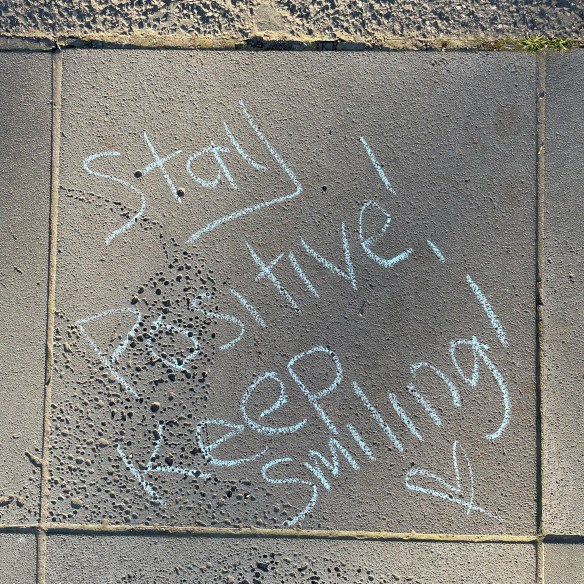
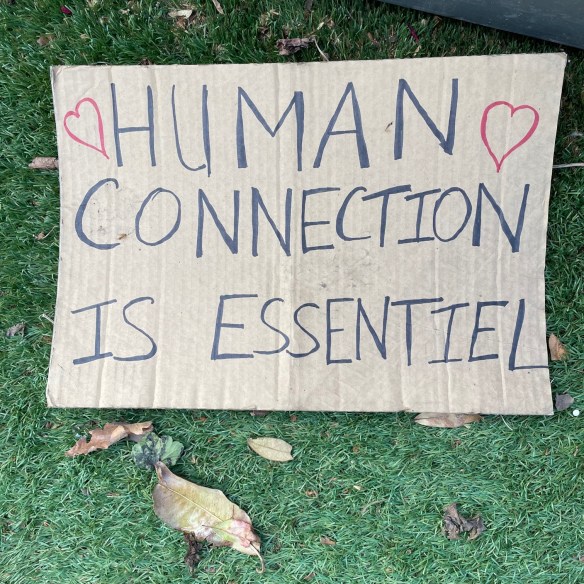
The following two pictures convey similar human sentiments, but they also represent very different responses to the situation we are living under. One is an example of the numerous messages of hope and encouragement that I see around my neighbourhood on my statutory daily walks. The other is a discarded placard seen a few days after an anti-lock-down protest.
The first reflects a “let’s grin and bear it” attitude – nobody likes being in lock-down, but we are all in this together, and if we can just remain positive, we will come through it OK.
The second is more reactive, and emotionally charged – the enforced isolation brought on by the lock-down is having an enormous effect on peoples’ mental health.
It’s hard to argue with either message….
I thought I would be able to cope better with each successive lock-down. Building a daily routine, maintaining some physical discipline (courtesy of the permitted daily exercise), managing at least 2-3 AFDs per week, treating myself to a nice restaurant-prepared meal now and then, catching up on films that I didn’t get to see at the cinema. But despite the recurring groundhog scenario, this lock-down seems different, and much harder to manage mentally.
First, the uncertainty of when it will end creates a sense of dread that we could be like this for 100 days or more (like lock-down #2). Second, the daily drip feed of data and the endless press conferences only reinforce the sense that we are not being given the full picture. Third, the sense of helplessness that for all our individual sacrifices of the past 18 months, we don’t seem to be any further ahead (if anything, we have gone backwards on so many counts). Fourth, State politicians seem to view this public health scare as a war of attrition between themselves and the voters (and their interstate and Federal counterparts). Gone is any sense that we are all in this together.
Quite apart from the cracks in Federation that the pandemic and its response has exposed, entire sections of the community are being driven apart and/or pitted against one another. Despite the so-called “National Plan” that the Commonwealth, State and Territory governments have all signed-up for, it’s clear that individual Premiers each reserve the right to interpret it differently, and will continue to impose internal border closures if they see fit. So, while Victoria and New South Wales seem aligned on this National Plan, Western Australia and Queensland in particular are more circumspect. Then there is the “race” to vaccinate their respective populations (or, as has been said a few times already, “our State citizens”, rather than “our Commonwealth citizens”).
At what point will the 70% and 80% vaccination levels be achieved to herald the promised social and economic freedoms? Is it the % of total population, or only the adult population, or only the eligible population, or only those between certain ages? Is it going to be calculated Federally, or at the State/Territory and/or LGA level? What about mandatory vaccinations for essential and front line workers, and those that have face-to-face dealings with the public? What about employers who require their staff to be fully vaccinated, but face resistance from unions?
Continued lock-down risks becoming a blunt instrument, and a tool of first (rather than last) resort. As such, it also risks alienating the majority of the population who are doing the right thing, in observing the public health directions and getting vaccinated (like, where’s the benefit?). And a prolonged lock-down risks undermining the efficacy of the vaccine, so we’ll need booster shots before we know it!
It seems that Covid19 is challenging our notions of the social contract between the government and the governed, and even testing the social license to operate we grant to big business (especially monopolies and cozy duopolies). The pandemic is also demonstrating the limits of individual responsibility and accountability, and potentially undermining the duty of care we owe to one another. If I knowingly, recklessly or carelessly (and as a result of breaching public health orders or OH&S measures) infect my family, my neighbour, my colleague or my customer, am I culpable? Does that mean I forfeit certain of my rights, especially if infection leads to death?
Just on the data, another reason the current lock-down seems different is because the information is being presented is not the same. Last year, everything was about the R0 number, flattening the curve, and “double-donut days”. There was also confusion over agreed terminology for “clusters”, “unknown cases”, “hot spots”, “red zones”, “complex cases” and “linked cases”. Politicians and bureaucrats talked about “settings”, “circuit breakers”, and “gold standards” for contact tracing. This year, it’s all about the “number of days infected”, “chains of transmission”, “mystery cases”, as well as the number of tests and vaccinations – much less analysis, it seems, on the number of confirmed cases per 1,000 tests or per 1,000 of the population, recovery rates or deaths as a percentage of cases.
From what I can glean, the stubborn levels of “mystery” cases can only be explained by the following:
- more asymptomatic cases (are people building natural immunity?);
- legacy cases shedding (a result of long Covid?);
- longer incubation (and reporting) periods (less obvious initial symptoms?);
- novel forms of transmission (or the virus is lingering longer on outdoor surfaces?);
- QR codes and contact tracing not working (or the data is not usable?);
- confusion over domestic/social/workplace/health/retail settings (e.g., extended families and multi-generational households?);
- people being unclear about their movements (for fear of being victimised?).
Finally, I’m also not sure if lessons are being learned from elsewhere. We are still applying 14 day quarantine/isolation periods (albeit now with a day 17 test), yet in Hong Kong, for example, quarantine was extended to 21 days some time ago.
Next week: To be or NFT?
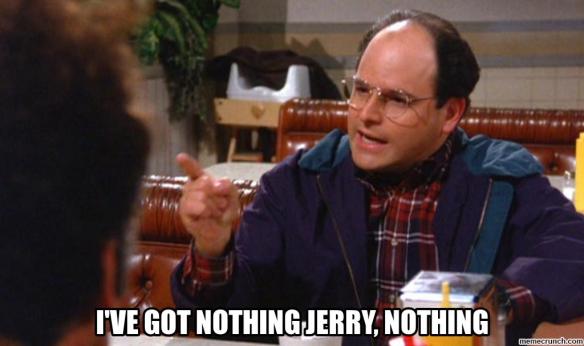 The lack of external stimulus has finally beaten me, and I have nothing much to say. The muse is gone, the well is dry, and there’s only so much you can say about being confined to quarters.