Renzo Piano & the Centro Botín

In March this year, the Victorian Government unveiled the winning concept design for the NGV Contemporary, a new centre for art and design, forming part of the planned revamp of the Arts Precinct on Melbourne’s Southbank. Due to open in 2028, The Fox: NGV Contemporary (to give it’s full name, thanks to the benevolence of trucking magnate and close acquaintance of Premier Daniel Andrews, Lindsay Fox) is being heralded as an iconic, nation-defining statement in support of Melbourne’s claim to be the cultural centre of Australia. So far, so good – but I can’t help feeling the design competition has been conducted with some undue haste: Expressions of Interest were sought in March 2021, with a one-week registration deadline. The competition for Stage One of the project closed in August 2021, and Stage Two in November 2021, with the winning team announced in March 2022, barely 12 months from the EOI. Why the hurry (especially as Melbourne was in lockdown for much of that time), and up to now, there does not appear to have been any public consultation in the design process.

The Centro Botín, Santander, designed by Renzo Piano (image sourced from Wikimedia)

Contrast this with the design of the Centro Botín in Santander, Spain, by Italian architect Renzo Piano, whose story is told in an absorbing documentary, “Renzo Piano: The Architect of Light”. First, neither the architect nor the sponsoring Botín Foundation had any aspirations of creating an “iconic building”; instead, the goal was to have as minimal physical impact as possible, while reclaiming an area of land and returning it to public use. Second, there was a public consultation process, to overcome concerns expressed by some nearby residents. Third, while the documentary has no doubt been artfully edited, it does provide extensive “behind the scenes” access to the design and construction process over its 7-year development, which included a 3-year delay in completion. The fact that this was a private commission rather than a competition may account for this approach, but there was still a great deal of negotiation with municipal and community stakeholders.

The documentary itself is notable not only for the degree of transparency (we observe meetings between architect, client and project managers throughout the process), but also for the simplicity of its narrative, and the wise decision to dispense with any voiceover commentary – the subjects are allowed to speak for themselves. There are also references to cultural icons such as novelist Italo Calvino and film-maker Roberto Rossellini. The use of Mahler’s ‘Symphony No. 5’ in the soundtrack underlines Renzo Piano’s fascination with light as a construction material, as important to him as glass, concrete and steel – the music is most famously associated with the film of ‘Death in Venice’, a city renowned for its light.

If the primary inspiration for the design of the Centro Botín is light (and lightness of construction), I’m struggling, based on the available evidence, to see what the inspiration is for the NGV Contemporary. Despite being a statement about “art and design”, I fear that this project is as much about political statements and lasting personal legacies. Much has been made about the potential job creation during its construction, but much less about the design principles and aesthetic objectives. I hope this project does not turn into a municipal white elephant.

The original NGV (now referred to as NGV International) is a landmark building and one of the most popular destinations in Melbourne. I have known it most of my life, having first visited it aged 10, when it left an indelible impression on me. Having lived in Melbourne the past 20 years, I have been a regular visitor since it was extensively refurbished in 2003. As part of the Arts Precinct, the NGV is a focal point for the city’s cultural activities, and is a major draw card for local and international visitors. Any enhancement of the NGV and the surrounding facilities is generally to be welcomed, and certainly there are parts of the precinct that could do with upgrading. However, I’m not sure the design for the NGV Contemporary is the right decision.

Aside from the hastiness shown by the NGV Contemporary’s design phase, I’m surprised that the winning design team, Angelo Candalepas and Associates, do not appear to have built any comparable projects, despite winning multiple awards for their past work. The Candalepas studio has designed many residential buildings (and I lived very happily in one of their first competition successes, ‘The Point’ in Sydney’s inner city suburb of Pyrmont), but as far as I can see, nothing on the scale, significance or importance as NGV Contemporary. The proposed design looks very “blocky”, notwithstanding the internal “spherical hall”, which is highly reminiscent of New York’s Guggenheim Museum. It’s also not clear what the spacial relationship will be with the existing NGV and other neighbouring buildings, nor whether any of them will need to be remodelled or demolished to make way for this latest addition. I’ve tried, without success, to find a map or ground plan of the proposed development, or any details on how the NGV Contemporary will be accessed from adjacent streets, other than via a new garden that appears to envelop the NGV International – so what existing land will this garden occupy, and what current facilities might be lost in the process?

In conclusion, since its opening in 2017, the Centro Botín appears to have been enthusiastically embraced by the residents of Santander, and manages to be both utterly modern and easily accessible, unlike so many other examples of “statement” architecture. I hope we will see a similar outcome for NGV Contemporary.

Next week: Mopping up after the LNP

To be or NFT?

If there’s one consistent lesson to be learned from Blockchain and crypto is that the enabling technology often outpaces our understanding of the viable use case, commercial application or sustainable business model. For example, smart contracts have only recently proven their value with the rise of decentralized finance (DeFi). Even then, they are not perfect and if not well-coded can result in hacks, losses or other damage. Plus, until scaling (transaction throughput) and gas fees (transaction costs) are properly resolved, mass adoption is still some way off.

CryptoPunk #7523 (Image sourced from Reuters)

The latest crypto phenomenon is the market for NFTs (non-fungible tokens). Artworks in the form of digital files are being created, auctioned and traded for serious (or very silly?) amounts of money – just Google EtherRock, Beeple, CryptoPunk or Rare Pepe for recent examples.

NFTs are not just confined to digital art – animation, video, music and text are all being created in the form of NFTs. In addition, NFTs are being minted to represent ownership or other IP rights for physical artworks, real estate assets, collectibles and luxury goods.

Why would anyone pay the best part of US$12m for the original digital file of CryptoPunk #7523, a copy of which I have displayed above?

Perhaps we need to consider the following:

First, the image above is simply a low-res web image, easily reproduced via copy and paste – it’s not the “real” image as represented by the code or digital file embedded in the NFT. The original file is owned by the NFT buyer, and if it is an edition of one, then that is the only authentic version. Scarcity (as well as kudos) is a key market driver in NFTs – but only if someone else attaches financial value to the work (just as in any art market).

Second, owning the NFT does not necessarily mean you own the copyright or other rights associated with the art work. (I may own a Picasso painting, but I don’t own the image contained in the work.) So, apart from holding an NFT in your digital wallet or displaying it in a virtual art gallery, the only right you have is to re-sell the work. This means you can’t commercialise the image for t-shirts, on-line redistribution or reproduction (unless the owner has agreed to grant such rights within the NFT). (My use of the image here would be covered by the “fair use” principle, for the purposes of illustration and/or critical analysis.)

Third, unless you are able to export the NFT from the marketplace or platform that sold it, the NFT may “vanish” if the platform goes offline for any reason. (Doubtless, platforms need to enable token transfers to other market places and to users’ own digital wallets, otherwise there could be a lot of stranded and/or worthless NFTs in years to come.)

Fourth, the creator of the original work may be entitled to a % of the resale value of the NFT. This is obviously an important consideration for artists and other content creators, and I see this as a positive development. By extension, musicians, authors, film-makers and designers can more easily track and control the downstream revenue generated by the use and licensing of their works by third-party marketplaces, streaming platforms or 3D printing and fabrication services.

Fifth, NFTs support improved authentication, provenance and chain of ownership, as well as bringing more transparency to the world of art auctions – valuations, bidding and prices could all be hashed on the Blockchains that track the NFTs.

Finally, if NFTs are seen as a form of bearer bond (linking ownership to whomever controls the token), they could also be used to package up a portfolio of different crypto or digital assets, and auctioned as a single lot. The buyer could then unlock the disparate assets, and combine them into subsequent bundles – bringing a new dimension to block trades and the transfer of large bundles of stocks.

Next week: I got nothing


RONE in Geelong

Public art galleries need to attract paying customers if their funding derived from government grants is being cut. To pull in the punters, galleries have to resort to “blockbuster” exhibitions. In these uncertain, post lock-down times, the lack of international tourists means that galleries are forced to focus on local audiences. It’s good to showcase local talent in the shape of conquering heroes returning to their roots.

These may have been some of the arguments behind the Geelong Art Gallery‘s decision to mount a retrospective exhibition featuring the work of street artist Tryone Power (aka RONE). Of course, the planning began long before COVID struck, but otherwise the above assumptions would seem to be valid.

Let’s acknowledge the positives of this show: First, it is certainly pulling in the punters, and helping to bring in visitors and their wallets to the town. Second, it is hopefully creating a platform for future exhibitions, and public engagement with the Gallery itself. Third, it’s nice that a locally-born artist is being recognised (even if he has had to travel afar to make a name for himself at home).

Unfortunately, that’s where it ends, for me. My recent visit was probably the shortest time I have spent in an exhibition which I had paid to see. Overall, I found the work vapid – there was nothing of substance (nor anything challenging) underneath the painted surface, or behind the concept of “beauty and decay”. As a street artist, RONE does not have the wit or depth of a Banksy; as a conceptual/installation artist, he’s no Christo. The main images he creates or imposes on his work are highly stylised and extremely idealised portraits of young women – it’s a very limited exploration of “beauty”. At best, the work reveal something interesting about abandoned and overlooked locations. At worst, the installation reeked of interior decor magazines and displayed a taste for romanticised and sentimental kitsch.

Which is all a great shame, because given RONE’s apparent interest in deserted and decaying structures, there is a deep and rich vein of Australian Gothic he could have tapped into. (In comparison, think of the work of Nick Cave, Peter Weir, Peter Carey, Julia deVille, Rosalie Ham, etc.)

Despite the use of physical objects, this exhibition felt very one-dimensional. Artists as disparate as Helen Chadwick, Paola Rego, Cindy Sherman and Rachel Whiteread have all deployed notions of female beauty, decay, abandonment and destruction to far greater effect and impact.

Next week: Intersekt FinTech Pitch Night

Corporate Art

The art world in Melbourne is getting something of a boost from corporate commissions. Last year, Deloitte compiled one of the largest corporate art collections in recent years for their new offices on Collins Street, which was otherwise a lean time for local artists during the recent lock-downs.

Not everyone will get to see this collection, as the works are on selected floors within the building, and access will be limited to staff, business visitors and clients.

But elsewhere, there is a lot of work that is accessible to the public. Here are a few randon examples:

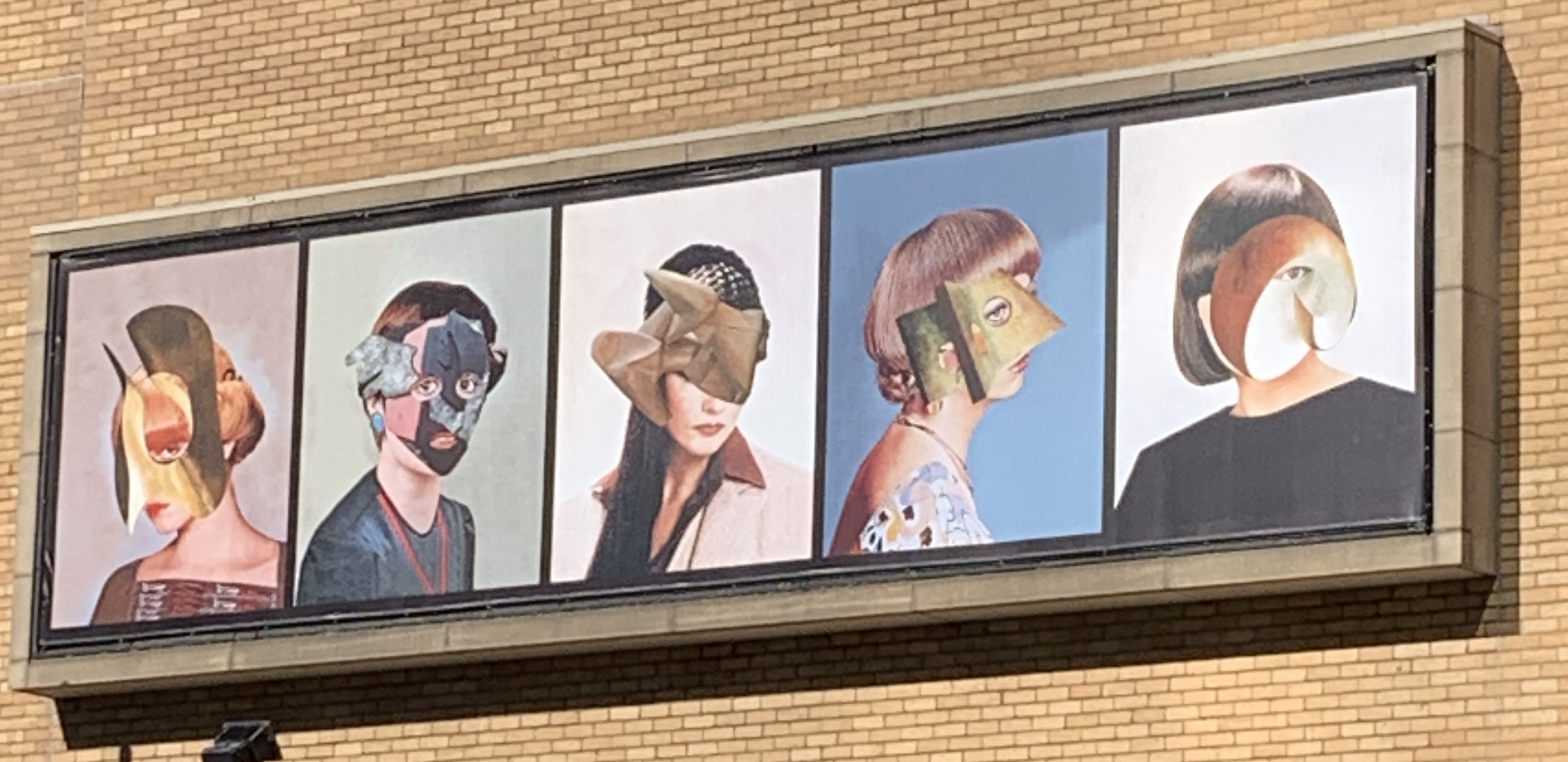
Collage mural, Hero Apartments, Russell Street

Hero Apartments – this former telephone exchange displays unique work on its western-facing wall, usually photographic in nature.

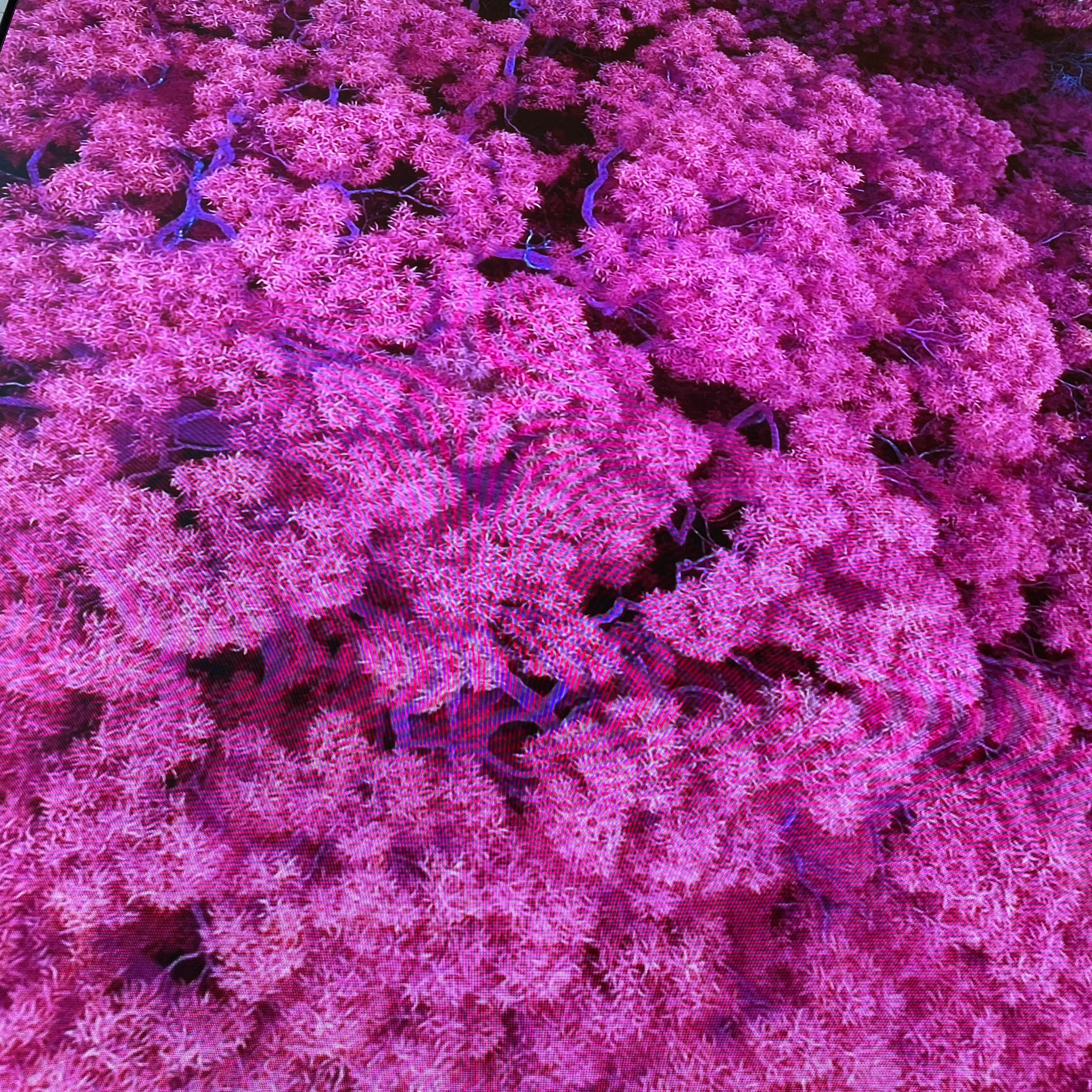
80 Collins Street – the revamped office block has recently undergone a major makeover, including an enormous digital screen in its ground floor lobby, for displaying newly-commissioned works.

Digital mural, 80 Collins Street

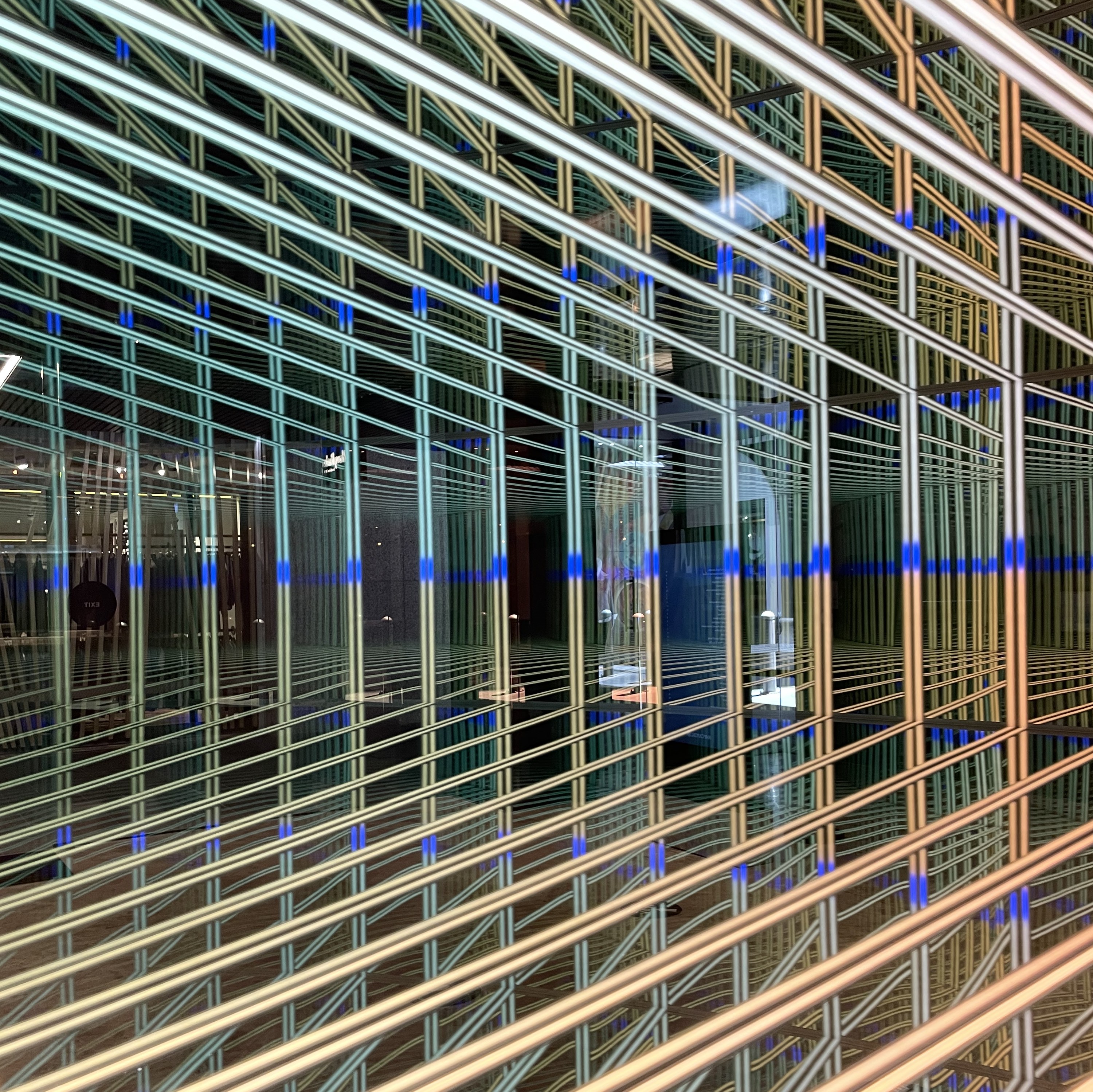
330 Collins Street – the lobby to this otherwise anonymous office building now features a striking piece of op art, in the form of a dual light box and mirror construction.

Lobby Op Art, 330 Collins Street

Grand Hyatt Hotel – as part of its major revamp more than a decade ago, the hotel installed some huge Bruce Armstrong bird sculptures to guard the main entrance.

Docklands – facing the waterfront opposite Marvel Stadium is John Kelly’s quirky “Cow Up A Tree” (which says what it is).

Yarra River – from Birrarung Marr to Webb Bridge (itself a great example of functional public art) there are a sequence of sculptures and installations, including further works by Bruce Armstrong.

Southbank Arts Precinct – not surprising given its function, this area houses numerous sculptural works, permanent installations architectural features, such as Ron Robertson-Swann’s “Vault” outside ACCA.

Laneways Street Art – of course, Melbourne is (in)famous for its extensive “collection” of graffiti and spray-paint murals, although works attributed to Banksy have either been vandalised, stolen or simply painted over.

Next week: Cancel or Recalibrate?