As Melbourne and Victoria continue to emerge from lock-down, it was great to see that the NGV International has re-opened for the summer with the latest edition of its Triennial show. And while we should all be grateful to have the opportunity to visit this exhibition in person (rather than on-line), it’s not without some shortcomings.
Refik Anadol: Quantum Memories (image sourced from NGV website)
First, the good news: no doubt it was a logistical headache to co-ordinate this exhibition while Melbourne was in strict lock-down for much of the past 10 months. Making admission free is also a wonderful public gesture given that the local population was starved of art exhibitions for most of last year – in particular, we missed out on the NGV’s winter blockbuster season.
The curators are also to be commended on assembling a diversity of artists, work and media; and for placing a great number of these new pieces among the NGV’s permanent collections, which forces visitors to assess these contemporary exhibits within the context of historic work.
But that’s probably where the positive ends.
A major drawback of this exhibition is the lack of anything truly ground-breaking, innovative or even challenging. It all felt very safe – but maybe that’s just what we needed after our extended social isolation: work that is comforting, familiar, cozy, cuddly, soothing, and certainly bright (lots of lively colours).
As a result, however, there seemed to be an emphasis of form over substance, technique over content, and scale over context. Much of the three-dimensional work felt flat and one-dimensional. Even the opening centrepiece, Refik Anadol’s “Quantum Memories” that dominates the entrance lobby, is a classic example of the “medium is the message”. Comprising a giant digital screen (incorporating a clever trompe-l’œil 3-D effect) to stream animated, computer-programmed images, ultimately gave the impression that this was all about the technology and the scale of the work. It was difficult to identify any meaning beyond mere decoration.
And unfortunately, “decorative” was a recurring theme, alongside some rather kitsch and lazy imagery – especially the digital and animated wallpaper that featured in several of the permanent galleries. These “displays” reminded me of cheesy son et lumière or pedestrian CGI effects – it may be technically adept, and even stylish to some degree, but that’s as far as it goes. Perhaps “deep” and “complex” are out of favour at the moment, as we make way for “shallow” and “simple”.
While some work might attempt to convey a more profound response, when shorn of its original context, the message is lost and the result is a void. I wasn’t necessarily looking for “deep and meaningful”, but I was hoping to be provoked or inspired. Or at least have my curiosity piqued.
Just when we thought it was safe to go out and about, Covid19 has once again put much of Australia on high alert, following the latest virus outbreak in New South Wales. And with impeccable timing, this cluster has emerged only a few days before the Christmas holidays – peak super-spreader season. On top of the months of lock-down, working from home, toilet paper shortages, job losses, food deliveries, economic disruption, closed borders, non-stop streaming, social distancing, restricted movements, panic buying, mask wearing, night-time curfews, Zoom calls, on-line shopping, cancelled events and home-made entertainment, we now have the prospect of a muted festive period. Like most people, I will be glad to see the back of 2020 – not that 2021 will necessarily be a whole lot better, given the ongoing rates of infection around the world, and the other knock-on effects of the pandemic.
My holiday plans are all mapped out….
Overall, I can count myself fortunate to have had a “good pandemic” – I managed to keep working from home, I don’t work in any of the front line sectors (health, education, hospitality, logistics, tourism), I live close to public parks and open spaces for daily exercise, and none of my immediate family or circle of friends caught the virus (although I have spoken to a number of people who were not so lucky). However, my travel plans were severely disrupted, so I have been unable to see any of my family overseas, and the prospect of visiting them in 2021 still looks remote.
As I write, the Report into Victoria’s failed Hotel Quarantine Program has just been released. The findings conclude that no single person was responsible for the ill-fated decision to engage private security firms to enforce the quarantine restrictions (which in turn led to Victoria’s second wave and Stage 4 lock-down for over 100 days). Instead, the Report underscores the notion of “acquiescence” (and “creeping assumptions“) – and of course, the failure of governance and proper decision-making.
The significance of this Report is now being brought into stark relief in light of the latest NSW outbreak – which appears to be as a result of a breach in hotel quarantine measures. Having read the Executive Summary, it’s clear that respective Victorian government departments and agencies charged with implementing and managing the HQP did not understand their specific roles and responsibilities. Regardless of the decision to engage private security firms, it seems that the procurement process was seriously flawed; and even if the Department of Jobs, Precincts and Resources was not at fault in how it hired certain private-sector security firms, it’s a serious oversight (and failure of process) that neither it nor the Department of Health and Human Services were fully aware of who was accountable for monitoring these contractors.
Of course, the ramifications of the US Presidential Election and a no-deal Brexit are still playing out – and the New Year is unlikely to bring immediate closure. For myself, I am lying low and staying close to home during the Saturnalia celebrations. As the above photo suggests, my plans involve nothing much more than catching up on my reading, and exploring my wine collection. Consequently, this blog will be taking a break for a few weeks, but I trust that this holiday season will bring a welcome respite from the events of 2020 for you and yours. Thanks for reading.
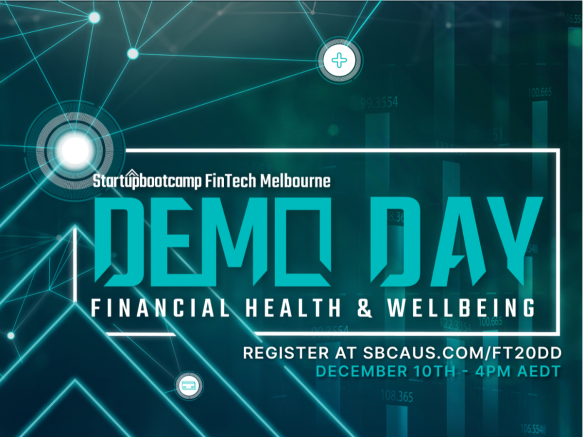
Taking its cue from some of the economic effects of the current pandemic, the latest Startupbootcamp Melbourne FinTech virtual demo day adopted the theme of financial health and well-being. When reduced working hours and layoffs revealed that many that people did not have enough savings to last 6 weeks, let alone 6 months, lock-down and furlough have not only put a strain on public finances, they have also revealed the need for better education on personal finance and wealth management. Meanwhile, increased regulation and compliance obligations (especially in the areas of data privacy, cyber security and KYC) are adding huge operational costs for companies and financial institutions. And despite the restrictions and disruptions of lock-down, the latest cohort of startups in the Melbourne FinTech bootcamp managed to deliver some engaging presentations.
Datacy allows people to collect, manage and sell their online data easily and transparently, and gives businesses instant access to high quality and bespoke consumer datasets. They stress that the data used in their application is legally and ethically sourced. Their process is also designed to eliminate gaps and risks inherent in many current solutions, which are often manual, fragmented and unethical. At its heart is a Chrome or Firefox browser extension. Individual consumers can generate passive income from data sales, based on user-defined permissions. Businesses can create target data sets using various parameters. Datacy charges companies to access the end-user data, and also takes a 15% commission on every transaction via the plugin – some of which is distributed to end-users, but it wasn’t clear how that works. For example, is it distributed in equal proportions to everyone, or is it weighted by the “value” (however defined or calculated) of an individual’s data?
Harpocrates Solutions provides a simplified data privacy via a “compliance compliance as a service” model. Seeing itself as part of the “Trust Economy”, Harpocrates is making privacy implementations easier. It achieves this by monitoring and observing daily regulatory updates, and capturing the relevant changes. It then uses AI to manage a central repository, and to create and maintain tailored rules sets.
Mark Labs helps asset managers and institutional investors integrate environmental and social considerations into their portfolios. With increased investor interest in sustainability, portfolio managers are adopting ESG criteria in to their decision-making, and Mark Labs helps them in “optimising the impact” of their investments. There are currently an estimated $40 trillion of sustainable assets under management, but ESG portfolio management is data intensive, complex and still emerging both as an analytical skill and as a practical portfolio methodology. Mark Labs helps investors to curate, analyze and communicate data on their portfolio companies, drawing on multiple database sources, and aligning to UN Sustainable Development Goals. The founders estimate that there are $114 trillion of assets under management “at risk” if generational transfer and investor mandates shift towards more ESG criteria.
MassUp is a digital white label solution for the property and casualty insurance industry (P&C), designed to sell small item insurance at the consumer point-of-sale (POS). Describing their platform as a “plug and sell” solution, the founders noted that 70% of portable items are not covered by insurance policies, and many homes and/or contents are either uninsured or under-insured. MassUp is intended to simplify the process (“easy, accessible, online”), and will be launching in Australia under the Sorgenfrey brand in Q2 2021. For example, a product known as “The Flat Insurance” will cover items in and out of your home for a single monthly premium. As MassUp appears to be a tech solution, rather than a policy issuer, underwriter or re-insurer, I couldn’t see how they can achieve competitive policy rates both at scale and with simplicity (especially the claims process). Also, as we know, vendors love to “upsell” insurance on tech appliances, but many such policies have been seen to be redundant when considering existing statutory consumer rights and product warranties. On the other hand, short-term insurance policies (e.g., when I’m traveling, or on holiday, or renting out my home on AirBnB) are increasingly of interest to some consumers.
Ontrack provides B2B white label digital retirement planning solutions for financial institutions to help their customers in a more personalised way. There is a general consumer reluctance to pay for financial advice, but retirement planning is deemed too complicated. Taking an “holistic” approach, the founders claim to have developed a “best in class simulation engine” – founded on expected retirement spending priorities (rather than trying to predict the cost of living in 20 years’ time). Drawing on their industry experience, the founders stated that a key challenge for many financial planning providers is getting members comfortable with your service. I would also add that reducing complexity with cost-effective products is also key – and financial education forms a big part of the solution.
In Australia, the past 10 years has seen a major exit from the financial planning and wealth management industry – both at the individual adviser level (higher professional qualification requirements, increased compliance costs, and the end of trailing sales commissions in favour of “fee for advice”); and at the institutional level (3 of the big 4 banks have essentially withdrawn from offering financial planning and wealth management services). At the same time, there have been a number of new players – including many non-bank or non-financial institution providers – offering so-called robo-advice and “advice at scale”, mainly designed to reduce costs. In addition, the statutory superannuation regime keeps being tweaked so it is increasingly difficult to plan for the future, with the constant tax and other changes. Superannuation (a key success story of the Keating government) is just one of the “pillars” of personal finance in retirement: the others are the Commonwealth government aged pension (means-tested), personal wealth management (e.g., investments outside of superannuation); and retirement housing (with the expectation of more people opting to remain in their own homes). I would also include earnings from part-time employment while in “retirement”, as people work longer into older age (either from choice or necessity) – how that aligns with the aged pension and/or self-funded retirement is another part of the constantly-shifting tax and social security regime.
This product describes itself as a customer data platform that powers stored value, and was described as a “Safe harbour” solution (I’m not quite sure that’s what the founders meant in this context?). According to the pitch, consumers gain a fair and equitable outcome (consumer discounts), while retailers get targeted audiences. The team have created a vertically integrated gift card platform (working with MasterCard, Apple Pay and GooglePay), and launched JamJar, a cashback solution.
Similar to Harpocrates (above), RegRadar is a regulatory screening platform that helps companies “to set routes and avoid crashes”. The tool monitors regulatory changes (initially in the financial, food and healthcare sectors) and uses a pro-active process to developing a regulatory screening strategy, backed by analysis and a decision-support tool.
Having worked in legal, regulatory and compliance publishing for many years myself, I appreciate the challenge companies face when trying to keep up with the latest regulations, especially where they may be subject to multiple regulatory bodies within and across multiple jurisdictions. However, improved technology such as smart decision-support tools for building and maintaining rules-based business systems has helped enormously. In addition, most legislation is now online, so it can be searched more easily and monitored via automated alerts. Plus services such as Westlaw and Lexis-Nexis can also help companies track what is currently “good” or “bad” law by tracking court decisions, law reports and legislative updates.
Cover versions are always tricky – for some fans, the thought of another artist messing about with a song by their favourite singer can come across as sacrilege; for many others, a cover version can bring to their attention music that they might never otherwise hear. At their best, cover versions can reveal unfamiliar elements in a familiar song, uncover hidden depths, and add an extra dimension to established work. At their worst, cover versions are simply pedestrian, lazy reworks, or mere replicas (slavish copies). Many renditions veer on karaoke or like those over-hyped performances (which are inflicted on an undeserving public courtesy of “reality” shows such as The Voice, Pop Idol and The X Factor), they seem mainly designed to demonstrate vocal gymnastics, rather than exploring the essence of a song. Far from making an iconic song their “own”, the performer ends up with a Xerox facsimile.
ABC Triple J’s “Like A Version” veers between true inspiration and mere replication….
Our preferences for particular cover versions (even over the originals) are purely subjective. The other night I was at a small social gathering, and the host started playing Frank Sinatra’s version of “Mack The Knife”, a recording from late in Ol’ Blue Eyes’ career. Hearing it for the first time, I recognised the song and the singer, but not this rendition. My own reference for this particular arrangement of the Weill/Brecht standard is probably Bobby Darin – but he was following in the footsteps of Louis Armstrong who first brought the song into the Top 40. Perhaps if I had heard Sinatra’s version first, would that be my reference point?
There are probably lots of songs we all know by way of cover versions, rather than the original. Which is understandable. First, in jazz, country and blues, of course, standards and evergreens are the staples of many a repertoire. Second, in pop music of the 1950s and 60s, multiple versions of the same song (usually written by jobbing song writers, rather then by established performers) would be released, often at the same time, to cater for different markets. But in both these categories, these are not so much cover versions as different interpretations – which is not quite the same thing, in my view.
What draws me to a particular cover version tends to be one or other of the following factors: first, what prompted or inspired the artist to record their own version? second, does the new recording bring an unfamiliar artist to my attention, that I then end up exploring further? third, how does the cover version interpret a well-known number, beyond replicating it?
Here are three examples of cover versions, whose original recordings were unknown to me when I first heard them, and which remain my reference points for these songs – but they have also prompted me to explore the original artists’ back catalogue:
“Song to the Siren”, written by Tim Buckley, as recorded by This Mortal Coil
“Thank You (Falettinme Be Mice Elf Agin)”, written by Sly & The Family Stone, as recorded by Magazine
“My Funny Valentine”, the Rodger & Hart evergreen, as recorded by Elvis Costello (who was referencing Chet Baker’s version)
In contrast, here are three recordings of songs which I love, but I hate these interpretations, because, as happens with many cover versions, they do not add anything, or they are poor replicas, or the vocal interpretations are simply out of kilter:
“Love Will Tear Us Apart”, written by Joy Division, and bludgeoned by Paul Young
“Ziggy Stardust”, written by David Bowie, and made soulless by Bauhaus
“Hallelujah”, written by Leonard Cohen, and rendered overwrought and histrionic by Jeff Buckley (sometimes less is more – as demonstrated by John Cale’s majestic and elegiac interpretation, recorded a few years before Buckley brought out his version)
Of course, a good song will generally shine through, regardless of performer, style or arrangement – revealing itself to be a perennial work of art. A few random examples:
“Computer Love”, originally by Kraftwerk, but turned into a laid back, disco-style torch song that manages to bring warmth and humanity to an electronic classic by Glass Candy
“There Is A Light That Never Goes Out”, a classic ballad by The Smiths, yet when rendered as “The Light 3000” by Schneider TM & Kptmichigan, it becomes a mournful song of love, loss and regret that could easily have been performed by HAL from “2001: A Space Odyssey”
“She’s Lost Control”, Joy Division’s post-punk anthem, given a reggae makeover by Grace Jones that works because it sounds like Ms Jones could easily be singing about herself in the third person…
But for all my reservations, cover versions do have their place. If it wasn’t for This Mortal Coil, I wouldn’t have heard Big Star’s “Third” album; if not for Nick Cave’s “Kicking Against The Pricks” album (which at the time, set off a trend for tribute and covers albums – with varying results…), I’m not sure I would have encountered much of his own music; and without Robert Wyatt’s series of cover versions in the early 1980s, I probably wouldn’t have been as engaged by or aware of the music of Thelonious Monk, Miles Davis or even Chic….
Next week:Startupbootcamp – Melbourne FinTech Demo Day



 Content in Context