A Journey Through England

As travel restrictions have eased over the past 12 months, I’ve been taking advantage of the opportunity to visit family and friends overseas.

Late last year, I spent a month in the UK, and it was a trip of very mixed experiences. It was the first time I had been back in nearly 4 years, the longest period of time I have ever been away from the country of my birth.

It’s nearly 30 years since I left London to live and work abroad, and even though I am still “from” the UK, I don’t really consider myself to be “of” it. Despite family ties and social links, with each visit back I feel less and less connected to the place. As a result, I tend to experience my time there as a visitor, rather than a returning expat.

This sense of dislocation has become especially evident since Brexit, and the quagmire that is UK domestic politics. Not only does the political environment feel quite alienating, the profile of the political leadership is almost unrecognisable: last time I was back, Theresa May was still Prime Minister; when I arrived in early November, Rishi Sunak was in the second week of his Premiership.

Luckily, the rolling programme of public sector strikes and other industrial unrest had limited impact on my own travel schedule, even though it has become almost impossible to plan train journeys too far ahead thanks to unreliable timetables and complex booking systems. Fortunately, the grocery shortages evident during the UK winter had yet to take hold, and before I left Australia, I had managed to lock in a favourable exchange rate to offset the effect of inflation.

I spent most of the time in the Peak District, but also visited Manchester, Sheffield, Milton Keynes, London and Kent – a north-west to south-east trajectory. The Dark Peak was my base, and I really appreciate the scenery in and around the town of Glossop, where I stayed – but for a town that used to boast one of the highest number of pubs per capita, quite a few local hostelries were only open from Thursday to Sunday, probably a consequence of Covid, energy costs and broader inflation?

Manchester itself was a dispiriting experience – the city centre (Piccadilly Gardens) resembled a zombie theme park, and there was a palpable sense of anger and an all-pervading threat of violence in the air. Maybe I was there on a bad day, but the overall mood was definitely “off”. By contrast, Sheffield city centre, which I’d not visited since the early 1990s, felt welcoming and had a much more positive vibe.

I have to admit to being pleasantly surprised by my weekend in Milton Keynes. Its reputation, as a planned New Town, for being soulless and devoid of personality is probably undeserved. Yes, it helps if you know how to navigate the network of roundabouts and ring roads (anyone familiar with Canberra would have sense of déjà vu), but I can definitely see the attraction, especially for families, with its acres of space and many recreational activities. If necessary, it’s possible to commute to London, plus there are nearby country parks and village pubs to frequent on the weekends.

Despite my familiarity with the geography and fabric of London, I now see it through the eyes of a tourist. Even though the overall layout remains the same, the constant changes in the built landscape can disorient the infrequent visitor. Because I no longer rely on it every day for work, I actually think London’s public transport has improved, but I’m sure it would only take a strike on the underground, or the wrong type of leaves on the train tracks at Clapham Junction to disabuse me of this situation. While London has always existed in an economic bubble in relation to the rest of the country, it probably wouldn’t take much to undermine the city’s renewed self-confidence as it tries to navigate a post-Brexit role in international banking, finance, trade and commerce.

Judging by a financial services conference I attended, compared to the same conference 4 years ago, there was a lot more focus on regulation as the UK (and the City in particular) disentangles itself from the EU – and as in many other areas, there is confusion about the transition process: understanding which rules continue unaffected; the scope and impact of any interim arrangements; and the anticipation of totally new measures yet to come into force.

Of course, the worst of petty British bureaucracy probably doesn’t even need the headache of Brexit to tie itself in knots. One small example I witnessed: in a country pub, I was told at the bar that I could not be served soy milk with my tea, and that the barman risked losing his license if he complied with my request – but oat milk was OK; and bizarrely, dishes that contained soy and served in the pub restaurant were also available. Go figure. I still can’t work out whether this was a quirk of local licensing laws, a capricious whim of the hotelier, or just a cranky member of staff.

My final port of call was the outer London suburbia of north-west Kent. Close enough to the London bubble to be popular with commuters, it’s also where I spent much of my childhood and teenage years. I wouldn’t say that familiarity breeds contempt, but it gets increasingly hard to feel any nostalgia for the place. Whenever I go back, it naturally feels much smaller (physically, socially, culturally) than when I was growing up there. Fortunately, when I caught up with a bunch of high school friends (all of whom have long since moved away from the area), there was a “very comfortable familiarity”, as one of our group described it afterwards: “not overly nostalgic but warm and generous. It’s the kind of thing I might have disdained when younger but I really enjoy it.” There speaks the wisdom of age(ing).

There’s no doubt a great deal I should be grateful for having been born in the UK, and probably a lot more that I take for granted as a result when I am there: walks in the country, spending some quality time with close family, good pub meals, excellent art exhibitions, even the inter-city train journeys through “England’s green and pleasant land” (no irony intended). All of which make the many varied and minor disappointments even harder to accept – I somehow expect better of the place, even after all this time away.

Next week: Hong Kong – Then and Now
 

Pivot Point

2022 marked a significant, personal pivot point: I have now lived more than half my life outside my country of birth.

When I was young, I did not imagine my life panning out this way. Although I spent part of my childhood living in Australia, after my family moved back to the UK, I thought that was probably it – no more big overseas adventures.

At one point, I had a fanciful notion that perhaps I might live and work for a while in somewhere like Paris or New York. But after university, I settled in London, and didn’t see myself moving anywhere else. After ten years working there, I bought my first apartment, and with the associated financial commitments, the prospect of relocating seemed even more remote.

Then, out of the blue, I was given the opportunity to move to Hong Kong. The idea was I would spend 1-2 years setting up a business there, after which my employer would move me back to London.

However, after six years in Hong Kong, and having met my partner, it seemed less and less likely that I would return to the UK – she planned to move back to Australia, and having had that earlier childhood experience, it seemed a natural and logical choice for me to follow her to Melbourne.

And more than 20  years later, here we are still.

I think passing this half-way point became more significant thanks to the past few years of limited overseas travel – my trip to the UK last November was the first time I had visited in four years, the longest period I had been away from my “home” country.

I’m not saying I won’t move or live anywhere else (never say never…), but the likelihood does seem to diminish with each year, and I just find it harder to imagine.

Next week: It’s Only A Game…


Reflections on The Kimberley

I’ve just returned from a 2-week trip to the Kimberley region of Western Australia. It was the furthest I have travelled from Melbourne, and the longest vacation I have had, since mid-2019 and before Covid struck in early 2020. Covid still managed to make its presence felt, in several ways, but thankfully did not directly impact the holiday. Here are just a few observations from my time away.

Although I have been to other remote parts of Australia, living inside the Melbourne bubble can make you forget just how big this country is, and the Kimberley is particularly difficult to get to thanks to the vast distances, and limited access points. I was travelling with my significant other and five of our friends, so the logistics required careful planning. Scheduled flights are limited, and the knock-on effects of Covid have resulted in higher air fares, more demand for accommodation and hire cars, staff shortages across the hospitality and tourism sectors, pent-up demand from interstate visitors who can now travel to Western Australia, and some indigenous and remote communities remain closed or visitors are being discouraged. (We had to take RAT tests before we were allowed to travel to one remote location.)

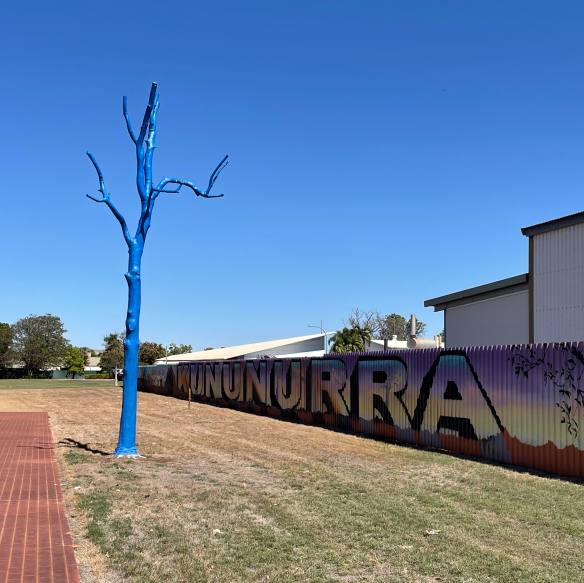
Our journey started in Broome (via Perth, as there were no direct flights from Melbourne), and then took us to Kununurra, Bullo River and Darwin. In between, we visited Quandong Beach, Mitchell Falls, the Bungle Bungles, Lake Argyle, Mirima National Park, and Litchfield National Park. Along the way we looked for dinosaur footprints, went whale watching, got up close to some crocodiles (freshwater and saltwater varieties), did some star gazing, hiked to see rock art, saw loads of wild fauna and countless boab and kapok trees, and swam in billabongs, waterfalls and lakes. Most of the journey was made on scheduled commercial flights, or with regular tour operators.* In one case, it was cheaper (and far, far quicker) to charter a pair of light aircraft to take us to and from our destination, instead of hiring a couple of 4WD vehicles.

We heard about the significance of the pearl industry in Broome (and its multi-cultural origins), the importance of the Ord River Irrigation System to agriculture, the historic and ongoing role of Darwin in Australia’s defence strategy, and the efforts being made towards sustainability, eco-tourism and environmental conservation and protection across the region (including some of the enormous and historical cattle stations).

Although we did not have an opportunity to meet with any local communities, one of our guides had been working closely with indigenous organisations, and shared some of his insights and experiences of customary law, the corporate nature of some aboriginal businesses, the challenges of addiction and mental illness within indigenous communities, and the knowledge gaps between the Stolen Generation and the younger members of our first nations people.

In addition to some amazing scenery, stunning sunrises and sunsets, pristine beaches and crystal clear waters, the vacation also provided tangible examples of some of the challenges facing Australia: immigration policies, the Jobs and Skills Summit, the Indigenous Voice to Parliament, the environment, energy policy, agricultural production, and national security – themes which I hope to draw on over the coming weeks.

* Our scheduled flights to/from Melbourne were booked direct with the respective airlines, and a couple of charter flights were arranged directly with the local operators, who were extremely helpful. We did hire a couple of 4WDs for part of our time in Broome, but vehicles were scarce, and tended to be expensive. However, most of our accommodation and guided tours were booked through Georgia Bedding at The Tailor, specialising in personalised travel itineraries.

Next week: The Jobs and Skills Summit


Literary triggers

Reading for pleasure should be a joy in itself. But to read a book and then be drawn into somewhat tangential (and even trivial) thoughts triggered by personal recollections is an added bonus.

That was partly my reaction when reading Jonathan Coe’s marvelous novel “Mr Wilder and Me”. Ostensibly a fictional account about the making of one of Billy Wilder’s final films, set in Greece and France in the mid-1970s, it manages to incorporate many themes – Hollywood, the creative process, migration, family, the Holocaust, ageing, travel – without selling any of them short. Happily, it’s now being made into a film itself, which confirms the strong narrative at the core of the book. I look forward to seeing it when it is released.

For myself, the novel prompted three travel-related memories:

1. Just like a key time in the novel, my first visit to Greece was also a few years after the collapse of the military junta – currency restrictions, banks only open a couple of hours a day, rationing of hot water in the hostel where I was staying, and construction projects abandoned unfinished because of their association with the military regime

2. The narrator’s love of cheese, stemming from an impromptu visit to a Brie maker, brought back memories of many trips to Paris in the 80s and 90s, and visits to bars like La Tartine, and trying the different types of crottin

3. On my first trip to California, I was fortunate enough to have drinks at the Hotel del Coronado, the setting for Billy Wilder’s most famous film, “Some Like It Hot”, and an iconic resort facility in San Diego Bay.

Seemingly unconnected, yet all evoked by a single work of fiction.

Next week: Let There Be Light