Pivot Point

2022 marked a significant, personal pivot point: I have now lived more than half my life outside my country of birth.

When I was young, I did not imagine my life panning out this way. Although I spent part of my childhood living in Australia, after my family moved back to the UK, I thought that was probably it – no more big overseas adventures.

At one point, I had a fanciful notion that perhaps I might live and work for a while in somewhere like Paris or New York. But after university, I settled in London, and didn’t see myself moving anywhere else. After ten years working there, I bought my first apartment, and with the associated financial commitments, the prospect of relocating seemed even more remote.

Then, out of the blue, I was given the opportunity to move to Hong Kong. The idea was I would spend 1-2 years setting up a business there, after which my employer would move me back to London.

However, after six years in Hong Kong, and having met my partner, it seemed less and less likely that I would return to the UK – she planned to move back to Australia, and having had that earlier childhood experience, it seemed a natural and logical choice for me to follow her to Melbourne.

And more than 20  years later, here we are still.

I think passing this half-way point became more significant thanks to the past few years of limited overseas travel – my trip to the UK last November was the first time I had visited in four years, the longest period I had been away from my “home” country.

I’m not saying I won’t move or live anywhere else (never say never…), but the likelihood does seem to diminish with each year, and I just find it harder to imagine.

Next week: It’s Only A Game…


Reflections on The Kimberley

I’ve just returned from a 2-week trip to the Kimberley region of Western Australia. It was the furthest I have travelled from Melbourne, and the longest vacation I have had, since mid-2019 and before Covid struck in early 2020. Covid still managed to make its presence felt, in several ways, but thankfully did not directly impact the holiday. Here are just a few observations from my time away.
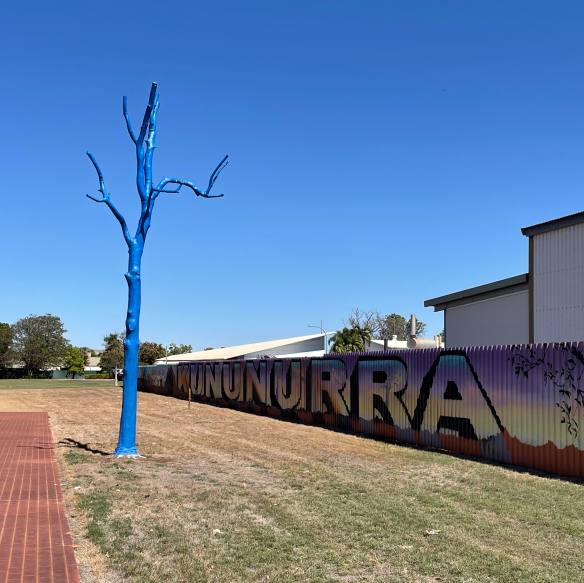
Although I have been to other remote parts of Australia, living inside the Melbourne bubble can make you forget just how big this country is, and the Kimberley is particularly difficult to get to thanks to the vast distances, and limited access points. I was travelling with my significant other and five of our friends, so the logistics required careful planning. Scheduled flights are limited, and the knock-on effects of Covid have resulted in higher air fares, more demand for accommodation and hire cars, staff shortages across the hospitality and tourism sectors, pent-up demand from interstate visitors who can now travel to Western Australia, and some indigenous and remote communities remain closed or visitors are being discouraged. (We had to take RAT tests before we were allowed to travel to one remote location.)

Our journey started in Broome (via Perth, as there were no direct flights from Melbourne), and then took us to Kununurra, Bullo River and Darwin. In between, we visited Quandong Beach, Mitchell Falls, the Bungle Bungles, Lake Argyle, Mirima National Park, and Litchfield National Park. Along the way we looked for dinosaur footprints, went whale watching, got up close to some crocodiles (freshwater and saltwater varieties), did some star gazing, hiked to see rock art, saw loads of wild fauna and countless boab and kapok trees, and swam in billabongs, waterfalls and lakes. Most of the journey was made on scheduled commercial flights, or with regular tour operators.* In one case, it was cheaper (and far, far quicker) to charter a pair of light aircraft to take us to and from our destination, instead of hiring a couple of 4WD vehicles.

We heard about the significance of the pearl industry in Broome (and its multi-cultural origins), the importance of the Ord River Irrigation System to agriculture, the historic and ongoing role of Darwin in Australia’s defence strategy, and the efforts being made towards sustainability, eco-tourism and environmental conservation and protection across the region (including some of the enormous and historical cattle stations).

Although we did not have an opportunity to meet with any local communities, one of our guides had been working closely with indigenous organisations, and shared some of his insights and experiences of customary law, the corporate nature of some aboriginal businesses, the challenges of addiction and mental illness within indigenous communities, and the knowledge gaps between the Stolen Generation and the younger members of our first nations people.

In addition to some amazing scenery, stunning sunrises and sunsets, pristine beaches and crystal clear waters, the vacation also provided tangible examples of some of the challenges facing Australia: immigration policies, the Jobs and Skills Summit, the Indigenous Voice to Parliament, the environment, energy policy, agricultural production, and national security – themes which I hope to draw on over the coming weeks.

* Our scheduled flights to/from Melbourne were booked direct with the respective airlines, and a couple of charter flights were arranged directly with the local operators, who were extremely helpful. We did hire a couple of 4WDs for part of our time in Broome, but vehicles were scarce, and tended to be expensive. However, most of our accommodation and guided tours were booked through Georgia Bedding at The Tailor, specialising in personalised travel itineraries.

Next week: The Jobs and Skills Summit


Literary triggers

Reading for pleasure should be a joy in itself. But to read a book and then be drawn into somewhat tangential (and even trivial) thoughts triggered by personal recollections is an added bonus.

That was partly my reaction when reading Jonathan Coe’s marvelous novel “Mr Wilder and Me”. Ostensibly a fictional account about the making of one of Billy Wilder’s final films, set in Greece and France in the mid-1970s, it manages to incorporate many themes – Hollywood, the creative process, migration, family, the Holocaust, ageing, travel – without selling any of them short. Happily, it’s now being made into a film itself, which confirms the strong narrative at the core of the book. I look forward to seeing it when it is released.

For myself, the novel prompted three travel-related memories:

1. Just like a key time in the novel, my first visit to Greece was also a few years after the collapse of the military junta – currency restrictions, banks only open a couple of hours a day, rationing of hot water in the hostel where I was staying, and construction projects abandoned unfinished because of their association with the military regime

2. The narrator’s love of cheese, stemming from an impromptu visit to a Brie maker, brought back memories of many trips to Paris in the 80s and 90s, and visits to bars like La Tartine, and trying the different types of crottin

3. On my first trip to California, I was fortunate enough to have drinks at the Hotel del Coronado, the setting for Billy Wilder’s most famous film, “Some Like It Hot”, and an iconic resort facility in San Diego Bay.

Seemingly unconnected, yet all evoked by a single work of fiction.

Next week: Let There Be Light

Getting out of town

This week, if all had gone to plan, I would have been reflecting on my latest stay in regional Victoria. Instead, Melbourne is under lock-down #6, and my mini-break out of the city had to be abandoned. But at least I managed to enjoy a great lunch and a walk in the country, before day release came to an end, and I had less than 4 hours’ notice to get back to town ahead of the latest curfew.

Greetings from Castlemaine – local art for local people….

Despite the abrupt end to my trip, the few hours of freedom were enough to remind me of the benefit (and downside) of living in a regional town.

First, regional and rural towns provide a great sense of belonging. You can experience a form of community in Melbourne’s urban and inner-city areas, but the connections don’t always run as deep, and they can be quite transactional and event-driven – meeting up to watch sport, going to the pub or catching up for dinner. Whereas, regional communities just “are”, and are always there to offer support, especially during challenging times.

Second, people living in regional areas tend to have a very different perspective and outlook on things, with a healthier approach to work/life balance. They have a greater appreciation of the country, nature and the land on which they live – something we can overlook or take for granted in our urban bubbles.

Third, rural and regional towns come with their own individual personalities and identities – something seriously lacking in our sprawling new suburbs with their increasingly cookie-cutter homes, and distinct lack of character.

The recent pandemic has shown that if you can work remotely, and don’t need to meet colleagues or clients face-to-face, regional centres are very attractive locations (even for a temporary tree/sea-change). But while the locals may welcome your city spending power in their shops and cafes, they may not appreciate the impact on property prices.

However, regional towns can take a while to warm to new-comers, and in these edgy pandemic times, strangers are viewed with as much suspicion as they are curiosity. More than once on recent trips I have noticed the locals almost crossing the street to avoid getting too close to the out-of-towners. Not quite dueling banjos (or the country pub scene in “An American Werewolf in London“…), but enough to suggest visitors are not entirely welcome.

Small towns are also notorious for everyone knowing each others’ business, where you can’t even sneeze without the rest of the village knowing about it. It can get to the point of suffocation, along with repressed emotions and dreadful secrets, especially where local traditions are based on very conservative (even regressive) values, beliefs and prejudices. (I was reminded of this recently when watching “The Last Picture Show”.)

In case this reads as overly pessimistic, I should emphasize that I really enjoy visiting regional Victorian towns (lock-down permitting), as they offer a rich variety of scenery and local produce – even if I can’t get there as often as I’d like these days, it’s good to know they are there. (And my wine cellar would be poorer for the lack of choice…)

Next week: More Music for Lock-down