End of Year Reflection

As we reach the end of 2016, I can’t help thinking: “What just happened?“. It’s been a year of unexpected (and far from conclusive) electoral outcomes. Renewed Cold War hostilities threaten to break out on a weekly basis. Sectarian conflicts have created levels of mass-migration not seen since the end of WWII. Meanwhile, there have been more celebrity deaths than I can recall in a single year. (And a Scotsman is the #1 tennis player in the world.)
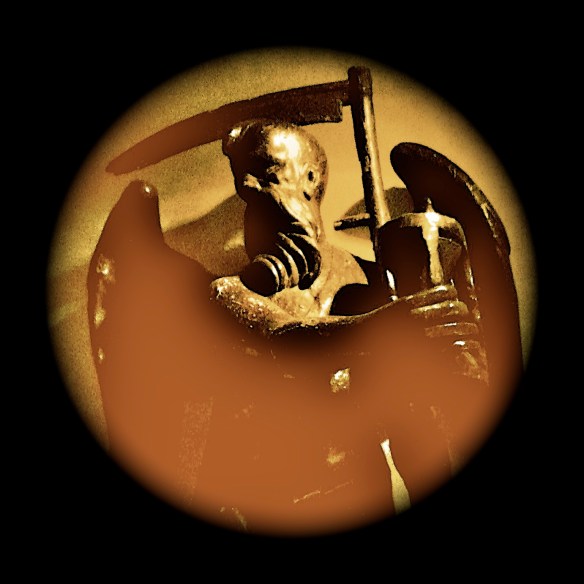
Old Father Time, Museum of London (Image: Chris Wild)

Old Father Time, Museum of London (Image: Chris Wild)

The Brexit and Trump poll results are being cited as either examples of the new populist/nationalist politics, or proof that our current democratic systems are highly flawed. Either way, they are indicative of a certain public mood: anger fueled by a sense of despair at not being able to deal with the rapid changes brought about by globalisation, multiculturalism, modernisation and the “open source” economy. Ironically, both the Brexit and Trump campaigns relied heavily on the global technologies of social media, 24-news cycles and internet-driven soundbites (plus they surely benefited at various times from fake news, false claims and belligerent rhetoric).

As I write, I am in the UK, which is heading for a mini winter of discontent (with high-profile strikes in the rail, mail and airline sectors). The last time I was here about two years ago, there was a general sense of public optimism; now, post-Brexit, it feels very subdued, even depressed. Whether this is a delayed response to the Brexit result, or uncertainty about the exit process itself, it’s hard to tell. While the governing Conservative party leadership is struggling to implement the outcome of a referendum that many of them did not want (or expect), the opposition Labour party (whose own leadership was highly ambivalent about the Brexit vote) is busily re-enacting the 1970’s and 1980’s….

Speaking of the 70’s and 80’s, the return to Cold War hostilities has felt like an inevitability for the past few years, and if it weren’t so serious it might be the suitable subject of a satire by Nikolai Gogol. While the primary fault lines are again between the USA and Russia, there are some complications and distractions, that don’t paint as clear a picture compared to the past: first, the relationships between the US President-elect and Russia confuse matters; second, the ideological war has shifted from capitalism vs communism, to liberalism vs autocracy; third, the role of “satellite” states is no longer to act as proxies in localised disputes – these supporting characters might now provide the trigger for all out hostilities between the super powers.

The ascendancy of this new nationalism (within the USA as much as in Russia) and the increased autocratic leadership on display in democratic, theocratic, oligarchic and totalitarian regimes alike is a renewed threat to enlightened liberalism and classical pluralism. Hence the significance of failing democratic institutions and political leadership in the west – the vacuum they leave behind is readily filled by the “certainty” of dictatorship and extremism. With China added to the mix via recent maritime events, plus ongoing strife in the Middle East, the potential flash point for a new Cold War conflict might be in the Spratly Islands as much as Syria, Ulaanbaatar as Ukraine, or Ankara as Aden.

On a (slightly) lighter note, the number of celebrity deaths reported in 2016 could be explained by demographics: artists who became famous during the explosion of popular culture in the 50’s, 60’s, 70’s and 80’s are simply getting old. In terms of dead pop stars, 2016 was book-ended by the deaths of David Bowie and Leonard Cohen. Both were experiencing something of a renaissance in their professional fortunes, and each left us with some of the most challenging but enduring work of their careers. Of their surviving contemporaries, some might argue that Neil Young and Bob Dylan continue to keep the musical flame alive, but for my money, Brian Eno and John Cale are the torch bearers for their generation.

In a satirical end of year review in The Times last weekend, the following words were “attributed” to Bowie (someone known to understand, if not define, the zeitgeist):

“Sorry to bail, guys. But I could see the way things were going.”

Next week: Content in Context is taking a break for the holidays. Peace and best wishes to all my readers. Normal service will resume on January 10.

Banksy – an artist for our times?

Is Banksy the most contemporary of artists? The main medium he works in (spray paint) and the primary format he uses (street art) are synonymous with urban graffiti art. His re-appropriation and re-contextualisation of images and icons tend to both support and subvert traditional notions of art production, the commercial gallery system and copyright law. These same concepts are likewise being challenged via the use of digital technology, social media platforms and creative commons licensing.

Banksy: Laugh Now (2005) [Photo by Rory Manchee]

Banksy: Laugh Now (2005) [Photo by Rory Manchee]

The current retrospective of Banksy’s art in Melbourne is an intriguing exhibition – part homage, part entertainment, part circus sideshow, part social event. It’s nevertheless a calculated commercial venture, given the local veneration of street artists and their work in the city’s laneways (including some of Banksy’s which have been destroyed in recent times…). Plus, on the way out, there is the gallery shop with mass-produced copies of Banksy’s art, souvenirs and street wear.*

Everything Banksy does is designed to provoke a reaction – even if it’s just a snigger at some of the rather obvious visual gags. Even his (or her?) anonymity is used to reinforce the enigma of the artist as outsider (and sometime outlaw), while potentially allowing multiple artists to operate behind the assumed identity of “Banksy”.

Banksy’s use of a corporate-style logo creates the impression of a brand, and as one of my colleagues noted, it also acts as a meme which spurs both imitators and detractors. Using a distinctive and standardised logo as a signature also suggests there may be a production line process behind the scenes, some factory or warehouse where either minions or wannabe Banksys manufacture art to a predetermined design or theme.

For all his rebellious intentions, Banksy echoes the work of established artists – Andy Warhol, Keith Haring, Marcel Duchamp, Damien Hirst, Barbara Kruger, Jenny Holzer etc. He parodies, repurposes or references iconic images such as Warhol’s “Marilyn” screen print portraits, Joe Rosenthal’s photo of the US flag being raised on Imo Jiwa in WWII, and the infamous addition of a green mohican hairstyle to Winston Churchill’s statue. And he obviously has an affection for the sayings of Oscar Wilde, going by the aphorisms and witticisms that decorate the walls:

“Art should comfort the disturbed, and disturb the comfortable”

There is every reason to suspect that even this exhibition will somehow be considered just another Banksy art prank, rather than a critical assessment of his work. I suspect that there were hidden cameras and other means to capture the audience engagement and reaction. The website is careful to state that the exhibition is “100% Unauthorised – Guaranteed”, thereby allowing Banksy to disassociate himself with the event.

The exhibition’s public face is Steve Lazarides’s (Banksy’s former dealer and curator), who possibly still owns much of the work (or likely knows the people who do). There are other statements that Banksy does not directly benefit from sales of his work in the secondary market, and in any event, copyright in many of the works is in the public domain – meaning Banksy has either formally assigned his copyright to the public, or does not wish to claim or exercise any copyright over it. In theory, anyone can make copies of the original pieces (there being no copyright protection) but no-body can claim copyright in the resulting image or work. So, for some of Banksy’s prints, t-shirts and other multiples, it begs the question, what is an “original” Banksy – the ones in the gallery, or the ones in the gift shop?

*Not surprising, given the title of a notorious Banksy documentary, “Exit Through The Gift Shop”

Next week: Final Startup Vic Pitch Night of 2016

Richmond 3121

What makes a great suburb? Location? Infrastructure? Public transport? Affordable housing? Great coffee? Schools, shops, restaurants and amenities? Probably all these and more…. Although housing costs are comparatively high, Melbourne is frequently rated as one of the world’s most livable cities. I would argue that part of its success lies in the distinct personalities of many of its key suburbs, such as Richmond (postcode 3121).

img_1284

I have lived in this inner city suburb for the past 14 years, which is by far the longest time I lived in one place. I love the convenience (within walking distance to the CBD, close to the river and parks, and well served by trains and trams) and the diversity (it’s comfortable yet retains a somewhat grungy character). I must admit to feeling spoiled at times, because I don’t need a car, and often take for granted the proximity to Melbourne’s cultural and sporting precincts.

Although there have been some enormous changes in the past 10 years, mainly thanks to more apartment developments that have brought in high-end restaurants, hipster bars and cafes, and artisan food outlets, even I was surprised when a new branch of Avenue Bookstore opened on Swan Street a few months ago. Maybe this was the missing ingredient? It turns out that the most popular categories are cooking titles (inspired by all the new eateries?) and children’s books (a result of the recent influx of younger couples starting families?). In any event, this probably plays up Richmond’s aspirations to being a bit intellectual – after all, it is within the administrative boundaries of the People’s Republic of Yarra…

A while back, in a Saturday newspaper article on Melbourne’s trendier suburbs, Richmond was described as being like Switzerland: neutral territory between the hipster-filled Bo-Bo* land of Fitzroy and Collingwood to the north, and the fashionista playground of South Yarra and Toorak to the south. And although in the Corner Hotel, Richmond has one of the best live music venues in Australia, it no longer has any record stores (which are now clustered in Collingwood’s Johnson Street, and Fitzroy’s Brunswick Street).

In recent times, Richmond (along with the adjacent suburb of Cremorne) has also become an epicentre for Melbourne’s thriving startup community and co-working culture. Co-working spaces such as Inspire9, Lennox Street Exchange and Launchpad, along with a multitude of shared creative spaces, have helped to host, incubate or entice local and global startups like LIFX, Stripe, Culture Amp, Uber, Tablo, CareMonkey, RomeToRio, etaskr and CoinJar to set up in Melbourne. Much of this activity has grown to occupy the factories, warehouses and light-industrial spaces once home to the local textile industry – and along with the increased apartment living has been a spur to the area’s urban renewal. So, for an increasing number of people, Richmond is both home and workplace.

Finally, while Richmond’s median property prices have maintained pace with recent growth rates for Melbourne’s established suburbs, they are still more favourable than some of the leafier neighbouring suburbs. True, plots and properties here are generally smaller, and you would be hard placed to find any McMansions – but I think this just adds to the area’s appeal.

*Bo-Bo = Bourgeois-Bohemian

Next week: Summing up the FinTech summit

The arts for art’s sake…

Last week I wrote about the importance of learning coding skills. This prompted a response from one reader, advocating the teaching of STEM (science, technology, engineering and maths) in schools: “Coding and the STEM subjects are our gateway into the future.” I would agree. But, as other commentators have noted elsewhere, we also need to put the A (for art) into STEM to get STEAM to propel us forward….

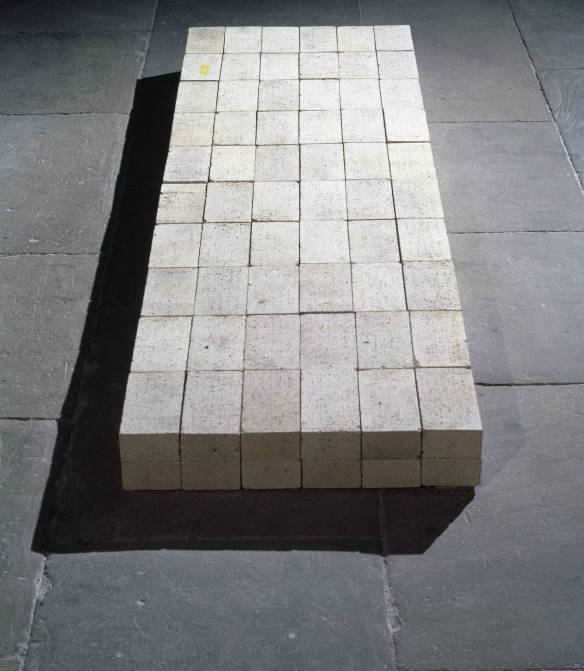
Equivalent VIII (1966) Carl Andre (b.1935) Purchased 1972 http://www.tate.org.uk/art/work/T01534

Equivalent VIII (1966) Carl Andre (b.1935) Purchased by Tate Gallery in 1972 http://www.tate.org.uk/art/work/T01534

I recently attended a talk by renowned arts administrator Michael Lynch, as part of the FLAIR art event, where he expressed frustration at the state of the arts in Australia, the lack of a public arts policy, and the associated cuts to government funding. It can’t help that from John Howard onward, we have had a sequence of Prime Ministers who, while not total Philistines, have shown little enthusiasm, appetite or appreciation for the arts. And during Q&A, Mr Lynch referenced the conservative and “safe” nature of so much arts programming as evidenced by the lack of risk-taking and the stale and over-familiar choice of repertoire, although he did acknowledge some arts organisations were doing exciting work.

The debate then shifted to whether we need a new method to evaluate the benefits of a strong arts sector that is not purely dependent on economic terms or financial performance. It was not possible in the time available to come up with a suitable indicator, but I suggest we can derive a range of benefits from putting more emphasis on teaching, supporting and sponsoring the arts. This RoI might be measured in such terms as the following:

  • Enhancing creativity among students will benefit individual problem-solving skills and collective innovation;
  • A healthy arts scene is indicative of a balanced, self-assured and progressive society;
  • Participating in the arts can give people a sense of confidence and well-being;
  • Through art we can learn about culture, philosophy and history – especially of other societies;
  • Giving people the means to express themselves through art is an important outlet for their skills, talent and interests.

We agonize about the amount of investment in our Olympic athletes in pursuit of gold medals, and whether the money can be justified (goodness – Australia only just made the top 10!)  But no-one (yet) has suggested it’s not worth doing, even if we don’t win as many medals as is often predicted. And of course, together with the wider popular entertainment industry, professional sports attract more dollars, airtime and support through sponsorship, advertising, broadcasting rights, gambling revenue, club memberships and merchandise than the arts could ever hope to.

Part of the challenge lies in the popular notion that arts are either elitist, worthy, self-important, or simply frivolous – which makes it harder to build an economic case for the arts, but which can also lead to the worst kind of cultural cringe. Also, if the arts are really doing their job, they hold up a mirror to our society, and we may not like what we see. Populist politicians can’t afford to be associated or identified with such critiques – either as the targets or as de facto protagonists – so would they rather be seen shaking hands with gold medalists (or attending a Bruce Springsteen concert…) than maybe attending a cutting-edge performance by The Necks?

Next week: The latest installment of Startup Victoria pitch night