Since his unceremonious dumping as leader by his colleagues in the Parliamentary Liberal Party, former Prime Minister Malcolm Turnbull must be wondering why the party that spat him out twice (despite benefiting from his personal donations) accepted his membership in the first place. So adamant were his conservative enemies that Turnbull was “not one of us”, they were willing to sacrifice not only Turnbull’s status as preferred Prime Minister, but also his popular deputy, Julie Bishop, and their own preferred leadership candidate, Peter Dutton.
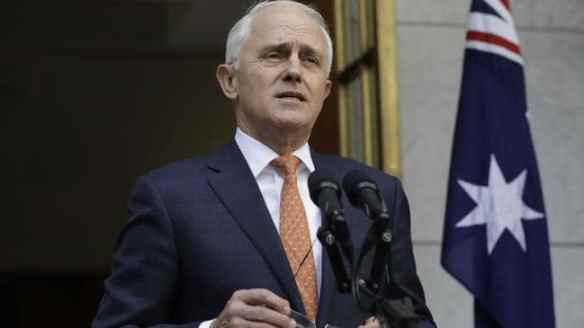
Turnbull’s farewell speech – image sourced from The Australian
All of which suggests Australian democracy (or at least, the version played out by our political parties) is seriously damaged, if not actually broken.
Turnbull is the fourth sitting Prime Minister to be dumped by his or her own party in less than 10 years (and let’s not forget he himself ousted his predecessor). This latest incident suggests that the problem is not with the electoral system, but with the party system that controls the management and exercise of political power – and with scant regard for the voters who directly elect their constituency representatives.
Here’s why I think party politics are the root cause of Australia’s current leadership malaise:
1. No legal or constitutional basis
Quite simply, political parties are neither mentioned in the Constitution, nor formally defined in any Act of Parliament. Their role in our democracy is entirely by custom and convention – in a way, we tolerate them as a “necessary evil”, because we are led to believe that Parliament cannot function without them. At best, Parliamentary parties operate under a license, one which should not be seen as a right, but as a privilege. And like all such licenses, this privilege should be subject to being revoked at the will of those who granted it – the electorate.
2. If our political parties were treated like corporations….
…. they would likely be hauled before the ACCC every time they broke an electoral promise, for misleading, unconscionable or deceptive conduct. Sure, circumstances can change once governments are elected – but should it be a requirement for governments to re-establish their political mandate before they make a significant u-turn? In fact, political parties are exempt from a number of legal provisions that apply to companies. Political parties may have a paying membership that determines policy, candidate selection and other procedural matters – but they are not directly answerable to the customers they purport to serve: the general electorate.
3. Our elected representatives are not even accountable to their electorates….
…. except at election time. The notion that voters elect parties into power needs to change. Voters elect individual candidates who stand for office. Even if a candidate aligns with a specific political party, there is no binding obligation on them to sit as a member of that party once they are elected. By switching party allegiance, elected representatives who cross the floor are being disrespectful of the same (flawed) party system that saw them selected to stand for election. But they are also disregarding the wishes of their electorate, who may have been convinced or persuaded to vote for them on the basis of their stated party allegiance.
4. Voters are increasingly excluded from choosing their Prime Ministers (and their governments)
Of course, we do not directly elect our Prime Ministers. The parliamentary convention is that the elected member who commands a majority in the house of representatives is invited by the Governor General to form government. The parliamentary custom and practice is that the leader of the parliamentary party that holds most seats becomes the de facto leader of the government, and hence Prime Minister. Increasingly, the largest party bloc may not command a majority. So formal and informal coalitions have to be formed, often between competing political parties, to enable minority government to function. Such alliances may be politically expedient, but they cannot be said to represent the will of the people, if we assume that the electorate is expected to vote along formal party lines. Besides, if the party system is to retain any credibility, shouldn’t voters be entitled to expect that the leaders of the parliamentary parties, which they have (indirectly) elected to lead that party, should continue to lead unless and until they have been voted out by that same electorate?
5. Voters are not even consulted when Prime Ministers are rolled mid-term
Since Prime Ministers are not directly elected, voters have also been excluded from the process when political parties choose to roll their own Prime Minister (and effectively change the government without having to call a general election). Do the party factions who seek a leadership change bother to directly consult their paid-up local party members, or their own party voters, or the local constituents they purport to represent (regardless of which way they voted at the previous election)? To me, this represents a huge fraud on the population – and the party system is at the heart of this “madness”.
6. The failure of (party) political leadership
During the 2013 general election I commented on the lack of public support for the then leaders of both major political parties – part of what I saw as a broader failure of leadership across multiple public institutions that claim to represent our interests. Regardless of their party allegiances, the electorate seems increasingly disillusioned, if not repelled, by the party back-stabbing, treachery and disloyalty. The result is, we are poorly served by our elected representatives and the governments they form along supposed party lines.
7. Politics is not binary….
…. but the party system forces us to think this way. On most party-driven policy questions, the answer cannot be reduced to “for” and “against” – there are just too many shades of grey. This is especially true of the key policy area that seems to have brought down the last four Prime Ministers – climate change, energy and the environment.
First, Kevin Rudd abandoned the ETS, a decision which he later regretted. He claimed that the main actors in his own demise were the ones who agitated for this policy u-turn.
Second, Julia Gillard avowed that she would not introduce a carbon tax – and the electorate never forgave her for her later u-turn, resulting in her being dumped by Rudd.
Third, Malcolm Turnbull was unhappy at the direction Tony Abbot was taking the Liberal Party on climate change.
Fourth, Turnbull came a cropper on energy policy (linked to climate change), even though he had decided to capitulate to the right-wing views in his own government and Party.
You have to think that something as important as climate change demands a bipartisan solution – but the party system just keeps getting in the way.
8. “Power, corruption & lies”
Finally, in recent years we have seen a litany of corruption and other cases involving our major (and some minor) parties, and the factions within – a further cause of the lack of public trust and respect for parties, politicians and power-brokers. Add to this mix the relatively small numbers of directly paid-up members of political parties, issues of party funding and campaign donations, the party stuff-ups on disqualification due to dual citizenship, and the ongoing saga of MP’s expenses, a key conclusion is that the political party system is not conducive to modern democracy or the electoral, parliamentary and government processes. And while it is sometimes said that we get the type of governments we deserve, I don’t think any member of the general electorate would say they voted for the current situation.
Next week: Separating the Truth from the Facts