Food for thought at #StartupVic’s #pitch night

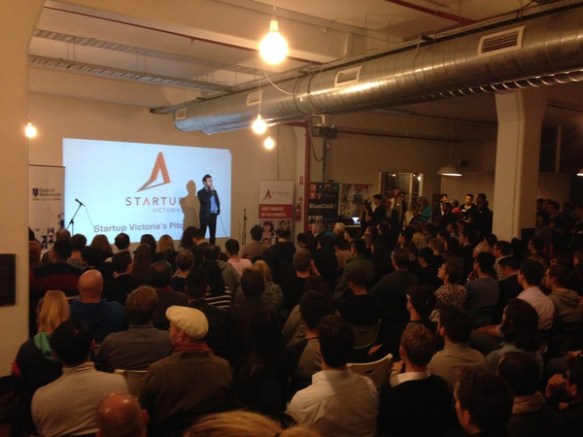
There was something of a different flavour at Startup Victoria‘s pitch night for September – including the new beverage sponsors! – which may have been helped by the large crowd, and the more polished presentations (judging by the feedback).
startupvic

Image sourced from Startup Vic’s Meetup page

I will comment on each pitch in order of appearance:

Studio Ninja

Studio Ninja is described as Client Management software for professional photographers. Aimed at the wedding industry, it also holds some appeal for other event planners, DJs, musicians, make-up artists, hairdressers, caterers and florists. But the primary focus is on weddings, and the specific needs of studio photographers, whose workflow is very particular (according to the founders).

Regular attendees at these pitch nights will recall similar CRM/project management tools for other sectors, such as architects and management consultants – which raises questions about how unique each profession really is?

In essence, the software handles lead management, invoicing and cashflow reporting. It is available via subscription, and integrates with payment systems such as Stripe and PayPal, and other service providers such as Uber, and will soon integrate with Xero.

With a reported 40 new sign-ups per day, and around 2,000 members (of which only 300 are currently paid subscriptions), the Studio Ninja team are aiming to grow to 10,000 users and revenue of $4m. Growth is being driven by strong SEO and organic discovery among photographers, and word of mouth referrals.

The panel of judges were interested to know how the software could be sold via peak bodies and professional associations, under a SaaS or white-labelling model, and what potential there is to integrate lead generation and referral solutions. The judges also thought that camera and photography equipment brands could offer a significant sales channel opportunity.

Deliciou

Something of a different pitch came from this bacon flavoured seasoning, which is actually bacon-free. (I should confess that I was once a vegetarian, but when I started to dream about bacon sandwiches, I realised I was missing out… Maybe if this product had been around all those years ago, things would have turned out different. But I digress.)

There was certainly no lack of passion in this pitch, and the founder had even made sure there were free samples to go around, so strongly does he feel about his product. With a 9% conversion rate from website visits, and 2,000 bottles sold this year, there is obviously a niche in the flavourings market for a “guilt-free” bacon experience.

A graduate of the Melbourne Accelerator Program, the founder has cleverly chosen to use a pop-up popcorn stall to generate market awareness, solicit customer feedback, and create visibility for a product that comes in a small jar, and will compete for valuable shelf space in supermarkets.

The business is seeking $100k in seed funding to expand the range of seasonings,
expand overseas, and to resolve issues with production lead times and logistics. But given the challenges in building consumer brands, especially in the food and beverage category, a better option might be to tie up with another snack food or convenience food brand, and use that vehicle for distribution and market reach.

Reground

Reground is another food-related startup, but this is all about recycling coffee grounds. The business turns coffee waste – which otherwise goes into landfill – into sustainable uses, thereby reducing the amount of methane gas released into the atmosphere.

With a waiting list of cafes who want to access the service (because cafe owners already pay their local council to take away the waste), Reground will divert part of those waste collection fees and can even help cafes save money. Reground also supplies community gardens with free material for their compost. Other uses for the coffee waste include mushroom production.

As well as offering waste assessment services and potential cost savings, Reground runs a newsletter and provides certification for participating cafes. There is also potential for this Melbourne-based business to go national and even to the USA.

They are also offering a customer app to support logistics around collection, and they operate their own van as there are council limitations on more waste trucks on our streets. Asked by the judges about scaling their business, the founders are considering to build their own waste processing plant. (After the event, I did a quick search, and found a similarly-named business in Canada.)

Allume Energy

Finally, Allume Energy, another sustainability business, this time in solar energy distribution. Or, in their own words, “Democratising access to renewable energy”.

As a social enterprise, Allume offers tenants easier access to cheaper solar energy. Basically, Allume contracts with the property landlord to provide initial funding to install and set up a solar system, and then tenants pay for their energy via a contract licensing system. In addition to working with community and social housing projects in remote locations, Allume also offers a shared system for apartment blocks.

Claiming to provide a 30-50% saving to tenants, Allume requires landlords to commit to a 15 year contract, with a 50% break fee (based on the initial installation and set up costs). Given some of the current challenges in renewable energy (weather events, phasing out of government rebates, and reduction in feed-in tariffs), this scheme to implement very local solar systems will no doubt appeal to landlords and bodies corporate.

And on the night, Reground was the people’s choice – probably because it was a simple but effective proposition, and it appealed to Melbourne’s environmentalists and coffee lovers alike!

Next week: A Tale of Two #FinTech Cities – Part 2
101 #Startup Pitches – What have we learned?

During the past 3 years of writing this blog, I have probably heard more than 100 startup founders pitch, present or share their insights. Most of these pitch nights have been hosted by Startup Victoria, with a few on the side run by the Melbourne FinTech Meetup and elsewhere.

Image sourced from Startup Victoria Meetup

Image sourced from Startup Victoria Meetup

Based on all these presentations, I have collated a simple directory of each startup or pitch event I have covered or mentioned in this blog, as well as a few key accelerators and crowdfunding platforms.

What have we learned over that time?

First, apart from the constant stream of new startups pitching each month, it’s been impressive to witness the Melbourne startup community collaborate and support one another.

Second, some of the international founders who have spoken are among the rock stars of startups – and we are fortunate that they have been willing to spend time in Melbourne.

Third, a number of the local startups who have pitched during this time have become well-established and well-known businesses in their own right.

This all means that besides creating great products and services, and being willing to share their experiences, the founders have helped aspiring founders and entrepreneurs to appreciate the importance of:

  • product-market fit;
  • working with agile processes and lean startup models;
  • tackling prototyping and launching MVPs;
  • learning what to measure via key metrics;
  • figuring out funding; and
  • knowing when to pivot or fold.

Looking at the cross section of pitch nights, panel discussions and guest speakers, there are some significant trends and notable startups to have emerged:

Industry focus: Not surprisingly, the pitches are heavily biased towards FinTech, MedTech, Education, Digital Media, Enterprise Services and Consumer Services. There are a some key startups focused on devices (e.g., SwatchMate and LIFX); a smattering in recruitment, fashion, gaming, health and well-being, property services, social media and even logistics. But there are surprisingly few in environmental technology or services.

Business models: Two-sided market places abound, as do customer aggregators, sharing platforms (“the Uber for X”, or “the AirbnB of Y”), freemium apps and subscription services (as opposed to purely transactional businesses). There are also some great social enterprise startups, but surprisingly no co-operative models (apart from THINC).

Emerging stars:  Looking through the directory of startups, some of the star names to have come through during this time, based on their public profile, funding success, awards (and ubiquity at startup events….) include:

CoinJar, LIFX, Tablo, SwatchMate, etaskr, DragonBill, Culture Amp, Eyenaemia, Timelio, Moula, nuraloop,  Konnective, OutTrippin and SweetHawk.

Acknowledgments: Some of the startups and pitches in the list are just ideas, some don’t even have a website, and some didn’t get any further than a landing page. However, I have not been able to include all the startups that turned up at Startup Alley, nor the many more startup founders I have met through these events (but whom I didn’t get to see pitch or present), nor the startup ideas that were hatched during the hackathons I have participated in. And there are a few startups that I could not include because I heard them pitch at closed investor events. Finally, I am and have been very fortunate to work with a number of the startups listed, in various capacities: Brave New Coin, Ebla, Re-Imagi, Slow School of Business and Timelio. To these startups and their founders, I am extremely grateful for the opportunities they have given me.

Next week: Putting a Price on Value


The latest installment of Startup Victoria #pitch night

The numbers were out in force for the August edition of Startup Victoria‘s monthly pitch night. A full house (no doubt helped by a new beverage sponsor…) heard from another batch of startup hopefuls, operating in very different sectors: medtech, recruitment, food logistics and domestic services. Despite some AV issues, this event showcased some interesting businesses, all of them demonstrating some impressive early stage traction.

In order of appearance, the night’s pitches came from:

VideoMyJob

Launched in April 2016, this online tool allows recruiters and hiring managers to film, edit and share their job ads. The business already boasts more than 60 clients (some of them very high-profile), with the data suggesting an 82% higher success rate in hiring outcomes. This performance is largely attributed to the simple fact that candidates spend up to 4 minutes watching a video ad, rather than the average 12 seconds candidates spend reading a text-based ad before they submit an application.

The tool, which runs on a mobile device, includes a tele-prompt feature, in-app editing functions, a one-step process to publish to social, plus e-mail. Customer pricing is based on a $79 monthly subscription to place unlimited video ads. One reported benefit for clients is much stronger candidate short lists.

Given the changing dynamics in the recruitment market, where companies are finding themselves competing for talent and striving to become employers of choice, any new hiring solution has the potential to be a game-changer. Which is what the founders are probably banking on as their exit strategy, with a likely trade sale to a complementary recruitment platform.

PredictBGL

This medtech startup (previously known as ManageBGL) offers an app-based solution to help diabetes patients manage, monitor and predict their blood glucose levels. Despite regular patient testing, according to the founders, 80% of the data is actually ignored.

Able to offer more “real-time” testing, the app claims to fix wrong insulin doses within 3 hours (not the usual 14 days with traditional clinic-based testing), offers more precision dosing, and predicts patient levels up to 8 hours ahead.

It also has the option to incorporate live exercise data (from wearables), and serve patients who can’t afford expensive insulin pumps. As well as paying a monthly subscription, patients are also paying for insights based on the data. With a $10 per month fee, over 80% customer retention rates, and around 600 sign-ups per month, the app is breaking into the US market.

Asked about potential risk factors and the margin for error in patient testing, the founders explained that the user results are somewhat conservative, so they are embarking on clinical trials to refine the analytics.

Jarvis

Billed as “your very own personal butler”, Jarvis is one of a number personal concierge services, catering to the time-poor, inner-city residents who want to outsource domestic chores and errands.

From $33 per week (and an average of $55), Jarvis differentiates itself by offering a more personal touch, because the business hires and trains employees, rather than using freelancers or contractors.

Launched in January 2016, Jarvis is experiencing 20% growth per week, 90% customer retention, high referral rates and generating 10-15% margins. The founders are working on their logistical efficiency – routing, grouping – and deploying scalable technology – such as cluster algorithms. Pat of the attraction for clients is the fact that Jarvis does not see itself as a transactional service like some freelance and task-based apps and platforms.

The panel of judges asked about the risk of being disintermediated (by their own employees going direct to client). Jarvis claims that their key defense is the proprietary Butler app for employees.

Pantreeco

Last up was Pantreeco, which was established in 2014, with the goal of building “productive partnerships in food” by streamlining the logistics and supply chain communications between food suppliers and buyers.

A self-styled “co-commerce” solution, Pantreeco includes a messaging tool between producers, wholesalers, distributors, restaurants, cafes, grocers and providores.

Offering a freemium SaaS model (based on a per customer per channel basis plus commission), Pantreeco is in the process of taking its model to overseas markets via some major international expansion.

Asked by the judges about the competition, such as TradeGecko and Unleashed, the founders stress that they are not simply an e-commerce or inventory management solution. Instead, Pantreeco developing a range of integration services in response to customer demand – e.g., invoicing, accounting, communications as well as inventory management with 3rd party platforms such as Xero, ZenDesk and SalesForce. They also have plans to on-board major enterprise clients in the food and beverage industry.

Based on the audience voting, Pantreeco took out the honours on the night.

Next week: When robots say “Humans do not compute…”

Another #pitch night in Melbourne…

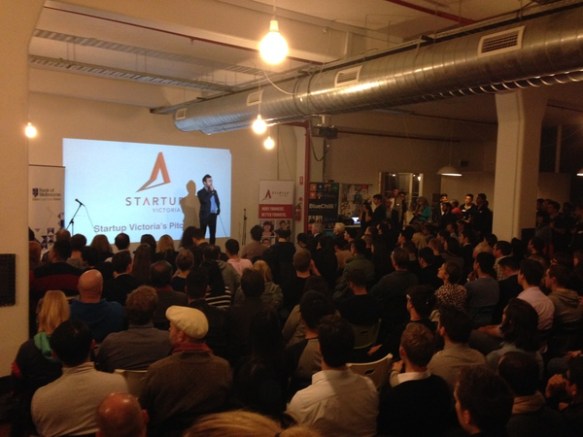
If there is one basic theme emerging from Startup Victoria‘s monthly pitch nights, it is this: whatever market you are in, regardless of your business model, and however disruptive you are trying to be, if you don’t know how to engage or reach your customers your idea is far less likely to succeed. This message came across loud and clear during last week’s event where four startup hopefuls pitched their business ideas to a panel of judges in front of a packed audience.

Picture sourced from Startup Victoria Meetup page

Picture sourced from Startup Victoria Meetup page

So let’s look at this specific issue in respect to each of the pitches:

First came JobPokes, an online recruitment service designed to help candidates match job opportunities to their career preferences. Because it claims to be addressing the hidden job market, candidates aren’t applying for specific roles – instead, it’s a form of reverse enquiry, where recruiters target potential applicants via their registered profiles. I applaud the focus on the non-advertised job market, but while it may well offer an additional channel for recruiters, I’m not sure there was a clear strategy to reach job candidates who need to create a user account, and who are probably already using platforms like LinkedIn and Seek.

Next was Airly, which is sort of “Uber for private aircraft”. The business model involves signing up a minimum number of customers (who pay a monthly subscription fee, entitling them to unlimited flights), and securing sufficient seat capacity via scheduled charter contracts. There is no doubt that the idea of flight flexibility, and an element of passenger exclusivity met with audience approval (Airly took out the people’s choice vote on the night). Also, the PR around Airly has generated in-bound enquiries, suggesting there is demand. But how does this market interest convert to individual customers, when many corporate travel policies rely on wholesale and bulk-purchase models (i.e., aggregation, consolidation, vendor discounts, agency rebates, preferred airlines) rather than catering for individual travel needs or preferences? Unless the target customers are business travelers that manage and pay for their own tickets?

If Airly was about the Uberisation of air travel, RagRaider revealed another aspect of the shared economy model. Squarely aimed at fashion- and budget-conscious women, RagRaider offers a peer-to-peer service whereby customers can hire clothes for one-time use. No doubt there is a market (high school formal, spring carnival, wedding reception…) but the question is how to connect with actual lenders and hirers? We know that the per customer cost of acquisition for 2-sided markets is a key metric, and it wasn’t clear how the founders were addressing this, other than a pre-launch website and some social media. As one observer has commented, the “model is focusing on the ‘product’ part first which is the reverse of how it should be”, and another commented that despite a defined market, the barriers to entry are considerable. The judges also questioned some of the proposed pricing, commission rates and logistics.

Finally, Rounded is another FinTech startup looking to service the SME sector, specifically sole traders, freelancers, sub-contractors and tradies. Another spin on the invoice solution when suppliers need to get paid efficiently, Rounded does not claim to be a full-service accounting software – but, as one attendee commented, key to success will be reaching and educating the end-user market.  Also, they are entering a competitive space, where a new entrant like Xero has already disrupted incumbents like QuickBooks, Reckon and MYOB. I wasn’t able to stay for the pitch, but I did have the opportunity to speak with the founders beforehand. Clearly driven by their own experience and needs, there is a solid but simple idea here – but as Xero and others are increasingly able to serve similar customers, Rounded will find it really difficult to compete.

If anything, these latest pitches showed how hard it is to compare apples with oranges, although the voting criteria (market traction, product viability, team composition, pitch presentation, and responses to judges’ questions) are designed to deliver a consistent evaluation. It was also apparent that these pitches divided audience opinion more so than previous contestants – which is probably a good thing as variety is the spice of life….

Acknowledgments: thanks to Graphican, Marlene M., Cornell and Dale G. for their input.

Next week: Re-Imagining Human-led #Innovation