Cooking the books?

Over the many years I have been writing this blog, I have often commented on the publishing industry, from my personal experiences, to industry trends and future outlook. The recent collapse of Australia’s online bookseller, Booktopia, prompted me to revisit the topic.

First, a declaration – I am an unsecured retail creditor of Booktopia. Orders for books I  paid for in advance of their publication dates still have not been fulfilled. Obviously, I am not alone; there are about 170k retail creditors, owed a total of $15m. That is an average of about $90 per creditor, although some retail customers are owed more than $10k.

Second, Booktopia’s total debts of around $60m are nearly one third of annual turnover ($198m in FY2023). In FY2022, annual turnover was $240m. Clearly, this was a business in decline, and in financial trouble.

Third, I should have been alert to the problems when I enquired about my outstanding orders, shortly before the administrators were called in. I knew the books had already been published, so I wanted to know when to expect them. This was part of the reply I received, in mid-June:

“We have been experiencing difficulties procuring new stocks from our supplier lately, we are so sorry for the delay.”

Fourth, it transpires that publishers, wholesalers and distributors were experiencing payment delays from Booktopia. Suppliers were reducing or cutting off their credit lines, and declining to supply more stock unless the existing debts were cleared. The administrators are doing their best to realise any remaining value of the business, including a trade sale of Booktopia (as a whole, or as parts). The assets include warehouse stock (some of which may still be owned by the publishers/wholesalers), customer lists, technology, goodwill and other IP. But it was made pretty clear at the first creditors’ meeting that unsecured trade and retail creditors should not expect to get their money back any time soon, and certainly not in full. (A total of $15m in secured debt will get preference, including employees.) So even if the unfulfilled but paid-for stock can be located, there is no apparent obligation for outstanding orders to be completed. In fact, the administrators were suggesting that retail creditors should contact their banks or credit card providers, to see if they could recover their money via those channels. (Which is why insurance premiums, card fees and bank charges go up, of course.)

I don’t understand why Booktopia’s retail and trade debts were allowed to get to such a high percentage of their turn over. Book publishing and distribution shouldn’t be that hard – either the book is in stock at Booktopia, and can be sent immediately, or it is available to order from suppliers and can be fulfilled within a reasonable time. For books that have not yet been printed, surely the customer’s money should be held in some sort of escrow account, and the cash not accessible by the seller or recognised as revenue until the order has been completed?

Of course, books go out of print, and customers may have to wait for a re-print or a new edition. Or the industry needs to consider print-on-demand solutions. Funnily enough, that is one of the key recommendations of the Ad Rem report on the Australian publishing industry (“The Australian Book Industry: Challenges and Opportunities”) in 2001….

Next week: Notes from the UK


The Last Half-Mile

One evening last week, I came home to find two separate deliveries waiting on my doorstep. Both had been delivered in error. The first was a bunch of flowers, but the named recipient, the street address and the suburb were all incorrect – it was for someone else in another postcode. The second was a packet of coffee beans (part of my monthly subscription), but I had already received the same delivery the day before – so this was clearly a duplicate. Welcome to the perennial logistics challenge of the “last half-mile”.

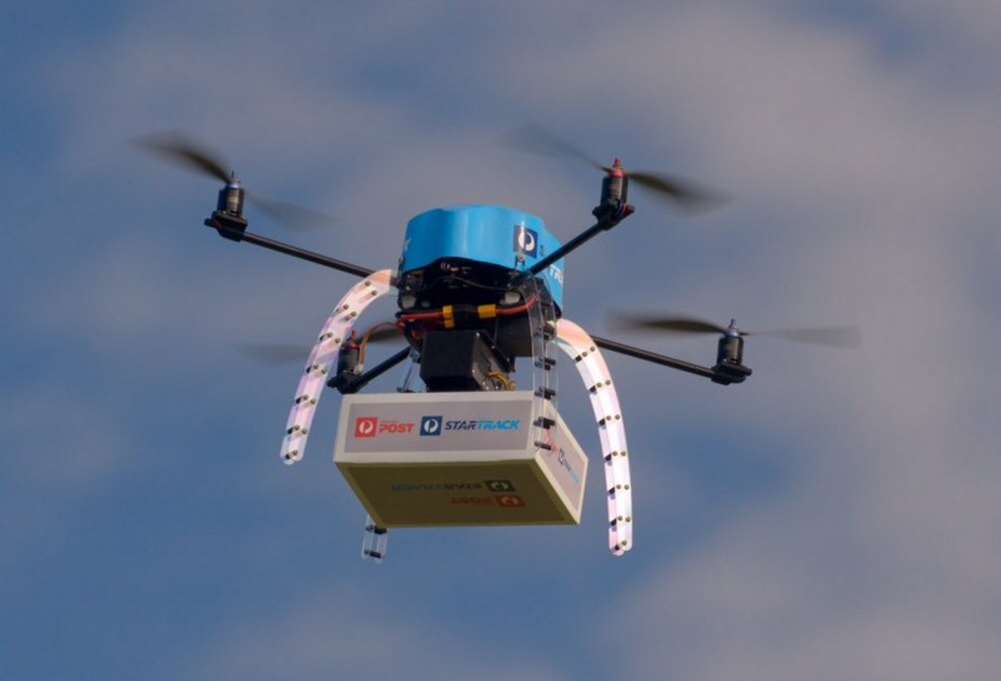
Delivery-on-Demand: 5 years ago, Auspost was experimenting with drone deliveries (image sourced from IT News)

It seems that despite the increased demand for on-line shopping and home deliveries during lock-down, supply chain logistics are still struggling to find a consistent and reliable solution. Coincidentally, in recent weeks I have been pitched two different start-up ideas that aim to address the last half-mile challenge for e-commerce. Although they are each taking slightly different approaches, both start-ups are trying to address the “recipient not at home” dilemma – what to do with parcels and deliveries when there is no-one at home? Their respective solutions revolve around a “localised point of collection/delivery” – either using a more convenient network of click & collect facilities, or a network of trusted neighbours to receive deliveries on your behalf. I have previously covered another Melbourne start-up called Passel based on a network of trusted local couriers – but it doesn’t seem to have progressed very far.*

So if this is a recurring theme, why can’t it be fixed – or are the solutions out of step with the actual problem? Or is the problem not that big of an issue to warrant over-engineered answers? In attempting to provide constructive feedback to both the recent pitches, I gave similar responses in each case, which can be summarised as follows:

Using a proxy recipient still does not solve the problem of items being delivered to the wrong address (or wrong items delivered to the correct address). In particular, it doesn’t address the issue of Australia Post personnel carding an item as “not at home” when in fact they simply can’t be bothered to attempt delivery and prefer drop it off at the local Post Office for collection – believe me, I have had more than my fair share of those.

Localised click & collect services already exist – usually in convenient locations, and often accessible outside Australia Post’s normal hours. Plus more parcel locker and similar services are appearing – so is the demand really there for another delivery solution?

Who is responsible for insurance claims on lost or damaged packages, where the named recipient (who has the sales contract with the seller) does not match some of the relevant transaction details associated with the proxy recipient?

Likewise, if you are using proxy delivery or collection services, who is responsible for managing returns and/or unclaimed items? Some retailers will take items back and offer refunds as a matter of policy – but others won’t or can’t process returned stock, and end up re-selling into secondary supply chains at a discount.

How do you recruit and screen proxy recipients and deliverers, and build trust into the network? How do you avoid an under/over-supply of proxy providers – too few and the system gets choked; too many and it’s not worth their time and effort to sign up.

How do you recruit and service multiple retailers and/or their point of sale and fulfillment providers to make it a viable service for customers who wish to shop from multiple shops and brands?

Who (and how) do you charge for the additional convenience you are trying to offer – retailer, customer, or both? Suggested options include a per transaction fee and/or an annual subscription fee, or a check-out fee which can be rebated based on loyalty or other frequent buyer rewards. But the “convenience premium” cannot be disproportionate to the value of the transaction.

Even with more customised delivery options such as trusted neighbours, the issue of having to be at home during quite wide delivery hours (e..g, 8am to 1pm, or 9am to 5pm) still applies.

Confirming proof of delivery is still a pre-requisite – even more so if using proxy delivery addresses – and potentially adds another layer of complexity.

Finally, the need for immediate “Delivery-on-demand” may be overstated, at least on non-perishable goods, so a constant stream of delivery drones down every suburban street is probably some way off….. but maybe don’t rule it out if we have further pandemic-related lock-downs or continuing challenges in the COVID vaccine rollout.

* Similarly, I also blogged about other customer experience with the final step in fulfillment across a number of sectors, including e-commerce.

Next week: Notes from Blockchain Week

Startmate Virtual Demo Day

Despite being under lock-down, the current cohort of Australian & NZ startups participating in the Startmate accelerator programme managed to deliver their Demo Day presentations on-line, including a virtual “after party” where founders were available for Q&A.

Given the large number of startups, and the fact that several were very early stage businesses, I have grouped them into loose clusters, with just a brief summary of each project. More info can be found at the links in the names:

Real Estate

Landlord Studio – tax & book-keeping solution for landlords. I tend to think the need for very niche accounting solutions is either overstated, or existing software platforms like Xero will come up with a plug-in of their own. Also, tax rules vary greatly by jurisdiction, so scaling internationally can be a challenge.

Passingdoor – an online estate agency trying to remove some of the costs and hassles of selling your home. Rather than listing with a traditional estate agent, Passingdoor will find buyers on your behalf (via a matching process?). I assume that prospective buyers will come from: people in the process of selling their own home; buyer advocates; or recent mortgage applicants – which is why the founders will need relationships with traditional agencies (referrals), mortgage brokers (cross-selling) and real estate ad platforms (leads). But given that sellers on Passingdoor only pay a 0.5% commission once an offer becomes unconditional, I’m not sure how the cashflow model will work.

MedTech

Mass Dynamics – scaling spectrometry for improved patient care. From what I understand, Mass Dynamics is using cloud-based architecture to “lease out” spectrometry capacity on demand, and to accelerate sample analysis.

LaserTrade – a marketplace for second-hand medical laser equipment. Rather than seeing re-usable equipment go to scrap, the founder saw an opportunity to create a marketplace for unwanted items. All items are tested beforehand. Has the potential to extend to other types of equipment, assuming the certification process is valid?

Health & Wellbeing

Body Guide – semi-customised rehab exercises to suit your symptoms. With superb timing as we emerge from months of inaction (or poor posture) while working from home during lock-down, this service is an aid to physical recovery, once your condition has been formally diagnosed. I’d probably want to check in with my GP or physio that the programme was right for me, though.

Sonnar – offers a library of audio content for people with reading disabilities. This is a subscription service, which claims to be cheaper than other audio-book services, and with a broader type of content (periodicals as well as books). I was unclear whether Sonnar is cheaper because they don’t need to pay publisher or author royalties (as it is deemed a charity?), or because they only license out-of-copyright content.

Good Thnx – promises to be “the world’s best gifting and recognition tool, with impact”. Aiming to provide a service for businesses, individuals and partner charities, Good Thnx is still in development. But as part of the Startmate Demo Day, gave attendees an opportunity to allocate a small financial donation to a selection of charities.

Food & Agriculture

Cass Materials – With the search for sustainable alternatives to meat, Cass Materials is developing a cheap and edible high fibre cell scaffold on which to grow cultivated meat – otherwise known as bacterial nanocellulose (BNC). I’m not opposed to the idea of “meat substitutes”, but I’m generally wary of what are sometimes called “fake meats” – vegetable proteins that are so processed so as to resemble animal flesh. I’d rather go vegetarian (I’m not sure I can go full vegan, because if we weren’t supposed to eat honey and yoghurt, why do they taste so good, especially together?).

Digital Agriculture Services – An AgTech platform is using AI-powered applications for developing a range of data-driven solutions across rural, agricultural and climate applications. The potential to bring more business insights and practical analysis to farming and allied industries is of huge potential in the Australian economy.

Heaps Normal – This company has taken a novel approach to producing non-alcoholic beer. Rather than chemical extraction or other processing to remove alcohol from ordinary beer, Heaps Normal has managed to brew beer without alcohol content.

Energy

Gridcognition – Using digital twin mapping of buildings, structures and locations to optimise the planning and operation of distributed energy projects. Given the value of lower transmission and storage costs, as well as more efficient energy generation, Gridcognition is aiming to bring their “decarbonised, decentralised, digitised” solutions to a range of industry participants.

ZeroJet – Helping the marine industry transition to sustainable energy solutions with the development of electric propulsion systems. In particular, targeting small inshore craft which are ideal boats for this type of engine.

Logistics & Analytics

PyperVision – This startup has developed a system for fog dispersal at airports. By aiming for zero fog delays, PyperVision is helping to reduce disruption in the travel and logistics sectors.

Arlula – An API service to stream satellite images from space. As we know, satellite imagery is an important input to modelling, planning and analysis. Arlula also offers access to historic and archive content.

Database CI – A platform for in-house software developers to access the right sort of enterprise data for real-life testing purposes. For example, realistic and appropriate “dummy” data that does not compromise privacy, confidentiality or other obligations.

Law on Earth – On-line access to self-serve legal documents, forms and precedents, plus lower-cost legal advice. With a mission to “empower the public to safely manage their own legal needs”, Law on Earth already has a tie-up with Thomson Reuters, one of the largest legal information providers in the world.

Next week: Are we there yet?

Business as Unusual

At the time of writing, the Victorian Government has decided to defer the easing of Covid-19 restrictions, in the wake of a sudden spike in community transmissions. There was always a risk that opening up too much, too soon, would result in a second wave of coronavirus infections, as people returned to work, as shops, restaurants and bars started to re-open, and as people began socializing on a larger scale. There is even talk of more drastic local restrictions in so-called hot-spot areas.

Meanwhile, the deferment (and the extended State of Emergency) is creating further uncertainty for businesses in an already fragile economy. In recent weeks, I have been attending a number of on-line seminars on the broad theme of business in the post-pandemic era. Variously described as the “new normal”, the “new new normal”, and even the “next normal”, things are unlikely ever to be the same, and not many punters are willing to bet on the resumption of business as usual.

Here are some of the challenges and opportunities that lay ahead:

Future of Work

As employees head back to the workplace, employers will need to balance the need for productivity and business continuity with the obligation to provide a safe working environment. Some staff can’t wait to get back to the office, some will prefer to continue working from home (if they can), while a large number would probably welcome a mix between the two. This has prompted debate on introducing a 4-day working week, the introduction of team rostering (e.g., alternating one week in, one week out), and possibly the end of hot-desking.

Overall, new work practices will necessitate a re-think on office space, workplace location and employee facilities. Some commentators have predicted that companies will need to extend their current premises (to allow for adequate space per employee); while others suggest CBD workplaces may need to decentralize towards more suburban or regional hubs (to reduce commuting times, to relieve congestion on public transport and to allow people to work closer to home). The latter may also stimulate local economies as people reallocate their commuting costs and daily expenses into local shops, cafes and services.

Innovation

Change and uncertainty should drive companies to innovate – in fact, former Prime Minister Malcolm Turnbull recently spoke about innovation in light of the pandemic. His view is that current technological trends will only accelerate, and industries facing disruption will be displaced even faster. So no time for complacency, and no point waiting for normal service to resume.

Necessity has driven many retail and restaurant businesses towards more online engagement with their customers, and those that have been shown to be creative, resilient and agile appear to have found a way through the lock-down. Equally, many businesses used to delivering their services in person have had to find ways to embrace digital solutions – no doubt enhancing their digital transformation in the process.

Self-sufficiency

We’ve heard about the need for food and fuel security – especially when supply chains are disrupted, and when countries pursue “domestic first” policies in relation to essential goods and commodities.

While Australia is a net food exporter, we still have to import many daily staples. Primary producers have come to rely on lucrative export markets, so in the light of trade wars and import bans, local farmers and consumers alike will need to adjust their expectations – on choice, price, seasonal availability and market volumes.

Australia is also in the enviable position of being potentially self-sufficient in energy – but although we are rich in renewables, we are still reliant on fossil fuels, and recent events revealed our vulnerability to volatility in the oil markets. It suggests the current environmental and economic debates around weaning ourselves off coal, oil and gas are only going to become more critical.

There has also been a call for a larger domestic manufacturing base – not only to enhance workforce skills and productivity, but also to ward off supply chain disruption. Some have called for a return to domestic car production. Even if that were desirable, let alone a realistic option, I don’t imagine that anyone would welcome the bad old days of churning out Australian-made gas guzzlers that nobody wants to buy. We would need to advocate for smarter cars, energy efficient and non-fossil fuel vehicles, environmentally sustainable materials and manufacturing process, and possibly different car ownership models (in line with the trend for ride share businesses and smart city solutions) and more creative financial incentives to the industry than wholesale subsidies.

Other manufacturing sectors that are getting attention include medicines and medical supplies (surely there must be a market for domestically-produced PPE made from bio-degradable materials?), clothing (again, an opportunity for environmentally sustainable materials and manufacturing processes), processed goods (after all, we already have much of the raw material), domestic appliances and technology.

One area where Australia has also proven vulnerable is in recycling. China and the Indian Sub-continent are pushing back at taking and processing our exported waste. So we have to get smarter at recycling household waste (paper, plastic, glass and metal) especially if in a post-pandemic world we see a return to single-use items and additional sterile and protective packaging for foodstuffs and personal products. We also need to look at e-waste, and find ways to extract more recycling value from obsolete devices.

The lock-down during the pandemic has also highlighted an opportunity to re-connect with the “make do and mend” mentality of our parents and grandparents. Again, if supply chains are disrupted, buying a replacement item might not be an option. But often, nor is it possible to buy replacement parts – either they rely on the same supply chains, or there are no user-serviceable parts available. What if manufacturers and distributors had more of an obligation to take back and recycle their products, or to include more interchangeable parts in their designs, and enable consumers to become more self-sufficient in repairing and maintaining their electronic and electrical goods?

Federal, state and local governments have a huge role to play here – from mandating the use of more recycled and recyclable materials, to incentivizing recycling schemes, from supporting local repair workshops and “maker” projects, to creating more common and open standards around components and replaceable parts.

Finance and Digital Money

At a time when many people are on reduced income and/or or relying on government welfare, the pandemic has also demonstrated a need to rethink our relationship with money in general, and cash in particular.

The latest round of QE by governments and central banks to offset the financial impact of the pandemic has highlighted once again the fragility of current monetary policies, including fractional reserves and treasury buy-backs. The decision to print money on demand will only increase public appetite for crypto currencies as a legitimate store of value – including stable coins and (ironically) central bank digital currencies – and paradoxically, accelerate the removal of physical cash from the economy.

In times of crisis, digital currencies can also transfer money to remote recipients faster and cheaper than traditional means (i.e., incumbent remittance businesses, bank transfers, payment gateways), and actually increase transparency and traceability.

The lock-down also revealed that many people did not have a sufficient financial buffer to withstand job losses, especially in the casual workforce and the so-called gig economy. This suggests a new approach is required for how people are remunerated for their labour and services, taxed on their income, and incentivized to save for the future. Current systems cannot address these issues because they are over complex, far too rigid, and totally dis-empowering of the people they are designed to serve and support.

Digital currencies (along with the benefits of Blockchain technology, and the new economic models represented by digital assets and tokenization) will enhance trends such as decentralization, peer-to-peer networks, trust-less systems, fractional ownership and more sophisticated barter structures.

Bitcoin was created in response to the GFC, it has now come of age in the post-COVID-19 era.

Next week: Antler Demo Day – Rewired