
Paywalls go up – Staff numbers go down: a tipping point for Australian news media?

Ownership concentration dominates Australia’s Mass Media

The past 12 months have been a pivotal time for Australia’s mainstream news media. Having seen off controversial regulatory reforms that would have relaxed some cross-ownership controls (but also introduced more onerous oversight of press standards), harsh business truths and painful economic reality have returned, in the form of cost-cutting, new digital subscription models, and foreign competition.

The failed regulatory reforms generated public, industry and political debate around ownership concentration and the lack of media diversity; cross-ownership and the impact of media convergence; the need for revised rules around mergers and acquisitions; and calls for more control over media standards.

What does Australia’s Fourth Estate currently look like?

There are two daily national newspapers, and 10 daily capital city newspapers; all but one of these 12 titles are owned by just two companies: News Limited, and Fairfax Media. Only Sydney and Melbourne have more than one daily local newspaper. Together, News and Fairfax account for about 88% of print media. Both companies have significant interests in broadcast media. The sole “independent” daily newspaper is owned by Seven West Media, itself a major TV broadcaster. As further evidence of Australia’s concentrated content ownership, Seven West has a joint digital venture with Yahoo!, while its rival network broadcaster, Nine Entertainment has a similar joint venture with Microsoft. Prominent in the ownership mix are the names of Rupert Murdoch (News Limited), James Packer (Consolidated Press Holdings) and Kerry Stokes (Seven West Media) – each of whose companies have various interests in Australian pay TV. Meanwhile mining magnate and Australia’s richest person, Gina Rinehart has been buying into both Fairfax (along with John Singleton, a key figure in Australia’s advertising and radio industries) and Network Ten (along with James Packer and Lachlan Murdoch).

Another layer of complex media cross-ownership comes in the form of Australia’s regional TV networks. The main regional networks (WIN, Southern Cross and Prime) each have content affiliation agreements with one or other of the three metropolitan networks (Seven, Nine and Ten), and each have separate interests in radio. Just to confuse things even further, the owner of WIN, Bruce Gordon is a major shareholder in Network Ten, and in the past week it has been reported that he is open to merging WIN with either Nine or Ten. Not only would such a merger lead to further concentration (subject to regulatory approval), it would also see a re-alignment of the metropolitan and regional content agreements; and given past criticism of of reduced local and regional TV news content (and the closure or consolidation of local TV news rooms), I would imagine that without suitable regulatory provisions, local news content will be even further reduced.

What are the news media doing in response to current market challenges?

First, both News and Fairfax have announced staff cuts in an effort to offset declining circulation and advertising revenues from their print editions. The overall results have seen: departures by high-profile journalists; centralized news-gathering operations; outsourced sub-editing; re-alignment of print and on-line assets; and the closure of some local and regional titles. Most recently, Australian Associated Press (AAP) announced that newswire staff numbers are being reduced by 10%. AAP (whose largest shareholders are News and Fairfax) is a major provider of news content and sub-editing services to the mainstream media. The staff reductions among in-house editors and journalists have raised concerns about quality and diversity in Australia’s highly concentrated news media. Partly in response to this perceived decline in editorial standards, The Conversation (a not-for-profit venture, backed by a consortium of universities) was launched in 2011 as a platform for in-depth, objective and authoritative news analysis and commentary.

Second, both News and Fairfax are in the process of building subscription paywalls around their digital content. Fairfax has operated a paywall around its business title, the  Financial Review, for several years; but like News it is introducing freemium models for broader on-line news content. In their latest investor briefings, News and Fairfax have outlined a renewed strategic focus on digital platforms, although neither have given definitive timelines for sun-setting their print editions. Personally, I am somewhat confused by the different subscription models on offer (print, on-line and tablet editions) and what I can access as a subscriber to one or other platform (and as a domestic or overseas reader).

Third, UK publisher Guardian News and Media has launched an Australian edition of its online newspaper. Free to readers, the site is funded by local advertising, and supported by a combined UK/Australia editorial, production and commercial team. As with News and Fairfax, I’m confused by the commercial model for digital content – is there a dedicated Australian subscription within the tablet edition? – and I doubt whether the Guardian Australia can compete effectively with domestic news coverage. The Guardian claims that Australia is one of its largest markets outside the UK, but I wonder if that readership mostly comprises British backpackers wanting to check the latest results from the English Premier League… The Guardian Australia, along with The Conversation has benefited from the staff downsizing at News and Fairfax to co-opt some leading journalists and editors to its cause. Meanwhile, The Conversation has launched a beta site for the UK.

And the rest?

Elsewhere, News, Fairfax and other smaller publishers are building specialist digital content, particularly in business, finance, politics, property, motoring, careers and sport. Most of these assets are funded by advertising and sponsorship, or underwritten by cross-media promotion. A number of these outlets appear to source their content from unpaid bloggers and commentators, as a way of offering free marketing and audience exposure to their writers.

Despite the latest failed attempts at regulatory reform, I expect to see plenty of activity within Australia’s news media (once we get past the forthcoming federal election), fuelled by renewed debates over ownership concentration; the realignment of cross-media interests (especially among Australia’s media barons and billionaires); and the re-positioning of print vs online vs mobile.

Disclosure: the author does not hold a financial interest in, or have a commercial arrangement with any of the publishers mentioned in this article..

6 Melbourne Start-Ups to Watch…

LogoRecently, I blogged about Audiobus, and the success of its collaborative approach to app development. So last week, I attended a very entertaining “pitch’n’pizza” evening for start-ups, to see what other interesting things are going on in app and content development. The event was organised by Lean Startup Melbourne and hosted by inspire9. Other support came from BlueChilli, General Assembly, Startup Leadership, PlayFi and Kussowski Brothers.

The idea was a mix of Open Mic Night, and “Dragons’ Den” – 6 start-ups presented their pitch to a panel of VC’s and angel investors, in front of an audience of 300+ friends, colleagues, hangers-on and curious onlookers all fuelled by free beer and pizza.

Melbourne is something of a “Silicon Laneway” – not quite a valley, but more of an alley, given the city’s landscape of back streets and converted warehouses that are fostering a culture of start-ups, digital creatives and social media entrepreneurs.

On the night, the 6 hopefuls that presented were:

  • Tablo – a self-publishing platform for authors – sort of Bandcamp for books, but with even better content distribution
  • PetHomeStay – an on-line booking system for pet owners who want to leave their animals with a trusted pet lover while they are on holiday
  • CareMonkey – an app that shares childrens’ health care needs with relatives, schools and sporting clubs, so that teachers, coaches and carers have relevant support information at their fingertips
  • CoinJar – a platform that enables consumers and merchants to transact with Bitcoin
  • Fairshare – an app designed to take the hassle out of shared living (but not to be confused with FairShare….?)
  • SwatchMate – a combined app and smart phone device for matching colours, primarily for painting and decorating

Each presentation was of a very high quality, although some were more polished and rehearsed than others, and only a couple really shone through in terms of having both a great idea and a great commercial offering.

The questions asked by the panel of experts provided some helpful insights on what makes a successful or engaging pitch:

  1. Why? Having a personal experience resonates, and can avoid the awkward “is this a solution in search of a problem?”
  2. Competitors? What makes you different – smarter? cheaper? quicker? Are you truly disruptive or innovative? Or have you just designed a better mousetrap?
  3. Commercialisation? Show me the money! What’s the business model? Where is the revenue coming from? (“Simple is not always best, but best is always simple”)
  4. Customers vs Users? If the paying customer is actually different to the end-user, then make sure this is clear and you have a strategy to connect the dots and to monetize the key part of the transaction
  5. Real world vs On-line? Are you replicating something which already happens in the real world? Can real world transactions easily dis-intermediate your on-line business model?
  6. App or Website? Is it a dedicated app, or is it a website that works well on mobile devices? Going for a well-designed website may be cheaper, and lead to greater/faster customer adoption.

And in keeping with the spirit of this blog, I would add that the essence of all of these new businesses is having interesting content and a meaningful way for people to engage and transact with it.

At the end of the presentations, the panel selected their favourite pitch (the winner getting the chance of a meeting with the VC of their choice), while the audience voted for the people’s choice. Not surprisingly, the panel went with CoinJar, while the people went for Tablo (which also got my vote).

Disclosure: The author does not have any connection to or commercial relationship with the presenters or sponsors mentioned in this blog. He didn’t even get there in time for a free slice of pizza or bottle of beer.

Outside of a small circle of friends, there’s only connections…

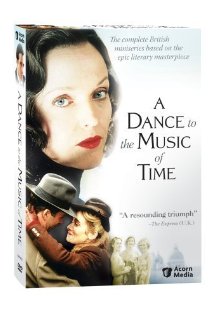
"A Dance to the Music of Time" is an epic tale of friendships and relationships

How many true friends can a person really have? Friends you would go to the cinema with, and who would walk out with you if you didn’t like the film? Friends whom you would invite to stay at your home for the holidays? Friends who would tell you when you had made a fool of yourself, but not hold it against you? Friends from whom you would borrow money or to whom you would lend money?

Social networking makes it all too easy to connect with people we’ve barely or never met. Instead of investing our time and effort in cultivating meaningful and lasting friendships, social media encourages us to “collect” as many virtual friends as possible, and we spend increasing amounts of time in vicarious “sharing” – but how many of these “connections” can we actually count on as our friends?

The question occurred to me as I read the First Movement of Anthony Powell’s “A Dance to the Music of Time”, a literary tour de force situated somewhere between Marcel Proust’s “À la recherche du temps perdu” and Evelyn Waugh’s sequence of novels from “Decline and Fall” to the “Sword of Honour” trilogy.

At the heart of Powell’s 12-novel saga is a group of four friends – Jenkins, the narrator, and his three contemporaries from school – Templer, Stringham and Widmerpool. As we follow their adventures over a 50-year period, we discover the interweaving relationships and often tangential connections that run through their lives. We also witness the subtle change in relationships between the main characters – especially the ebb and flow of their individual circumstances as they fall out of favour and lose contact with one another for years at a time. The reflective and considered format of the novel allows us to see that as in real life, there are periods when the friends positively dislike each other and are frequently disappointed by their personal shortcomings and irritated by their annoying habits.

Powell’s epic work of fiction reminds us that even among our strongest and most enduring friendships, there can be episodes of absolute dislike, as well as times of empathy, loyalty and support; and of course, being only human, our opinions and views of our friends can change over time. Powell’s perspective also confirms that most of the people we encounter in social and professional situations are mere acquaintances. We must surely recognize that our personal friendships are each valued on their own merits, and we enjoy different friendships for different reasons – we do not simply have a homogenous group of “connections” that are all exactly the same. There is nothing wrong with being part of well-connected and inter-related networks, but we must guard against reducing all these relationships to a single dimension.

Unfortunately, most social networking platforms operate on a binary structure where we are forced to make simplistic choices of either “friend” or “unfriend”, “like” or “unlike”, “follow” or “unfollow”. And there is something rather materialistic and incredibly narcissistic in the way that the number of “likes”, “follows” and “shares” we collect on-line is not only representative of our popularity, but it is somehow an indication of how fabulous a friend we really are.

Unlike the real world, these on-line platforms do not recognize the subtle dynamics of our true friendships, nor do they acknowledge that we value each of our friendships for the different experiences that we draw from them. We also have different friends with whom we enjoy doing different things, and we probably don’t introduce all our friends to one another (and certainly not at the same time).

Of course, younger generations who have grown up with social media may have no qualms about the reductionist nature of social networking, and the inherent opportunity it affords them to “connect” with as many different people as they can. But for someone like myself who is quite happy to count fewer than a score of people as my true friends, I relish the quality of my friendships, not the quantity.

Apologies to Phil Ochs for (mis-)appropriating his song title.

Social Media – finding its own level?

Social media is accessible to all...

Social Media is accessible to all…

Recently I’ve come to see that as a communication tool Social Media is just like any other resource or commodity – it’s not an end in itself, it’s what you can do with it that makes it valuable.

If I had to make a comparison, I would say that Social Media is most like water – not just because we seem to be swimming (if not drowning) in the stuff; but because like water, it will find its own level. And as Myer CEO Bernie Brookes found out this week, something that sustains us can also be unleashed against us.

As content pours into our Social Media aquifers, it will naturally flow, collect and disperse. The rivers of content being uploaded daily* suggest that unlike other resources, Social Media will not run out any time soon:

  • Twitter: 400 million Tweets posted per day
  • Instagram: 40 million photos uploaded per day
  • YouTube: 72 hours of videos posted every minute
  • Facebook: 2.5 billion content items shared per day
  • LinkedIn: 175,000 new profiles created every day
  • SoundCloud: 10 hours of audio uploaded every minute

These reservoirs of digital content that we are creating could be put to good use (like dams that provide hydro-electricity). Viewed from this perspective, Social Media can be seen as a potential source of energy. Rather like waterwheels that harness the power of rivers, Social Media can be used to drive a range of applications; but left to its own devices, and with nowhere else to go, all this content will simply collect in stagnant pools – sometimes you need to use part of that energy to keep the water flowing downstream.

In just the past week I’ve been exposed to three more Social Media platforms, each of which is at advanced beta stage: @IFTTT – a tool to re-publish selected updates to multiple platforms via a series of automated decision trees; @Poptip – a tool for conducting polls via Twitter; and a personalized viral marketing tool which I probably cannot mention by name because I had to sign an NDA in order to participate in the pre-launch.

Each of these new platforms is trying to harness the potential of Social Media and keep the communication flowing (the waterwheel analogy). Similar to other Social Media platforms, these tools also act like aqueducts carrying water to where it’s needed. It’s as if we are using the content to feed a Social Media irrigation system – the results of which allow us to harvest followers, “likes” and customers.

The question is, who will we look to for inspiration when we come to write Social Media’s epitaph – will it be Smith, Bell, Coleridge or Goethe?** Will we end up drowning in the stuff (but no-one will notice until it’s too late)? Will we wish we had used it more sparingly? Will we be faced with an abundance that we cannot actually make use of? Or will it be a case of “be careful what you wish for”? (Clearly, King Canute is of no assistance, as it’s far too late to turn back the tide….)

* Note: Statistics gathered from a casual internet search of company websites, press releases and industry commentaries. No claims as to accuracy, currency or verification.

** Literary references: Stevie Smith – “Not Waving but Drowning”; William Bell – “You Don’t Miss Your Water (Till Your Well Runs Dry)”; Samuel Taylor Coleridge – “Water, water, everywhere, nor any drop to drink”; Johann Wolfgang von Goethe – “The Sorcerer’s Apprentice”