Haring vs Basquiat

Following last week’s “compare & contrast” entry, another similar exercise this week, between artists Keith Haring and Jean-Michel Basquiat, the subject of the NGV’s summer blockbuster exhibition.
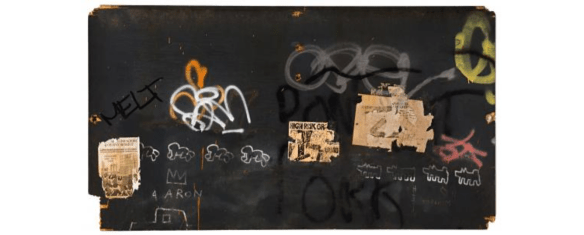
Keith Haring, Jean-Michel Basquiat, Other artists: “Untitled (Symphony No. 1)” c. 1980-83 [image sourced from NGV website]

Given their friendship, collaborations and mutual connections to the New York scene of the 1980s, it was only natural that the NGV went for this double-header retrospective. Since they both gained early recognition for their street art and graffiti-based work, and their images crossed over into the worlds of music, fashion and clubbing, they had a lot in common. They were as likely to be featured in style magazines such as The Face as they were to be found in the arts section (or society pages) of the New York Times.

Both died relatively young, and it’s as if they somehow knew they each had limited time, such is the intense pace at which they worked, as evidenced by their prolific output. If there is one element that really links them is their inner drive – they had to produce art, there was no choice for them, and they threw everything into it.

They each developed their own distinctive visual styles, much imitated and appropriated throughout popular culture, graphic design, video and advertising. Haring is known for his dog motif and cartoon-like figures, Basquiat for his iconic crown and text-based work. They also placed great emphasis on issues of identity, gender, sexuality and broader sociopolitical themes.

Where they perhaps differ is that Haring relied on more simplistic imagery (albeit loaded with meaning and context), using mainly primary colours, flat perspective (no shading or depth), and strong repetition. On the other hand, Basquiat’s paintings reveal confident mark-making, bold colour choices (not always successful), and an implied love of semiotics (even more so than Haring’s almost ubiquitous iconography).

Of course, we’ll never know how their respective work would have developed over the past 30 years – maybe what we now see is all there was ever going to be? As a consequence, there is perhaps a sense that they plowed a relatively narrow field, that they did not develop artistically once they became gallery artists. I’m not suggesting their work is shallow or one-dimensional (even though it can simply be viewed and appreciated “on the surface”), but it would have been interesting to see where their work took them.

Finally, we are still very close to the era in which they were active, and in that regard their true legacy will be in the influence they cast on late 20th century art and beyond.

Next week: Hicks vs Papapetrou
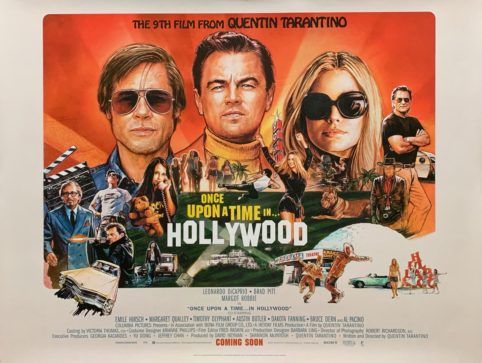
 

Tarantino vs Ritchie

Rather like an English Literature exam where students are invited to “compare and contrast” the work of two contemporary authors, over the holidays I had the opportunity to consider recent films by Quentin Tarantino and Guy Ritchie – cinema is a great way to stay out of the summer heat.

Both directors have something of the auteur about them – they like working with ensemble casts, adopting non-linear story lines, and showing off their taste in music via the soundtrack selections. In Tarantino’s case, he also writes, produces and occasionally acts; whereas for Ritchie, his trademark directorial style is defined by his London crime comedies.

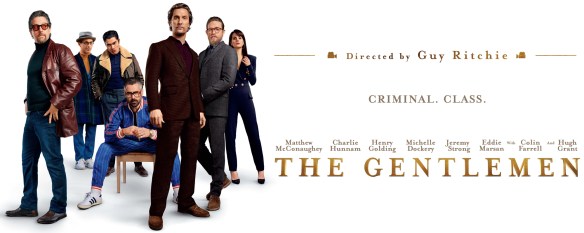
The latter’s forays into more traditional stories, adaptations and film franchises have not always been successful – but “The Gentlemen” is a return to the form of his early London gangster movies, which helped make his name. In the character portrayed by Hugh Grant, there is a certain pleasure at seeing the actor take cinematic revenge on the British tabloid press, enhancing (even refining) the satirical edge that these films sometimes reveal.

For Tarantino, “Once Upon a Time in Hollywood” is another oblique take on a familiar theme or storyline – in this case, the end of Hollywood’s Golden Age, amplified by the Manson murders and the death of the hippy dream. Once again, the director demonstrates a keen ability to create enormous cinematic tension prior to a cathartic denouement, a technique used to great effect in most of his films.

Both directors place great emphasis on dialogue and the interaction between characters, even if there is not a great deal of character development. Often, if feels like the leading roles are either pure ciphers (metaphors for interpreting events around them), or mere signifiers (the characters themselves are the meaning).

If there is one central theme connecting their core work, it is the concept of “honour among thieves” – that however far outside the law their characters reside, there is an internal logic and moral compass that guides them (however warped those values may appear to be to outsiders).

Overall, I think Tarantino’s films have more substance, and his nine feature films as director (and will the 10th also be his last?) represent a concentrated body of work that will stand the test of time. While I prefer Ritchie’s crime comedies (“Revolver” aside) to his more mainstream work, in the future those gangster capers will seem as quaint as Ealing comedies of the 1950s.

Next week: Haring vs Basquiat


Cryptopia – The Movie

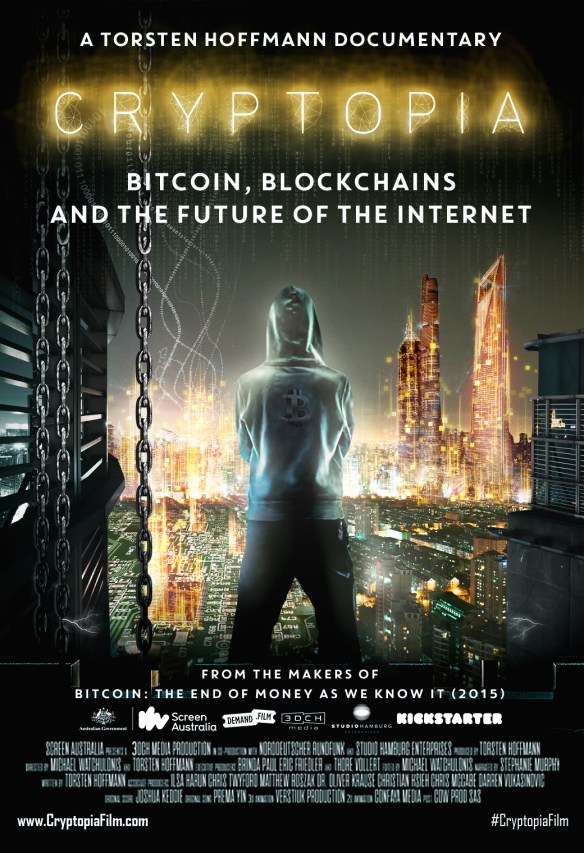
A quick plug for Torsten Hoffman‘s new documentary, Cryptopia: Bitcoin, Blockchains and the Future of the Internet. After a series of preview screenings around Australia and  New Zealand last last year, the film has its world premiere tonight in Melbourne.

Five years after producing Bitcoin: The End of Money As We Know it, the director has gone back and interviewed a number of key figures who appeared in the last film, to update their stories, and to dig deeper into the whole Blockchain, Bitcoin and crypto narrative.

I haven’t yet seen the latest film, but I first met Torsten when he was screening the previous documentary on the meetup circuit. He was kind enough to show me some early edits of Cryptopia, and I have to say the new content looks very promising.

Given the speed at which Blockchain and Bitcoin markets move (a week in crypto is often referred to as a year in any other asset class), it’s actually important that we stand back and take stock of where we are in this new paradigm for FinTech, decentralisation and distributed ledger technology.

Even if you can’t make it to the Melbourne premiere, look out for Cryptopia the movie as it tours globally.

Next week: Tarantino vs Ritchie

You said you wanted a revolution?

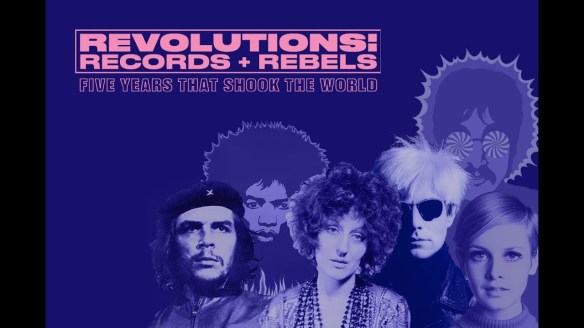
In terms of popular music and the “revolutionary” counter-culture, the Hippie Dream was born during the Summer of Love in 1967 (Haight-Ashbury to be precise) and died in December 1969 (The Rolling Stones’ concert at Altamont). The tipping point was probably The Beatles’ “White Album” released in 1968, featuring “Helter Skelter” and “Revolution 9”. Along the way, we had the “14 Hour Technicolour Dream (April 1967); the Monterey Pop Festival (June 1967); the first Isle of Wight Festival (August 1968); the Miami Pop Festivals (May and December 1968); Stones In The Park (July 1969); oh, and Woodstock (August 1969). From visiting the current “Revolutions: Records + Rebels” exhibition at Melbourne Musuem, the most significant outcome from this era was Woodstock, even though it came close to being a self-inflicted human, environmental and logistical disaster. It was only saved by a combination of the emergency services, the military, local residents – and sheer luck.

This ambitious and uneven exhibition spans the years from 1966 (The Beatles’ “Revolver”, The Beach Boys’ “Pet Sounds”, and Bob Dylan’s “Blonde on Blonde”) to 1970 (Deep Purple’s “Deep Purple in Rock”, Black Sabbath’s “Paranoid”, and The Stooges’ “Fun House”). Despite covering the peak psychedelic era of “Sergeant Pepper”, “Their Satanic Majesties Request” and “The Piper At The Gates Of Dawn”, the exhibition leaves you with the impression that Woodstock is the only enduring musical or cultural event from this time. Yet, the music portrayed in Woodstock is far from revolutionary – being mostly a bland collection of highly-derivative (and by then, almost passé) rock, blues and folk.

It almost feels like the curators of this exhibition set themselves up for failure. By trying to cover such a broad spectrum of political, social, economic and cultural themes, and then view them primarily through the rather narrow lens of popular music, the net effect is a grab bag of museum artifacts assembled with little coherence, all accompanied by a rather insipid soundtrack selection.

I’m not doubting the importance and lasting significance of the topics included (civil rights, peace movement, feminism, class war and gay liberation) – but the attempt to tack on some Australian relevance almost backfires. Let’s not forget that homosexuality was not decriminalised in Tasmania until 1997, and abortion is still not decriminalised in NSW. In fact, Australia was possibly more progressive on some issues in the early 1970s (anti-Vietnam War, ecology, feminism) than it is today with the current resurgence of populism, nationalism and religious conservatism.

Anyway, back to those “Records + Rebels”. I was surprised there was nothing about the radical developments in jazz or improvised music by the likes of Miles Davis (“In A Silent Way, “Bitches Brew”), The Art Ensemble of Chicago and Ornette Coleman, or labels like ESP, BYG and ECM. Absent also was any reference to the mod and early skinhead movements that were the antidote to hippiedom, embracing soul, r’n’b and reggae music. No mention of Soft Machine (who were contemporaries and colleagues of both Pink Floyd and Jimi Hendrix). Very little significance given to The Velvet Underground (probably the most influential band of the era in terms of inspiring the music that came after the hippie dream dissipated). And where were the likes of Can, Tangerine Dream, and Kraftwerk (their first album came out in 1970….) to represent the German rejection of traditional Anglo-American rock and roll?

On a somewhat depressing note, apart from Woodstock, two of the other enduring “brands” of this era that were on display were Richard Branson’s Virgin empire, and Time Out magazine…. So much for the Children of the Revolution.

Next week: Top 10 Gigs – revisited.