Australian MPs recommend a ban on geo-blocking

In a recent blog about geo-blocking, I commented on the frustrations of Australian consumers in trying to access digital content. That blog was written in light of a parliamentary inquiry into IT price discrimination.

ImageA Report by the House of Representatives Infrastructure and Communications Committee has just been published, and makes for some fascinating reading.

The Report reveals a number of key themes:

  • There is strong evidence that Australian consumers pay between 50 and 100 per cent more for the same product than consumers in comparable markets.
  • Price differentials cannot be fully explained by the so-called “Australia tax” (i.e., the relatively higher costs of doing business locally, due to wages, taxes, market regulation, shipping costs, economies of scale, etc.).
  • Consumer complaints about price discrimination are not being taken seriously by the industry as a whole.
  • Industry participants either deflected responsibility for price discrimination to other parts of the supply chain, or blamed inconsistent market practices as justifying the need for different regional and national price policies.
  • Despite being given the opportunity by the Committee to defend their pricing practices in public, most industry participants declined to co-operate in full; this gave rise to Apple, Adobe and Microsoft each being compelled to give evidence.
  • A number of submissions made by industry participants appeared to be disingenuous, self-serving, evasive and even misleading.

The Committee accepts that IT vendors are entitled to run their businesses as they see fit, and there is nothing to stop them from charging whatever prices they like. There was also general acknowledgment that copyright holders must be able to protect their IP assets.

However, geo-blocking (especially of digital content) simply reinforces price disparity based on a customer’s geographical location, rather than protecting the interests of copyright holders. Further, although so-called “Technological Protection Measures” (TPM) or “Effective Technological Measures” (ETM) and “Digital Rights Management” systems (DRM) may have a legitimate role in controlling copyright (and as such they enjoy protection under the relevant Copyright Law), their net effect has been to limit competition and to lock consumers into “walled gardens” which places considerable power in the hands of IT vendors as to how, when and where consumers access content.

In short, the Committee made several recommendations designed to address price discrimination and restricted market access imposed on Australian consumers, including:

  • Remove any remaining restrictions on parallel imports (in a bid to increase market competition among distributors and retailers).
  • Clarify the legal circumvention of TPM/ETM/DRM barriers that are purely designed as geo-blocking tools (rather than copyright protection measures).
  • Educate Australian consumers about their ability to buy cheaper goods from overseas, or to legally circumvent geo-blocking (without compromising product warranties or infringing copyright).
  • As a last resort, place a ban on geo-blocking and outlaw contacts or terms of service that rely on and enforce geo-blocking.

Unfortunately, while this Report is of great significance to the Australian digital economy, and seeks to achieve a balance between the rights of copyright holders and the interests of consumers, it is likely to be overshadowed by concerns about tax avoidance in respect to multinational companies. No doubt Australian consumers will make a connection between global IT companies whose products they buy, and transnational tax minimization strategies linked to transfer pricing policies and the routing of content royalties and copyright licensing fees via low-tax jurisdictions.
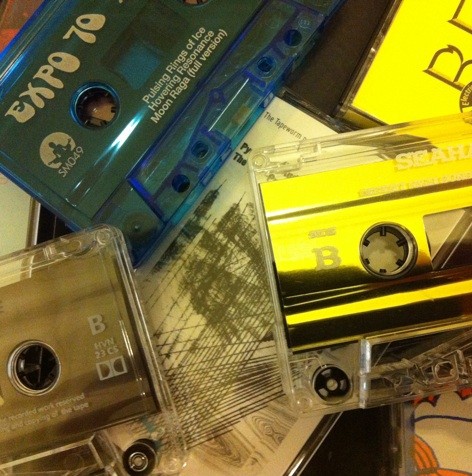

In Praise Of Analogue…

Let me start by saying that I am not a technophobe, and I certainly do not consider myself a Luddite. But in this digital age, I do have a certain fondness for all things analogue.

Cassette Culture is alive and well in the analogue world...

Cassette Culture is alive and well in the analogue world…

There are growing analogue trends in:

  • photography – Lomography and Polaroid
  • music – vinyl and cassette
  • publishing – zines and artists’ books
  • film – Super 8
  • graphics – letterpress
  • arts & crafts – Etsy and Craftsy

More and more of us are drawn to the charms and quirks of the analogue world, and not out of some perverse counter-culture posturing – we actually like this stuff for its own sake, and for the qualities that it represents:

  • slowness
  • tactile
  • considered
  • basic
  • hand-made
  • imperfect
  • uncomplicated
  • finite
  • flawed
  • serendipitous
  • warm
  • personal
  • custom-made
  • limited
  • simplicity

In fact, these key characteristics of analogue are antonyms of most things digital….

For many people who are using analogue production processes, the medium really is the message; and what you see really is what you get, because the products are usually a true representation of the work and effort that go in to making them.

However, the appeal of analogue is not just about the format or the technology; the inherent limitations of analogue production processes lead to natural constraints which inform the content and determine the final outcome of the finished object. For example, the number of photographs an analogue camera can take at any one time is limited by the length of the roll of film; a vinyl album can carry about 22-23 minutes of music on each side; a plate used in a hand-made printing process can usually generate editions of no more than 30 before it starts to deteriorate.

There are some traditional analogue domains where the digital format does enhance the user experience e.g., digital radio (although I sometimes miss the hum and crackle of AM broadcasts); or where digital technology introduces a whole new dimension e.g., 3-D printing; or where digital can resurrect/replicate a virtual experience of analogue e.g., iOS apps that mimic classic analogue synthesizers.

On the other hand, on-line communities are moving to “analogue” events via meet-ups because being there in person offers a deeper connection. I recently attended an afternoon salon conducted by a digital media agency, because they recognize the need to interact face-to-face with customers.

I anticipate that in response to a growing sense of digital disintermediation, more of us will start to engage with and interact through analogue media. This should not be seen as an out and out rejection of digital, but more as a means to establish balance and to find a deeper level of engagement beyond the often superficial shimmer of digital gloss.

Declaration of interest: the author, under an assumed nom de musique, recently released a limited edition cassette version of his last album, available on-line and from select record stores in Melbourne

“Everything on the Internet should be free…”

Last week I got into a very heated dinner-party debate with an artist, an academic and a publisher about the economic value of copyright protection in particular, and intellectual property rights in general.

It started with a discussion about file-sharing and illegal downloads, and led to an argument about patenting genomes. I can’t attribute directly, but the gist of the argument was as follows:

1 Copyright and patents do not encourage innovation – they stifle it

2 Intellectual property rights represent a modern phenomenon – ancient societies managed to exist without them

3 Everything on the Internet should be free – and not subject to copyright protection

Let’s agree that formal intellectual property laws are a relatively recent invention – the modern concept of patents emerged in 15th century Europe, and the first British copyright law was passed in 1710. These laws then grew in importance as technology introduced the printing press and the industrial revolution.

I would argue, however that all civilisations have placed a premium on knowledge, creativity and invention. Regardless of whether this knowledge is based on folklore, scientific experiment, geographical discovery or geological exploration – specific rights, actual economic benefits and certain legal protections have been afforded to those who establish ownership or control of these assets. Examples would include the right to copy ancient manuscripts held in monastic libraries; the monopolies and protection granted to members of craft guilds in plying their skills; the trading rights granted to merchants; and restricting the practice of certain tribal traditions to selected community elders.

Most of these knowledge-based activities involve a high degree of effort, ingenuity and risk-taking – so in return, it was acknowledged there needed to be financial and other rewards to act as incentives. In the case of science and technology, these incentives are often deemed essential to offset the huge capital costs of developing new products and processes. In the case of copyright, the rewards of author royalties and content licensing fees are desirable to encourage people to come up with new ideas and new concepts – even if the purpose is simply to amuse and entertain us.

Of course, the economic rewards need not simply be derived from patents or copyright – tax-breaks for R&D or public grants to fund academic research are some examples of alternative financial incentives for both inventors and people of ideas.

As for the concept that “everything on the Internet should be free”, I am reminded of what I once told a client, who could not understand why access to the on-line version of a printed reference work was costing him more than the “physical” cost of adding a new user log-in and password to our content publishing platform: “OK”, I replied, “you can have all the content for free, but we’re not going to index it, or structure it with headings and sub-headings; we won’t tag it, insert cross–references, or add hypertext links; we won’t even edit it; and finally, we won’t update it every time there is new material.” He soon got the point.

Would you take career advice from a sushi chef?

MV5BMTkzMDU1NzQxNV5BMl5BanBnXkFtZTcwMDAxODkyNw@@._V1_SY105_CR41,0,105,105_

The cohorts of Baby Boomers who entered the workforce during the latter stages of the Industrial Age represent the last generation who contemplated lifelong employment in the same career, if not in the same organization or even in the same job. Here in the Information Age, with increasing numbers of employees engaged in knowledge work, the notion of a single career for life, let alone a single job for life, is pure fantasy.

In the Information Age, our willingness to embrace career change is as important as our ability to develop and maintain our core technical skills. For example, while we may think it is necessary to become experts in the latest technology, it’s equally important to understand how and why that technology is being deployed in particular situations – this is where the real learning occurs, as both the content and the context for that technical application will inevitably change.

The Agrarian Age helped define the concept of life-long occupations – in agriculture, the military, government service, science and medicine, the trades and professions, and even among unskilled labourers.  Think of the workers who toiled their whole lives on building the great mediaeval cathedrals, never to see the final results of their labour as those major construction projects took several generations to complete.

The Industrial Age ushered in occupations that relied on workers acquiring and applying technical, practical and manual skills that in essence changed very little during their lifetime, particularly on manufacturing production lines. This era also saw the development of the formal workplace and business establishments, in contrast to the largely home-based work patterns of before.

The Information Age continues to see rapid changes in workplace structures, employment patterns and career development. This change demands that knowledge workers constantly improve their skills – keeping up to date with new technology, engaging in the latest management theory, embracing new business models. This continuous learning process is not best served by staying in the same role, the same environment or the same mindset for lengthy periods. Personal change is a surer way of keeping in touch with universal changes.

So for latter-day job seekers who are looking for insights into their own career choices and options, why would they take career advice from someone who has been doing the exact same thing for 50 years or more?  I was reminded of this when a recent edition of my high school alumni newsletter reported that a long-serving member of staff had retired after more than 40 years in the job. During my own time at the school, this particular teacher was also the careers adviser, and without meaning to disrespect his teaching abilities, why would anyone take careers advice from someone who had stayed in the same job his whole career?

And yet, who could fail to appreciate the explicit career advice in the critically acclaimed documentary, “Jiro Dreams of Sushi” (made by David Gelb in 2011)?

Jiro Ono has been making sushi for over 70 years, but continues to hone his skills as a sushi shokunin, always seeking perfection, constantly finding new and better ways to create his dishes. As a master sushi chef, Jiro makes sure he knows his suppliers and is familiar with their produce. As a leader he is quick to acknowledge that the food he serves to his customers is the result of much hard work and detailed preparation by his team of chefs. As a teacher, his Michelin 3-Star restaurant also offers lengthy (and highly valued) apprenticeships to aspiring itamae who are willing to dedicate themselves to pursuing their craft.

Even though the daily process of producing the highest quality sushi seems repetitive and even tedious, it is the willingness to face each day as both a new challenge and a fresh opportunity to improve one’s skills that gives Jiro his core purpose and sense of career satisfaction.

From personal experience, my own career development continues to be about defining my core values and improving my skills, understanding how to apply them in new situations, and how to enhance them by learning from colleagues, mentors, clients, suppliers and competitors, or from on-the-job and formal training.  Like Jiro the sushi shinkonin, I try and make this a daily process, by reflecting on how something can be done better or by understanding how new information can be incorporated into existing solutions.

Many of us working in the Information Age will recognize that we don’t pursue a single, linear career path, but engage in a series of both distinct and overlapping career sequences, connected by a common thread of transferable skills and inter-disciplinary learning applied to new roles, new projects or to new client engagements. Our challenge is to ensure we maintain purpose, relevance and a sense of direction as we navigate our “transactional” careers.

Footnote: The soundtrack for “Jiro Dreams of Sushi” features several compositions by Philip Glass, which seems totally appropriate, on several levels:  Glass, like fellow minimalist John Cage, is attracted to various aspects of Japanese culture; and as a minimalist, Glass’s music is often criticised for being repetitive, even boring – but attentive listening reveals that the repetitions subtly shift, revealing minuscule changes in pattern, rhythm and texture – much like every piece of sushi tastes subtly different.