“Language is a virus” – a look at coding skills

We are fast-approaching the point when a lack of some basic coding skills will be likened to being illiterate. If you are unable to modify a web page or use an HTML text editor, it will be like not knowing how to create a Word document or edit a PDF file. Coding does appear on some school curricula, but it is primarily taught in the context of maths, computer programming or IT skills. Whereas, if we look at coding as a language capability (part of a new literacy), it should be seen as an essential communication tool in itself.
quote-William-S.-Burroughs-language-is-a-virus-from-outer-space-92713First, I am aware that a number of programs for children are trying to teach coding and maths in more relevant ways, and having talked to some of their creators, I admire their ambition to place these skills in a broader context. Coding might be described as the “4th R”: alongside reading, writing, arithmetic we have reasoning”. So a program like Creative Coding HK (as it name implies) focuses on students making things; in the USA, KidsLogic is placing as much emphasis on contextual learning as on robotics; while Australia’s Machinam is re-writing the maths curriculum to teach practical, everyday problem-solving skills.

Second, as we know, learning the foundations of coding is like learning the syntax of a foreign language. However, while Latin and Greek can provide the basis for learning the structure (and many words) of many European languages, it’s not much use when learning character-based languages (Chinese, Japanese) – although there are common grammatical elements. But if we understand that a line of any code has to be structured a certain way, contain essential elements, define key attributes and run in a particular sequence or order, we may come to “read” and interpret what the code is saying or doing.

As an aside, I’m struck by the comments made by the founder of AssignmentHero during a recent pitch night. Although he had studied computer sciences at Uni, he did not use any of the formal computing languages he had learned when building his product. This highlights the downside of learning specific languages, which can become obsolete, unless we have a better grasp of “which languages for which purposes”, or find ways to easily “interpolate” components of one language into another (just as languages themselves borrow from each other). Or do we need an Esperanto for coding?

Third, even if I don’t want or need to learn how to program a computer or configure an operating system, knowing how to define and sequence a set of instructions for running some software or a dedicated program will be essential as more devices become connected in the Internet of Things. For myself, I have dabbled with a simple bluetooth enabled robot (with the original Sphero), acquired a WiFi-enabled light bulb (the programmable LIFX) and experimented with an iOS music app that incorporates wearables (the MIDI-powered Auug motion synth).

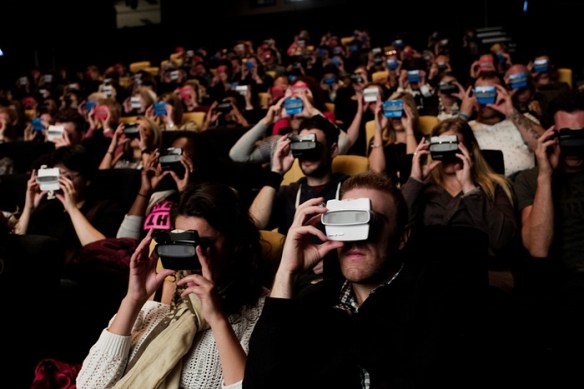
Finally, just like a virus, coding is contagious – but in a good way. At a recent event on Code in the Cinema (hosted by General Assembly as part of the Melbourne International Film Festival), there were three demos which captured my attention, and which I will be investigating over the coming months:

I think they show why, where and how many of us “non-computing” types will want to learn the benefits of coding as a new language skill. If nothing else, getting comfortable with coding will help mitigate some of the risks of the “digital divide”.

Next week: The arts for art’s sake….

Update on the New #Conglomerates

My blog on the New Conglomerates has proven to be one of the most popular I have written. I’d been contemplating an update for a while, even before I heard this week’s announcement that Verizon is buying the bulk of Yahoo!. Talk about being prescient…. So, just over two years later, it feels very timely to return to the topic.

Image sourced from dc.wikia.com

Image sourced from dc.wikia.com

Of the so-called FANG tech stocks, when I was writing back in May 2014, Facebook had recently acquired WhatsApp and Oculus VR. However, apart from merging Beats Music into its own music service, Apple has not made any big name deals, but has made a number of strategic tech acquisitions. Meanwhile, Amazon has attempted to consolidate its investment in delivery company, Colis Privé, but got knocked back by the French competition regulators. Netflix finally launched in Australia in March 2015, and within 9 months had 2.7 million customers, a growth rate of 30% per month. Finally, Google has since renamed itself Alphabet, and purchased AI business Deep Mind.

Over the same period, Microsoft appears to have reinvigorated its strategy: back in May 2014, Microsoft had just completed its acquisition of Nokia. Since then, Microsoft has announced it is buying LinkedIn (following the latter’s purchase of Lynda.com in 2015), but has also shut down Yammer, which it had only bought in 2012. The acquisition of LinkedIn has been framed as a way to embed corporate, business and professional customers for its desktop and cloud-based productivity tools (and maybe give a boost to its hybrid tablet/laptop PCs). On the other hand, Microsoft has a terrible track record with content-based products and services, as evidenced by the Encarta fiasco, and the fact that Bing is an also-ran search engine. I think the jury is still out on what this transaction will really mean for LinkedIn’s paying customers.

So, what are the big tech themes, and where are the New Conglomerates competing with each other?

First, despite being the “next big thing”, VR/AR is still some way off being fully mainstream (although Pokémon GO may change that….). Apple and Google will continue to go head-to-head in this space.

Second, content streaming is not yet the new “rivers of gold” for publishing (and the sale of Yahoo! might confirm that there’s still gold in those advertising hills….). But music streaming (Apple, Spotify, Amazon and Google – plus niche services such as Bandcamp and Mixcloud) is gaining traction, and Amazon is building more content for SVOD (to compete with Netflix, Apple and Google). But quality public broadcasters such as BBC, ABC and NPR are making great strides into audio streaming (via native apps and platforms like TuneIn) and podcasting. One issue that remains is the fact that digital downloads and streaming still suffer from geo-blocking, and erratic pricing models.

Third, Amazon continues to build out its on-line retail empire, even launching private label groceries. Amazon will also put more of a squeeze on eBay, which does not offer fulfillment, distribution or logistics and is a less attractive platform for local used-goods sellers compared to say, Gumtree.

Fourth, Amazon is making a play for the Internet of Things (which, for this discussion, includes drones), but both Apple and Google, via their hardware devices, OS capabilities and cloud services, will doubtless give Amazon a run for its money. Also, watch for how Blockchain will impact this sector.

Finally, payments, AI, robotics, analytics and location-based services all continue to bubble along – driven by, for example, crypto-currencies, medtech, fintech, big data and sentiment-based predictive tools.

Next week: Another #pitch night in Melbourne…


More In The Moment

In an earlier blog on “being in the moment”, I confessed that I often find the prospect (and practice) of meditation to be daunting and somewhat overwhelming. I forgot to mention that there is a park bench in one of Melbourne’s inner-city gardens which I have found to be a useful starting point. It features a quotation from Dr Ainsley Meares:

“Sit quietly, for it is in quietness we grow”

"clinamen" by Celeste Boursier-Mougenot (2013), purchased by NGV Foundation (Photo © Rory Manchee, all rights reserved)

“clinamen” by Celeste Boursier-Mougenot (2013), purchased by NGV Foundation (Photo © Rory Manchee, all rights reserved)

The significance of this insightful instruction has been driven home by some recent experiences:

  • Through my involvement with the Slow School of Business, I have participated in some Slow Coaching, where I was a Listener. The practice of “deep listening” really does require you to be present in the moment, to focus on what is being said by the Speaker, to observe how it is being expressed, and to give constructive feedback on what you have heard without judging or critiquing. It’s an extension of “active listening”, a technique I learned many years ago as a counsellor helping clients with their consumer debt problems, and I later used it as a manager to provide employee feedback during performance reviews. The key difference is that deep listening is not so concerned with exploring a linear narrative or identifying specific solutions, and is more about giving space to the Speaker to articulate what concerns or issues they are currently facing.
  • At a concert the other week I was struck by the number of people in the audience who were avidly taking photos and videos on their smart phones, or busy talking at the bar rather than appreciating the live performance in front of them. It made me wonder why some people bother going to gigs at all – it often seems like they are not there to watch and listen to the musicians! Apart from being disrespectful to the performers and other members of the audience, the happy snappers and the chatty drinkers can’t really be in the moment because they are too busy trying to capture a transient event for posterity (and who actually watches shaky live concert footage shot on a phone?). Or are they so self-absorbed that they are actually oblivious to what is going on around them?
  • Similarly, last weekend I visited the Twelve Apostles and was dismayed by the ubiquitous selfie-sticks and constant preening and posing at every vantage point. As the sun went down, hardly anyone was actually observing the dusk, let alone being still and listening to the waves below. Instead, everything was being reduced to a diluted digital experience. Again, who goes back and looks at all those photos (and do they do so more than once)? How do these images enhance the experience of simply being there? Did these visitors really appreciate the natural beauty and breathtaking views in front of them? Is a digital camera the only way to interpret the scene for themselves? Is it only “real” when they take a picture? Can it only “exist” as a bunch of pixels?

To underscore quite how significant “being in the moment” can be, I’m reminded of the Above All Human conference in January, where theoretical astrophysicist Dr Katie Mack scared the living day lights out of the audience when she discussed the impact of vacuum decay theory. In (very, very, very) short order, a shift in the current state of the Universe would wipe out life as we know it in a millisecond. It would happen so quickly, that no-one would see it coming. The effect would be catastrophic, but we wouldn’t know it was happening. As Dr Mack so eloquently put it, there would be no point in worrying about FOMO, because:

(a) there would be nothing left to be missing out on;

(b) no trace of your existence would remain; and

(c) in any event, there would be no-one left to miss you….

While I understand the need to validate our existence through “capturing the moment”, if we are too pre-occupied with taking photos, rather than focussing on our actual presence, we risk surrendering our experience to mere digital simulacra.

Next week: Whose IP is it anyway?

Tourism: Time to Get #Digital

In the latest State of the Nation report, Roy Morgan Research shone a spotlight on Australian tourism, an industry which has the potential to make a larger contribution to national GDP following the commodities boom. But the industry needs to get smarter at leveraging digital technology and embracing disruptive business models to ensure sustainable growth.

Melbourne's White Night Festival (Photo: Paul Jeffers for The Guardian)

Melbourne’s White Night Festival (Photo: Paul Jeffers for The Guardian)

As the report highlights, digital is disrupting traditional operators through “automation and variable pricing of everything from hotel rooms to airline seats”, which combined with huge changes in media consumption “is impacting the very essence of the industry”.

What does this mean for the industry, and how should it respond? Here is a quick overview:

1. Tourism is a major contributor to exports and to GDP

According to data from the Department of Foreign Affairs and Trade, tourism generated over $14bn in exports in 2014, and is #5 after iron ore, coal, natural gas and education.

In particular, revenue from Chinese tourists, especially “Free and Independent Travellers” (FIT), grew 19% in 2014, and now accounts for around one-third of in-bound tourism revenue.

With an increasing proportion of Australia’s population born overseas (in large part driven by people coming here to study or to work from China, India and South East Asia), it’s only natural that their friends and family will come to visit them for holidays. And since they are likely to be more affluent visitors, they can afford to curate their own itineraries, rather than be locked into package tours.

2. Great attractions need even better infrastructure and UX

It’s no longer enough that Australia can boast many of the best natural, cultural and lifestyle tourism attractions in the world. Increasingly, catering for the “visitor experience” means that travel operators, hotels, resorts, attractions and destinations need to consider things like:

  • Multilingual and multicultural capabilities
  • Internet & WiFi access
  • Smartphone compatibility
  • Signage and navigation aids
  • Integrated services (e.g., transportation and visitor attractions)
  • Content and interpretive tools

3. Market and digital disruption means more choice for travellers

Disruptive market forces mean that tourists have more choice, and can access the sharing/informal economy, such as Uber and AirBnB.

Digital disruption also means a myriad of ways to discover, book and pay for transport, accommodation and services, aided by numerous apps that can bypass official travel and tourism services.

Visitors not only have more choice, they are more likely to be well-informed, having done their research before they arrive, aided by social platforms that offer personal reviews and recommendations.

4. What are the reasons tourists come to Australia (and what do we do with them once they are here)?

I don’t have any official data, but anecdotally, tourists come to Australia because in general they believe it’s safe (notwithstanding shark attacks and venomous insects), it’s clean, it’s unique, it has variety, and for some the language is also a convenience.

Whether it’s natural scenery, food and wine, cultural events, sport, historical sites, gambling, surfing, trekking, arts festivals, fashion weeks, galleries, museums, beaches, or just hanging out in coffee shops, Australia has a lot to offer.

I’m obviously biased, but Melbourne alone hosts a full calendar of cultural, sporting, culinary and commercial events – there’s something significant happening every month of the year:

  • Major Festivals – Jazz, Comedy, Film, Arts, Fringe and Cabaret (plus the Laneways Festival)
  • Special Events – White Night, SuperSense, Winter Masterpieces, Gertrude Street Projection Festival
  • Sport – Tennis, Spring Racing Carnival, AFL Grand Final, F1 Grand Prix, Boxing Day Test
  • Commercial – Food & Wine Festival, Design Week, Fashion Week, Art Fair, Trade Expos, Professional and Industry Conferences

And did I mention the coffee shops???

5. Some further opportunities?

Digital won’t displace these attractions; in fact it should make it much easier for tourists to discover, connect to and interact with them before, during and after their visit.

Digital can also help curate the whole end-to-end experience, from suggesting thematic itineraries, managing personalised bookings and organising customised events, to providing travel information and advice in advance, updating information throughout their stay, and keeping in contact with visitors once they leave.

And a personal plea – can Melbourne’s trendy restaurateurs that don’t accept bookings offer an app to let customers know when their table comes up on the waitlist?

Declaration of interest: The author currently consults to Roy Morgan Research. These comments are made in a personal capacity.

Next week: Update on AngelCube