From Brussels With Love (Revisited)

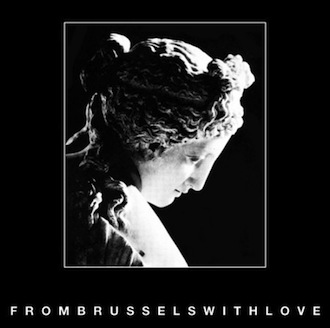
40 years ago this month, an obscure record label in Belgium released a cassette-only compilation album, which became a reference point for many post-punk projects. “From Brussels With Love”, originally put out by Les Disques du Crepuscule, has just been re-issued, so during the recent lock-down, I thought I would exhume my original copy and remind myself of why this was such a landmark album, and why its influence continues to this day.
To add some context, Sony had launched the Walkman cassette player in 1979, the first truly portable device for pre-recorded music. This led to a renewed interest in the cassette format among independent artists and labels, as it was also a cheaper means of manufacture and distribution than vinyl records (and long before CDs, mp3 and streaming services). And in the wake of the DIY aesthetic promoted by punk, some new music was being released on cassette only, such as Bow Wow Wow’s “Your Cassette Pet” and BEF’s “Music for Stowaways” (the title referencing an early model of the Sony Walkman). Some of these cassette-only releases (especially by independent, lo-fi, DIY electronic artists such as Inertia) are now highly collectable.

What made “From Brussels With Love” so significant was not just the format. It was not even alone in combining music with interviews and fully illustrated booklets. Fast Forward in Melbourne also launched their first audio-magazine in November 1980, and other similar projects followed such as Edinburgh’s “Irrationale”, Manchester’s “Northern Lights”, and London’s “Touch” label which began life releasing a series of curated audio gazettes, including both spoken-word and musical contributions.

The importance of “From Brussels With Love” was the cross-section of artists it managed to bring together: mercurial musicians such as Bill Nelson, John Foxx and Vini Reilly; side projects from members of established post-punk bands from the UK (Wire, Joy Division/New Order, the Skids and Spizzenergi); a cluster of emerging European bands (Der Plan, The Names and Radio Romance); and several leading names in modern classical and ambient music (Harold Budd, Michael Nyman, Gavin Bryars, Phil Niblock, Brian Eno and Wim Mertens). Oh, and an interview with actor Jeanne Moreau.

This eclectic mix of contemporary artists (and this deliberate approach to curation) was no doubt highly influential on subsequent projects such as the NME/Rough Trade “C81” or Rorschach Testing’s “Discreet Campaigns” – these were not compilations reflecting a single musical style or even the usual label sampler, nor were they simply collections of what was new or current. Instead, they reveal an aesthetic attitude (curiosity combined with open-mindedness mixed with a high level of quality control and a hint of audience challenge) that is harder to find today. Now we have “recommender engines” and narrow-casting streaming services that would struggle to compile similarly diverse outcomes. And more’s the pity.

I know there are a number of on-line platforms and print publications that try to bring a similar approach to their curation, but for various reasons, and despite their best intentions, they generally suffer from being cliquey, self-referencing/self-identifying, and all driven by a need to capture eyeballs to attract advertising, so they quickly lose any claim to independence or even originality. Which is a shame because there is so much great music out there that we don’t get to hear, simply because it is not mainstream, or it doesn’t conform to a particular style, or it doesn’t meet “playlist criteria”, or it doesn’t have enough marketing dollars behind it.

Next week: Is the Party over?

Margaret Tan and Dragon Ladies Don’t Weep

Last week, I mentioned the number of ageing rock stars having to cancel concerts. In contrast, Margaret Leng Tan, aged 74, performed a 75-minute one-person show as part of the Asia TOPA festival in Melbourne. She made it look effortless, producing an almost choreographic style of piano playing, as she performed the world premiere of “Dragon Ladies Don’t Weep”.

Both autobiographical and a tribute to two of her greatest influences, John Cage and her mother, the show is a mix of live piano, prerecorded audio, digital art, multimedia and spoken word. It is comprised of anecdotes from her life, personal musings on loss, and practical aphorisms, such as “DRC” – the “daily reality check” – a must for all artists and anyone else needing to make sense of the modern world.

Clearly a very focused and determined musician, Margaret Tan has carved out a niche for herself in the modern classical world, with her championing of the toy piano. She has made it an instrument for serious composition and concert performance.

The physicality of her performance ensured that the digital technology neither dominated nor descended into gimmickry (no “tech for tech’s sake” here). Her presence on stage was captivating yet self-contained – despite largely being all about her, it was authentic and self-effacing in equal measure.

Margaret Tan revealed two key aspects of herself that go some way to explaining her success. First, at an early age she realised she had to concentrate on the piano – she couldn’t maintain her other music and dance studies – from which we get the sense of her single-minded purpose. Second, her lifelong obsession with numbers – almost a form of synesthesia; and given the strong relationship between numbers and music, it felt that she has learned to live with, even appreciate, this “affliction” in the pursuit of her art.

If there was one thing missing, it was Margaret Tan’s own music. While she is best-known for her interpretations of John Cage and other modern composers, I was curious about her own work, and whether she has ever explored composition herself.

Next week: My Four Years in Crypto


Hicks vs Papapetrou

Another compare and contrast this week, and like last week, based on a current NGV exhibition – this time, head-to-head retrospectives of two Australian photographers, Petrina Hicks and Polixeni Papapetrou.

Petrina Hickson – “Peaches and velvet” (2018) – image sourced from NGV

The challenge for contemporary photographers is the ubiquity of the medium. Anyone with a smart phone can be a “photographer”. At a basic level, the technology to capture photographic images is accessible to all, and no special skill is required. Add to this the impact that advertising, magazines, fashion, portraiture, reportage and social media have had on the way we view images, and there is a risk that audiences detect no difference between what they see on a billboard poster, in an on-line news article, on Facebook/Tumblr/Instagram/Twitter or in an art gallery or museum.

In these two particular shows, I think the NGV is trying to re-establish a platform for contemporary photography as an art form, and not merely as a technical means of capturing and creating images. (Selfies, holiday snaps and wedding photos are all very well, but they ain’t necessarily art.) It’s an admirable ambition, but I’m not sure these collections are the best examples on which to build such a thesis.

Polixeni Papapetrou – “Prize Thimble” (2004) – image sourced from NGV

Both photographers produce highly stylized, almost trademark images, which reveal a very methodical and deliberate approach to their work. Everything is highly choreographed, deliberately posed and meticulously arranged – nothing is left to chance, giving an overwhelming sense of artifice. These photographs are hyperreal yet also quite literal – what you see is what you get. This is not to say they lack formal narrative or even additional meaning, but despite their obvious visual appeal, it’s hard to see much beyond the images themselves.

In Hicks’ case, as well as recurring images, arrangements and visual motifs, the works on display reveal a very defined (even limited) colour palette, especially as many tones appear washed out, almost over-exposed. While Papapetrou’s work mostly feature her own daughter, in various staged settings, some of which allude to well-known fictional stories,  historical events, myths, legends and fairy tales. Despite both these exhibitions being retrospectives, based on these selections you would be hard-pressed to say there was much in the way of artistic development – there’s a sameness to both sets of images.

Despite each photographer having a distinctive style, there are also echoes of many other photographers – notably Julia Margaret Cameron, Madame Yevonde, Claude Cahun, Meret Oppenheim, Cyndi Sherman and Polly Borland among them.

Next week: The Current State of Popular Music


Haring vs Basquiat

Following last week’s “compare & contrast” entry, another similar exercise this week, between artists Keith Haring and Jean-Michel Basquiat, the subject of the NGV’s summer blockbuster exhibition.

Keith Haring, Jean-Michel Basquiat, Other artists: “Untitled (Symphony No. 1)” c. 1980-83 [image sourced from NGV website]

Given their friendship, collaborations and mutual connections to the New York scene of the 1980s, it was only natural that the NGV went for this double-header retrospective. Since they both gained early recognition for their street art and graffiti-based work, and their images crossed over into the worlds of music, fashion and clubbing, they had a lot in common. They were as likely to be featured in style magazines such as The Face as they were to be found in the arts section (or society pages) of the New York Times.

Both died relatively young, and it’s as if they somehow knew they each had limited time, such is the intense pace at which they worked, as evidenced by their prolific output. If there is one element that really links them is their inner drive – they had to produce art, there was no choice for them, and they threw everything into it.

They each developed their own distinctive visual styles, much imitated and appropriated throughout popular culture, graphic design, video and advertising. Haring is known for his dog motif and cartoon-like figures, Basquiat for his iconic crown and text-based work. They also placed great emphasis on issues of identity, gender, sexuality and broader sociopolitical themes.

Where they perhaps differ is that Haring relied on more simplistic imagery (albeit loaded with meaning and context), using mainly primary colours, flat perspective (no shading or depth), and strong repetition. On the other hand, Basquiat’s paintings reveal confident mark-making, bold colour choices (not always successful), and an implied love of semiotics (even more so than Haring’s almost ubiquitous iconography).

Of course, we’ll never know how their respective work would have developed over the past 30 years – maybe what we now see is all there was ever going to be? As a consequence, there is perhaps a sense that they plowed a relatively narrow field, that they did not develop artistically once they became gallery artists. I’m not suggesting their work is shallow or one-dimensional (even though it can simply be viewed and appreciated “on the surface”), but it would have been interesting to see where their work took them.

Finally, we are still very close to the era in which they were active, and in that regard their true legacy will be in the influence they cast on late 20th century art and beyond.

Next week: Hicks vs Papapetrou