Unknown's avatar

About Content in Context

Content in Context helps companies to define the market for their products and services, to identify customers and build the business pipeline, and to develop their content marketing strategies. By working with our clients to design, build and grow their business, our primary focus is to extract commercial value from unique assets, including knowledge, data, know-how, processes and transactional information.

ASIC’s new regulatory sandbox for #FinTech #startups

Last week, ASIC published its eagerly awaited public consultation paper on the so-called FinTech regulatory sandbox. ASIC Commissioner, John Price and his colleague Mark Adams launched the paper at a special meeting of the FinTech Melbourne group, hosted by KPMG. There was also participation by FinTech Australia represented by its new CEO, Danielle Szetho, and by the Digital Finance Advisory Committee, represented by Deborah Ralston.

sandbox-295256The Commissioner was at pains to stress that, notwithstanding the developments within FinTech, and ASIC’s contribution via the Innovation Hub, the primary focus of the regulator is to “promote confident and informed consumers and investors, and to promote fair, transparent, orderly and efficient markets”.

To reiterate the point, Mr Price stressed that while the Innovation Hub is designed to help FinTech startups navigate the regulatory system, as well as reducing red tape, there should
be no compromise in ASIC’s fundamental regulatory and licensing regime.

ASIC will continue to adopt what it calls a modular approach to licensing and regulatory oversight, that includes: the ability to operate as a representative of an existing licensee; a focus on organisational competence; and the use of waivers and the “no-action” policy and decisions.

However, ASIC recognises the issues and barriers to entry that face some FinTech startups such as speed to market (a function of technology outpacing compliance?) and organisational competence (do firms need to hire in these skills and/or provide specific undertakings to that effect, or can they make use of third-party resources?). In ASIC’s view, by helping firms to reduce the time to market and to enhance their organisational competence, FinTech startups will be able to overcome the further barrier of access to capital. But there still needs to be acceptable consumer and investor outcomes, and efficient markets.

The proposals include additional guidance and discretion on organisational competence, and a limited license model that makes use of third parties as an alternative to establishing in-house organisational competence from day 1 (e.g., using an accounting firm as an external reviewer or sign-off), and limited exemptions during a defined test phase, yet still subject to some constraints to maintain a balance.

To clarify, ASIC currently exercises its discretion when assessing organisational competence based on the nature of the financial services and financial products to be offered, and the collective knowledge and skills of the people in the business. Under the proposals, the limited license will offer some additional flexibility to heavily automated business services and models, whereby the business can rely on professional third-party sign-off for compliance plans.

The sandbox exemptions will only be available to new Australian entities (to focus on startups) and only for a 6-month duration. It will be confined to certain financial services only – such as providing advice and arranging transactions. It will not include market making, and consumer protection will remain paramount. Once the limited license has expired, companies will either be instructed to cease operations, become an authorised representative of an existing licensee, or submit a full license application.

Other restrictions on the sandbox exemptions mean that applicants must be advising or dealing in liquid products (equities, managed funds and deposits), so not superannuation, insurance or derivatives. There will also be a cap on the number of investors (e.g., 100 retail clients), and on individual exposures (e.g., $10,000 per client), with an overall cap of $5m (but possibly unlimited in respect to wholesale clients?).

Participants must demonstrate they have adequate compensation arrangements, such as holding appropriate professional indemnity insurance and participating in an external dispute resolution process. They must also operate under core conduct and disclosure principles (e.g., disclosing trailing commissions).

There is some thought that sandbox participation could be “sponsored”, by third-party advisers, startup hubs or venture capital funds. This would operate on a “no liability” basis, and would primarily offer a preliminary health check of the FinTech applicant’s proposed business model. Above all, there will need to be adequate notification and reporting requirements, including a feedback process.

When comparing these proposals to what some international regulators are doing, ASIC believes they are more progressive than their counterparts. The UK is adopting a restricted licensing model, the US is using a “No action” process (more focused on credit providers?), and Singapore has recently announced a hybrid sandbox proposal.

During the Q&A session, the following issues were aired:

  • Is ASIC in favour of mandatory client recording? No, it will continue to rely on industry best practice
  • Is general insurance included in the sandbox? No, ASIC is not looking at risk-management products to be part of the exemptions.
  • If incubators and/or VC’s are able to be sandbox “sponsors”, how will ASIC deal with potential bias? ASIC says it is alert to practices such as unreasonable “fees”.
  • Would a new entity or product from an existing authorised representative be able to access the sandbox? It wasn’t clear whether this would be covered, but presumably not if it did not meet the “new business” requirement?
  • Would the sandbox be available to non-financial services co-creating products for existing AFSL holders? Again, it wasn’t clear – but if it was a new business applicant, presumably it would. (This also raised the issue of “mature” businesses using disruptive or outsourced services as a way to access the sandbox.)
  • ASIC will encourage companies to apply for a full license prior to end of the six month test, to ensure timely compliance
  • What will happen as a result of people playing in the sandbox? Clearly, ASIC has a vested self-interest in learning about and getting exposure to innovation, but it needs to demonstrate a pro-active and efficient approach.
  • What are the key criteria for the sandbox exemption? ASIC does not have a prescriptive approach (subject to the sandbox restrictions), so it will look at each application on its merits (e.g., short vs long-dated products, simple vs complex, retail clients vs wholesale), and focus on the financials, the organisational competence, and the business model. And obviously, experience counts.
  • Timing of the sandbox? ASIC hope to see it operating by the end of September (Responses to the CP260 are due in by July 22).

Subject to the consultation feedback, there seems to be general industry consensus that the sandbox proposals are to be welcomed. But there are still some grey areas, as evidenced by the Q&A, and nowhere did I here anything specifically relating to the new emerging class of programmable currencies and other digital assets, many of which are pushing the regulatory boundaries, as well as disrupting traditional markets. And with current equity crowdfunding proposals stuck in Parliament, nothing happening there either.

(For some other responses to Consultation Paper CP260, check the following articles:

http://m.smh.com.au/business/banking-and-finance/asic-to-build-fintech-startups-a-regulatory-sandbox-to-test-ideas-20160608-gpe4l7.html

http://www.financialobserver.com.au/articles/fintechs-welcome-regulatory-sandbox-proposal

http://www.fintechaustralia.org.au/#!Why-the-Fintech-Regulatory-Sandbox-is-a-Game-Changer/ll9ed/5757cd8f0cf245cf71a32089)

Next week: Customer service revisited

University Challenge – #Startup Victoria’s Student #Pitch Night

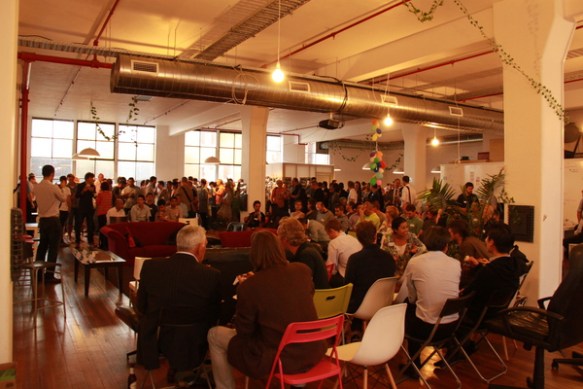
There were around 500 people in the audience for last week’s #StartupVic University Startup Battle, which either says there was nothing better to do on a chilly Melbourne evening, or that this new Meetup format is working – or that the students of today are less interested in finding a job, and more interested in building their own career opportunities that connect with their purpose. (Our political leaders should take note….)

A sell out audience for the University Startup Battle (Image by Stefan Welack sourced from Twitter)

A sell out audience for the University Startup Battle (Image by Stefan Welack sourced from Twitter)

After a series of campus competitions, the finalists on the night were representing 6 of Victoria’s universities, and revealed a wealth of talent, ideas, innovation and inspiration. In order of appearance, the pitches were:

InternMe – (Victoria University)

With a tagline of “Experience the Experience”, this is a 2-sided market for graduate recruitment, that revealed some interesting stats about the student employment market.

Revenue is expected to come from fees for successful placements, and job advertisements. The business plans to cover work experience, internships, part-time and temporary work during study, as well as permanent and full-time roles.

Currently sourcing leads via LinkedIn and social media (notably Instagram), the founders say they may include psychometric profiling tools for better matching applicants with opportunities.

The pitch was to raise $100,000 for website development, but as the judges commented during the Q&A, the biggest challenge is engaging employers. As regular attendees to these pitch nights will recall, this mismatch or disconnect between students/graduates and employers continues to provide startup opportunities.

Printabox – (Swinburne University)

This website is designed to reduce the time, cost and complexity of ordering short-run branded boxes. Basically a self-serve model, the founders have spent $500,000 in development costs, primarily on a proprietary design tool. The resulting products come in 3 standard sizes – perhaps more customisation will become available?

The target clients are the 44,000 online stores in Australia who often need small numbers of branded boxes for sending out customer orders. But as the judges noted (based on a quick online search) there does appear to be a lot of competition. And although Printabox claims that their source code is protected, they have not applied (or are unable to apply) for a design patent.

Mech X Innovation – Project Ora – (Deakin University)

The founders have developed a hardware device that fits on standard tablet computers, and is designed to help children reduce and prevent eyesight damage caused by too much screen time, and by being too close to the device.

Essentially a Bluetooth-enabled accessory linked to an app, Ora monitors the amount of user screen time, proximity to the device and ambient lighting, and can be used in conjunction with “time outs”, scheduled messages and reminders to “go and do something else”. It can be semi-customised, so that parents can create a reward system, for example.

According to the designers, the competitor products (Appomate and samtime) are app-based only, and focus on time and distance – not lighting. Ora may also integrate with other devices, e.g. FitBit, but the target market is children and teenagers up to age 18, and their parents.

Asked about their path to market, they are planning a crowdfunding campaign. The key to adoption, though, will be via schools (who either provide or prescribe what devices pupils use) and schools suppliers (e.g., digital text books and e-learning tools).

ICallDibs – (Monash University)

This idea grew out of direct user experience, namely how can overseas students coming to Melbourne buy and sell furniture? The business is aiming to provide a market place for “Second Hand Furniture, First Class Deals”.

The biggest challenges faced by international students when buying/selling furniture are transportation, timing and finding buyers/sellers. The business will offer bundled services, including storage and removals/delivery, via partnerships.

The company aims to target international student agencies, and will ensure better matching between buyers and sellers (although they may want to consider changing the name unless they can trademark it….).

Rather than an “Ask”, the team offered a “Give” in the form of a customer discount for the evening’s attendees.

When asked about logistics and insurance, the founders clarified that the counterparts (buyer and seller) bear the direct risk. The business takes their commission upfront, then release the order details to the customers.

Assignment Hero – (Melbourne University)

It felt that this app, a collaboration tool for group work (sort of Slack for education?) was speaking to the converted, given the audience response. In short, having access to lots of different collaboration tools sounds great, but they each only do one or two things (albeit, really well). And if you use more than one app, you end up with too many tools and too many notifications.

While students may hate group assignments, they’re an important aspect of learning how to work with other people and acquiring other soft skills. They also seem to comprise a greater component of student assessments – possibly because they require less direct teacher-student face time?

Rather than build a whole new system, the founders have opted for native integration with Google Docs, plus some dashboard reporting tools (including the amount of individual input to a project).

The app is free to end users, but will generate revenue from education providers (enterprise sales) and on-demand services and commissions. When asked about existing tools like Moodle and Blackboard, the founders noted that these were designed for teaching, not collaboration.

It was also noted that existing productivity apps are not easily accessible by students (although no doubt, as with education content providers, enterprise app vendors will make student versions and pricing available). Plus, the “edtech” sector is of particular interest when linked to life-long learning, professional development and self-directed study.

Eat Up – (RMIT)

Finally, Eat Up is a social enterprise trying to address the number of school children who turn up at school without anything for lunch – estimated to be as many as 1 in 8 schoolchildren. Personally, I find this an indictment on our society – why should anyone in Australia need to go without basic food? – but the causes/reasons are far too complex to address here.

Essentially a partnership for sourcing, assembly and distribution, Eat Up has created a service model which they hope to roll out in more and more schools. They tap into the established Food Bank network for supplies, engage TAFEs to prepare the lunches, and use OzHarvest and SecondBite for logistics. There has also been support from Virgin Australia, ygap, Karma Canteen and Education Changemakers.

Eat Up aims to avoid passing on the costs to kids, parents or schools, and in part takes inspiration from another social enterprise, Thank You Water.

During a panel Q&A, the founders were asked about the apparent lack of technical skills or resources on their teams. In response, it was noted that there are many open source apps, available templates and market places for code and plugins. One founder commented that despite studying computer science, he used very little of what he learned to develop his app.

Revealing another apparent weakness in their pitches, the founders were quizzed on their respective sales models, costs of acquisition and pathway to revenue. The responses suggested that the startups risk being limited by their own inexperience, and that they each need to do more market analysis, assessment of customer willingness/ability to pay, and identify the best ways to scale their businesses.

There was also a lack of clarity around near-term goals and milestone planning.

In the end, the winner was Assignment Hero, no doubt reflecting the needs of the audience, plus the fact that the business has gained traction with some universities.

Next week: ASIC’s new regulatory sandbox for #FinTech #startups

More on #FinTech, #Bitcoin and #Blockchain in Melbourne

The Melbourne FinTech community brought together a bunch of interested parties recently to find out what’s happening locally in Bitcoin and Blockchain. Organised by the Melbourne Bitcoin, FinTech and Silicon Beach Meetups, and hosted by the Melbourne Bitcoin Technology Centre (MBTC), the evening was part open house, part info sharing, and part pitch night.

BitcoinThe MBTC is now a recognised hub for Bitcoin and Blockchain activities, and currently hosts around a dozen startups within its co-working space. Offering a “full service” facility (it even has a Bitcoin miner on site), complete with staffed reception, meeting rooms, event space, a pod cast studio and an outdoor barbecue area, it’s something of a hidden gem in Melbourne’s Southbank. Regulars also get to attend Bitcoin “swap meets”…..

Last week’s event also featured a number of micro-pitches from Bitcoin and Blockchain startups, a few of the MBTC staff and tenants, and a couple of student projects from RMIT.

Given this was almost “speed pitching“, it’s probably not appropriate to go into too much detail:

  • Toodles – a dating app on a decentralized network, using a Blockchain solution for additional security and privacy
  • Blockfreight – the Blockchain for global freight, enabling cargo containers to be shipped around the world with minimal legacy documentation, based on smart contracts, RFID and Blockfreight tokens
  • blockTRAIN – a training provider and consultancy on Blockchain, smart contracts and digital currencies
  • Bitcoin Buskers v2 – sort of MySpace/Bandcamp/SoundCloud for Buskers, to promote their merchandise and to secure international festival bookings, all powered by Bitcoin
  • ACX – Australian Crypto Exchange, offering the largest single Bitcoin order book in Australia
  • Bitcoin Group – explaining that most Bitcoin mining is currently done in China due to cheaper electricity
  • Antstand – portable laptop stand (which you can buy with Bitcoin!)
  • Think Bitcoin – providing consulting and education services, particularly in schools
  • Lyra – an app to track and reduce your personal environmental impact, sort of Fitbit and Smart Meter combined
  • ImagineNation – innovation consultancy, backed by training and coaching, and featuring a 2-day startup game to help organisations transform cultural mindsets around agile, lean, design thinking, UX and incubator/accelerator concepts
  • Brave New Coin – the “Bloomberg for Bitcoin”, providing market data (prices, rates, indices, news) for Bitcoin and other digital currencies*

With the next Bitcoin halving due soon, and a significant uptick in FinTech, Blockchain and Digital Asset investments announced during Q2, this sector is going to look very interesting for some time to come, and it’s good to know that Melbourne, whose fortunes were founded on gold, is staking a claim in these new asset classes.

* Declaration of Interest: I have recently joined the team at Brave New Coin as Head of Business Development – more news to follow….

Next week: University Challenge – Startup Victoria’s Student Pitch Night

Design thinking is not just for hipsters….

In recent months, I have been exploring design thinking, a practice I first encountered nearly 20 years ago (when it was called user-centred design). Whether we are talking about UX/UI, CX, human-centred design, service design or even “boring” process improvement, it’s important to realise that this is not just the domain of hipsters – everyone can, and needs to understand how these design thinking techniques can build better product and service outcomes in multiple applications. Here are three real-world examples to consider:

Curved Space-Diamond Structure by Peter Pearce, Hakone Open-Air Museum, Japan (Photo © Rory Manchee, all rights reserved)

Curved Space-Diamond Structure by Peter Pearce, Hakone Open-Air Museum, Japan (Photo © Rory Manchee, all rights reserved)

1. Financial Services – a case of putting the cart before the horse?

A major bank was designing a new FX trading system, to replace a labour-intensive legacy system, and to streamline the customer experience. The goal was to have more of a self-service model, that was also far more timely in terms of order processing, clearing and settlement.

The design team went ahead and scoped the front end first, because they thought that this was most important from a customer perspective (and it was also a shiny and highly visible new toy!). However, when I heard about this focus on the front end, I was prompted to ask, “What will the customer experience be like?” By automating the process from a front end perspective, the proposed design would significantly diminish the need for customer interaction with relationship managers, and it meant they would have less direct contact with the bank. Whereas, part of the bank’s goal was to enhance the value of the customer relationship, especially their priority clients.

Also, by starting with the front-end first, the design did not take into account the actual mechanics and logistics of the middle and back office operations, so there were inevitable disconnects and gaps in the hand-off processes at each stage of the transaction. (This is a common mistake – a colleague who consults in the retail sector told me about the online storefront for a major retail chain that looked really pretty, but revealed no understanding of the established supply chain logistics and back-office order fulfilment processes.)

The bank team had a rethink of the storyboarding and workflow analysis, to make sure that the customer experience was streamlined, but that there were still adequate opportunities for customer touch points between client and relationship manager along the way.

2. Construction industry – inside and looking inwards

Another colleague told me of a specialist supplier in the construction industry, that was undertaking a review of their processes and service design model. From an internal perspective, everything looked fine. The customer orders came in, they went into production, and were then delivered according to the manufacturing schedule.

However, there were two stages in the process, that did not work so well from a customer perspective:

First, customers did not receive any confirmation or acknowledgment that the order had been submitted; so they might be worried that their order had not been received.

Second, once the order had gone into production, there was no further customer communication until it was ready to be delivered. Meanwhile, the client’s own schedule might have slipped, so they might not be ready to take delivery (we’ve all seen those moments on “Grand Designs”). Resulting in the supplier having to hold unpaid for work-in-progress in their warehouse.

For the supplier, it was a simple case of implementing a formal acknowledgment process, and a check in with the client prior to fabrication and a follow-up prior to delivery to make sure schedules were aligned.

3. Energy sector – gaining empathy in the field

A friend of mine ran a local distribution and installation business for an international supplier of energy switching gear. They specialised in remote operating systems, most notably used in indigenous communities. Head office was in Europe, and the clients were in outback Australia – so communications could be challenging. The overseas engineers would not always appreciate how time critical or simply inconvenient power outages or interruptions could be. “We’ll fix the software bugs in the next upgrade,” was usually the response.

Then the local business started inviting their European colleagues to come and work in the field, to get some downstream experience of how customers use their products. It was also a good opportunity to train technical staff on how to handle customers.

One time, a visiting engineer was in a remote community, trying to fix a power operating system. When Europe said they would take care of it in the next upgrade, the engineer pointed out that he was with the client there and then, and that without power, the community could not function properly, and that Head Office had to solve the problem immediately, even if it meant working overnight. The issue was sorted right away.

If nothing else, the visiting engineer, schooled in siloed processes and internal systems at Head Office, had managed to gain empathy from working directly in the field.*

While none of these examples seems to involve cutting edge design thinking, they do reveal some fundamental service design and product development concepts: the need for empathy, the value of prototyping and testing, the role of user scenario and workflow analysis, and the importance of challenging existing processes, even if they seem to be working fine on the inside.

*Footnote: This reminds me of a time many years ago when I was travelling around Beijing in the back of a cab, between client visits, calling my production team in the US, asking them to investigate a problem the local customers were having in accessing our subscriber website. “The Chinese government must be blocking the site”, I was told. Given that most of the clients were state-owned enterprises, or government departments, I thought this was unlikely. Turns out that the IT team in the States had “upgraded” the SSL without informing anyone and without doing multiple site testing first. Some clients had problems logging on from slower internet services, because the connections timed out. Being in the field, and speaking directly after witnessing the client experience for myself enabled me to convince my colleagues of what the cause actually was. Although we had to implement an interim workaround, going forward, every software upgrade or product modification was benchmarked against multiple test sites.

Next week: More on #FinTech, #Bitcoin and #Blockchain in Melbourne