Recent Notes from Europe

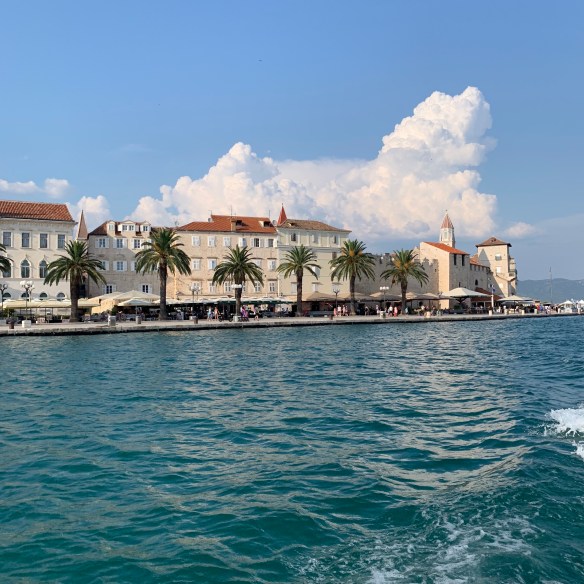
Over the past few weeks I have been travelling in Europe – Switzerland, Croatia and Italy. It was a great trip, and prompted a few observations along the way. Here are some key recollections.

First, after making a number of trips by train, bus and boat, it reinforced the sense that in Europe, public transport is seen as an essential service and not just a means of last resort (you know, that notion we sometimes experience elsewhere that suggests “only losers take the bus”). As a result, public transport is generally clean, safe, efficient, punctual and largely affordable. One counterpoint is that as a temporary visitor, accessing and paying for tickets such as multi-day / multi-system travel passes is not always straightforward.

Second, despite the close proximity of the three countries I visited, I had to use different fiat currencies in each location – and in the case of Croatia, although it is a member of the EU, the Euro is not always accepted and it maintains a separate currency (the Kuna) that is not easy to exchange outside the country. And when you get cash out of an ATM, it’s mostly in denominations of HRK200 – but local shops hate having to change large notes. Plus, there are still instances where plastic money is not accepted.

Third, visiting the extensive national art collections in Zurich (the Kunsthaus) and Milan (the Museo Del Novecento) was a great opportunity to see works by significant twentieth century artists beyond the Dadaists and Futurists respectively – including many works that rarely travel abroad.

Fourth, for all my reservations about organised religion, you can’t deny that a key legacy of European Christianity is church architecture, and the associated patronage of the arts. The Duomo in Milan even affords visitors the opportunity to walk along the roof terraces to get closer to the decorative flying buttresses and mini-spires topped with hundreds of statues.

Finally, along with all the excellent food I was lucky enough to order in restaurants, the trip was a great opportunity to sample local and regional wines, especially while in Switzerland and Croatia. We just don’t see that much of these in Australia, for obvious reasons. Plus, the global phenomenon of craft beer is still alive and well, all adding to the gastronomic experience.

Next week: Recent Notes from Hong Kong

Tales from Tasmania

There’s a slightly misleading advertisement for Tasmania that greets arrivals at Melbourne’s international airport. “You got off one stop too soon” is the message. But there are no scheduled international flights to or from Tasmania, so overseas visitors must travel via the Australian mainland. Just one of many idiosyncrasies that occurred to me on a recent visit to the island state.

On this trip, I experienced the snowfalls on Kunanyi (Mount Wellington), sampled the local produce at the Farm Gate Market (a popular destination, no doubt helped by TV programmes such as “Gourmet Farmer”), enjoyed tasting the wine at Moorilla, the cheese and beer on Bruny Island, and the beer at the Cascade Brewery.

I also spent a very wet day in Richmond – but some attractions in this historic village are at risk of pricing themselves out of the market, especially outside the summer season. And despite being another popular destination, the shops and galleries along Hobart’s Salamanca Place seemed tired and lacklustre, especially when compared to what else Tasmania has to offer.

In particular – MONA. Its opening in 2011 has added to Tasmania’s growth in tourism, and no trip to Hobart would be complete without a visit. It might not be to everyone’s taste, but what David Walsh has managed to achieve here is nothing short of incredible. Talk about putting your money where your mouth is…. The current exhibition, ZERO, is a powerful survey of this post-war movement in German art.

Notwithstanding the cutting edge culture represented by MONA, you can’t help feeling that Tasmania represents a microcosm of the Australian psyche, and in particular the tension between traditional, conservative beliefs, and modern, progressive thinking. Tasmania was the last state to decriminalise male homosexuality (following Federal intervention), and abortion was only decriminalised as recently as 2013. The fact that access to publicly funded abortion is extremely limited may or may not be linked to the state’s high rate of teenage pregnancy – but it is certainly the background to a high-profile unfair dismissal case.

Tasmania has been the setting for other significant social and political battles (and ecological victories), especially those involving logging and damming. The state’s natural beauty and reputation for a clean environment makes it popular with overseas visitors (and probably some prospective survivalists in the wake of New Zealand’s new property ownership laws). However, the growth of short-term holiday lettings is seen as contributing to a local housing crisis.  And the significant contribution that tourism makes to the local economy cannot hide the fact that on the basis of total and per capita GSP, Tasmania’s economy looks comparatively insipid.

Next week: Sakamoto – Coda and Muzak

Tech, Travel and Tourism (revisited)

Just over two years ago, I posted a blog on how the tourism and travel industries needed to embrace the opportunities brought about by digital disruption. Having been on half a dozen overseas trips in the past 12 months, I can see that there have been some improvements in the traveler experience, but there is still a lot of room for improvement…

One of the biggest benefits has been the expanded integration of public transportation information into Google Maps. Navigation and route planning, right down to which platform to board from or which subway exit to take, has been a huge boost to the traveler UX. Many cities are now using integrated stored value cards for public transport, but limitations still exist: for example, some systems don’t make it that easy for overseas visitors to obtain the card itself, others make it hard to re-load other than by cash; while only a few systems, like Hong Kong and Japan, support multiple point-of-sale transactions for shops, restaurants and other services.

Another plus for frequent travelers has been the increased adoption of chip-enabled, e-passports which streamline the immigration entry/exit process (but only for participating countries, of course). Laborious paperwork still exists in many cases with arrival/departure cards and customs declaration forms – but over time, these processes should become more streamlined with the adoption of digital IDs and biometrics.

Using local mobile phone networks may have gotten easier with compatible operating systems, but even with pre-paid travel SIM cards and data packages, access costs are still disproportionately expensive for overseas visitors. Sure, there are more and more public WiFi services and hotspots available, but most still require users to provide personal data and/or reveal security weaknesses. Even though I recently purchased a mobile pass to access “free” WiFi services abroad, it’s hard to see what value it offers, because it only works after I have already logged onto the WiFi network.

Getting flight information, notifications and alerts via SMS and e-mail has improved considerably, along with easier online booking tools and mobile check-in solutions – and of course, QR codes now support paperless boarding cards. But I’ve noticed that some airline apps don’t support full integration with mobile phone wallets, and consolidating ticketing and invoicing information (e.g., for consolidated expense reporting) from multiple airlines and booking platforms still feels a long way off.

Finally, a constant irritation for travelers are the card transaction fees that most hotels still pass on at checkout – as if many guests are likely to pay in cash! – compounded by the FX fees that the credit card companies also like to charge. All up, this can mean an average of between 3% and 5% in additional fees, in a situation where hotel guests are something of a captive audience. Transaction fees remain a target for further disruption….

Next week: Token ring – a digital ID solution


There’s an awful lot of coffee in Japan (but not much espresso…)

Living in Melbourne all these years, I have become spoilt when it comes to the choice and quality of coffee on offer in the numerous cafes and bars around the city. So when I go overseas, I can get withdrawal symptoms if I don’t get my morning doppio. And I don’t mean an over-priced and over-rated big brand product from a certain you-know-who-you-are multinational chain store. My recent experiences in Japan, which has the third largest coffee consumption by nation, revealed that espresso-style coffee is on the increase, but is competing with some entrenched coffee tastes.
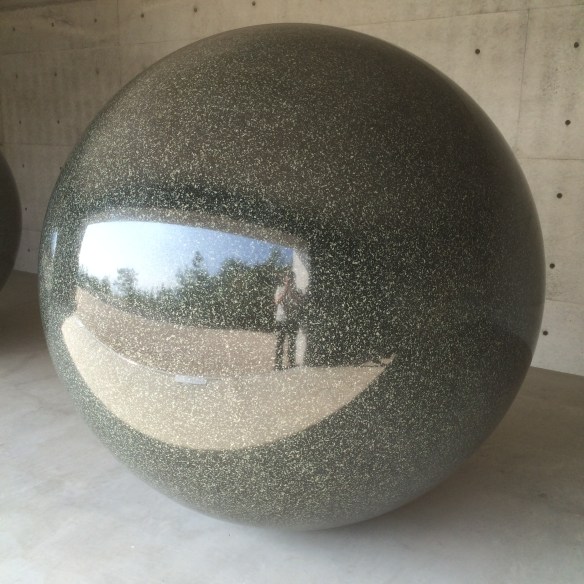
Walter de Maria "Seen/Unseen Known/Unknown" (Photo: © Rory Manchee - all rights reserved)

Walter de Maria “Seen/Unseen Known/Unknown” (Photo: © Rory Manchee – all rights reserved)

On my recent trip to Japan, I not only found some excellent new espresso outlets, I also acquired a renewed respect for siphon and filter coffee, which are both great when they are done well. As anyone who has been to Japan will know, coffee (both hot and cold) frequently comes in a can, either from a vending machine or a convenience store. In cafes, the coffee is usually brewed, and however good the coffee beans, this style just doesn’t do it for me. Rarely have I seen a cafetière (“plunger”) or percolator in use, although iced drip coffee is something of a delicacy.

From three weeks of travel, here are some of the highlights:

In Tokyo’s Ginza district, there is the Renoir Coffee Room which has a certain appeal, if you like authentic retro (i.e., it’s probably the same decor since the 1970’s, without a hint of irony or post modernism). Certainly a favourite with an older clientele, presenting a genteel atmosphere (somewhat undermined by the popular smoking section) and a reminder of a slower, gentler time. In the absence of espresso, I had a standard filter or pour over coffee, and despite being a little on the weak side, it had just enough of a roasted flavour to compensate. Rating: 6/10

Over in hipsterish Ebisu, I was expecting to find loads of local coffee shops, packed with neo-beatniks, retro-hippies and proto-punks, and the constant hiss of espresso machines. Not to be – maybe it was too early in the afternoon, but there were few options. Marugo Deli is more of a juice bar and organic cafe, that also happens to serve espresso. It was a friendly place, nice atmosphere, but the coffee was nothing special. Rating: 6/10

Down in Himeji, after a challenging climb to the top of the castle on a hot day teeming with hundreds of other visitors, it was a welcome relief to escape into the cool, calm comfort of Hamamoto Coffee. Again, they don’t serve espresso, but they specialise in siphon coffee (something I probably haven’t had since I used to visit the former Martinos Coffee Lounge in Hong Kong’s Causeway Bay in the 1990s). Sitting at the counter meant that I got to see the whole process close up, as the bar tender kept several siphons going at the same time. It’s as much an art as working a good espresso machine, and makes for interesting entertainment. The coffee itself was bold, yet mellow at the same time – full-bodied but smooth with an almost zesty edge. HIghly recommended. Rating: 8.5/10

Wandering around Kyoto‘s hipster quarter close to Nijo Castle, I came across Cafe Bibliotic Hello! (quirky name, quirky building!!!) where it’s easy to while away the time browsing through the library of art books and sampling the excellent baked goods from the adjoining store. The espresso was a welcome bonus, and was the best I’d had up until then on this trip. Rating: 8.5/10

Outside Kyoto, in Saga-Arashiyama (near the bamboo forest), % Arabica has recently opened its second Kyoto coffee shop. Overlooking the river, this tiny cafe is really only a takeaway stand, but everything has been designed for maximum aesthetic effect. There’s clearly a personal statement being made here, almost verging on the pretentious/precious, but not surprisingly it is very popular with the passing visitors. And the coffee is also pretty good – full-roasted, robust, just enough acidity, and an excellent crema. Rating: 9.5/10

Back in Tokyo, nearing the end of my trip, I spent a day walking around the district of Kiyosumi-Shirakawa, visiting the numerous galleries, second-hand bookshops and the Kiyosumi Gardens. In 2014, the New Zealand-based Allpress Espresso roastery and cafe group opened a branch here, in a former timber warehouse. It’s an interesting space, and is bringing some serious competition to a rival coffee roaster nearby (which only serves filter coffee to its customers). However, not all the locals seem to have taken to espresso – after having the coffee menu explained to them, a number walked out without trying, looking somewhat confused. But for me, having an Antipodean barista was obviously a plus. Rating: 9/10

Finally, I tried a couple of other espresso bars on my stay in Shimo-Kitazawa, one of which was not much more than an espresso stand, offering good coffee (Rating: 7.5/10), but the service was very slow. I can’t remember the name, and I can’t find a website for it, but it was close to the west entrance to the railway station. This trendy neighbourhood has a number of well-regarded coffee shops, but sadly, I did not have enough time to visit many of them. Next trip, perhaps.

Next week: More #FinTech stuff